

Executive Overview
The video game industry of the early 2000s operated in a vastly different landscape than it does today. Without the rigid pipelines, data-driven telemetry loops, standardized design frameworks, and overarching mandates that govern modern live-service development, studios often felt more like collegiate workshops or chaotic artist communes. Nowhere was this more apparent than at Blizzard Entertainment during the genesis of World of Warcraft.
While the chaotic culture of early-2000s game development yielded legendary titles, it also fostered a unique brand of workplace politics—not of the malicious variety, but rather characterized by internal friction, creative rivalry, and friendly office jockeying. As recent retrospective interviews have revealed, this loose framework allowed individual developers to covertly bend the rules to favor their own systems.
A prime casualty—and beneficiary—of these subtle internal power struggles was the game’s crafting and profession system. Intended to follow a strict, strictly balanced numerical hierarchy, crafting was quietly subverted by rogue designers looking to elevate their preferred systems above the rest. More than two decades later, as Blizzard prepares to launch World of Warcraft: Forever, the studio is finally addressing these foundational design quirks, illuminating a fascinating chapter of MMORPG history that explains why crafting in vanilla WoW always felt just a little bit off.
Detailed Chronology: The Wild West of Early Blizzard Design
To understand how crafting balance went awry in vanilla World of Warcraft, one must first examine the environment in which the game was built between 2000 and 2004. The team was breaking new ground, attempting to translate the top-down RTS sensibilities of the Warcraft universe into a seamless, 3D massively multiplayer online role-playing game.
[2000-2003: Development Phase]
  └── Loose internal mandates; Eric Dodds sets baseline rules for crafting power.
  └── Rogue designers subtly "buff" their pet systems (dungeon drops vs. crafted gear).

[November 2004: Vanilla Launch]
  └── Crafting exists in a fragmented state where blacksmithing and leatherworking often lag behind dungeon drops.

[2019: The "No Changes" Classic Era]
  └── Blizzard releases WoW Classic; developers are barred from fixing known design oversights from 2004.

[Present Day: World of Warcraft: Forever]
  └── Modern philosophy allows developers to correct historical mistakes, making professions genuinely viable for leveling.
During this tumultuous development cycle, departments operated with a surprising degree of autonomy. While high-level directors outlined broad goals, day-to-day execution fell to individual system designers who wielded immense personal influence over their specific domains.
According to principal designer Kris Zierhut, who joined Blizzard in 2005 just after the game’s initial launch, design direction in the early days could be summarized quite simply: build compelling systems and figure out the balance later. However, "later" often never arrived before the ship date, leaving disparate mechanics to collide in the wild.
Crafting was assigned strict numerical boundaries meant to ensure that gear created by players was useful, but never entirely eclipsed the items earned through high-end questing or dungeon crawling. Yet, because oversight was decentralized, individual developers found loopholes. While some designers adhered strictly to the established mathematical formulas, others quietly inflated the stats of their own pet projects, creating a subtle power creep within specific corners of the game’s itemization tables long before the code ever hit retail servers.
Supporting Context & Metrics: The Myth of Best-in-Slot Crafting
In the ecosystem of early MMORPGs, itemization was king. The pursuit of "Best-in-Slot" (BiS) gear drove player engagement, dictated guild progression, and defined endgame prestige. Within this framework, crafting was envisioned as a reliable foundational pillar—a way for players to bridge gaps in their gear progression without relying entirely on the randomized whims of dungeon loot drops (commonly known as "RNG").
However, the reality of vanilla World of Warcraft itemization was far more lopsided.
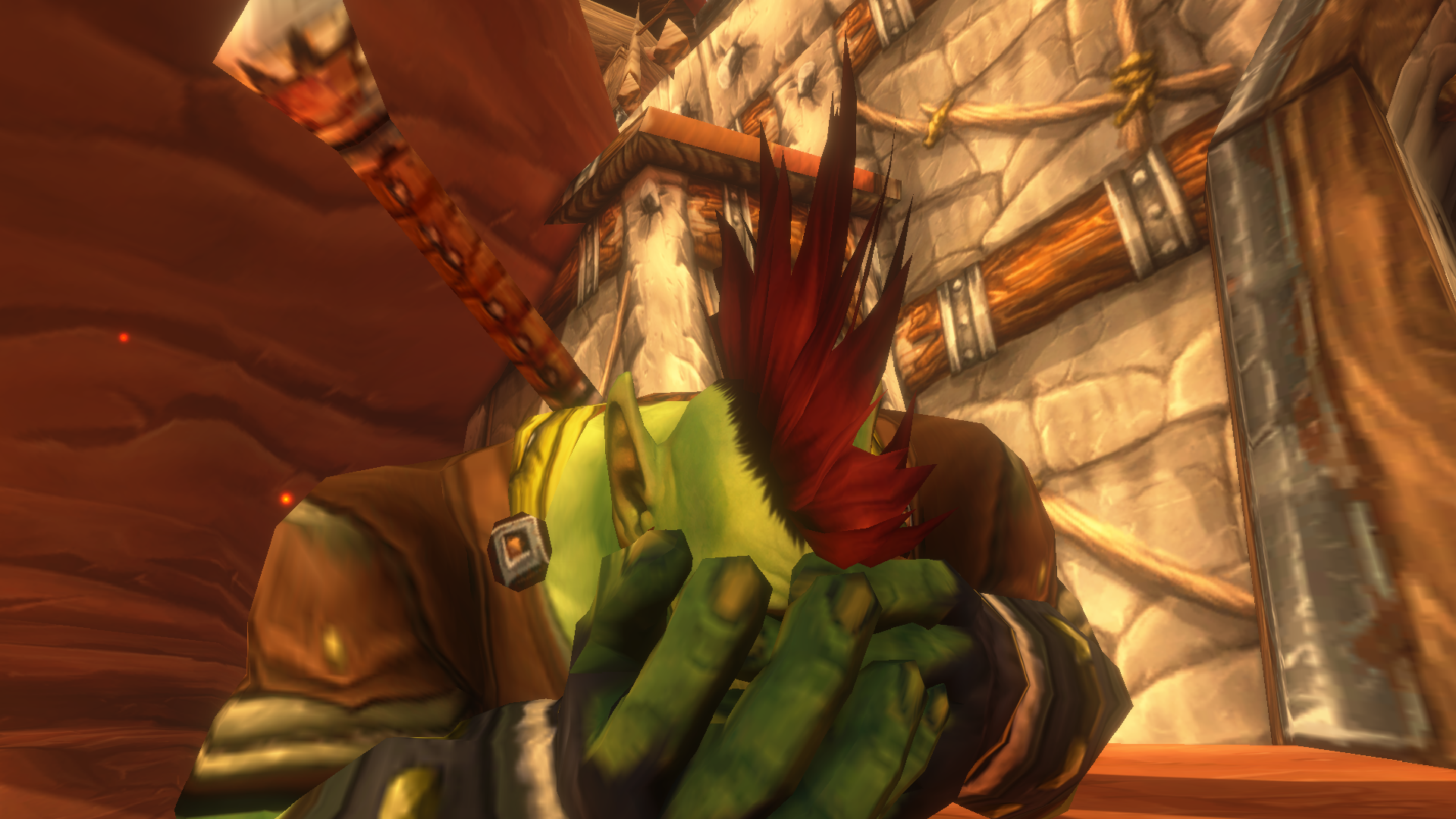
- The Original Intent: Professions like Blacksmithing, Leatherworking, and Tailoring were designed to give players a steady stream of useful gear from the very beginning of their leveling journey. Crafting recipes were meant to offer a predictable, reliable power curve.
- The Variance: Because certain designers "cheated the system"—slightly inflating stamina, strength, or intellect values on crafted gear outside of official review—the internal consistency of item budgets shattered.
- The Eric Dodds Factor: As Zierhut noted in a revealing interview with Polygon, Eric Dodds, the primary crafting designer at the time, was known for following the rules meticulously. Consequently, the systems overseen by Dodds adhered rigidly to the conservative mathematical models laid out by management. Meanwhile, systems managed by less orthodox team members crept ahead in power, creating an uneven playing field where certain professions yielded remarkably higher returns on investment than others.
For years, this meant that while professions like Alchemy and Engineering remained permanently entrenched in the endgame meta due to utility items (like potions and grenades), armor-crafting professions often saw their utility peak early and plummet dramatically once players hit mid-to-late-game dungeons. The dungeon-crawler philosophy ultimately won out, cementing "dungeons, dungeons, and more dungeons" as the definitive path to power, while blacksmith anvils and leatherworking frames gathered digital dust.
Official Statements & Industry Reflections
The passage of time has transformed these petty office discrepancies from frustrating development hurdles into amusing anecdotes of a bygone era. Speaking on the design politics of early-2000s studios, industry veterans can now look back with amusement at the amateur-hour charm of building a multi-billion-dollar franchise.
Reflecting on the 2019 rollout of World of Warcraft Classic, Zierhut highlighted the agonizing restraint required by the development team during the strict "no changes" era. Blizzard was inundated with community demands to preserve the 2004 experience warts and all, which meant leaving historical design mistakes fully intact—even when the developers who made those mistakes were sitting in the office knowing precisely how to fix them.
"The only design direction that really existed was: Don’t change anything… I was there when we made some of these decisions. I had those discussions with Tom and Jeff and Scott. And I knew some places where we made mistakes," Zierhut shared.
This strict adherence to historical preservation eventually gave way to a more pragmatic philosophy. Developers realized that preserving nostalgia should not come at the expense of good design, paving the way for iterations like World of Warcraft: Forever, where historical oversights can finally be ironed out without breaking the spirit of the original game.
Future Outlook: Rebalancing the Past in World of Warcraft: Forever
The legacy of these rogue design choices is finally being rewritten. With the arrival of World of Warcraft: Forever, Blizzard is actively utilizing the hindsight granted by two decades of MMORPG evolution to correct the numerical discrepancies of the past.
Early access and beta testing phases for the project have confirmed that crafting is no longer an afterthought or an inefficient gold sink for leveling characters. Significant adjustments have been implemented across the board:
- Soulbound Crafting Upgrades: Players can now craft powerful, soulbound blue-quality items via Blacksmithing and Leatherworking that directly rival and sometimes surpass standard quest and dungeon drops during the leveling phase.
- Rebalanced Item Budgets: The invisible statistical penalty that plagued strictly regulated professions has been lifted, standardizing item power across all crafting disciplines rather than leaving them at the mercy of individual developer biases from 2002.
- Restored Utility: By ensuring that crafted gear remains relevant throughout the leveling curve, professions now provide a meaningful, self-sufficient gameplay loop for solo players and alt-characters alike.
Ultimately, the story of early World of Warcraft crafting serves as a charming reminder of how human and imperfect game development used to be. What once started as cheeky, behind-the-back stat boosting by rebellious developers has evolved, decades later, into a polished and cohesive system that honors the spirit of vanilla WoW while finally letting crafting live up to its full, uncompromised potential.





Belum ada komentar. Jadilah yang pertama berkomentar!