

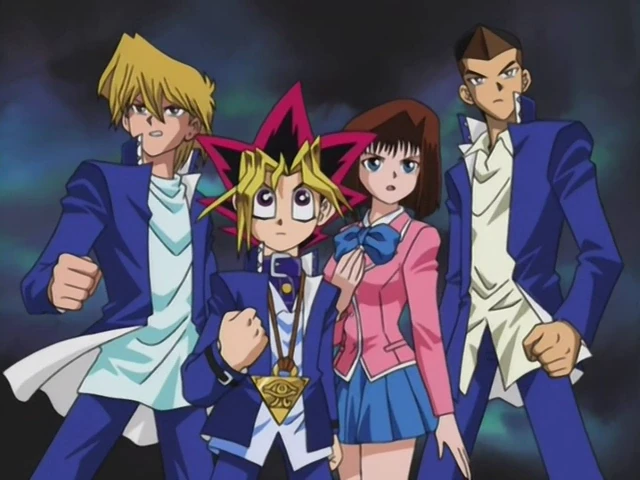
TOKYO — Long before it became a global trading card phenomenon and a multi-billion-dollar pop-culture empire, Yu-Gi-Oh! was staring down the barrel of a premature cancellation. In the late 1990s, the anime industry was a volatile battleground dominated by advertising conglomerates, fierce broadcast rivalries, and rigid distribution networks.
Fresh insights from veteran Asatsu producer Kataoka Yoshiro have peeled back the curtain on the creation of Yu-Gi-Oh! Duel Monsters, revealing an unbelievable saga of corporate brinkmanship. The survival of the franchise hinged on a desperate rescue mission orchestrated by Weekly Shonen Jump’s legendary editor-in-chief, a high-stakes blackmail scheme involving Dragon Ball, and a controversial casting choice that pitted the creator of the series against a powerhouse talent agency.
Executive Overview
To understand the miraculous pivot of Yu-Gi-Oh!, one must examine the landscape of Japanese media production in the late 1990s. Advertising agency Asatsu (now ADK) held an unprecedented monopoly over the children’s entertainment market. Sponsors like Bandai, Namco, Sega, Takara, and Tomy funneled their advertising budgets directly through Asatsu, making it the undisputed king of kids’ programming.
Yet, despite this formidable backing, the initial adaptation of Kazuki Takahashi’s manga—handled by Toei Animation and rival agency Dentsu—premiered on TV Asahi in April 1998 only to be unceremoniously canceled after just six months due to lagging viewership ratings.
What followed was a masterclass in industry manipulation. Backed by surging manga reader surveys in Weekly Shonen Jump, leadership at Shueisha refused to let the property die. Through aggressive negotiation, institutional leverage, and sheer stubbornness, key industry players engineered a migration to TV Tokyo, completely reshaping the DNA of the franchise into the tactical card-game juggernaut known worldwide today.
Detailed Chronology: From Toei’s Cancellation to TV Tokyo’s Triumph
The Fall of the 1998 Toei Series
In April 1998, Toei Animation launched the first television adaptation of Yu-Gi-Oh!, broadcast via TV Asahi and handled by advertising giant Dentsu. While praised in retrospect for its meticulous attention to character detail—faithfully adapting Kazuki Takahashi’s early manga chapters in a style reminiscent of Akira Kurosawa’s The Seven Samurai—the show suffered from a fundamental misalignment.
Toei and TV Asahi had greenlit the anime before the manga had exploded into a mainstream cultural phenomenon. Consequently, it was never produced with long-term commercial dominance in mind. When ratings faltered, the plug was pulled after 27 episodes.
Under standard broadcasting and licensing rules of the era, this should have been the end of the road. TV Asahi retained the rerun rights for those 27 episodes for two and a half years, and Toei Animation held a tight grip on all secondary usage and merchandising rights. Under normal industry protocol, no other production company or broadcaster could touch the Yu-Gi-Oh! IP during this lock-out period.
Torishima’s Nuclear Option
Refusing to let a roaring manga property die on screen just because of a failed adaptation, Weekly Shonen Jump Editor-in-Chief Kazuhiko Torishima took unprecedented action. Walking into the Asatsu offices for the very first time, Torishima made a direct plea to Kataoka Yoshiro: "Please turn this into an anime and get someone to air it, no matter what."
Kataoka initially dismissed the request as an impossibility. Navigating the regulatory minefield meant risking an open war with TV Asahi and Toei Animation. If Asatsu secured a time slot on TV Tokyo and brought in heavy-hitting sponsors like Konami and Bandai, TV Asahi would retaliate.
Torishima, however, was playing a completely different game. He told Kataoka to focus solely on securing a broadcast slot at TV Tokyo and leaving the opposition to him.
When Torishima approached Toei Animation to clear the path, he was met with flat refusal. In response, Torishima unleashed an industry-shaking nuclear option: he threatened to strip Toei of all secondary usage and merchandising rights for Dragon Ball, then at the height of its global dominance. He similarly cornered TV Asahi—which was airing heavy-hitters like Hell Teacher: Jigoku Sensei Nube—warning that Shueisha would pull its lucrative properties from their lineup entirely if they stood in the way. Leveraging the full weight and editorial clout of Shonen Jump, Torishima forced the industry giants to back down.
Crafting Duel Monsters: The Pedagogical Pivot
With the legal and broadcast hurdles miraculously cleared, Kataoka and his team set about designing a new series tailored explicitly for the burgeoning trading card craze. Recognizing why the Toei version struggled, Kataoka shifted the creative mandate:
"If kids watch this ‘Yu-Gi-Oh! Duel Monsters’ animated TV show, they should be able to win at the card game. Let’s make it an anime that teaches viewers how to win."
Asatsu brought in actual competitive card game experts to consult on the production. The writing staff integrated real, functional card combinations and tactical strategies into the script. By transforming the anime into an interactive, educational tutorial disguised as high-stakes drama, the production struck gold, setting off a generational craze.
Supporting Context & Metrics: The Asatsu Monopoly
To fully grasp how Yu-Gi-Oh! survived its initial execution, one must analyze the unique structural power held by Asatsu in late-20th-century Japanese media.
| Industry Player | Primary Sphere of Influence | Key Clients & Accounts |
|---|---|---|
| Asatsu (ADK) | Children’s Entertainment & Toy Market | Bandai, Namco, Sega, Takara, Tomy, Konami |
| Dentsu | General Media, Prime-Time TV, Major Networks | TV Asahi, Toei Animation Projects |
| Shueisha | Publishing & Manga IP Management | Weekly Shonen Jump (Dragon Ball, Yu-Gi-Oh!) |
While Dentsu possessed the broader clout of an industry titan, Asatsu maintained an absolute stranglehold over the children’s commercial market. Every major toy manufacturer and game developer in Japan relied on Asatsu to move product. This ecosystem allowed Kataoka to effortlessly pivot sponsors from the failed Dentsu-backed venture to the newly minted TV Tokyo production, securing financial stability before a single frame of Duel Monsters was animated.
Official Statements & Creative Clashes: Casting Shunsuke Kazama
Securing the broadcast slot and sponsors was only half the battle. A major creative controversy nearly derailed the production during the voice-casting phase.
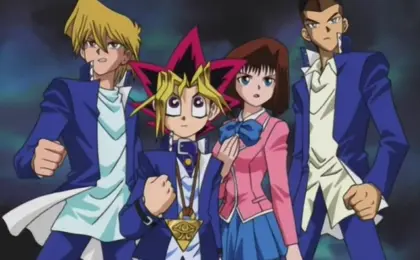
Kataoka rejected the industry standard of hiring veteran female voice actors (such as Masako Nozawa, Mayumi Tanaka, or Chika Sakamoto) to voice the teenage protagonist, Yugi Muto. Kataoka argued that professional adult women voicing an ordinary eighth-grader introduced an air of artificiality, failing to capture the dramatic psychological duality of the character—a mild-mannered, timid boy in his everyday life who transforms into a fierce, confident hero the moment he engages in a game.
Instead, Kataoka turned to Johnny Kitagawa, head of the legendary talent agency Johnny & Associates, who recommended a 14-year-old actor: Shunsuke Kazama.
Kazuki Takahashi’s Fury
When the casting proposal landed on the desk of Yu-Gi-Oh! creator Kazuki Takahashi, he was furious.
- "What the heck is this? This is no good," Takahashi protested, explicitly refusing to trust a novice with zero voice-acting experience to carry the lead role of his defining creation.
Kataoka defended the choice:
"A real second-year Junior High Student would be perfect for bringing this aspect out to the forefront… It’s just like riding a bike; once you do it five or six times, you get the hang of it."
Reluctantly, Takahashi agreed to a high-stakes ultimatum: he would attend the recording session for Episode 1. If Kazama’s performance proved to be an absolute disaster, the rookie would be fired on the spot.
Winning Over the Creator
Entering the recording studio as a raw, nervous 14-year-old, Shunsuke Kazama leaned entirely on his work ethic. As Kataoka notes, Kazama possessed the rare intelligence required to genuinely listen to direction, process constructive criticism, and physically project those instructions through his vocal cords and emotions.
While a typical recording session for a single episode lasted four to five hours, the recording for Episode 1 stretched to five or six hours as Kazama pushed himself to the absolute limit. Witnessing a literal middle-schooler fighting tooth and nail for his role moved everyone in the room—including Takahashi. By the end of the session, the author was won over.
This grueling introduction forged a lifelong bond between Kazama and Takahashi. To this day, Kazama expresses deep emotional gratitude to Kataoka, viewing him as the unseen savior who brought his career-defining role to life.
Future Outlook: Legacy of a Resilient Franchise
The miraculous survival story of Yu-Gi-Oh! Duel Monsters serves as a testament to the chaotic, high-stakes nature of late-90s anime production. Had Kazuhiko Torishima not played his nuclear card against Toei and TV Asahi, had Asatsu not leveraged its unmatched toy-industry monopoly, and had Kataoka Yoshiro fought for an untested 14-year-old actor over industry conventions, the King of Games might have faded into obscurity after a forgotten 27-episode run.
Today, the echoes of those boardroom ultimatums and studio standoffs reverberate through a multi-billion-dollar global franchise spanning card games, video games, and millions of devoted fans worldwide. For veterans like Kataoka Yoshiro, stepping out of the shadows to share these stories illuminates the gritty, human realities behind the magic of childhood television history.



Belum ada komentar. Jadilah yang pertama berkomentar!