

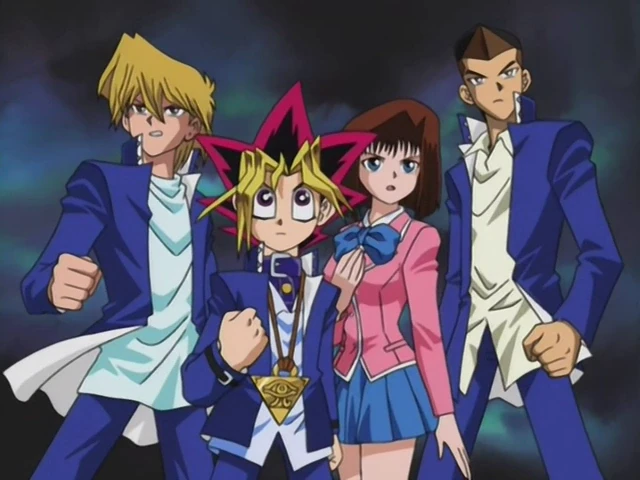
TOKYO — For generations of fans worldwide, Yu-Gi-Oh! is more than just a nostalgic trading card game or a blockbuster anime; it is a global cultural institution. Yet, the path from Kazuki Takahashi’s ink-and-paper creation to the iconic, card-slinging phenomenon of the early 2000s was fraught with corporate warfare, high-stakes ultimatums, and a casting battle that nearly derailed the franchise before it even began.
In a rare, expansive retrospective interview, former Asatsu (now ADK) producer Kataoka Yoshiro has pulled back the curtain on the turbulent history of Yu-Gi-Oh!. Detailing the industry landscape of late-1990s Japan, Kataoka exposes how the monumental success of Yu-Gi-Oh! Duel Monsters was forged in the crucible of fierce network rivalries, legendary publisher intervention, and an unprecedented gamble on a teenage idol.
Executive Overview
The journey of Yu-Gi-Oh! on television began long before the iconic Duel Monsters series premiered on TV Tokyo in April 2000. In April 1998, Toei Animation aired an initial adaptation of Takahashi’s manga on TV Asashi, handled by advertising giant Dentsu. Despite high production values and careful narrative framing, that initial run was abruptly canceled due to low viewership ratings.
Under normal circumstances, this would have spelled the quiet death of an anime adaptation. Instead, it triggered a high-stakes chess match involving Shueisha’s Weekly Shōnen Jump, Toei Animation, TV Asashi, and advertising powerhouse Asatsu. Through aggressive pressure from Jump Editor-in-Chief Kazuhiko Torishima—who threatened to pull powerhouse properties like Dragon Ball—the rights deadlock was broken.
Simultaneously, producer Kataoka Yoshiro pioneered a radically practical approach to the franchise’s pivot toward the trading card game, transforming an ordinary anime into an interactive tutorial. To top it all off, Kataoka won a grueling internal battle to cast a real-life junior high schooler, Shunsuke Kazama, as Yugi Mutou—a decision that initially enraged manga creator Kazuki Takahashi, but ultimately defined the soul of the franchise.
Detailed Chronology: From Toei’s Cancellation to the Duel Monsters Renaissance
The Collapse of the 1998 Toei Adaptation
In April 1998, Toei Animation launched its adaptation of Yu-Gi-Oh! on TV Asahi, a production steered by advertising titan Dentsu. Kataoka notes that while the 27-episode run was exceptionally well-crafted—painstakingly detailing Yugi’s school life, friendships, and early encounters with gaming culture in the spirit of Akira Kurosawa’s The Seven Samurai—it suffered from a fundamental planning flaw.
At the time, Toei and TV Asashi routinely greenlit anime adaptations of Jump manga before the source material had fully exploded in popularity. Consequently, they were never produced with the expectation of massive, sustained mainstream success. As ratings lagged, Dentsu and TV Asahi pulled the plug after just six months.
However, Weekly Shōnen Jump reader surveys for Takahashi’s manga were skyrocketing. To kill the anime while the print medium was experiencing a historic boom was, in the eyes of Shueisha, utterly ludicrous.
Torishima’s Nuclear Option: Shueisha’s Iron Fist
Desperate to save the IP’s audiovisual footprint, Jump Editor-in-Chief Kazuhiko Torishima made an unprecedented pilgrimage to the offices of Asatsu. Under the strict broadcasting rules of the era, even after a show’s cancellation, TV Asashi retained the rights to rerun Toei’s 27 episodes for two and a half years. During that window, Toei held absolute control over merchandising and secondary usage rights, effectively locking other production companies out of using the Yu-Gi-Oh! title.
When Torishima implored Asatsu to find a new home for the anime, Kataoka was frank about the systemic barriers:
"If Asatsu pulls some strings, I think we could get TV Tokyo to give us a time slot… but if we did the show on TV Tokyo, TV Asashi would get mad, right? There’s no way Toei Animation or TV Asashi would ever approve of something like this."
Torishima’s response was legendary in Japanese publishing lore. Dismissing the institutional roadblocks, he told Kataoka to secure a time slot on TV Tokyo and leave the heavy lifting to him.
When Toei Animation flatly rejected his initial demands, Torishima deployed Shueisha’s ultimate trump card: he threatened to revoke all secondary usage rights for Akira Toriyama’s Dragon Ball. Simultaneously, he approached TV Asahi—which was airing prominent Jump titles like Hell Teacher: Jigoku Sensei Nube—and made it clear that Shueisha would pull its entire catalog of hits from their network. Using the full, unbridled clout of the Shōnen Jump empire, Torishima forced the networks and Toei to back down, clearing the path for a reinvention.
Supporting Context & Metrics: The Asatsu Monopoly and the Card Game Paradigm
To understand how Asatsu was able to facilitate this miraculous rescue, one must examine the advertising ecosystem of 1990s Japan. According to Kataoka, Asatsu wielded overwhelming, near-monopolistic dominance over the children’s entertainment market.
While Dentsu held the crown as the industry’s overall revenue leader, Asatsu had locked down the toy and merchandising sector. Their client roster included heavyweights like Bandai, Namco, Sega, Takara, and Tomy. If a company manufactured products targeted at children, they virtually had to route their advertising through Asatsu.
+---------------------------------------------------------------+
                 THE 1990s KIDS' MEDIA ECOSYSTEM
+---------------------------------------------------------------+
  [ Shueisha / Weekly Shōnen Jump ] ---> Original Manga Content
                 │
                 ▼
  [ Asatsu (ADK) ] ──────────────────> Dominant Toy/Sponsor Network
    ├── Bandai / Namco                 (Bandai, Takara, Tomy)
    ├── Sega / Takara / Tomy
    └── Konami (Trading Card Synergy)
                 │
                 ▼
  [ TV Tokyo Time Slot ] ────────────> Broadcast of 'Duel Monsters'
+---------------------------------------------------------------+
When Kataoka and his team set out to build Yu-Gi-Oh! Duel Monsters, they shifted the core philosophy of the production. Recognizing the explosive commercial potential of the real-world trading card game published by Konami, Kataoka instituted a strict rule for his creative staff:
"If kids watch this ‘Yu-Gi-Oh! Duel Monsters’ animated TV show, they should be able to win at the card game. Let’s make it an anime that teaches viewers how to win."
By bringing in expert players to consult on actual, viable card combinations and deck synergies, the anime ceased to be a mere narrative adaptation. It became an interactive masterclass. Children watching across Japan could take the strategies demonstrated on screen straight to the schoolyard playground, fueling an unprecedented retail boom for Konami’s physical card sets.
Official Statements & The Great Casting Controversy
Perhaps the most culturally fascinating revelation from Kataoka’s retrospective centers on the casting of the series protagonist, Yugi Mutou, and his alter-ego, Yami Yugi.
In Japanese animation, it was standard industry practice to cast seasoned adult female voice actresses—such as Masako Nozawa (Dragon Ball), Mayumi Tanaka (One Piece), or Chika Sakamoto (Digimon)—to voice young adolescent boys. These veterans possessed the technical skill to instantly pivot between a timid teenager and a fierce warrior. However, Kataoka vehemently rejected this convention for Duel Monsters:
"If you’ve read the manga, you’ll know that the main character, Muto Yugi, is usually something of a wimp… The moment he picks up the card game, he turns into a hero. In a show that requires such a wide range and dramatic contrast, veteran actresses would easily do that job. But I thought there would be an air of insincerity… so I asked to be introduced to an actual 14-year-old who’s good at acting."
Kataoka approached Johnny Kitagawa, the legendary head of talent agency Johnny & Associates, who recommended a real-life second-year middle schooler: Shunsuke Kazama.
Kazuki Takahashi’s Outrage
When Kataoka submitted the casting list, manga creator Kazuki Takahashi was incandescent with rage.
- "What the heck is this? This is no good," Takahashi protested, arguing that he could not trust an amateur with zero professional voice-acting experience to carry the weight of a flagship television series.
While acknowledging that professional voice actors possessed the supernatural ability to alter their vocal cords on command without relying on personal emotion, Kataoka argued that a real teenager brought a raw, unreplicable authenticity to Yugi’s dual life. Unconvinced, Takahashi demanded an audition tape, to which Kataoka realized he was walking a diplomatic tightrope: he could not simply reject Johnny Kitagawa’s recommendation, nor could he alienate the creator of the manga.
The High-Stakes First Recording Session
Kataoka’s gambit was simple yet agonizing: he invited Takahashi to attend the recording session for Episode 1, promising that if Kazama’s performance was genuinely disastrous by the end of the day, they would recast the role.
+---------------------------------------------------------------+
                THE YUGI MUTOU CASTING GAMBIT
+---------------------------------------------------------------+
  [ Johnny Kitagawa ] ──Recommends──> [ Shunsuke Kazama (Age 14) ]
                                              │
  [ Kazuki Takahashi ] ──Outraged──> Demands Proof of Competence
                                              │
  [ Studio Session ] ──5-6 Hours──> Kazama Follows Direction
                                              │
  [ Result ] ───────────> Takahashi Converted / Lifelong Friendship
+---------------------------------------------------------------+
When Kazama entered the booth, he was a textbook 14-year-old middle schooler—not yet a glamorous heartthrob, but possessing an earnest, hard-working demeanor. Under the rigorous direction of the sound director, Kazama did not rely on tricks; he listened intently, processed the feedback, and adjusted his physical posture, vocal cords, and emotions to match the character.
While a normal recording session averaged four to five hours, Episode 1 stretched to five or six hours as the young actor poured every ounce of his energy into the microphone. Witnessing a teenager fight tooth and nail for his role moved everyone in the studio, including Takahashi. By the end of the session, the author was entirely converted.
What began as an adversarial clash blossomed into a profound, lifelong friendship between Takahashi and Kazama. To this day, whenever Kazama encounters Kataoka, he greets him with emotional gratitude: "Kataoka-san, you’re my savior."
Future Outlook: Preserving Anime History
As the anime industry continues to globalize and corporatize, the chaotic, high-stakes maneuvers of the late 1990s feel increasingly like ancient history. Today, Yu-Gi-Oh! remains a multi-billion-dollar global franchise spanning card games, mobile applications, and worldwide championships.
Yet, Kataoka Yoshiro’s testimony serves as a vital reminder of how precarious survival was in anime’s formative digital transition era. Without Torishima’s aggressive corporate brinkmanship, Asatsu’s unmatched market clout, and Kataoka’s stubborn insistence on casting an untrained teenage idol, the iconic voice of the King of Games might have been permanently silenced in 1998.
By bringing these behind-the-scenes battles to light, historians and fans alike gain a deeper appreciation for the human element behind the cards—proving that the greatest duels often happen off-screen, in boardroom negotiations and recording studio booths.







Belum ada komentar. Jadilah yang pertama berkomentar!