

Executive Overview
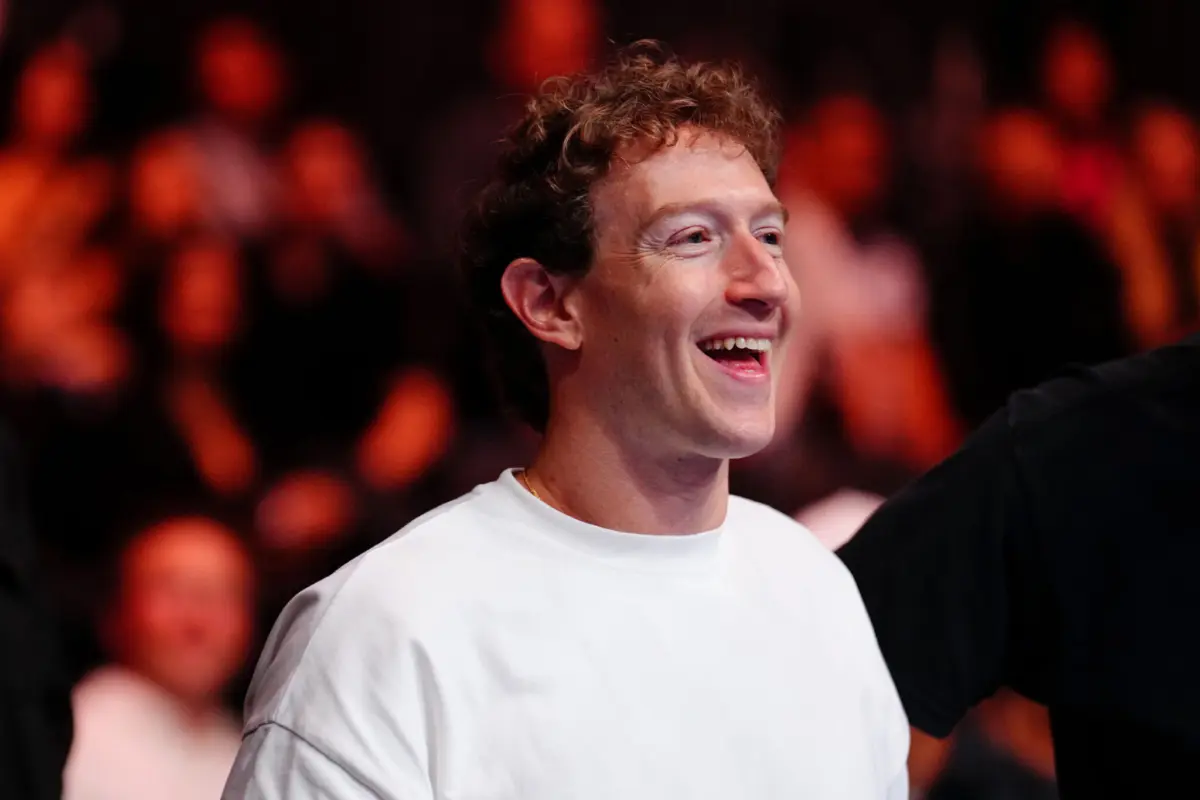
Meta CEO Mark Zuckerberg recently published a sprawling, 6,500-word essay titled "The Future is for Everyone." In this grand manifesto, Zuckerberg paints an aggressively optimistic vision of an artificial intelligence-powered tomorrow—one where every individual wields an exceptionally capable personal digital agent that deeply understands their goals, preferences, and daily lives.
Yet, the reception to Zuckerberg’s utopian prose has been far from universally celebratory. On an episode of TechCrunch’s Equity podcast, journalists Kirsten Korosec, Rebecca Bellan, and Anthony Ha dissected the essay alongside AI editor Russell Brandom, whose column famously characterized the manifesto as "exactly why people don’t like AI."
This deep-dive analysis explores the core tensions surrounding Meta’s latest strategic pivot. We examine how Zuckerberg is positioning himself as the "anti-Dario"—defying the cautious, safety-obsessed rhetoric of Anthropic CEO Dario Amodei—while simultaneously battling a severe deficit of public trust rooted in Meta’s legacy with social media. Furthermore, this report unpacks the practical realities of Meta’s hardware and software ecosystem (such as the Glimmer and Muse Spark models), the paradox of tech billionaires pushing dystopian narratives while selling utopian dreams, and the fundamental disconnect between Silicon Valley’s abstract promises and the everyday desires of modern consumers.
Detailed Chronology: The Evolution of Meta’s AI Strategy and the Manifesto Launch
To fully understand the weight of Zuckerberg’s latest manifesto, it is essential to trace the timeline of Meta’s aggressive push into artificial intelligence and the shifting rhetoric surrounding personal empowerment.
The Buildup to "The Future is for Everyone"
Over the past several years, Meta has transformed from a social media titan into a massive player in the generative AI space. Following the explosive debut of OpenAI’s ChatGPT, Meta poured billions of dollars into compute infrastructure, data centers, and top-tier AI research talent. Last year, Zuckerberg released an earlier iteration of his "Futures for Everyone" thesis, heavily tying the promise of artificial intelligence to wearable hardware, most notably smart glasses.
However, despite open-sourcing the popular Llama model family—which has won praise across the developer community—Meta struggled to capture the consumer mindshare enjoyed by ChatGPT or Google Gemini. When everyday users think of a personal AI assistant, "Meta" rarely tops the list. Instead, consumer interactions with Meta AI have largely been confined to side-features within Instagram and Facebook, occasionally marred by headline-grabbing controversies, such as leaked internal rules revealing that early chatbots were permitted to engage in romantic conversations with minors.
The Manifesto Drop and Immediate Industry Reaction
In early August, Zuckerberg bypassed traditional PR cycles to publish his massive, 6,500-word essay. The document attempts to stake out a definitive philosophical position for Meta: reject the "doomerism" of rival labs, reject the calls to slow down development for safety checks, and champion an open, highly personalized future.
Within days, the tech press and podcasters pushed back. TechCrunch’s Russell Brandom argued that the essay encapsulated the exact friction points driving public animosity toward the industry. Far from being received as an inspiring blueprint for human liberation, the manifesto was viewed by many critics as a tone-deaf exercise in corporate rebranding—an attempt by Meta to capture a market segment it has historically failed to dominate through sheer volume of optimistic marketing.
Supporting Context & Metrics: Unpacking the Tech, the Hardware, and the Skepticism
Behind the soaring rhetoric of Zuckerberg’s essay lies a complex commercial reality. Meta is attempting to pivot its narrative from a social media ad-broker into a purveyor of personal empowerment. But how does this translate into actual products?
The Product Ecosystem: Glimmer and Muse Spark
Zuckerberg’s vision hinges on agents like Glimmer, Meta’s new AI model designed to manage schedules, draft messages, and organize files locally and continuously, with or without an internet connection. Concurrently, Meta maintains projects like Muse Spark to retain centralized control over its most capable, heavy-duty frontier models, catering to enterprises and power users who require massive compute scaling.
Yet, a glaring friction point remains: accessibility. As TechCrunch’s Rebecca Bellan noted during her investigation, attempting to download and run these cutting-edge tools locally on standard consumer hardware—such as a standard MacBook—reveals a stark reality. The required hardware specifications put these advanced personal models out of reach for the average consumer. "It’s not for everyone. Not yet," Kirsten Korosec aptly summarized.
The "Anti-Dario" Positioning
The ideological fault lines within Silicon Valley have never been sharper. On one side stand leaders like Anthropic CEO Dario Amodei, who spend public appearances wrestling with safety, existential risk, and the ethics of runaway capabilities—even as their companies continue to push the envelope. Amodei has recently pushed back against the "doomer" label, yet his framing acknowledges the deep societal anxieties surrounding cybersecurity breaches and autonomous misuse.
Zuckerberg, by contrast, has planted his flag firmly in the opposite camp. His message is clear: slowing down development is a geopolitical gift to competitors like China, and any friction applied to AI development directly harms the individual who stands to be empowered by the technology.
| Dimension | Dario Amodei (Anthropic) | Mark Zuckerberg (Meta) |
|---|---|---|
| Pacing Strategy | Acknowledges safety concerns; publicly engages with "frontier pacing" concepts. | Full steam ahead; argues slowing down hurts individuals and yields ground globally. |
| Core Philosophy | Guarded optimism laced with existential caution. | Radical techno-optimism; "The Future is for Everyone." |
| Model Distribution | Closed frontier models focused on enterprise and high-end safety guardrails. | Open-source foundation models (Llama) combined with localized personal agents. |
| Public Narrative | Crisis of trust addressed through self-regulation and safety research. | Crisis of trust ignored in favor of sweeping personal empowerment promises. |
Official Statements & Roundtable Insights
The discourse surrounding Zuckerberg’s manifesto highlights a deep cultural fatigue with tech industry prognostications. Below are key excerpts and synthesized perspectives from the TechCrunch Equity podcast roundtable featuring Anthony Ha, Rebecca Bellan, and Kirsten Korosec:
-
On the Echoes of Social Media’s Broken Promises:
"You look back to the social media days, [Zuckerberg] was saying that he wants to make sure that everyone has an outlet for talking to their friends and having a social network. And what do we have instead? We have ragebaiting and advertisements, and not connection." — Rebecca Bellan
-
On the Pollyannish Nature of the Manifesto:
"The manifesto didn’t strike the right note for a lot of people… It feels very Pollyannish in a way. He’s put these thoughts out there in the past, and it really doesn’t provide what I think is a more realistic picture, but instead casts AI as this great tool for humanity. There will also be extreme costs to that, and I think that’s why the negative reaction to it has been so widespread." — Kirsten Korosec
-
On the Incongruity of Builder Psychology:
"If you are an AI doomer and you believe that that’s the future that AI is going to bring, why are you building this stuff? […] My big takeaway from that is not that the AI future is great, but it makes you wonder about people who are making these predictions and then pushing ahead anyway." — Anthony Ha
-
On the Problem of Abstract vs. Unwanted Use Cases:
Industry leaders consistently struggle to pitch use cases that resonate with human reality. Whether it is Sam Altman suggesting parents use ChatGPT to generate custom podcasts about their children’s interests for the school drive, or Zuckerberg proposing abstract creative "liberation," the public response remains a resounding: "Why don’t you just talk to your kid?" or "Who actually asked for this?"
Future Outlook: Can Meta Overcome Its Trust Deficit?
As we look toward the horizon of generative AI development, Meta faces a formidable uphill battle. The obstacles in Zuckerberg’s path are not merely technical; they are deeply psychological and historical.
1. The Burden of the Messenger
No matter how compelling or well-researched an AI manifesto might be, the identity of the author matters immensely. With upcoming cultural touchstones—such as renewed media retrospectives and dramatic portrayals of Facebook’s early days—public skepticism toward Mark Zuckerberg and Meta remains razor-sharp. When a company synonymous with surveillance capitalism, algorithmic rage-bait, and targeted advertising declares that it is here to "empower the individual," the market response is skepticism bordering on cynicism.
2. The Credibility Gap in Consumer AI
To successfully transition from a social network giant to a trusted personal AI provider, Meta must bridge the gap between grand philosophical declarations and everyday consumer utility. Right now, the abstract promises of "unleashing human creativity" do little to convince skeptics who are already fatigued by chatbot gimmicks, creepy romantic companions, and hardware that requires prohibitive processing power to run locally.
3. The Path Forward
For "The Future is for Everyone" to become a reality rather than a piece of sophisticated corporate fiction, Meta will need to demonstrate tangible, friction-free value that respects user privacy and mental well-being. Until Zuckerberg and his leadership team acknowledge the valid fears and historical grievances of the public—rather than dismissing them as mere "doomerism"—every manifesto published will likely be met with the same biting critique: It’s not that people hate AI; it’s that they don’t trust the people trying to sell it to them.







Belum ada komentar. Jadilah yang pertama berkomentar!