

Executive Overview
In the vast, ever-expanding ocean of modern independent video game releases, true gems frequently slip beneath the surface, overshadowed by massive marketing budgets or fleeting viral trends on social media. While the mainstream gaming discourse often fixates on complex deck-builders, hypnotic auto-shooters, and sprawling city-builders, a quieter revolution is taking place in the realm of high-velocity physics-based movement. Enter Stuntboost, developed by Byting Games—a blindingly fast, fiercely challenging, and mechanically intoxicating first-person 3D platformer and racer that has quietly dominated the early months of 2026.
Boasting tags like "Fast-paced," "3D Platformer," "Parkour," and "Racing," Stuntboost resists easy categorization. Is it a skateboarding game? Sometimes, though it frequently trades the deck for a drifting car, a free-roaming scooter, or a non-jumping longboard. Is it a traditional racer? Not quite, as its maps resemble micro-scaled, cardboard-and-toy circuits reminiscent of early classic first-person shooter level editors, completely stripped of a braking mechanism. Above all else, Stuntboost is a masterclass in precision camera control, momentum management, and pure, unfiltered adrenaline.
Despite currently holding a "Very Positive" user review rating on Steam with a modest 253 reviews, this $7 masterpiece punches wildly above its weight class. It delivers a rush of competitive speedrunning tension that rivals titans of the genre like Trackmania and Neon White, while carving out a uniquely chaotic identity of its own. For players willing to master its steep, keyboard-and-mouse-centric learning curve, Stuntboost is not merely a hidden indie darling—it is arguably the most exhilarating movement-shooter-adjacent experience of the decade so far.
Detailed Chronology: From Whispered Recommendations to Obsessive Time Trials
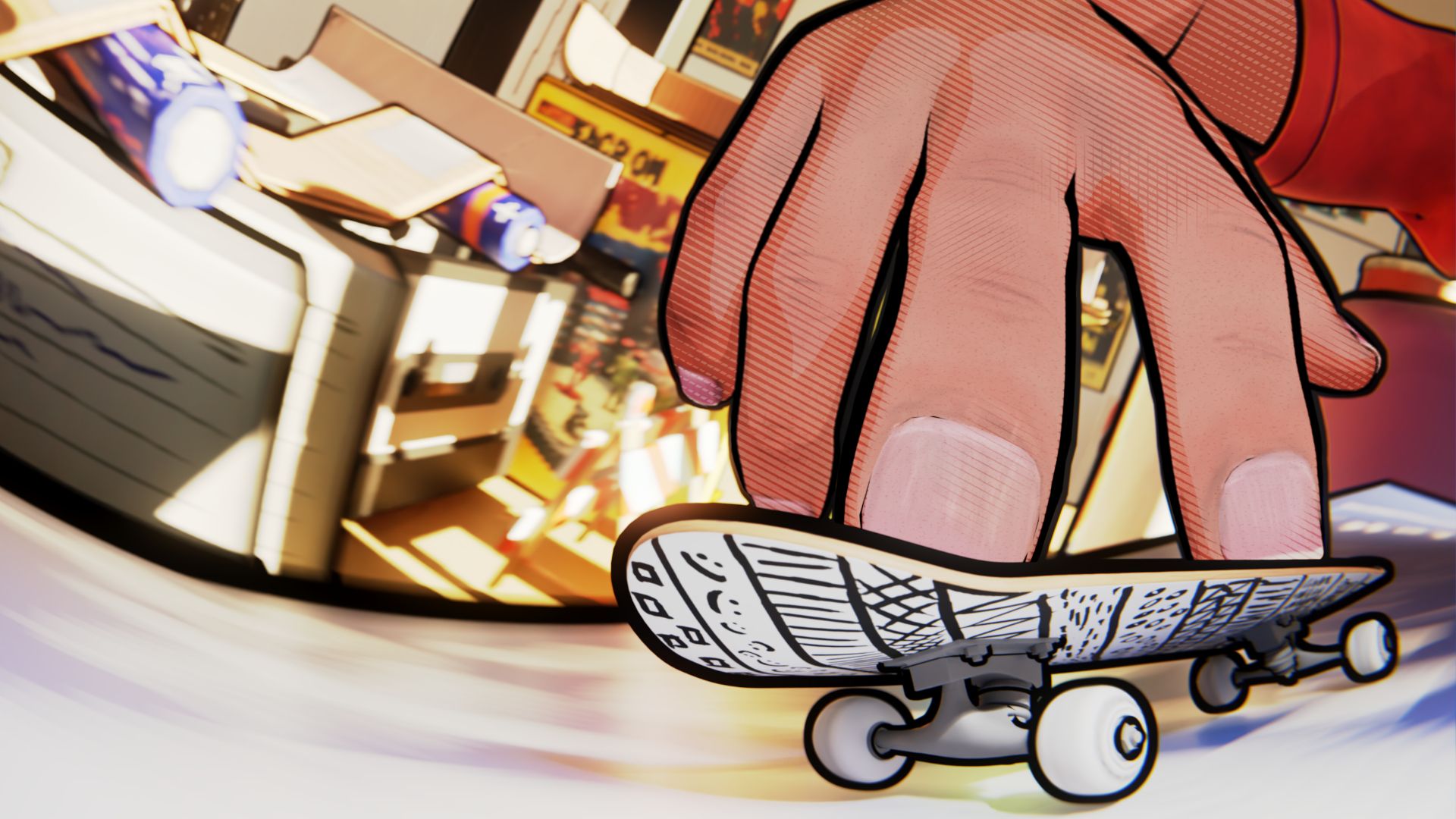
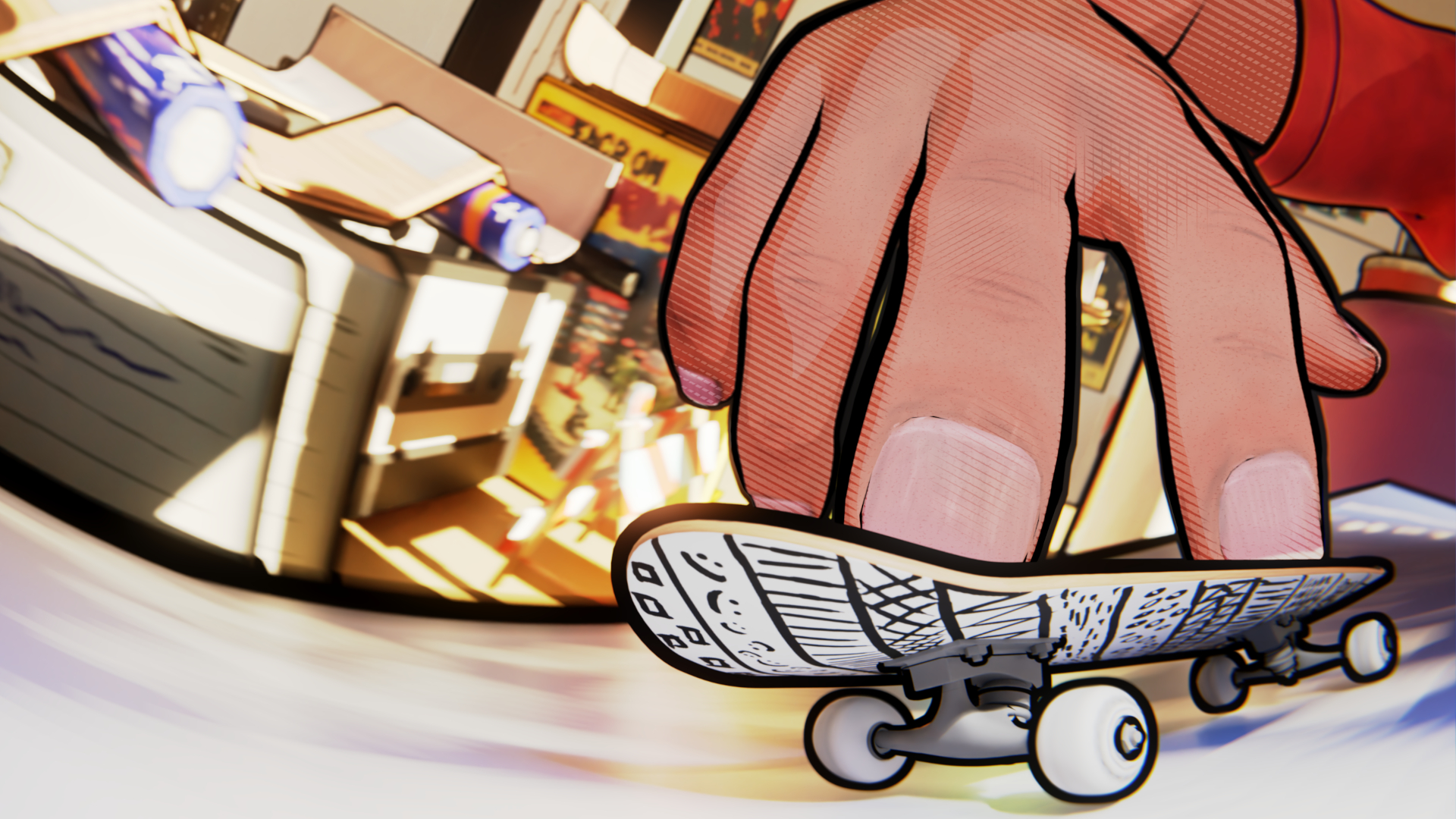
The journey of Stuntboost into the hearts of hardcore movement enthusiasts has been entirely grassroots. Released quietly on Steam roughly a month ago, the title initially failed to make a massive commercial splash. Its aesthetic—characterized by toy fingerboards, household cardboard circuits, and unassuming color palettes—easily leads casual observers to misjudge it as a leisurely, family-friendly racer akin to a digital Hot Wheels track.
However, that initial visual impression evaporates the second a player drops onto the starting line. Stuntboost comes with a rare, highly specific warning: it is a skateboarding game that strongly recommends playing with a mouse. This design choice immediately signals that the title is engineered specifically for first-person movement purists—players who view every geometric edge, slope, and ramp as an invitation to break the laws of in-game physics.
Discovering the Loop
For early adopters, the onboarding phase consists of learning a deceptively simple core input loop revolving around three primary buttons: jump, crouch, and grind. Yet, within this minimalist control scheme lies an astonishingly deep rabbit hole of advanced techniques. Through community discovery and meticulous trial-and-error, players quickly uncover movement mechanics that fundamentally change how levels are traversed:
- Varial Kickflips: Executed with precise timing to maintain forward momentum off vertical surfaces.
- Grind Hopping: Bouncing seamlessly between rails to preserve top speeds without friction loss.
- Speed Storage: Exploiting subtle architectural gradients to build compound acceleration across consecutive ramps.
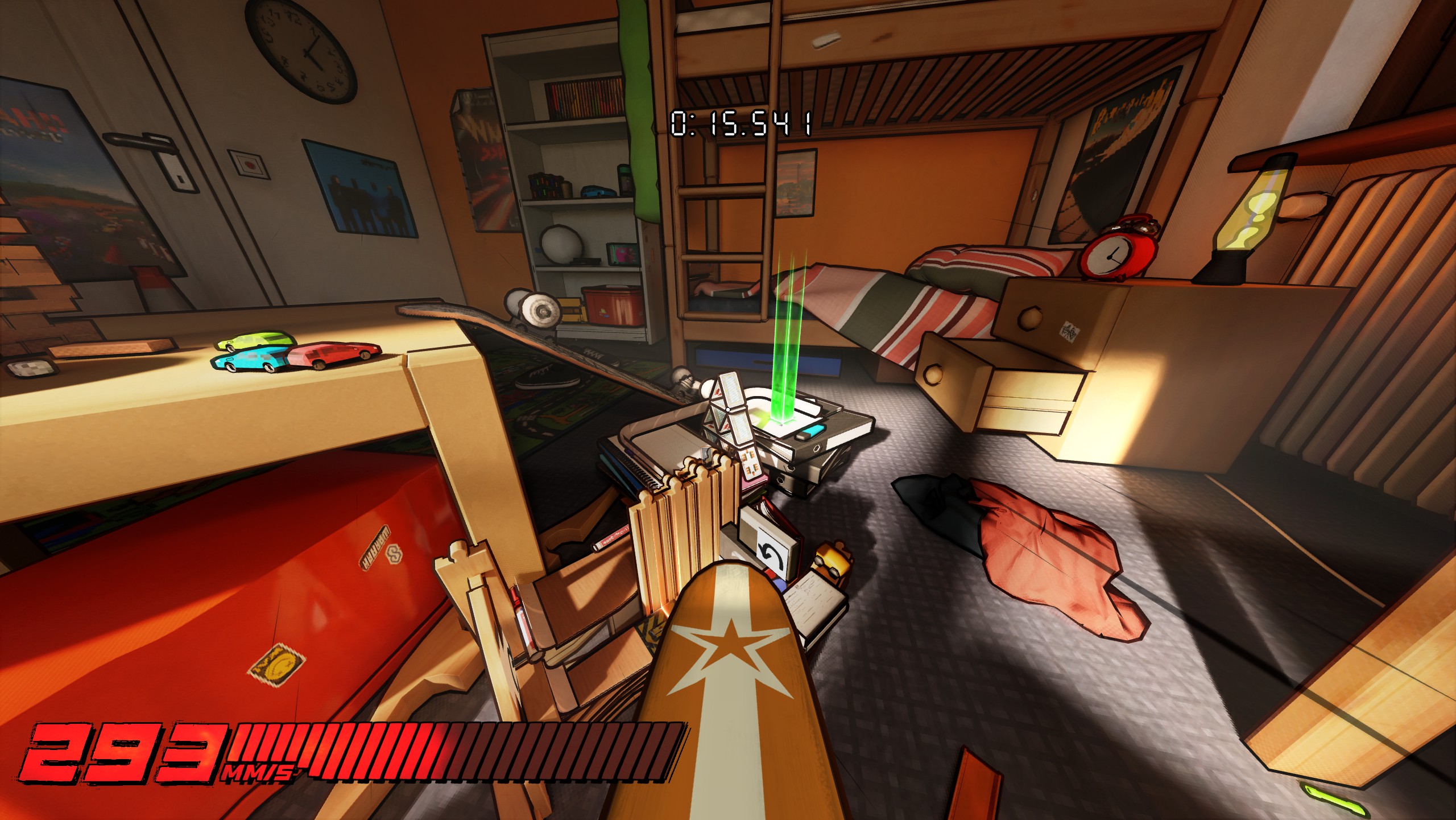
As players progress through the game’s initial tracks, the gameplay transforms from a standard time-trial experience into a hyper-focused exercise in spatial awareness. Every household object—ranging from ceramic plates and playing cards to massive three-ring binders—becomes a potential springboard capable of launching the player completely across the room.
Supporting Context & Metrics: The Anatomy of a Speedrunning Obsession
Stuntboost features over 40 distinct levels spanning multiple rooms of a sprawling domestic house. Each stage is meticulously non-linear, actively encouraging players to look past the intended path and carve out their own audacious shortcuts.
The Metrics of Mastery
The game’s progression and engagement loops are structured around tiered medal thresholds—ranging from standard finishes up to elusive diamond medals—followed by aggressive global and friend-based leaderboards. What makes the competitive loop particularly addictive is how the game doles out information:

- Staged Reveals: Friend leaderboard times remain hidden until the player successfully beats a track at least once, preventing intimidation and encouraging organic exploration.
- Locked Globals: Global leaderboards are strictly gated behind diamond medal achievements, ensuring that players competing for top spots have fundamentally mastered the track’s core mechanics.
- Interactive Ghosts: Players can toggle ghosts for their own personal bests, friends, or any player on the leaderboard. Crucially, the game allows users to view full replays of any leaderboard entry as long as they have already unlocked the relevant shortcuts, eliminating spoilers while inspiring players to hunt down missed routing opportunities.
Comparisons to Genre Titans
While comparisons to other movement-centric masterpieces are inevitable, Stuntboost occupies a distinct philosophical middle ground:
| Feature / Metric | Stuntboost | Trackmania | Neon White |
|---|---|---|---|
| Control Philosophy | Pure maximum speed; no brakes, instant directional adjustments. | Rigorous driving physics; heavy emphasis on braking and cornering lines. | Fast-paced card-juggling platforming with shooting elements. |
| Pacing & Flow | Improvised, fluid, and continuous momentum building. | Technical racing lines, highly structured time-attack optimization. | Strict, puzzle-like precision combat-platforming. |
| Vehicle Variety | Skateboard, car, scooter, and longboard variants. | Traditional sports/rally cars. | On-foot angelic assassin. |
| Price Point | $7.00 USD Budget-friendly indie. | Varies (Free-to-play models with subscription tiers). | Standard indie pricing ($24.99 USD). |
As noted by players who found Neon White occasionally stifling due to its mandatory card-juggling and shooting targets, Stuntboost strips away the clutter. It trades rigid puzzle solutions for unadulterated, improvisational speed. Similarly, while Trackmania fans will instantly recognize the appeal of full-speed community maps where braking is forbidden, Stuntboost grants an instantaneous turning responsiveness that traditional vehicle physics engines simply cannot match.
Official Statements & Developer Insight
Behind this compact powerhouse of speed is Byting Games, a developer team that has managed to achieve what multi-million-dollar AAA studios frequently fail to do: nail the minute, quality-of-life micro-interactions that make time-attack games deeply satisfying.
Although Stuntboost relies on a modest budget, its feature set reflects a profound understanding of the speedrunning psychology. By implementing tools like hidden cassette tapes that unlock a free-cam mode for route scouting, daily challenges, and extensive vehicle variety—including drifting-focused car levels and collectible-heavy free-roam scooter stages—Byting Games has crafted a title designed for longevity.
In developer updates and community spaces, the emphasis has consistently been placed on player expression. Rather than forcing a singular, optimal path through its environments, the studio designed levels with multiple layers of mechanical depth. The introduction of alternate vehicle types in later worlds—such as drift cars that force players to completely relearn cornering dynamics and longboards that completely remove the ability to jump—serves as a brilliant palate cleanser that prevents fatigue and continually challenges the player’s spatial mastery.
Future Outlook: Why Stuntboost Deserves a Spot on Every Gamer’s Radar
At a retail price of just $7, Stuntboost represents an embarrassment of riches for fans of precision platforming. Beyond its primary campaign, the game features expansive bonus content unlocked via hidden collectibles, including a punishing tower gauntlet designed to foster fierce competitive rivalries, dedicated speedrun modes for full-game completions, and customizable board skins.

Yet, the true tragedy of Stuntboost lies in its current visibility. In an ecosystem heavily saturated with automated gameplay loops and passive strategy titles, high-intensity physics games frequently struggle to capture mainstream attention. Movement-heavy games require active engagement, lightning-fast reflexes, and a willingness to fail repeatedly in pursuit of shaving mere hundredths of a second off a personal best.
Despite this, Stuntboost stands as a shining example of what independent development can achieve when mechanics are polished to a mirror shine. It does not try to reinvent storytelling or overwhelm players with bloated open worlds; instead, it focuses entirely on delivering a pure, intoxicating rush of velocity.
For those seeking an experience that makes them feel alive, dangerous, and completely dialed into the flow state, Stuntboost is an absolute mandatory purchase. Just be prepared to check your Discord notifications with a sense of lingering dread the moment a friend shatters your hard-earned personal record.







Belum ada komentar. Jadilah yang pertama berkomentar!