

Executive Overview
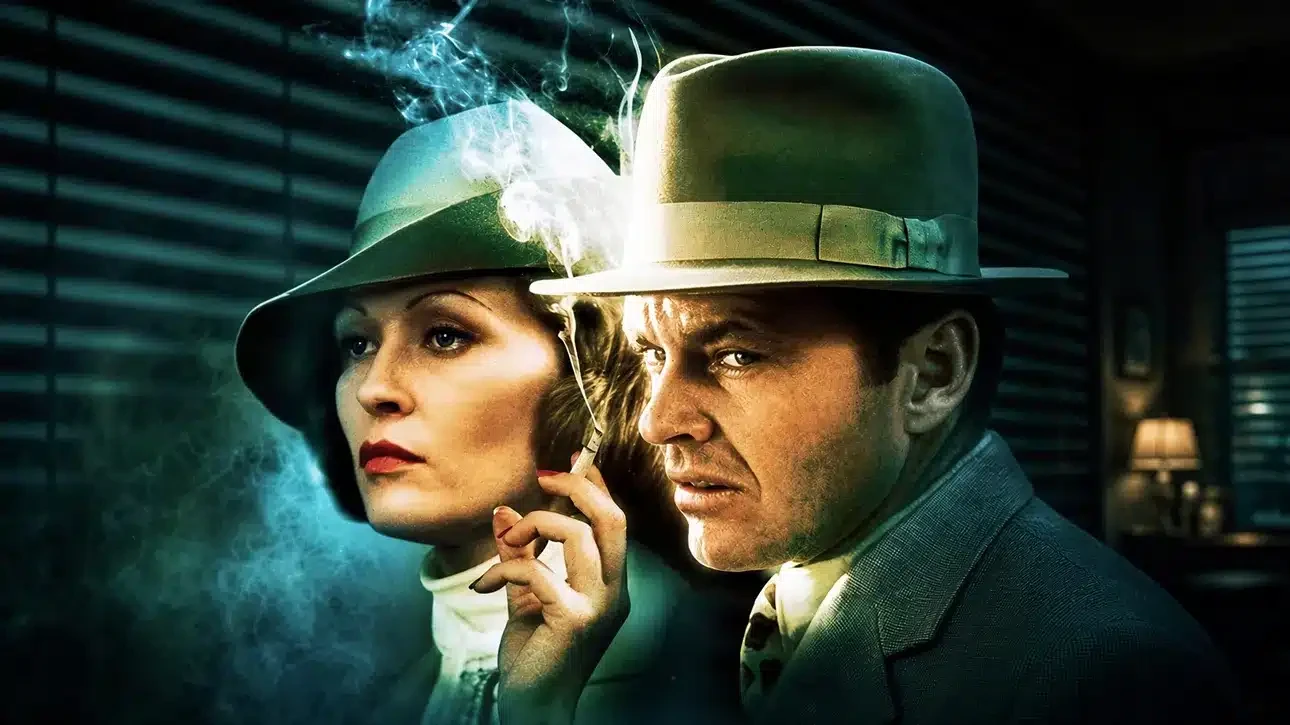
Decades after its initial theatrical release in 1974, Roman Polanski’s neo-noir masterpiece Chinatown continues to captivate, confound, and devastate audiences. While contemporary criticism at the time frequently tethered the film to its immediate historical moment—viewing it through the cynical prism of post-Watergate disillusionment or mapping its plot directly onto the early 20th-century Owens Valley water scandals—such reductive readings overlook the film’s true magnitude. Artworks of genuine, enduring longevity possess thematic architectures that stretch far beyond their point of creation.
At its core, Chinatown is not merely a historical artifact or a genre exercise; it is a transcendent meditation on the terminal limits of human knowledge and the crushing impermeability of systemic power.
Written by Robert Towne, whose legendary screenplay is a masterclass in structural economy and thematic layering, the film operates on multiple strata simultaneously. It is at once a hard-boiled detective thriller that keeps viewers glued to the edge of their seats, a sociological parable about the corporate shaping of American cities, and a dark, mythological tragedy. The narrative traces private investigator Jack Gittes as he descends from a seemingly trivial case of marital infidelity into an abyss of municipal corruption, incestuous depravity, and absolute corporate tyranny.
This article examines Chinatown not just as a high-water mark of 1970s Hollywood filmmaking, but as perhaps the greatest American movie ever made. By analyzing its thematic depth, its structural unity of expression, its subversion of classic noir tropes, and its stark philosophical conclusions about truth and justice, we uncover why its final, desolate warning—"Forget it, Jake, it’s Chinatown"—reverberates with undiminished force across generations.
Detailed Chronology: The Unraveling of Jack Gittes
To understand the genius of Chinatown, one must trace the meticulous trajectory of its protagonist, private investigator Jack Gittes (Jack Nicholson). The film deliberately employs and subverts the structural architecture of classic film noir. Traditionally, the detective genre operates on a comforting, enlightenment-era premise: an investigator pieces together fragmented clues, knowledge is gradually acquired, exposure brings understanding, and understanding ultimately brings justice.
Gittes begins his journey within this comforting illusion. Hired by a woman claiming to be Evelyn Mulwray to expose her husband’s supposed infidelity, Gittes operates with professional vanity, sharp intuition, and a cynical yet manageable worldview. The narrative unfolds entirely from his perspective. In nearly every scene, the camera positions the viewer directly over Gittes’s shoulder or captures him in medium-length shots alongside his interlocutor. Originally, the script featured a voiceover narration by Gittes; Polanski’s decision to excise this track was a stroke of genius, forcing the audience to learn exclusively in real time alongside the detective.
The chronology of Gittes’s discoveries forms a descending spiral:
- The Imposter: Gittes quickly realizes that the woman who hired him is an imposter planted to manufacture a public scandal and discredit Hollis Mulwray, the chief engineer of the Los Angeles Department of Water and Power.
- The Murder: Before Gittes can warn or understand the wider implications, Hollis Mulwray is found murdered—drowned in a dry riverbed, a grim irony in a city starved for water.
- The Land Grab: Gittes discovers that Mulwray’s murder is intimately tied to massive, clandestine land acquisitions, where properties are being bought up under the names of unwitting residents at state-run rest homes.
- The Puppet Master: All paths converge on Noah Cross (John Huston), Evelyn’s multi-millionaire father and former business partner, who is actively manufacturing an artificial drought to manipulate the city’s future.
Yet, as Gittes accumulates these facts, a horrifying realization sets in: knowing the truth does not grant the power to change it. Every piece of information Gittes unearths is already known by someone else. The city coroner knows the man drowned in a dry riverbed; the clerk at the hall of records knows about the suspicious land sales; Lieutenant Lou Escobar knows Gittes was set up. Power in Chinatown is not the ability to discover reality, but the ability to organize reality before anyone else even arrives at the scene. As the water department secretary notes of Noah Cross, "He made this city." Gittes realizes too late that he is merely operating inside a cage constructed entirely by the man who signs his checks.
Supporting Context & Metrics: The Triple Structure of Art
What elevates Chinatown above standard cinematic fare is its rare unity of expression. Film scholar and critics frequently note that great art usually operates on one or two levels—realism and allegory. Chinatown, remarkably, operates on three distinct levels simultaneously: the realistic, the allusive, and the archetypal.
| Narrative Element | Realistic Layer | Allusive Layer | Archetypal Layer |
|---|---|---|---|
| The Plot / Crime | Corrupt municipal land speculation in 1930s Southern California. | The historical Owens Valley water theft orchestrated by William Mulholland. | The cosmic usurpation of natural order by unchecked tyranny. |
| Noah Cross | A wealthy, ruthless Los Angeles land developer and oligarch. | The unchecked robber barons of early industrial America. | The dark demiurge, the corrupt patriarch, and Satan incarnate. |
| Evelyn Mulwray | An abused, traumatized woman shielding her daughter. | The classic cinematic femme fatale trapped by patriarchal structures. | The tragic bearer of a terrible, primordial secret. |
| The Setting (Chinatown) | A distinct ethnic enclave in downtown Los Angeles where Gittes once worked. | The absolute margins of societal understanding and institutional control. | The existential condition of human ignorance and systemic entrapment. |
This triple structure is an achievement matched in literary history perhaps only by George Orwell’s Animal Farm (1945), where the narrative is simultaneously grounded in real animal behavior, allusive to the Russian Revolution, and archetypal in its commentary on power and groupthink.
Take, for instance, the central, horrifying revelation of the film: the incestuous relationship between Noah Cross and his daughter Evelyn, which produced Katherine.
- Realistically: It is a harrowing depiction of domestic abuse and familial trauma.
- Allusively: It mirrors the nature of oligarchic power, where men like Cross believe ordinary moral boundaries simply do not apply to them, treating water, land, human beings, and family members as private property.
- Archetypally: It represents the ultimate collapse of moral boundaries—the transformation of the family from a sanctuary into a possession. Cross is portrayed as a demonic figure who views every natural limit as a boundary meant to be violated by his personal will. Yet, chillingly, he is never overtly monstrous in demeanor; he remains courteous, charming, and terrifyingly polite.
Official Statements & Critical Perspectives
In evaluating the cinematic weight of Chinatown, film historians and contemporary critics consistently point to its uncompromising nihilism as a defining turning point in Hollywood history.
In retrospective analyses published by leading cultural journals, directors and screenwriters frequently cite Robert Towne’s script as the gold standard of modern screenwriting. Unlike the tidy resolutions of classical studio-era cinema, Chinatown rejects the redemptive arc.
In a landmark 1975 interview regarding the film’s controversial genesis, screenwriter Robert Towne remarked on the thematic necessity of its bleak conclusion:
"If you want to reflect a world where people think they can master their environment, but where power actually dictates the rules of engagement, you cannot offer a clean Hollywood ending. Justice cannot prevail when the architect of the crime owns the courtroom, the police force, and the water supply."
Director Roman Polanski, whose own life was touched by profound tragedy, infused the production with an atmosphere of inescapable fatalism. Speaking on the visual motifs of the film—specifically the recurring imagery of eyes, broken glasses, and damaged optics—Polanski noted:
"Everyone in the film is wearing glasses, looking through binoculars, or peering through magnifying lenses, yet no one can actually see what is happening right in front of them. The eye injuries in the film are literal and symbolic: society gouges out its own ability to witness the truth because the truth is too horrible to bear."
Lieutenant Lou Escobar’s weary institutional complicity and Gittes’s painful reminiscences of his past failure in Chinatown—where he tried to help a woman and instead caused her death—reinforce this official thematic stance. When asked by a colleague what he did back in Chinatown, Gittes’s chilling reply defines the film’s entire philosophy: "As little as possible." In the universe of Chinatown, human agency is not merely thwarted; it is weaponized against the very people trying to do good.
Future Outlook: The Enduring Legacy of Chinatown
As we look toward the future of cinematic storytelling, Chinatown serves as a permanent reminder of the limits of optimism in art. In an era dominated by cinematic universes fueled by clear-cut moral binaries—where heroes routinely defeat systemic evil through sheer force of will—Polanski and Towne’s masterpiece stands as a monument to ambiguity, institutional decay, and structural realism.
The film’s lessons extend far beyond 1930s Los Angeles. As modern societies grapple with opaque corporate monopolies, algorithmic control of information, and the commodification of essential resources like water and data, the fundamental conflict of Chinatown feels more urgent than ever. Noah Cross is the eternal prototype of the modern billionaire tech-baron or real-estate mogul: charming, philanthropic on the surface, yet ruthlessly shaping the material reality of millions behind closed doors.
Ultimately, Chinatown refuses to offer the cheap comfort of closure. When Evelyn Mulwray is gunned down in the street, her eye blasted open in a final, horrific visual echo of the film’s optical motifs, Gittes is left completely powerless. He understands the corruption entirely, but his understanding is utterly useless.
The final words of the film—"Forget it, Jake, it’s Chinatown"—have entered the global cultural lexicon not merely as a memorable movie quote, but as a universal shorthand for institutional resignation. It is a bleak, unyielding acknowledgment of the human condition: sometimes, the systems governing our lives are so vast, so deeply entrenched, and so ruthlessly maintained that the only rational, surviving response is to walk away in silence. That uncompromising honesty is precisely why Chinatown will continue to be studied, debated, and revered as long as films are made.







Belum ada komentar. Jadilah yang pertama berkomentar!