

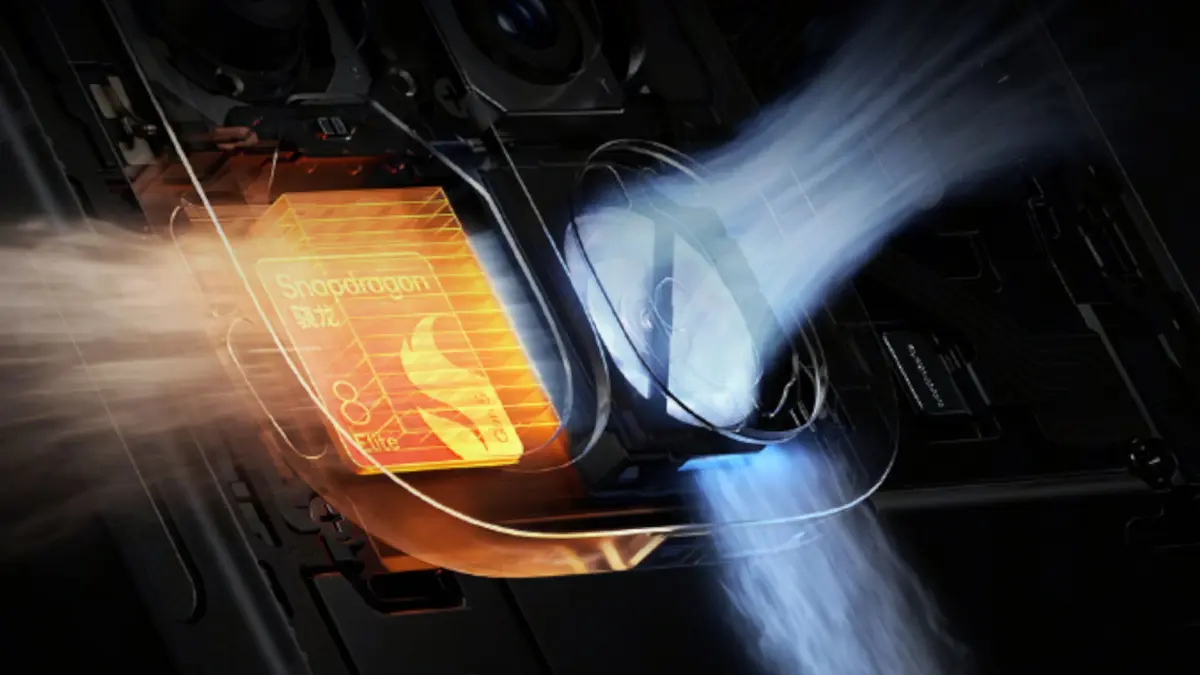
the Era of Dual-Channel Active Cooling
Executive Overview
In an era where smartphone iteration is increasingly characterized by incremental silicon upgrades and refined camera algorithms rather than radical hardware breakthroughs, thermal management remains one of the few frontiers where meaningful engineering can dramatically alter the user experience. Mobile gaming, in particular, has pushed mobile System-on-Chips (SoCs) to operating thresholds that regularly test the boundaries of passive heat dissipation. While conventional cooling methodologies—such as vapor chambers, graphite sheets, and external peltier coolers—focus exclusively on keeping silicon temperatures below thermal throttling limits, they often ignore the physical comfort of the user holding the device.
The upcoming launch of the OnePlus Ace 7 series in Mainland China marks a potential paradigm shift in mobile thermal dynamics. Official pre-launch disclosures published via Weibo reveal that both the baseline OnePlus Ace 7 and its high-tier counterpart, the Ace 7 Pro, will feature an industry-first dual-channel airflow cooling architecture. Unlike standard single-path internal cooling systems, this dual-convection framework addresses two distinct thermal vectors simultaneously: internal core component stability and external chassis surface temperature.
       +-----------------------------------------------------------+
       |               PRIMARY THERMAL DISSIPATION                 |
       |  Internal Micro-Airflow Stream -> Processor & SoC Core    |
       +-----------------------------------------------------------+
                                     |
                                     v
       +-----------------------------------------------------------+
       |              SECONDARY ERGONOMIC COOLING                  |
       |  Rear Surface Convection Stream -> Back Panel & Grip      |
       +-----------------------------------------------------------+
While internal heat dissipation prevents processor downclocking, the secondary dedicated airflow channel directs cool air across the internal surface of the rear panel, lowering skin-contact temperatures to combat palm perspiration and user discomfort during prolonged gaming sessions. However, this hardware innovation arrives against a backdrop of geopolitical and commercial restructuring. Following OnePlus’s strategic retrenchment from several major global markets to consolidate its domestic position within China, international enthusiasts face significant import barriers and elevated secondary-market costs to acquire this technology.
Detailed Chronology
The development and public debut of the OnePlus Ace 7 series follow a calculated teaser cycle and strategic engineering pivot within the BBK Electronics ecosystem:
[Phase 1: R&D & Teaser Campaign]
    --> Micro-air channel patents surfaced via CNIPA filings
    --> Social media teasers hint at ergonomic thermal solutions

[Phase 2: Technical Unveiling on Weibo]
    --> Official announcement of Ace 7 & Ace 7 Pro dual-channel system
    --> Confirmation of dual-airflow architecture mechanics

[Phase 3: Industry Benchmarking & Pre-Launch Analysis]
    --> Comparative evaluations against REDMAGIC 11 Pro & Galaxy S26 Ultra
    --> Technical breakdown of surface micro-convection vs. standard vapor chambers

[Phase 4: Mainland China Regional Launch]
    --> Commercial debut in China scheduled for late month
    --> Distribution via domestic channels; limited global grey-market availability
Phase 1: R&D and Teaser Campaign
In the months leading up to the official reveal, micro-air channel patents surfaced within China’s National Intellectual Property Administration (CNIPA) databases, hinting at a new approach to structural heat dissipation. Early teasers published on Chinese social media emphasized ergonomic temperature control rather than raw benchmark scores, signaling a pivot toward sustained real-world performance.
Phase 2: Technical Unveiling on Weibo
OnePlus formally confirmed the existence of the dual-channel airflow system across its official Weibo channels. The communications disclosed detailed render schematics demonstrating two isolated pneumatic channels built directly into the chassis frame, explicitly separating component cooling from surface-level tactile cooling.
Phase 3: Technical Benchmarking & Structural Analysis
Technology analysts and mobile gaming hardware reviewers began comparing the disclosed specifications against existing flagship devices. The Ace 7 series was positioned not merely as a regional mid-tier refresh, but as an experimental flagship designed to redefine thermals in a market dominated by brute-force passive cooling.
Phase 4: Mainland China Regional Launch Window
Scheduled for release late this month in China, the Ace 7 and Ace 7 Pro enter a competitive domestic market. Concurrently, international tech media confirmed that global availability remains restricted due to OnePlus’s ongoing operational consolidation within domestic sales channels.
Supporting Context & Metrics
The Thermodynamics of Modern Mobile Gaming
To understand the engineering behind the OnePlus Ace 7 series, one must examine the physical limitations of current mobile cooling solutions. As mobile SoCs push higher clock speeds to render graphics-intensive titles, thermal dissipation becomes a significant bottleneck.
+--------------------------+----------------------------------+----------------------------------+
| Thermal Metric           | Standard Vapor Chamber (VC)      | Ace 7 Dual-Airflow System        |
+--------------------------+----------------------------------+----------------------------------+
| Primary Heat Vector      | Internal Silicon Core            | Silicon Core + Exterior Chassis  |
| Heat Transfer Mode       | Passive Phase-Change Fluid       | Dual-Channel Directed Airflow    |
| Peak Rear Panel Temp     | ~44°C - 48°C under load          | Target < 38°C under load         |
| Sustained Clock Speed    | Throttles after 15–20 minutes    | Extended sustained performance   |
| Ergonomic Tactile Drift  | High (Chassis absorbs core heat) | Low (Isolated outer channel)     |
+--------------------------+----------------------------------+----------------------------------+
When an SoC operates at peak wattage, heat transfers outward through the chassis. In traditional designs—including top-tier gaming devices like the REDMAGIC 11 Pro or mainstream flagships like the Samsung Galaxy S26 Ultra—the rear glass or polycarbonate casing acts as an uninsulated heat sink. While this aids in drawing thermal energy away from the processor, it inevitably raises the surface temperature of the phone to between 44°C and 48°C under heavy loads.
At these temperatures, while the processor may remain operational, human hands experience noticeable discomfort. Sweat accumulation reduces grip stability, degrades touch-screen input precision, and causes physical fatigue during long sessions.
Architectural Breakdown: The Dual-Airflow Mechanism
The OnePlus Ace 7 series seeks to solve this dual-challenge through structural isolation.

                    [ INTERNAL CHASSIS CROSS-SECTION ]

     +-------------------------------------------------------+
     |                  Rear Panel Surface                   |
     +-------------------------------------------------------+
     |======== SECONDARY AIRFLOW CHANNEL (Hand Cooling) =====|  <-- Diverts heat from glass
     +-------------------------------------------------------+
     |                 Mid-Frame Separation Wall             |
     +-------------------------------------------------------+
     |======== PRIMARY AIRFLOW CHANNEL (SoC Cooling) ========|  <-- Prevents thermal throttling
     +-------------------------------------------------------+
     |                     Motherboard & SoC                 |
+-------------------------------------------------------+- Primary Silicon Airflow Channel: Designed to circulate air across the mainboard, targeting the SoC, power management ICs (PMICs), and battery charging circuits. This path preserves sustained clock speeds and prevents thermal throttling.
- Secondary Surface Airflow Channel: Routed parallel to the rear panel casing, this secondary micro-channel acts as a thermal barrier. By constantly moving air beneath the back plate, it disrupts the conduction of heat from the internal mid-frame to the user’s palms.
By decoupling component cooling from surface tactile temperatures, OnePlus aims to deliver sustained high-frame-rate gameplay without transferring excess heat to the user’s hands.
Official Statements
In communications released across Chinese media platforms, OnePlus engineers and product directors outlined the rationale behind this design choice:
"For years, the industry has evaluated cooling systems solely through the lens of benchmark preservation and internal chip temperatures. However, mobile gaming is an physical experience. When a device becomes uncomfortable to hold, raw frame-rate stability loses its value. With the Ace 7 series, our primary engineering objective was to solve both sides of the equation: absolute computational performance for the chip, and absolute physical comfort for the gamer."
— OnePlus Hardware R&D Team (via Weibo)
Industry analysts note that while the hardware concept is compelling, its market footprint will be heavily constrained by OnePlus’s current distribution strategy:
"The dual-channel system presented in the Ace 7 series demonstrates genuine hardware differentiation at a time when smartphone design has reached a plateau. However, OnePlus’s strategic pivot away from global retail networks means this technology will largely serve as a domestic showcase in China. International enthusiasts seeking this level of thermal innovation will have to navigate grey-market importers, which brings added costs and potential network compatibility challenges."
— Mobile Technology Analyst, Asian Market Insights
Future Outlook
Industry Implications and Feature Standardization
The introduction of dedicated tactile cooling by OnePlus could trigger broader changes across the mobile gaming landscape. Hardware innovation in the smartphone market often follows an adoption pattern driven by niche gaming brands before finding its way into mainstream flagships.
HISTORICAL INNOVATION PATTERNS IN GAMING PHONES:

[ 2010s ] Dedicated Physical/Capacitive Shoulder Triggers (First seen in REDMAGIC)
    │
    └──► Adopted by ASUS ROG Phone, Black Shark, and regional gaming SKUs.

[ 2020s ] High Refresh Rate Displays (120Hz/144Hz OLEDs initially for gaming)
    │
    └──► Standardized across almost all premium flagship smartphones globally.

[ 2026+ ] Dual-Channel Isolated Surface Cooling (Introduced by OnePlus Ace 7)
    │
    └──► Potential adoption by future ASUS ROG, REDMAGIC, and mainstream performance flagships.
If the Ace 7’s secondary airflow channel proves effective at reducing surface temperatures without compromising IP dust/water resistance ratings or structural integrity, competing manufacturers like ZTE (REDMAGIC), ASUS (ROG Phone), and Xiaomi (POCO/Black Shark) may develop similar surface-cooling architectures in upcoming product cycles.
The Import Dilemma for International Consumers
For international consumers, the Ace 7 series highlights a growing divide between region-exclusive hardware innovations and global market availability. As OnePlus focuses its distribution strategy primarily on Mainland China, importing an Ace 7 or Ace 7 Pro involves several logistics considerations:
- Cost Markups: Secondary market distributors and cross-border shipping fees can increase the retail price by 25% to 40%.
- Software Localization: Chinese-market SKUs run localized versions of ColorOS, which lack native Google Play Services out-of-the-box and carry region-specific carrier band configurations.
- Warranty and After-Sales Support: Cross-border purchases generally lack international warranty coverage, making hardware repairs difficult if the internal micro-convection system requires maintenance.
Final Conclusion
The OnePlus Ace 7 series represents a thoughtful step forward in mobile thermal engineering. By recognizing that high temperatures affect both silicon components and user comfort, OnePlus has introduced a fresh approach to thermal management.
Whether this dual-airflow design becomes a new industry standard or remains a localized experiment depends on how well it performs upon release in Mainland China—and whether competing global OEMs choose to adopt similar solutions in their next-generation flagships.






Belum ada komentar. Jadilah yang pertama berkomentar!