

Executive Overview
In the rapidly evolving landscape of contemporary cinema, true artistic risk is increasingly treated as an endangered commodity. Major studios routinely rely on predictable algorithmic templates, frictionless computer-generated imagery, and sanitized narratives designed to offend no one and appeal to everyone. Yet, stepping against the tide of modern homogenization stands Laika Studios. Under the visionary direction of Travis Knight, the Oregon-based stop-motion animation powerhouse has spent two decades redefining the boundaries of physical craftsmanship, emotional depth, and narrative darkness.
Their crowning achievement has finally arrived with Wildwood (2026).
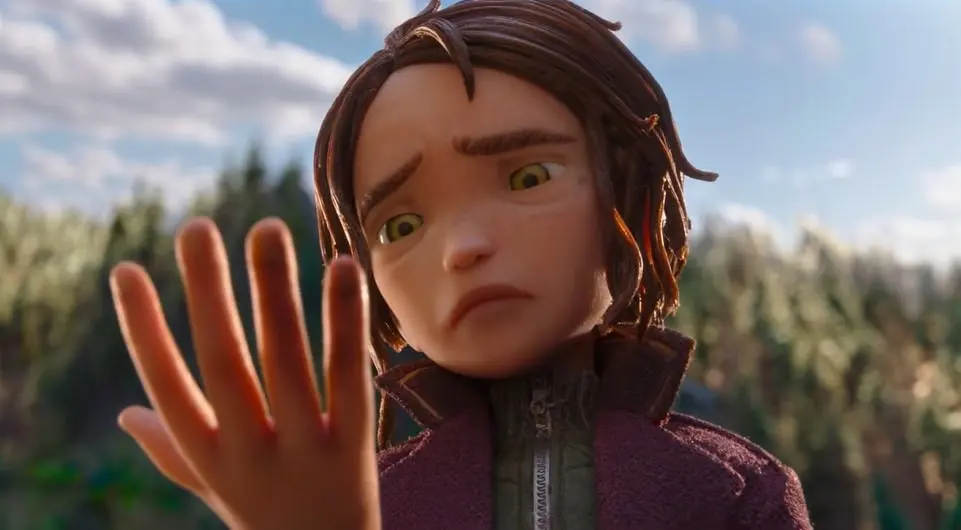
Steeped in the macabre, folkloric traditions of the Brothers Grimm rather than the safety nets of modern commercialism, Wildwood is far more than an animated movie; it is a cinematic landmark. Eschewing the diminutive "animated" prefix altogether, critics and industry insiders are hailing it as one of the finest films of the decade. Boasting a staggering, star-studded ensemble voice cast led by Peyton Elizabeth Lee, Carey Mulligan, Jacob Tremblay, and Mahershala Ali, the film tells the harrowing story of a young girl’s quest into the forbidden, fog-drenched forests outside Portland to rescue her kidnapped baby brother.
Yet, beneath its mesmerizing physical craftsmanship lies an uncompromisingly dark, mature parable that reminds audiences of a forgotten truth: in the deepest woods, there are no guaranteed happy endings. Wildwood stands as the definitive culmination of Laika’s twenty-year journey, setting a monumental new standard for storytelling, technical wizardry, and emotional resonance.
Detailed Chronology: The Journey into the Impassable Wilderness
The narrative architecture of Wildwood unfolds with the deliberate pacing and atmospheric dread of a classic European fairy tale, transposing timeless themes of loss, bravery, and sacrifice into a rich, alternative-history Pacific Northwest.
The film opens on a note of psychological shock rather than whimsical wonder. A young boy walks unsteadily toward the edge of a high balcony, his mother screaming in frantic terror as a relentless rainstorm beats down upon the cold concrete. He takes a single, fateful step over the precipice. In an instant, the audience is plunged headfirst into the tactile, chilling universe of Wildwood.
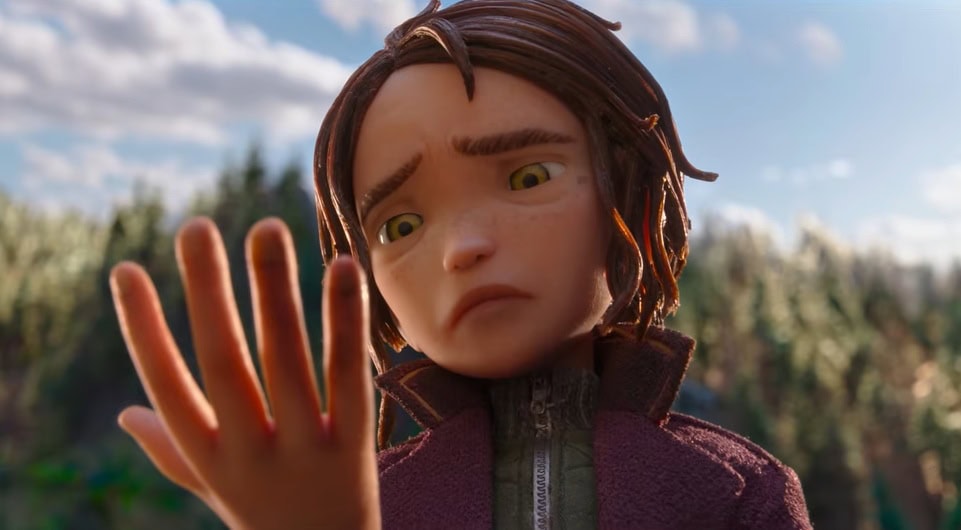
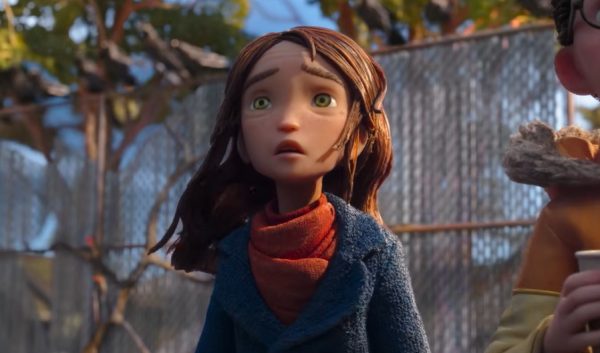
Echoing structural elements of Jim Henson’s Labyrinth, the story centers on Prue McKeel (voiced with world-weary resilience by Peyton Elizabeth Lee). Tasked by her anxious parents with the absolute responsibility of watching over her infant brother, and explicitly forbidden from venturing beyond the domestic boundary, Prue acts out of fierce familial devotion rather than mere rebellion. Loading her baby brother into a weathered wooden trolley attached to her bicycle, she sets off into the gray Portland afternoon.
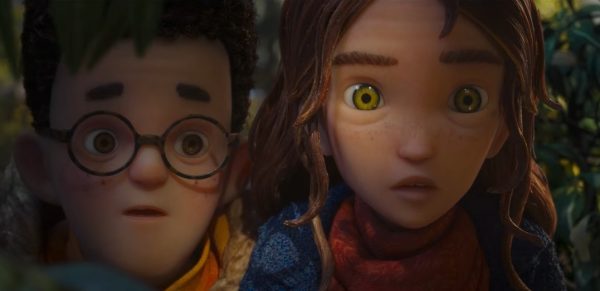
Her journey intersects with Curtis (voiced with awkward, end-of-the-world earnestness by Jacob Tremblay), a dedicated Dungeons & Dragons enthusiast whose unrequited affection for Prue drives him to tail her to the local playground. It is here that the idyllic suburban afternoon shatters. A swirling, menacing murder of crows descends from the overcast sky, violently kidnapping the infant before vanishing toward the horizon.

Thrust into a nightmare of her own, Prue—accompanied by the loyal, love-struck Curtis—must journey directly into the legendary, forbidden realm known as the Impassable Wilderness. What follows is an epic, multi-front war between the human world and the hidden, feral denizens of the forest. The narrative evolves from a personal rescue mission into a sweeping, complex geopolitical and ecological conflict reminiscent of the grand-scale battles found in The Lord of the Rings, executed entirely through the painstaking, frame-by-frame alchemy of stop-motion animation.
Supporting Context & Metrics: The Technical Wizardry of Laika Studios
To fully appreciate Wildwood, one must understand the Herculean logistical and technical hurdles required to bring its world to life. Laika has long pushed the envelope of what physical puppets and miniature sets can achieve—from the skewed, expressionist architecture of Coraline to the breathtaking, cascading foliage of Kubo and the Two Strings. However, Wildwood represents a monumental quantum leap forward that continually forces the viewer to ask a singular, disbelieving question: How did they possibly do that?
Behind-the-scenes featurettes and technical deep-dives routinely fail to prepare audiences for the sheer fluidity, life, epic scope, and minute detail packed into every single frame of the film. The production metrics alone are staggering:
- Scale of Production: The film required hundreds of distinct, highly specialized physical sets, featuring intricate, hand-carved foliage that responds realistically to simulated wind and weather elements.
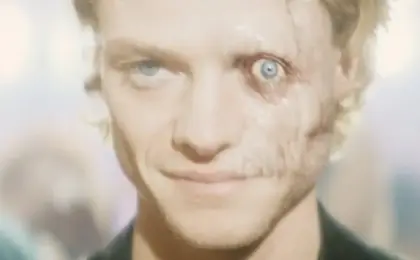
- Puppet Engineering: The characters boast unprecedented levels of micro-detailing, including microscopic scars, skin blemishes, subtle perspiration, and the deep, dark bags under their eyes that betray their exhaustion and emotional trauma.
- Animation Complexity: Rather than relying on seamless CGI shortcuts to manage large-scale crowd scenes, Laika’s animators orchestrated sprawling battle sequences within dense vegetation involving hundreds of distinct characters, each requiring physical manipulation across thousands of consecutive frames.
The result is a sensory paradox. The visual fidelity is so astonishingly high that it occasionally threatens to pull viewers out of the narrative, not due to flaw, but due to sheer awe at the physical labor involved. Yet, the writing and pacing ensure that viewers quickly surrender to the cinematic spell, becoming as thoroughly engulfed by the story as a decaying structure overtaken by suffocating ivy.
Official Statements & Cast Performances
The staggering technical achievements of Wildwood are anchored entirely by an emotionally rich vocal ensemble. Director Travis Knight and his casting directors assembled an eclectic roster of acclaimed talent, each bringing psychological depth to characters that could easily have devolved into animated archetypes.
Peyton Elizabeth Lee anchors the picture as Prue McKeel. Speaking about the character’s unique resonance, early critical consensus highlights Lee’s ability to infuse Prue with a mature, battle-tested empathy. "Prue feels like a hero for our times," notes industry analysis. "She is world-weary at such a young age, yet entirely capable of achieving greatness and inspiring hope against a bleak backdrop of societal division."
Equally compelling is Academy Award nominee Carey Mulligan, who steps into the role of Alexandra, the film’s primary antagonist. Eschewing one-dimensional villainy, Mulligan imbues Alexandra with a profound, tragic backstory. Her motivations are steeped in such deep-seated grief and sorrow that audiences find themselves trapped in a complex emotional tug-of-war—simultaneously rooting for Prue to save her little brother while desperately hoping that Alexandra herself might find redemption and salvation.
The supporting voice cast is a masterclass in character acting translated through stop-motion design:
- Angela Bassett brings commanding, royal stoicism to a colossal, mythical eagle.
- Awkwafina transcends comedic typecasting, transforming an ordinary urban rat into a deeply tragic, emotionally devastating presence.
- Jacob Tremblay delivers a career-best vocal performance as Curtis, serving as the emotional heart and accidental comedic anchor of the journey.
- The ensemble is rounded out by powerhouse performances from Richard E. Grant, Amandla Stenberg, Tom Waits, Charlie Day, Blythe Danner, Maya Erskine, Jake Johnson, Tantoo Cardinal, Rob Delaney, Jemaine Clement, Marc Evan Jackson, Len Cariou, Ólafur Darri Ólafsson, and Mahershala Ali.
Future Outlook: A New Benchmark for Dark Family Cinema
As Wildwood rolls out to global audiences, industry analysts are closely monitoring its commercial footprint, particularly regarding its target demographic. The film’s greatest triumph—its unvarnished, uncompromising darkness—may well present its biggest commercial hurdle.
Unlike modern animated releases engineered to coast on safe, comforting formulas, Wildwood stares unflinchingly into the abyss of mortality, trauma, and loss. The film features visceral battle sequences, multiple character deaths, and an opening sequence centered on the precipice of a balcony that is genuinely traumatic in its emotional intensity.
While cinematic history proves that some of the greatest children’s and family films—such as Bridge to Terabithia or The Lion King—derive their lasting power from their willingness to engage with real-world grief, Wildwood pushes these boundaries to the absolute edge. Exhibitors and critics suggest that parents exercise caution, perhaps recommending the film for older children capable of processing its profound psychological weight.
Nevertheless, Wildwood secures an unassailable legacy. As Laika Studios celebrates its 20-year milestone, this film stands as their undisputed crowning achievement. By marrying staggering, gravity-defying stop-motion world-building with an emotionally shattering narrative, Wildwood transcends the boundaries of its medium. It is an instant classic of dark fantasy, a monumental artistic triumph, and an immortal cinematic achievement destined to be studied, revered, and cherished for generations to come.





Belum ada komentar. Jadilah yang pertama berkomentar!