

Executive Overview
The technology landscape stands on the precipice of a seismic shift this week as Apple prepares to host one of its most consequential product unveiling events in over a decade. More than five years after Samsung commercialized the foldable smartphone category, Apple is widely expected to enter the market with its own high-end entry, tentatively dubbed the "iPhone Ultra."
This launch event carries immense symbolic and strategic weight. It occurs against the backdrop of a major executive transition: long-time Chief Executive Officer Tim Cook is officially handing the operational reins to John Ternus, the former Vice President of Hardware Engineering. For Ternus, steering Apple’s entry into an entirely new device form factor on day one represents a high-stakes trial by fire.
Beyond the long-awaited foldable smartphone, leaks and preview builds suggest that Apple’s September 9 event will feature a broad hardware refresh. This includes new iterations within the standard iPhone 18 lineup, updated HomePod smart speakers powered by a revamped, Gemini-integrated Siri, and a genuinely radical concept: wireless earbuds equipped with built-in optical sensors. As the company commands consumer attention once more, the tech giant must balance the risks of a $2,000 price point, potential hardware compromises, and rising privacy concerns over wearable ambient cameras.
Detailed Chronology: From Rumor to Reality
To understand the weight of this week’s announcements, it is necessary to trace how Apple’s hardware roadmap has evolved over the past half-decade.
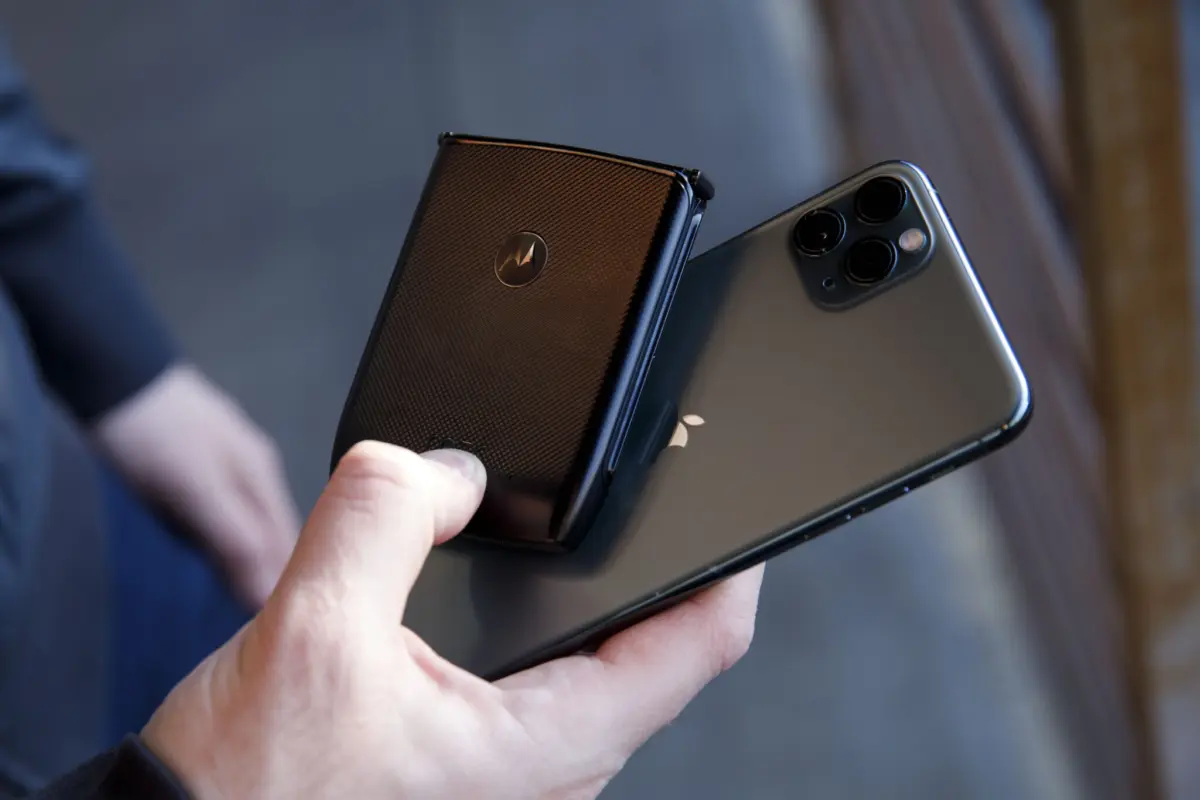
- 2019–2020: Competitors like Samsung and Motorola introduce the world’s first commercial foldable devices. Early iterations suffer from fragile hinge mechanisms, prominent screen creases, and prohibitive costs. Apple reportedly adopts a "wait-and-see" approach, assessing component durability and consumer appetite while prototyping internal concepts.
- Late 2025: Supply chain leaks and analyst reports from Bloomberg’s Mark Gurman reveal that Apple has moved beyond theoretical research, establishing a dedicated timeline for an inward-folding device. Simultaneously, Apple begins restructuring its iPhone roadmap, prioritizing the development of premium Pro models over traditional release schedules.
- March 2026: Further technical specifications leak, indicating that the foldable device will bypass standard iPadOS architecture in favor of a heavily optimized, multitasking-capable version of iOS running on advanced silicon chips. Early discussions highlight the engineering feat of minimizing the display crease.
- August 2026: Tim Cook officially announces his transition out of the CEO role, passing leadership to John Ternus. Meanwhile, data miners probing a macOS preview build uncover references to unreleased hardware, including updated smart home devices and mysterious camera-enabled AirPods.
- September 2026 (Present Week): The official Apple event is scheduled for September 9. Analysts, early testers, and global consumers converge on Cupertino as Apple prepares to officially reveal the iPhone Ultra and redefine its product ecosystem for the late 2020s.
Supporting Context & Metrics
The Foldable "iPhone Ultra": Specifications and Economic Realities
Entering the foldable space late affords Apple the advantage of learning from its competitors’ missteps, but it also raises consumer expectations to an uncompromising level. Reports indicate that the iPhone Ultra will command an eye-watering starting price exceeding $2,000. While this makes it twice as expensive as traditional flagship smartphones, it remains notably cheaper than Apple’s $3,500 Vision Pro spatial computing headset—and crucially, targets a mass-market form factor that consumers historically purchase with regularity.
According to early testers cited by Bloomberg, the device bridges the gap between pocketability and expansive digital workspace:
- Cover Display: A compact 5.5-inch outer screen designed for quick, one-handed tasks when the device is closed.
- Unfolded Display: A sprawling 7.8-inch inner display that transforms the device into a wide, iPad-like canvas capable of robust side-by-side app multitasking.
- Form Factor: When folded, the chassis is reported to feel notably shorter and wider than standard candy-bar iPhones, offering a premium hand-feel that fits comfortably into standard pockets.
Engineering Trade-offs
Achieving a sleek, pocketable profile required engineering concessions that may frustrate mobile photography enthusiasts. Rumors indicate that the iPhone Ultra will omit a telephoto lens, relying instead on a dual-lens rear camera system featuring standard main and ultra-wide sensors.
Furthermore, to preserve interior space and maintain structural thinness, Apple has reportedly chosen to forego Face ID in favor of a side-mounted Touch ID fingerprint sensor integrated into the power button. While returning to fingerprint recognition is a functional pivot, it marks a stark departure from the biometric security standard Apple has championed since 2017.
Most importantly, Apple claims to have successfully mitigated the dreaded screen "crease"—the visible and tactile groove that has plagued competing foldables since their inception. Coupled with advanced silicon matching the performance class of Apple’s efficient MacBook Neo laptops, the hardware promises high-tier processing power capable of handling split-screen iOS workflows without thermal throttling.
The Standard iPhone 18 Roadmap Shift
In a break from historical precedent, Apple is altering its deployment schedule for the broader iPhone 18 family. While leaks confirm that high-end variants like the iPhone 18 Pro and Pro Max will launch alongside or immediately following the September event, the base-model iPhone 18 is projected to arrive up to six months later. This inverted strategy positions the company’s luxury hardware at the forefront of the fiscal year.
The Audio Frontier: Siri, HomePods, and Camera-Equipped AirPods
Hardware form factors are only half the battle; software integration remains the true differentiator. Apple’s long-anticipated overhaul of Siri—now powered by advanced Gemini-backed AI infrastructure—is set to debut across the ecosystem, breathing new life into ambient computing.
Evidence discovered within recent macOS preview builds by developer Aaron Perris points to a comprehensive refresh of the HomePod line, cementing Apple’s continued push into smart home integration to rival Amazon and Google.
However, the most provocative hardware rumor involves the development of AirPods equipped with integrated low-resolution optical sensors. Internal demonstration videos depict a user wearing the earbuds while interacting with their physical environment, accompanied by a voiceover detailing a feature called Visual Intelligence:
"With Visual Intelligence, your world becomes savable. See something you like? Just ask me to save it for later."
The Privacy Paradigm
The introduction of camera-enabled audio wearables inevitably draws comparisons to past industry failures and heavily scrutinized devices, such as Meta’s camera glasses (often colloquially dubbed "pervert glasses" in public discourse). Privacy advocates have raised valid concerns regarding ambient recording devices worn in public spaces.
However, tech industry analysts emphasize that Apple’s engineering implementation differs fundamentally. Rather than capturing high-definition video or storing visual media for external sharing, Gurman reports that the AirPods’ optical sensors function exclusively as "eyes" for the Siri digital assistant. The components capture low-resolution visual metadata strictly to contextualize the user’s immediate environment for AI-driven utility, avoiding continuous recording loops.
Official Statements and Industry Perspectives
While official keynote presentations will provide definitive details, insider commentary has framed the transition under John Ternus as an intentional shift toward bolder hardware experimentation.
Speaking on the leadership handoff, outgoing CEO Tim Cook recently noted that the future of Apple is securely anchored in the hands of seasoned product builders. Ternus inherits an ecosystem that has successfully diversified through services and spatial computing, yet remains fundamentally tethered to the cultural and financial dominance of the iPhone.
Industry analysts note that pricing the iPhone Ultra above $2,000 is a calculated gamble. While consumer electronics spending has faced macroeconomic headwinds, the ultra-premium tier—demonstrated by the resilience of Pro Max sales globally—suggests a dedicated demographic exists that is willing to pay a premium for cutting-edge innovation.
Future Outlook
The week’s impending announcements will dictate the trajectory of consumer technology for the remainder of the decade. If the foldable iPhone Ultra successfully captures the public imagination without alienating users via camera compromises or biometric shifts, it could catalyze a broader industry migration toward multi-form-factor mobile computing.
Concurrently, the integration of ambient visual intelligence into audio wearables like AirPods signals a future where smart assistants are no longer confined to glowing screens or stationary smart speakers, but are actively integrated into our sensory perception of the physical world. As John Ternus takes the stage in Cupertino, the tech world waits to see whether Apple’s calculated leap into the unknown will cement its market dominance for another generation.







Belum ada komentar. Jadilah yang pertama berkomentar!