

Executive Overview
In a watershed moment for Japanese role-playing games (JRPGs), Atlus Co., Ltd., a subsidiary of Sega Sammy Holdings, officially announced that the next mainline entry in its flagship franchise, Persona 6, is currently in active development for Nintendo’s next-generation hardware, tentatively designated as the Nintendo Switch 2. The revelation occurred during a September industry showcase, ending years of intense speculation regarding the platform strategy for the critically acclaimed series.
Simultaneously, Atlus confirmed Persona 4 Revival, a comprehensive ground-up remake of its seminal 2008 title, expanding its modern re-imagining initiative following the commercial success of Persona 3 Reload. While Persona 4 Revival is scheduled to launch on rival modern consoles and PC in early 2027, the Nintendo Switch 2 edition will follow shortly thereafter, establishing a staggered release framework.
This dual revelation marks a decisive transition in Atlus’s hardware distribution strategy. Historically anchored to Sony’s PlayStation ecosystem for primary entry debuts, the publisher’s commitment to launching Persona 6 across next-generation hybrid hardware underscores the shifting economics of the gaming industry, where multiplatform day-one parity and hardware flexibility take precedence over platform exclusivity.
Detailed Chronology
                                    Persona Franchise Timeline

  [2008] Persona 4 (PS2)
    │
  [2016] Persona 5 (PS3/PS4)
    │
  [2022] Persona 5 Royal Multiplatform Expansion (Switch, Xbox, PC)
    │
  [2024] Persona 3 Reload & Metaphor: ReFantazio
    │
  [Sep 2026] Nintendo Direct Showcase
    ├── Official Announcement: Persona 6 (Teaser Trailer Revealed)
    └── Official Announcement: Persona 4 Revival
          │
          ├── [Early 2027] Persona 4 Revival Launch (PC, PS5, Xbox Series X/S)
          └── [Late 2027+] Persona 4 Revival & Persona 6 (Nintendo Switch 2)
The September Broadcast Breakdown
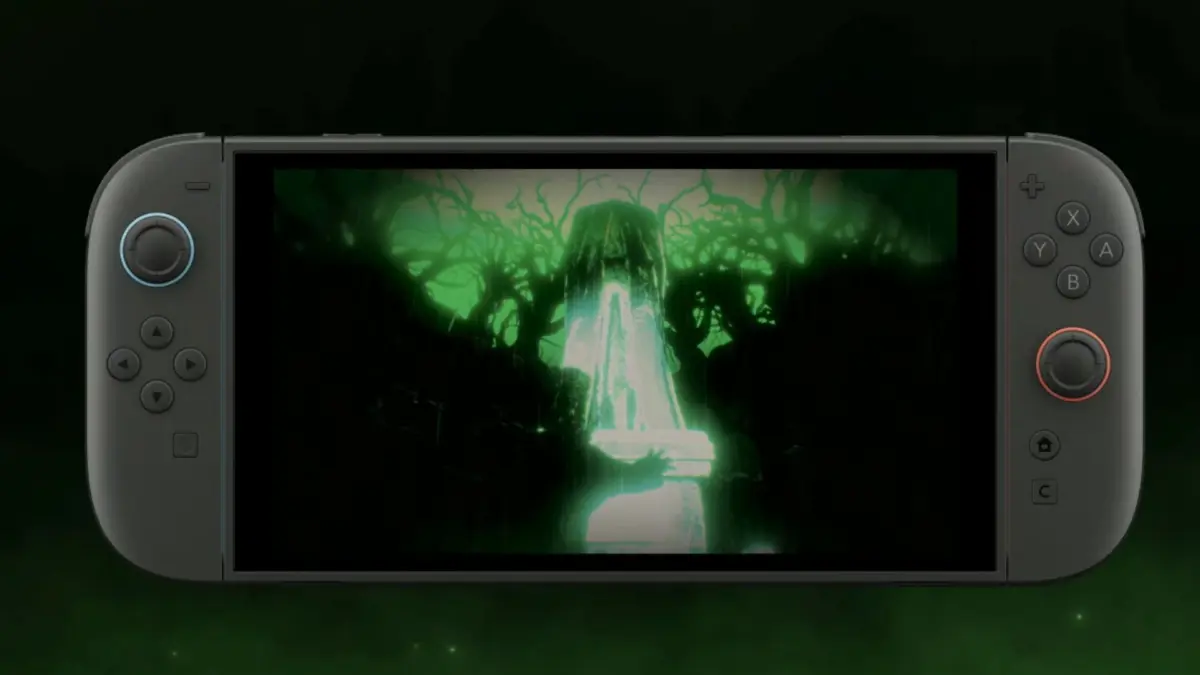
The formal unveiling took place during Nintendo’s September digital presentation, a broadcast heavily scrutinized by industry analysts for indications of second-generation Switch software support. Midway through the stream, Nintendo transitioned to a custom animated vignette showcasing a stylized render of the Nintendo Switch 2 hardware, signaling a high-profile third-party announcement.
The sequence opened with the iconic Atlus branding before transitioning into a dual-product showcase. The announcement moved swiftly from confirming the platform status of Persona 4 Revival to presenting the first official motion teaser for Persona 6.
Teaser Analysis: Environmental and Visual Cues
Though brief, the Persona 6 teaser provided significant stylistic and thematic intelligence regarding the project’s creative direction under Studio Zero and P-Studio:
+-------------------------------------------------------------------------------+
|                       TEASER VISUAL DECONSTRUCTION                            |
+-------------------------------------------------------------------------------+
| Visual Motif    | Emerald Green / High-Contrast Neon                          |
| Environment     | Dilapidated Urban Cemetery, Downpour Conditions             |
| Audio Landscape | Low-Frequency Atmospheric Hum, Neon Buzzing, Rain SFX         |
| Typography      | Fractured, Glitched Glyph Text Resolving into P6 Emblem       |
+-------------------------------------------------------------------------------+- Chromatic Palette: Moving away from the high-contrast Crimson Red of Persona 5, the Canary Yellow of Persona 4, and the Cobalt Blue of Persona 3, the Persona 6 visual motif relies heavily on a saturated, emerald-green color palette.
- Setting and Atmosphere: The footage presented a brooding, rain-drenched urban cemetery. Dynamic lighting effects illuminated gravestones weathered by time, paired with atmospheric fog and heavy rainfall shaders, highlighting enhanced graphical fidelity.
- Auditory Cues: The sound design eschewed traditional acid-jazz or J-rock arrangements in favor of ambient rain, low-frequency sub-bass hums, and the distinct flicker of electric neon elements.
- Iconography and Symbolism: The camera panned vertically up an ornate stone statue before fractured, glitched typographic elements coalesced on-screen. These glyphs stabilized into an ethereal, spectral "P6" logo shrouded in green mist, officially solidifying the title’s identity.
The Persona 4 Revival Timeline
Alongside the Persona 6 showcase, Atlus outlined its release strategy for Persona 4 Revival. While primary target platforms—including PC, PlayStation 5, and Xbox Series X/S—will receive the remake in early 2027, the Nintendo Switch 2 edition is slated for a delayed window. Atlus cited hardware-specific optimization and feature integration as the primary drivers behind the staggered release schedule.
Supporting Context & Metrics
The Evolution of Atlus’s Distribution Strategy
For nearly two decades, mainline Persona titles followed a rigid exclusivity model. Persona 3 (2006), Persona 4 (2008), and Persona 5 (2016) all debuted exclusively on Sony PlayStation consoles. Porting efforts were historically delayed by several years, as evidenced by Persona 4 Golden (PS Vita, 2012) and Persona 5 Royal (PS4, 2019).
Mainline Persona Initial Platform Exclusivity (2006–2026)
-----------------------------------------------------------------------
Persona 3 (2006)       | PlayStation 2 Exclusivity
Persona 4 (2008)       | PlayStation 2 Exclusivity
Persona 5 (2016)       | PlayStation 3 / PlayStation 4 Exclusivity
Persona 6 (Unscheduled)| Day-One Multiplatform Target (Inc. Nintendo Switch 2)
-----------------------------------------------------------------------
This paradigm shifted dramatically between 2020 and 2022. Driven by parent company Sega’s strategy to monetize intellectual property globally across all active platforms, Atlus brought Persona 5 Royal, Persona 4 Golden, and Persona 3 Portable to Xbox, PC, and the original Nintendo Switch.
The financial performance of these multiplatform ports demonstrated an appetite for handheld JRPGs outside Sony’s ecosystem, fundamentally altering Atlus’s production pipeline for future releases.
Franchise Performance Metrics
The decision to commit Persona 6 to Nintendo’s next-generation platform from its initial marketing push is backed by strong commercial metrics:
- Global Franchise Sales: The Persona series has surpassed 22.6 million units globally as of mid-2024.
- Persona 5 Ecosystem: Persona 5 and its associated spin-offs (Persona 5 Strikers, Persona 5 Tactica, Persona 5 Royal) account for over 10 million of those cumulative units.
- Persona 3 Reload: The February 2024 release became the fastest-selling title in Atlus history, moving 1 million units globally in its first week due to a simultaneous multiplatform release strategy.
Key Commercial Milestones (Atlus / Persona Franchise)
+------------------------------------+----------------------------------+
| Metric                             | Value                            |
+------------------------------------+----------------------------------+
| Total Franchise Lifetime Sales     | 22.6+ Million Units              |
| Persona 5 Ecosystem Contribution   | ~10.0 Million Units              |
| Persona 3 Reload Week-1 Sales      | 1.0 Million Units (Fastest-Ever) |
+------------------------------------+----------------------------------+
Chromatic Symbolism in Mainline Persona Entries
In the Persona franchise, primary visual colors serve as key thematic indicators for narrative, psychological, and social commentary:

+-----------+-------------------+-----------------------------------------------+
| Game      | Primary Color     | Narrative & Psychological Themes              |
+-----------+-------------------+-----------------------------------------------+
| Persona 3 | Cobalt Blue       | Mortality, Apathy, Melancholy, Acceptance     |
| Persona 4 | Canary Yellow     | Truth, Media Distortion, Small-town Isolation |
| Persona 5 | Crimson Red       | Rebellion, Social Conformance, Emancipation   |
| Persona 6 | Emerald Green     | Envy, Psychological Stagnation, Renewal       |
+-----------+-------------------+-----------------------------------------------+
The pivot to Emerald Green for Persona 6 suggests a narrative framework centered on themes of growth, envy, toxicity, or environmental and psychological degradation, departing from the explosive rebellion of Persona 5.
Technical Considerations for Nintendo Switch 2
Industry analysts point out that bringing a modern Unreal Engine 5 title to Nintendo’s upcoming hardware requires careful technical balancing. While the original Nintendo Switch faced hardware constraints that delayed late-lifecycle ports, the next-generation architecture is expected to feature upgraded system memory, customized Nvidia Ampere-based processing units, and DLSS (Deep Learning Super Sampling) support.
Hardware Target Expectations for Persona 6 Pipeline
===================================================================
Target Resolution (Docked)   | Dynamic 1440p upscaled via DLSS
Target Frame Rate            | 30 FPS / 60 FPS performance modes
Engine Pipeline              | Customized Internal / Unreal Engine 5
Key Graphical Features       | Volumetric weather, localized reflection
                             | maps, real-time shadow cascades
===================================================================
Official Statements
While exact narrative details remain closely guarded, statements from executive leadership emphasize global accessibility and platform flexibility.
In a recent corporate update regarding Sega Sammy Holdings’ long-term intellectual property strategy, Haruki Satomi, President and Group CEO, addressed the company’s commitment to simultaneous multiplatform deployment:
"Our focus moving forward is absolute global synchronization. High-profile releases from our core studios, including Atlus, must reach the widest possible audience on day one. Eliminating platform barriers allows our creative teams to maximize cultural impact and commercial longevity simultaneously."
Addressing the technological capabilities required for modern Atlus titles, P-Studio management noted in technical documentation:
"The aesthetic identity of a Persona title relies heavily on pristine visual presentation, sharp UI design, and fluid transitions. As hardware capabilities evolve across both stationary consoles and high-performance portable systems, our engine infrastructure has adapted to maintain feature parity without sacrificing stylistic expression."
Future Outlook
Projected Launch Windows
The timeline for both announced titles suggests a multi-year rollout strategy carefully calculated to avoid internal market cannibalization:
Estimated Atlus Release Horizon
┌──────────────────────────────┬────────────────────────────────────────┐
| Target Window                | Project Milestone                      |
├──────────────────────────────┼────────────────────────────────────────┤
| Early 2027                   | Persona 4 Revival (PC, PS5, Xbox Series)|
| Mid-to-Late 2027             | Persona 4 Revival (Nintendo Switch 2)  |
| Late 2027 / Early 2028       | Persona 6 (Simultaneous Multiplatform) |
└──────────────────────────────┴────────────────────────────────────────┘
Given that Persona 4 Revival is positioned for an early 2027 launch on non-handheld platforms, industry consensus places the Nintendo Switch 2 port of the remake in the mid-to-late 2027 window.
Consequently, Persona 6 is unlikely to launch before late 2027 or early 2028. This extended timeline gives Atlus space to finalize engine optimization across all target platforms, including Nintendo’s new architecture.
Industry and Market Impact
The decision to reveal Persona 6 early in the lifecycle of Nintendo’s next platform carries broader strategic implications:
- Third-Party Confidence: Major Japanese publishers are displaying strong early support for Nintendo’s successor system, helping prevent the third-party support gaps seen during the early Wii U era.
- JRPG Market Consolidation: Hybrid handheld/home console availability has become a key driver for long-form, 80-plus-hour JRPGs. Releasing Persona 6 on a high-performance portable system ensures high engagement from audiences who prefer handheld play for extended RPGs.
- Sega’s Financial Trajectory: Securing concurrent releases across PC, PlayStation, Xbox, and Nintendo ecosystems positions Sega Sammy to maintain strong fiscal performance from its consumer games segment through the late 2020s.
While the brief green teaser offers only an initial glimpse into the next chapter of the Persona franchise, its platform strategy is clear. Atlus has left behind its legacy of exclusive rollouts, positioning Persona 6 to launch as a multiplatform title designed for modern gaming hardware.







Belum ada komentar. Jadilah yang pertama berkomentar!