

Executive Overview
The landscape of South Korean television continues to evolve at a breathtaking pace, with niche genres finding unprecedented mainstream viability, critical acclaim, and global fandoms. Among these, the Boys’ Love (BL) genre has transitioned from an underground web-content phenomenon into a major commercial pillar of the contemporary K-drama ecosystem. Entering this thriving market is Summertime, a youth romance series that has quickly captured the imaginations of viewers worldwide.
The narrative core of Summertime focuses on the delicate, emotionally fraught transition from lifelong platonic companionship to romantic awakening. Protagonists Yeo Eun Ho, portrayed by Kim Do Min, and Cha Do Hyun, played by Seong In Ho, navigate the labyrinthine complexities of shared history, unspoken desires, and the terrifying boundary lines that separate friendship from love. As the series progresses through its narrative arcs, the off-screen dynamic between its two leads has become just as compelling to audiences as the scripted drama itself.
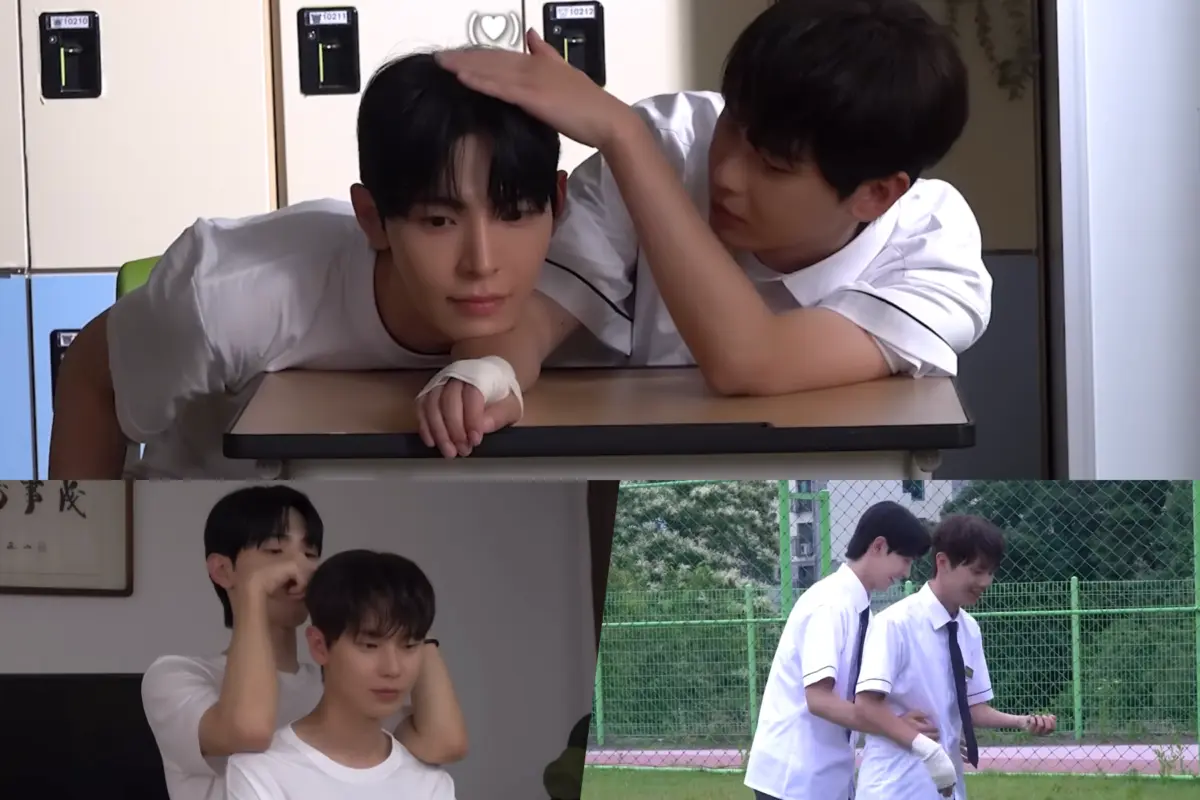
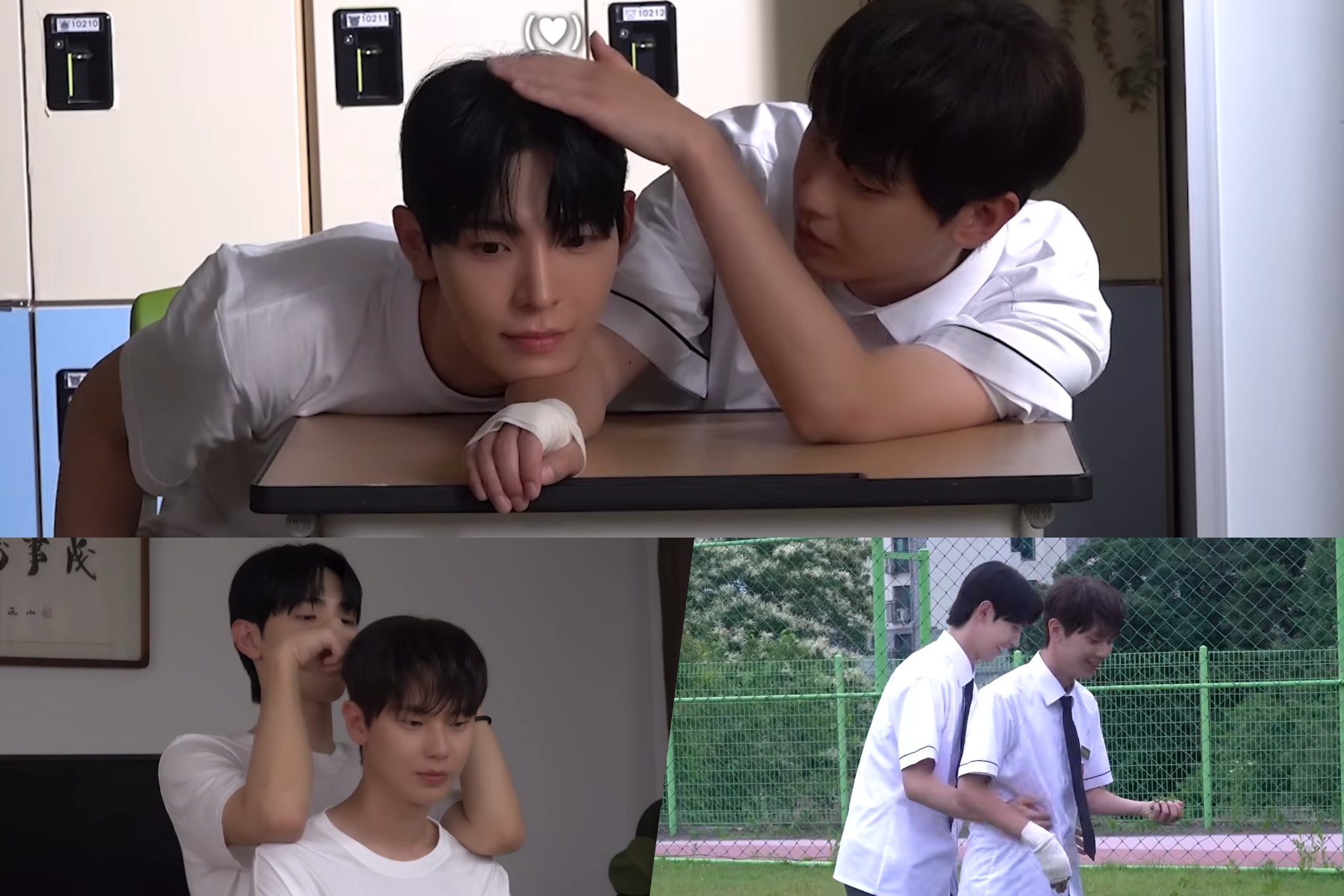
Recently, the production team released an exclusive making-of video dedicated to episodes 3 and 4, offering viewers an intimate, unvarnished look at the inner workings of the set. This behind-the-scenes footage does more than merely showcase bloopers and lighthearted moments; it provides a fascinating case study in modern K-drama production. From meticulous directorial collaboration and professional boundary-setting to accidental comedic relief involving local wildlife and rogue ramen noodles, the featurette highlights the intense dedication required to bring a high-stakes romance to life.
This article provides an exhaustive, authoritative examination of the Summertime episode 3 and 4 making-of release, analyzing the performances, production nuances, and broader implications for the surging Korean BL industry.
Detailed Chronology: Behind the Scenes of Episodes 3 and 4
The newly unveiled making-of featurette for Summertime runs for several minutes, serving up a carefully curated montage of hard work, technical precision, and spontaneous camaraderie. By breaking down the sequence of events captured on camera, industry observers and fans alike gain a clearer picture of how Kim Do Min and Seong In Ho construct their palpable on-screen chemistry.
The Reality of Character Portrayals: Clarifying the Smoking Scene
The making-of video immediately addresses one of the more intense character moments from the early episodes: a smoking sequence featuring Kim Do Min’s character, Yeo Eun Ho. In narrative terms, smoking tropes in youth dramas are often utilized to signal internal stress, rebellion, or a coming-of-age breaking point. However, the transition from dramatic fiction to physical reality on set requires careful management, particularly for actors concerned with public perception and personal health habits.
Immediately following the cut of the cameras, Kim Do Min steps out of character to directly address the viewing audience through the behind-the-scenes camera lens. With a reassuring smile, he clarifies, "It’s not a cigarette, everyone. I don’t smoke."
This unscripted interjection highlights a crucial aspect of contemporary idol and actor management: transparency. In an era where fans scrutinize every frame for authenticity, actors often feel a pressing need to break the fourth wall during behind-the-scenes reels to manage personal branding. For Kim, clarifying his personal stance on smoking ensures that his off-screen persona remains distinct from Eun Ho’s more troubled narrative beats, maintaining the wholesome appeal vital to youth-centric romance marketing.
Playful Preparation: Medical Props and Mutual Care
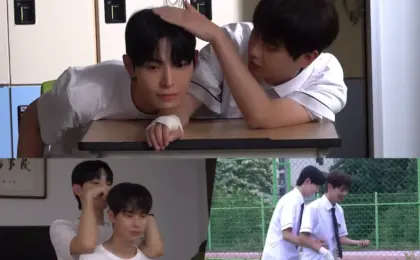
Following the intensity of the dramatic scene, the tone of the making-of reel shifts dramatically toward lighthearted playfulness. The actors are seen preparing for a medical-themed interaction, specifically practicing the technique of wrapping a bandage on one another.
In romantic dramas, physical touch is the primary currency through which emotional intimacy is communicated to the audience. Medical scenes—such as treating a wound, applying bandages, or tending to minor injuries—are classic tropes designed to force characters into close physical proximity while maintaining a veneer of utilitarian necessity.
Off-camera, however, Kim Do Min and Seong In Ho treat the prop manipulation as an opportunity for light banter. Rather than treating the bandage-wrapping as a rigid technical drill, the two actors experiment with playful wrapping styles, laughing between takes. This low-stakes camaraderie is essential for building the physical comfort required for more vulnerable romantic sequences. By demystifying the touch through shared laughter, the actors dismantle awkwardness, establishing a secure psychological space necessary for portraying vulnerable emotional states.
Unscripted Wildlife Encounters: The Ladybug Incident
One of the most charmingly human moments in the featurette occurs outdoors, far away from the controlled environment of the studio sets. During a break between setups, Seong In Ho inadvertently encounters a ladybug that had landed on a staff member.
Displaying an instinctive desire to assist, Seong gently picks up the insect to return it to the natural environment. However, the seemingly mundane interaction takes a comedic turn when the ladybug abruptly takes flight, startling the actor. The genuine, unscripted start caught on camera offers a refreshing glimpse into the actors’ off-guard personalities.
While professional actors are trained to maintain absolute focus under high-pressure conditions, outdoor shoots frequently introduce unpredictable variables. The ladybug incident serves as a brief, endearing reminder of the youth-centric, pastoral aesthetic that Summertime cultivates. The natural, unpretentious setting of the outdoor location acts as a physical metaphor for the simplicity of childhood friendships that the characters are desperately trying to outgrow.
Directorial Collaboration and Detailed Choreography
Romance is an art form built on micro-expressions, lingering glances, and precise physical spacing. The making-of footage places significant emphasis on the collaborative relationship between Kim Do Min, Seong In Ho, and the director of the project.
Rather than relying purely on instinct, the actors are seen huddled with the director, meticulously breaking down the emotional beats and physical choreography of their romantic scenes. Every tilt of the head, lingering gaze, and shift in body weight is discussed, evaluated, and refined. This attention to detail is what separates high-quality romantic dramas from rushed, commercialized productions.
In the BL genre specifically, the boundary between platonic and romantic touch must be tread with extreme narrative precision. If the characters are too intimate too early, the suspense of the "friends-to-lovers" slow-burn is ruined. Conversely, if there is no physical spark, the audience fails to believe the emotional transition. The on-set collaboration captured in the video demonstrates how the creative team engineers these psychological turning points step-by-step, ensuring that the visual storytelling matches the internal scripts of Eun Ho and Do Hyun.
The Ramen Dilemma: Clean Shirts and Dietary Disasters
Food scenes are staples in Asian television dramas, often functioning as domestic sanctuaries where characters drop their emotional guards. In episodes 3 and 4, a pivotal scene involves the characters sharing a meal of instant ramen—a classic comfort food deeply embedded in Korean cultural iconography.
However, anyone who has ever consumed hot ramen knows the inherent hazards it poses to clothing, particularly crisp, clean shirts. Following the completion of the ramen scene, the making-of video captures a humorous contrast between the two leads.
Kim Do Min proudly inspects his bright white shirt, noting with visible satisfaction that not a single drop of broth or oil splashed onto the fabric. He playfully credits his co-star, declaring, "Do Hyun had good control," attributing the clean shirt to careful choreography and spatial awareness during the meal.
In direct contrast, Seong In Ho is immediately shown pointing out the casualty of the scene: a distinct splash mark of ramen broth proudly staining his own shirt. The playful banter over wardrobe mishaps underscores the natural, brotherly dynamic the actors share off-camera. It grounds the production in reality, reminding viewers that beneath the polished, cinematic veneer of a high-end web drama are two young actors navigating the messy, unpredictable realities of shooting a meal scene on a tight production schedule.
Supporting Context & Metrics: The Rise of the Korean BL Ecosystem
To fully appreciate the significance of Summertime and its behind-the-scenes promotional strategy, one must examine the broader economic and cultural landscape of the Korean BL industry.
The Evolution of K-BL: From Niche to Mainstream
Historically, South Korean television broadcasting was bound by strict conservative guidelines regarding LGBTQ+ representation. For decades, explicit or central queer storylines were virtually non-existent on major public broadcasting networks (such as KBS, MBC, and SBS). However, the proliferation of global streaming platforms, web-novels, and independent production studios has completely upended this dynamic.
Beginning around 2020—catalyzed by breakout hits like Where Your Eyes Linger—the South Korean entertainment industry witnessed an explosion of dedicated Boys’ Love content. According to industry tracking and specialized media platforms like Soompi, South Korea has produced upwards of 40 distinct BL drama series and web-dramas over a compressed multi-year timeline.
This boom is not merely an artistic movement; it is a calculated economic response to shifting global consumption habits. International fans, hungry for diverse queer representation framed within the signature aesthetic, emotional depth, and high production values of K-dramas, have built massive, highly engaged digital communities.
The Mechanics of Behind-the-Scenes Marketing
In the modern digital entertainment economy, a drama’s broadcast window is only half the battle. The ecosystem relies heavily on ancillary content—interviews, press conferences, photo-shoots, and, most importantly, making-of featurettes.
For BL dramas specifically, behind-the-scenes videos serve a vital commercial function: chemistry validation. Because the core appeal of the romance genre rests on the interpersonal dynamic between the leads, fans demand proof of authentic rapport. When actors like Kim Do Min and Seong In Ho joke about ramen stains, get startled by ladybugs, or carefully rehearse romantic choreography, they are performing a dual role. They are simultaneously executing professional production duties and feeding the promotional engine that sustains fan engagement between weekly broadcast drops.
Metrics across video-sharing platforms consistently demonstrate that making-of reels for romance and BL dramas garner engagement rates comparable to, or even exceeding, the official trailers. They humanize the actors, reduce the perceived distance between celebrity and fan, and create a parasocial investment that directly translates into higher streaming numbers on platforms like Viki.
Official Statements and Cast Filmography Analysis
The credibility and market viability of Summertime are heavily bolstered by the established backgrounds of its lead actors. Examining their previous works sheds light on why the casting directors selected them for this nuanced youth romance.
Kim Do Min: Expanding His Romantic Range
Kim Do Min, who takes on the complex role of Yeo Eun Ho, is no stranger to the nuances of youth romance narratives. Prior to stepping into the world of Summertime, Kim built a solid reputation among digital drama enthusiasts through his notable appearance in the hit youth romance series Twenty-Twenty.
In Twenty-Twenty, Kim demonstrated an instinctive ability to portray the anxieties, boundary-pushing behaviors, and emotional vulnerabilities unique to the transitional period between adolescence and adulthood. This foundational experience in youth-centric storytelling equipped him with the precise emotional toolkit required for Summertime.
Rather than playing a flat archetype, Kim’s portrayal of Eun Ho benefits from his deep understanding of how young adults process unspoken affection. His on-set professionalism—evident in his clear communication regarding props like the mock cigarette—further illustrates an actor who is acutely aware of his audience and dedicated to maintaining character integrity while protecting his personal boundaries.
Seong In Ho: Crafting Relatable Vulnerability
As Cha Do Hyun, Seong In Ho shares the narrative and emotional heavy lifting of Summertime. Portraying a longtime childhood friend who must reconcile deep-seated platonic bonds with emerging romantic tension requires an actor capable of subtle facial acting and immense physical control.
Seong’s performance in the series—and his relaxed, unpretentious demeanor in the behind-the-scenes featurette—highlights an actor comfortable in his own skin. Whether he is accidentally dropping ladybugs, engaging in playful medical prop banter, or proudly owning the ramen stains on his wardrobe shirt, Seong projects an approachable charm that anchors the drama’s heavier emotional notes.
The contrast between Eun Ho’s internal reservation and Do Hyun’s expressive reactions is precisely what drives the narrative engine of episodes 3 and 4. The actors’ off-screen friendship provides the necessary trust to execute these contrasting character traits without letting the performance feel forced or theatrical.
Future Outlook: The Trajectory of ‘Summertime’ and K-BL
As Summertime continues its broadcast run, the release of making-of videos for episodes 3 and 4 signals a sophisticated, multi-tiered distribution strategy designed to keep viewer retention at an all-time high.
What Lies Ahead for Eun Ho and Do Hyun?
Narratively, episodes 3 and 4 represent a critical pivot point in the "friends-to-lovers" arc. The cozy domesticity of shared ramen meals and the forced vulnerability of medical care are classic narrative devices designed to erode the psychological walls the characters have erected over years of platonic co-existence.
As the series moves past its introductory setup, viewers can expect the emotional stakes to escalate significantly. The subtextual glances and playful banter captured in the rehearsal footage hint at far more dramatic confrontations in upcoming scripts. The transition from secret longing to explicit verbalization of feelings will test both the characters and the actors’ dramatic capabilities.
The Macro Future of the Genre
The success of Summertime and the enthusiastic reception of its behind-the-scenes content point toward an extremely optimistic future for South Korean BL dramas. As production values continue to rise, studios are attracting increasingly talented young actors who view these projects not as career anomalies, but as prestigious stepping stones in a diversified acting portfolio.
Furthermore, the integration of global streaming giants—such as Viki’s robust distribution networks, comprehensive masterlists, and targeted promotional campaigns—ensures that Korean BL dramas are no longer isolated regional experiments. They are global cultural commodities consumed by millions across North America, Europe, Southeast Asia, and Latin America.
For fans currently parsing through every second of the Summertime making-of video, the journey is far from over. With extensive masterlists of past K-BLs readily available to bridge the waiting periods between episodes, and a deep reservoir of behind-the-scenes content to analyze, the fandom ecosystem remains vibrant, engaged, and hungry for more.
As Kim Do Min and Seong In Ho continue to prove both on-screen and behind the cameras, the heat of Summertime is only just beginning to rise.

Belum ada komentar. Jadilah yang pertama berkomentar!