

Executive Overview
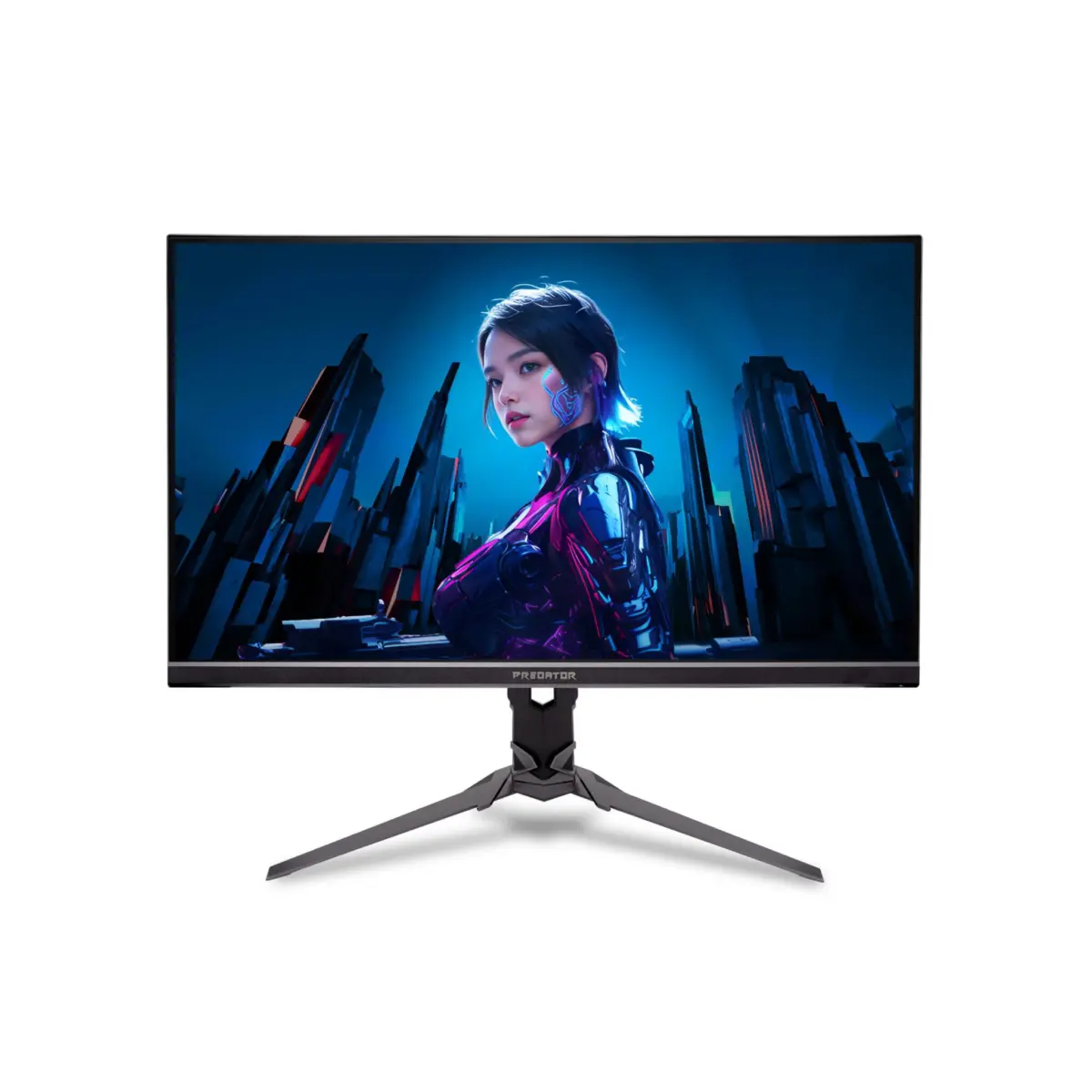
The consumer technology landscape has officially crossed a monumental threshold. At IFA 2026, Acer commanded the industry’s attention by breaking through a barrier once thought years away: the commercial introduction of a four-digit refresh rate. Leading the charge is the groundbreaking Predator XB253Q U1, a 24.5-inch Full HD display engineered to operate at an astonishing, unprecedented 1000Hz.
For years, the display industry has engaged in an evolutionary arms race, steadily climbing from standard 60Hz panels to 144Hz, 240Hz, 360Hz, and eventually 500Hz. While these milestones drastically improved motion clarity for competitive esports titles, a 1000Hz refresh rate represents a fundamental paradigm shift. It slashes theoretical frame presentation intervals to a single millisecond, effectively eradicating motion blur, reducing input latency to theoretical minimums, and providing elite competitive gamers with an almost telepathic connection to their virtual environments.
However, the Predator XB253Q U1 was far from a solitary headline-grabber. Acer utilized the IFA 2026 stage to unveil a comprehensive, forward-looking portfolio refresh spanning its elite Predator, value-forward Nitro, and color-accurate ProDesigner lines. This sweeping ecosystem update touches nearly every advanced panel technology available today, integrating cutting-edge QD-OLED, multi-zone Mini LED, and versatile Dynamic Frequency and Resolution (DFR) systems.
From color-obsessed visual creators to ultra-enthusiast gamers demanding both cinematic 4K fidelity and ultra-high refresh rates, Acer’s 2026 hardware showcase signals that the company is no longer content with merely competing—it intends to define the bleeding edge of visual technology for the remainder of the decade.
Detailed Chronology & Comprehensive Hardware Breakdown
Acer’s massive hardware rollout at IFA 2026 was methodically structured, showcasing a deep understanding of divergent consumer needs. By dividing its announcements across hyper-specialized esports monitors, ultra-vibrant OLEDs, and multi-functional hybrid displays, the company mapped out a diverse roadmap for late 2026 and early 2027.
1. The Crown Jewel: Predator XB253Q U1 (The 1000Hz Pioneer)
The undisputed star of the show, the Predator XB253Q U1, targets the absolute pinnacle of competitive esports. Built around a compact 24.5-inch form factor—the preferred tournament size for professional first-person shooter (FPS) players—the panel operates at a native Full HD (1920 x 1080) resolution.
Achieving a 1000Hz refresh rate required heavy engineering optimization. To combat the ghosting, smearing, and pixel response degradation that typically plague ultra-fast liquid crystal displays, Acer integrated its proprietary Visual Response Boost Pro (VRB Pro) technology. This advanced strobing technique dramatically enhances motion clarity, ensuring that fast-moving crosshairs and sweeping enemy models remain crystal clear even during chaotic, high-velocity engagements.
Understanding that competitive gaming sessions often span hours under intense tournament lighting, Acer equipped the XB253Q U1 with an advanced Circular Polarizer technology. Unlike traditional linear polarizers, circular polarizers significantly reduce ambient glare and reflection, reducing eye strain and maintaining visual contrast. Furthermore, the monitor features VESA DisplayHDR 400 certification for basic HDR responsiveness, alongside comprehensive variable refresh rate (VRR) implementation via AMD FreeSync Premium and NVIDIA G-SYNC Compatible certifications to eliminate screen tearing and stuttering.
2. Cinematic Fidelity: Predator X32 V3 (4K QD-OLED Penta Tandem)
While the XB253Q U1 sacrifices resolution for raw speed, the Predator X32 V3 takes the opposite approach, prioritizing breathtaking visual fidelity. Featuring a expansive 31.5-inch QD-OLED Penta Tandem panel, this monitor marries ultra-deep OLED black levels with vibrant quantum dot color reproduction at a crisp 4K resolution.
Designed for single-player enthusiasts and professional media consumption, the X32 V3 operates at a smooth 180Hz. Acer’s factory calibration guarantees a color accuracy rating of Delta E < 1, making it exceptionally faithful for color-critical work. Furthermore, the panel covers 99 percent of the DCI-P3 color gamut and boasts VESA DisplayHDR True Black 400 certification, delivering infinite contrast ratios and luminous highlight details that traditional LCDs cannot replicate.
3. The Best of Both Worlds: Predator XB273K V7 (Dynamic Dual-Mode)
Recognizing the eternal compromise between high-resolution immersion and high-refresh-rate speed, Acer introduced the Predator XB273K V7. This 27-inch marvel utilizes Dynamic Frequency and Resolution (DFR) technology, allowing users to seamlessly toggle between two distinct operational profiles depending on the software running on their system:
- Mode A: Native 4K resolution at a fluid 160Hz for immersive AAA role-playing games and graphical design work.
- Mode B: Full HD resolution scaling up to an astonishing 500Hz for twitch-reaction esports and competitive multiplayer shooters.
This dual-mode capability eliminates the need for multi-monitor setups, catering directly to gamers who split their leisure time between sprawling cinematic adventures and intense competitive ladders.
4. Nitro’s Mini LED and Multi-Mode DFR Expansion
Acer’s mainstream Nitro brand received equally impressive upgrades, democratizing technologies previously reserved for four-figure luxury displays.
Leading the Nitro charge is the Nitro XV275X P, a powerhouse featuring a 5K resolution paired with an advanced 2,304-zone Mini LED backlight. This massive array of local dimming zones allows for exceptional HDR performance, earning the monitor a prestigious HDR1400 certification. Thanks to integrated DFR technology, the XV275X P can dynamically shift from its ultra-sharp 5K canvas at 165Hz down to QHD (1440p) at 330Hz.
For ultra-responsive budget-conscious competitors, the Nitro XV275U Z2 and XV270U Z3 introduce flexible triple refresh-rate modes, pushing up to 520Hz at HD resolution.
Meanwhile, simulation and productivity enthusiasts are catered to by the Nitro XZ340CKR P, a sprawling 34-inch curved ultrawide monitor. Featuring DFR capability, it can switch between an ultra-wide 5120 x 2160 resolution at 180Hz and a Wide Full HD (WFHD) layout running at 360Hz.
5. Professional Precision: ProDesigner PE270X P
Acer did not neglect creative professionals. The ProDesigner PE270X P translates the bleeding-edge display hardware of the gaming sector into a workstation-class tool. It features a 27-inch 5K resolution canvas, a 2,304-zone Mini LED backlight, HDR1400 capabilities, and strict factory calibration ensuring a Delta E below 1 color accuracy rating, making it an ideal companion for video editors, 3D modelers, and color graders.
Supporting Context & Technical Metrics
To contextualize the engineering leap represented by the Predator XB253Q U1’s 1000Hz refresh rate, it is necessary to examine the mathematical reality of frame delivery times.
| Metric / Specification | Standard 60Hz | High-End 240Hz | Elite 500Hz | Acer Predator XB253Q U1 (1000Hz) |
|---|---|---|---|---|
| Frame Interval Time | 16.67 milliseconds | 4.16 milliseconds | 2.00 milliseconds | 1.00 millisecond |
| Pixel Response Time | ~5ms – 8ms | ~1ms – 3ms | < 1ms | Sub-millisecond (VRB Pro) |
| Motion Blur Impact | High | Moderate | Low | Virtually Imperceptible |
| Target Audience | Casual Users / Office | Mainstream Gamers | Competitive Esports | Elite Esports Professionals |
At 60Hz, a new frame is rendered every 16.67 milliseconds. At 1000Hz, that window shrinks to precisely 1 millisecond. In fast-twitch scenarios—such as professional Counter-Strike 2, Valorant, or Apex Legends tournaments where fractions of a second dictate victory—reducing system latency from input to photons on glass provides a tangible competitive advantage.
However, running games at a consistent 1000 frames per second presents monumental challenges for PC hardware. Even with advanced upscaling technologies like NVIDIA DLSS 4 or AMD FSR 4, achieving 1000 FPS requires cutting-edge CPU and GPU combinations, such as top-tier custom-cooled silicon. Acer’s engineers anticipate that while 1000Hz hardware is now a reality, software optimization across game engines will continue to evolve to fully saturate these lightning-fast panels.
Official Statements & Industry Reception
While Acer’s executive team kept formal onstage commentary focused on the broader trajectory of display evolution, industry analysts and hardware insiders at IFA 2026 have reacted with a mix of awe and analytical curiosity.
Display technologists have noted that achieving 1000Hz without catastrophic degradation in color depth or contrast speaks volumes about advancements in panel driver ICs (Integrated Circuits) and liquid crystal response chemistry. The implementation of Acer’s Visual Response Boost Pro is viewed as a masterclass in backlight strobing control, mitigating the thermal and voltage constraints typically associated with pushing panels beyond historical frequency limits.
Competitors and manufacturers alike have acknowledged that Acer has effectively set a new psychological and technical benchmark for the industry. By transitioning four-digit refresh rates from theoretical laboratory prototypes into a commercially priced product slated for early 2027, Acer has forced the entire monitor ecosystem to accelerate their own high-frequency development roadmaps.
Future Outlook, Pricing, and Availability
The road to the consumer market is already mapped out for Acer’s flagship innovations, though regional rollouts will occur in staggered phases.
The crown jewel of the lineup, the Predator XB253Q U1, is officially scheduled to hit shelves in Q1 2027. Early adopters in North America can expect an entry price of US$1,099, while European, Middle Eastern, and African (EMEA) markets will see pricing anchored at €1,099. At present, Acer has not yet disclosed official pricing or localized release timelines for Asian markets, including Malaysia and broader Southeast Asian territories.
As the industry looks past IFA 2026, the implications of Acer’s announcements are profound. We are officially entering an era where hardware display capabilities routinely outpace software frame generation limits, giving developers plenty of headroom to innovate. Whether consumers are chasing the competitive edge of a 1000Hz esports monitor, the deep inking blacks of a 4K QD-OLED, or the multi-functional versatility of DFR Mini LED panels, Acer has firmly established itself as the chief architect of the future of visual technology.








Belum ada komentar. Jadilah yang pertama berkomentar!