Autumn in Japan is a sensory phenomenon, traditionally heralded by the southward and downward migration of the koyo (autumn foliage) front. While millions of domestic and international travelers flock to historic temples in Kyoto or the alpine valleys of Nagano, an equally breathtaking yet functionally distinct seasonal transition occurs less than two hours away from major metropolitan hubs like Nagoya and Osaka. Rising 1,212 meters above sea level in Mie Prefecture, Mt. Gozaisho (Gozaisho-dake) acts as a vertical calendar, capturing the changing seasons weeks ahead of the valleys below.
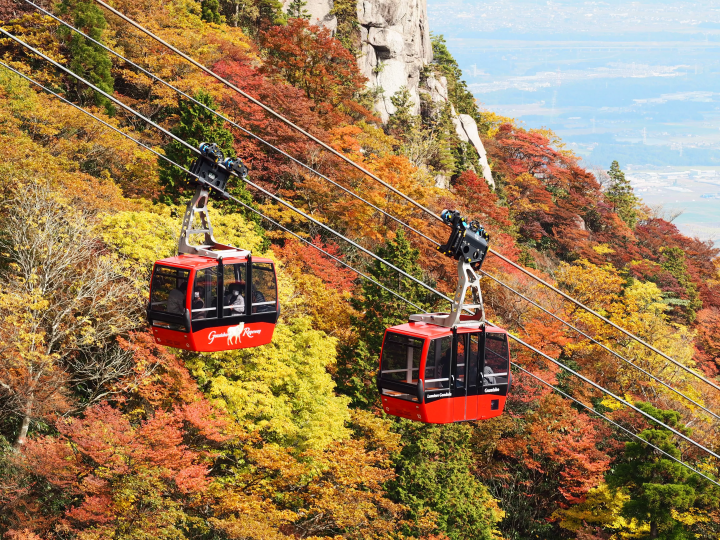
At the heart of this seasonal spectacle is the Gozaisho Ropeway, a marvel of engineering that transports visitors from the temperate base of Yunoyama Onsen to a high-altitude alpine park bathed in deep crimsons, golds, and burnt oranges. Recent infrastructural developments—most notably the October 2025 debut of the panoramic "COCORRU Terrace"—have elevated the mountain from a traditional hiking destination to a world-class tourism node.
However, this growing accessibility brings familiar challenges. High-volume tourism, regional traffic bottlenecks on weekends, and the delicate nature of alpine ecosystems require careful visitor management. This report explores the science, logistics, and strategic planning necessary to experience Mt. Gozaisho’s autumn foliage at its absolute peak, while offering a comprehensive blueprint for travelers navigating the Kintetsu rail network from Nagoya and Osaka.
Detailed Chronology of the Foliage Front
Unlike lowland deciduous forests where autumn colors unfold uniformly across flat terrain, Mt. Gozaisho experiences a staggered, multi-stage descent known locally as the descending foliage front (koyo zensen). Understanding this vertical migration is vital for travelers aiming to witness the mountain at its most vibrant.
Phase 1: The Summit Ignition (Late October)
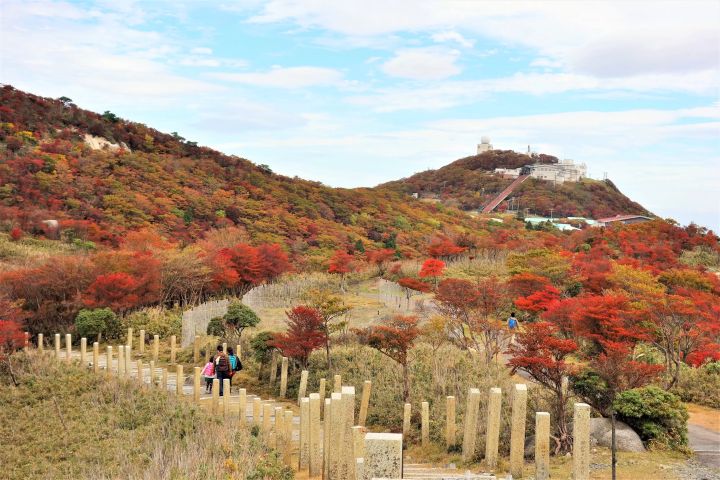
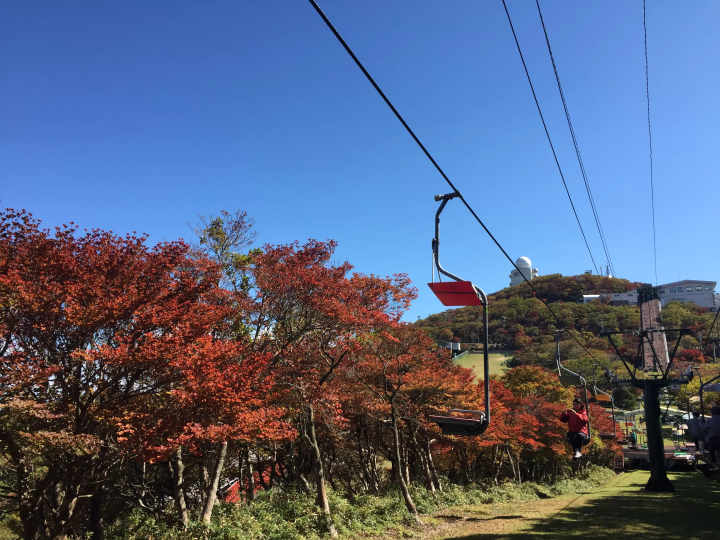
The seasonal shift begins at the very top of the mountain. Around October 20th every year, the extensive azalea colonies populating the Summit Park reach their peak intensity.
Botanically, Mt. Gozaisho’s summit is heavily populated by plants of the Ericaceae (heath) family, including red azaleas (tsutsuji), white azaleas, and Enkianthus campanulata (known in Japanese as Dodan-tsutsuji). When the crisp alpine air arrives, a combination of dropping nighttime temperatures and strong daytime sun triggers the accelerated production of anthocyanin pigments within these leaves. Because temperatures at 1,212 meters are significantly lower than those at the mountain’s base, this chemical reaction occurs weeks in advance, transforming the mountaintop into a sea of deep, velvety crimson.
Phase 2: The Mid-Slope Tapestry (Early to Mid-November)
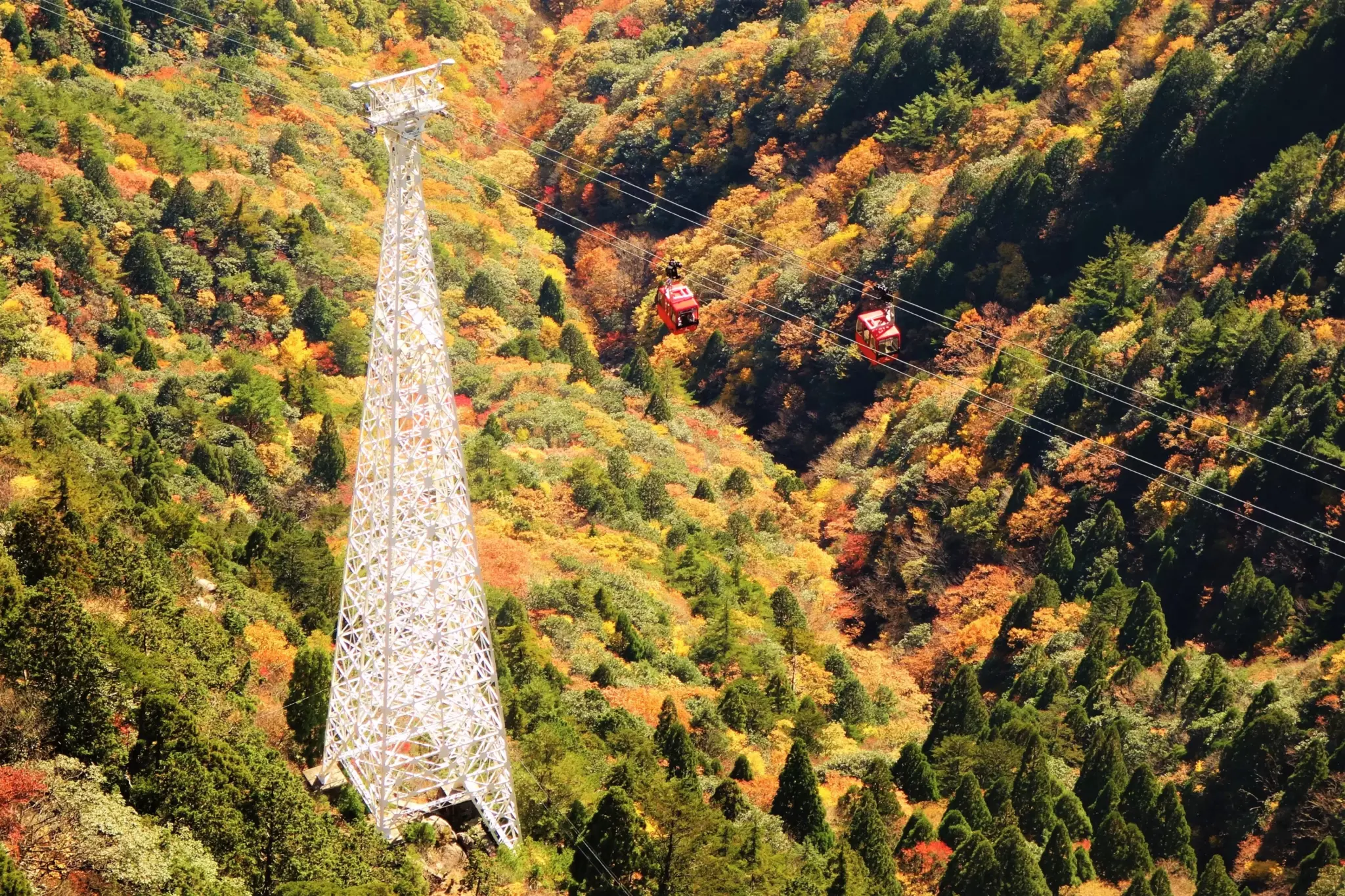
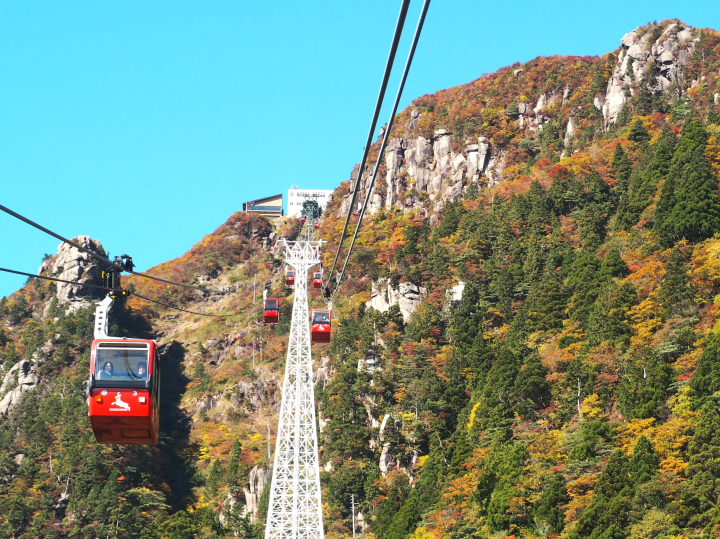
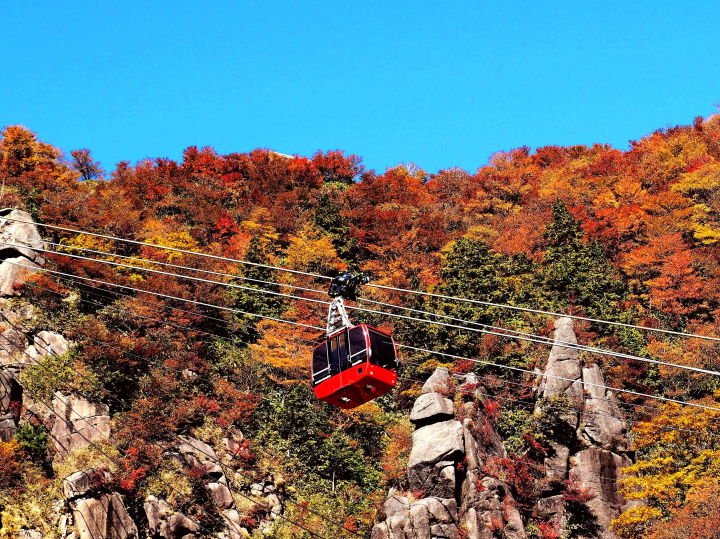
As October transitions into November, the foliage front descends steadily toward the middle elevations. During this phase, the rocky, rugged slopes surrounding the ropeway’s mountaintop park station burst into a dynamic mosaic of yellows, greens, and rust-reds.
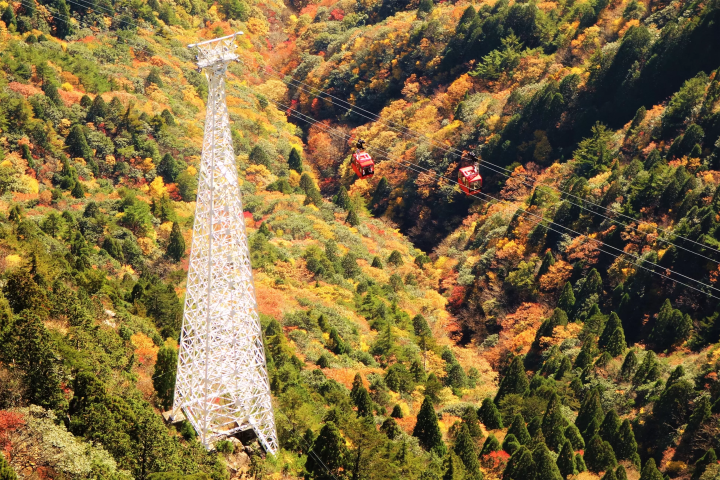
By mid-November, the descent reaches the deep valleys surrounding "Tower No. 6"—the iconic architectural symbol of the Gozaisho Ropeway. Here, the dense clusters of maple, birch, and rowan trees weave together to form what landscape photographers describe as a natural tapestry, cascading down the steep ravines.
Phase 3: The Lowland Finale at Yunoyama Onsen (Late November)
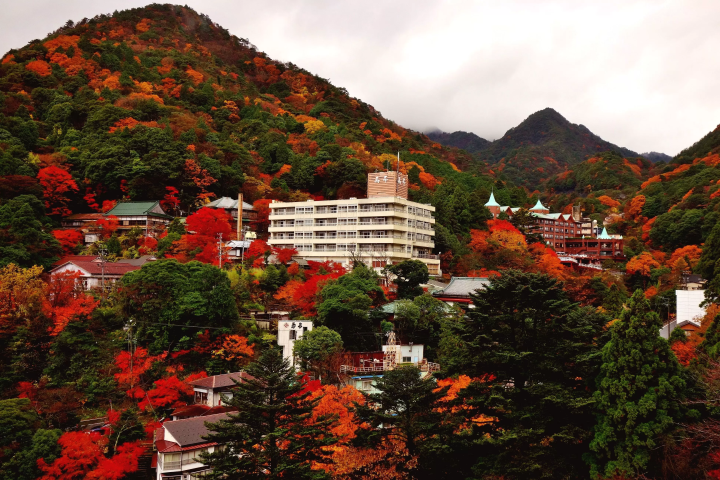
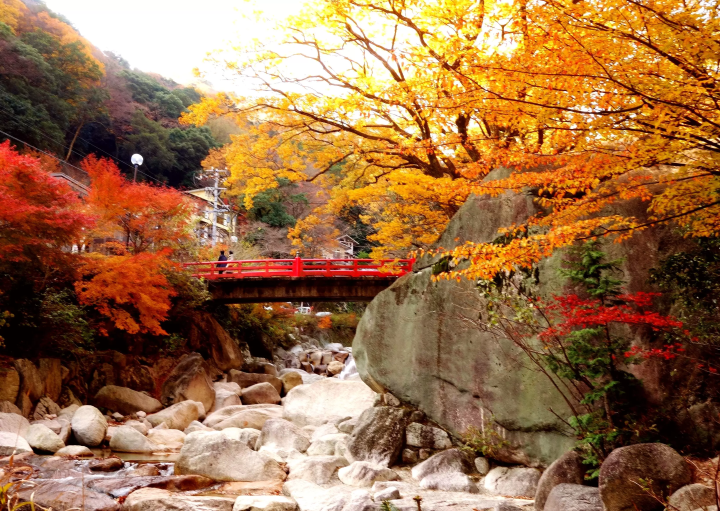
The final chapter of the autumn season unfolds at the foot of the mountain in Yunoyama Onsen. By late November, the classic Japanese maples (momiji) lining the clear mountain streams reach peak chromatic saturation. The contrast of brilliant red leaves reflecting off pristine mountain streams plunges the historic hot spring town into a serene, almost surreal aesthetic.
Supporting Context & Metrics: Infrastructure, Logistics, and Economics
Navigating Mt. Gozaisho requires an understanding of its transit systems, ticketing structures, and geographic layout. The infrastructure is purposefully designed to accommodate casual day-trippers and dedicated hikers alike.
The Gozaisho Ropeway & Sightseeing Lift Mechanics
Spanning a considerable distance from Yunoyama Onsen Station’s upper reaches to the summit, the Gozaisho Ropeway provides a bird’s-eye perspective of the changing foliage, sweeping across sheer cliffs, deep valleys, and distant vistas that stretch all the way to the Japanese Alps on clear days.
To further explore the summit park, visitors can utilize the Gozaisho Sightseeing Lift. Key operational metrics include:
Ropeway Fare: 2,600 yen round trip for adults (aged 13 and over); 1,300 yen round trip for children; free for children aged 1 to 3.
Sightseeing Lift Route: Connects Ropeway Sanjo Park Station to the Mt. Gozaisho summit.
Lift Distance & Duration: Covers approximately 500 meters in roughly 8 minutes.
Lift Fare: 400 yen one-way; 700 yen round-trip (uniform pricing for adults and children aged 4 and over).
Lift Design: Single-seater open-air cabins, offering unobstructed panoramic views of the azalea colonies lining the route.
Access and Transit Blueprint
Strategic transit planning is essential to bypass the severe vehicular congestion that plagues the area during peak foliage weekends.
Trunk Line Transit: Travelers originating from either Nagoya or Osaka must board the Kintetsu Railway network and route toward Kintetsu Yokkaichi Station. (Note: Visitors are explicitly advised to avoid trains bound for JR Yokkaichi Station, which is geographically isolated from the Kintetsu terminal).
Regional Transfer: From Kintetsu Yokkaichi Station, passengers transfer directly to the Kintetsu Yunoyama Line, riding it to its final stop: Yunoyama Onsen Station. (The use of the Kintetsu Rail Pass is highly recommended for cost efficiency).
Bus Connection: Immediately outside Yunoyama Onsen Station, transfer to the Mie Kotsu Bus bound for "Yunoyama Onsen Gozaisho Ropeway Mae." The bus journey takes approximately 10 minutes.
Managing visitor flows during the compressed autumn window requires proactive communication from regional operators and tourism boards. According to operational advisories issued by the Gozaisho Ropeway management:
"While the autumn foliage season offers some of the most visually stunning landscapes in the Kansai and Chubu regions, it concurrently represents our highest traffic density period of the calendar year."
To mitigate traveler frustration, official guidance stresses the importance of timing:
Weekday Preference:"We strongly recommend visiting on weekdays to avoid peak weekend congestion, long ticket queues, and highway bottlenecks."
Public Transit Mandate:"For those constrained to visiting on weekends or national holidays, utilizing the Kintetsu Railway and Mie Kotsu bus network is not merely a convenience—it is a vital strategy to bypass severe roadway gridlock around the base of the mountain."
Future Outlook: Modernizing the Alpine Experience
Mt. Gozaisho is not resting on its historical reputation as a seasonal viewing spot. In recent years, management has implemented targeted capital investments designed to diversify the visitor experience and modernize hospitality infrastructure on the summit.
The COCORRU Terrace Innovation
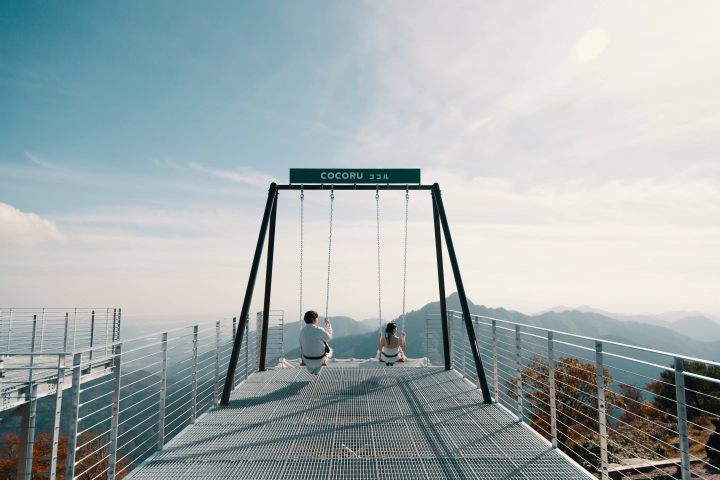
Unveiled on October 31, 2025, the "COCORRU Terrace" represents a significant milestone in the evolution of Mt. Gozaisho’s summit park. Positioned to maximize sightlines across Mie Prefecture’s expansive Ise Shima region, the terrace functions as an architectural viewpoint designed for contemporary travel culture.
The centerpiece of the installation is a high-altitude swing that hovers over the edge of the terrain, engineered to deliver both an adrenaline rush and an unobstructed photographic backdrop. This addition bridges the gap between traditional nature observation and modern, experiential tourism, encouraging visitors to linger longer at the summit rather than executing a quick turnaround trip.
Culinary and Hospitality Evolution
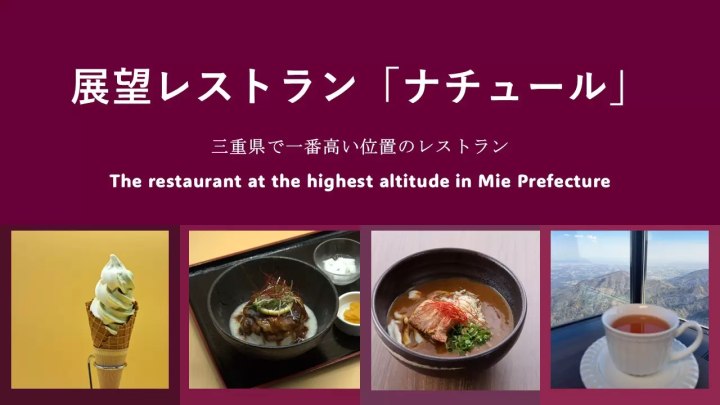
Complementing the visual upgrades is the summit restaurant, "Nature." Beyond serving its signature local comfort dish—Gozaisho Curry Udon—the establishment has rolled out seasonal menus and specialty cafe offerings designed to keep visitors comfortable in the brisk mountain climate.
Furthermore, regional integration is being bolstered by accommodations such as the Sanko Inn Yokkaichi Ekimae, located directly adjacent to Kintetsu Yokkaichi Station. By positioning itself as a central transit hub, the hotel facilitates multi-day itineraries that link Mt. Gozaisho with broader regional exploration across Nagoya, Ise, and Toba.
Sustainable Tourism Horizons
As climate variability shifts the timing of the koyo front year-on-year, operators are increasingly focusing on ecological monitoring and crowd dispersion strategies. Future outlooks for Mt. Gozaisho point toward digital queue management systems, expanded real-time web-camera broadcasting to manage daily capacity, and reinforced conservation protocols to protect the sensitive Ericaceae plant communities that define the mountain’s crimson identity.
For travelers seeking an accessible yet deeply immersive alpine autumn escape, Mt. Gozaisho remains an unmatched regional asset—bridging urban convenience with raw, high-altitude natural beauty.










Belum ada komentar. Jadilah yang pertama berkomentar!