

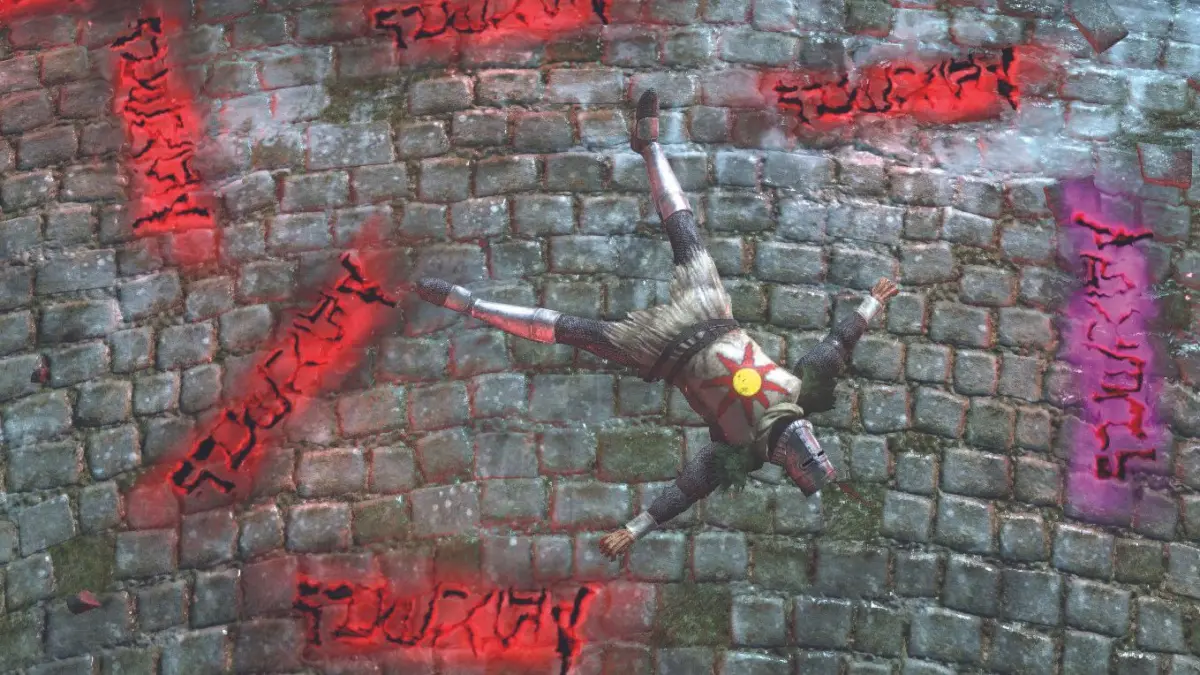
(Image credit: FromSoftware)
Executive Overview
In the unforgiving worlds crafted by FromSoftware, death is an expected and meticulously designed companion. However, for the millions of players traversing the desolate landscapes of Dark Souls II and Dark Souls III, an entirely different kind of peril has abruptly pulled them out of the experience: sudden, indeterminate server shutdowns.
On October 30, developer FromSoftware announced that the online multiplayer infrastructures for both Dark Souls II and Dark Souls III would be taken offline across all platforms—affecting PC, PlayStation, and Xbox users alike. The outage instantly severed access to core online pillars of the action-RPG masterpieces, including cooperative summoning, treacherous player-versus-player invasions, and the cryptic, often humorous orange-soapstone messages left behind by fellow travelers.
While the developer has remained tight-lipped regarding the exact root cause behind the blackout, citing only an undisclosed "server issue," the unexpected downtime has once again highlighted the fragile nature of long-term online support for legacy titles. It also serves as a sharp reminder of FromSoftware’s history with network vulnerabilities. Yet, unlike previous security crises that crippled the franchise for months, this multi-platform outage may not be as dire as it initially appears—particularly for PC players, who have recently found a robust workaround via the dedicated modding community.
Detailed Chronology: How the Outage Unfolded
The disruption began quietly before cascading into a mandatory, global network disconnect. Players attempting to log into Dark Souls II and Dark Souls III were met with persistent connection errors, unable to synchronize with the game’s matchmaking servers.
Hours after initial user reports flooded forums and social media platforms, FromSoftware took to X (formerly Twitter) to officially acknowledge the problem. In a brief statement issued on October 30, the studio confirmed the emergency maintenance, stating that online features for both games were suspended for an indefinite period while engineers investigated the underlying hardware or software failures.
Unlike localized outages or routine maintenance windows, which typically provide a precise countdown or an estimated time of return, FromSoftware’s announcement offered no timeline for restoration. The company noted only that it would issue a follow-up advisory once more information became available regarding the nature of the issue and the progress of the repairs.
The closure sweeps across every major platform where these titles are actively played:
- PlayStation 4 and PlayStation 5 (via backwards compatibility)
- Xbox One, Xbox Series X, and Xbox Series S
- Microsoft Windows (PC)
As days stretch on with minimal communication from the developer, the global Souls community has been left to speculate on the severity of the infrastructure failure.
Supporting Context & Metrics: A History of Server Instability
To fully understand the gravity of the current situation, one must look back at FromSoftware’s tumultuous history with online server maintenance and security management.
The 2022 Security Crisis
The most infamous chapter in FromSoftware’s online maintenance history occurred in early 2022, just weeks before the historic launch of the critically acclaimed Elden Ring. Cybersecurity researchers discovered a catastrophic Remote Code Execution (RCE) vulnerability hidden deep within the netcode of the Dark Souls franchise.
This exploit was dangerously severe: if left unpatched, a malicious invader could potentially execute arbitrary code on a victim’s personal computer, giving hackers full access to the machine. To protect its player base, FromSoftware took the unprecedented step of shutting down the PC servers for Dark Souls: Remastered, Dark Souls II, and Dark Souls III indefinitely.
While Elden Ring launched without incident, the older titles remained trapped offline for months. Dark Souls III servers did not return until late summer 2022, while Dark Souls II required an even longer hiatus. The fix required a complete overhaul of the PC security framework, proving that FromSoftware’s legacy netcode was struggling to adapt to modern cybersecurity threats.
Key Differences in the Current Outage
While the sudden loss of multiplayer access has drawn immediate comparisons to the 2022 disaster, industry analysts and long-time fans have pointed out crucial differences that offer a glimmer of hope:
- Multi-Platform Scope: The 2022 RCE exploit primarily targeted PC architecture, leaving console servers operational for a brief period before preventative shutdowns. The current October 30 outage impacts all platforms universally.
- Nature of the Issue: By affecting consoles alongside PC, the issue points less toward a targeted cybersecurity exploit or zero-day hack and more toward a centralized database failure, cloud-service provider hiccup, or backend infrastructure glitch.
- Anticipated Duration: Because the problem does not appear to stem from a critical architectural vulnerability requiring a complete netcode rewrite, many expect the resolution time to be significantly shorter than the months-long drought experienced in 2022.
Official Statements and Developer Response
FromSoftware’s official communication channels have been characteristically sparse. Known for letting their games speak for themselves, the Japanese studio rarely provides deep technical breakdowns of backend malfunctions.
The initial advisory released on X outlined the scope of the shutdown clearly, apologizing for the inconvenience while maintaining strict corporate ambiguity regarding the technical triggers. Industry insiders suggest that the studio’s primary engineering talent is heavily split between supporting Elden Ring (including its massive Shadow of the Erdtree expansion ecosystem) and developing upcoming titles, leaving fewer resources immediately available to diagnose legacy hardware issues.
Nevertheless, publisher Bandai Namco and FromSoftware have assured the community that engineering teams are actively investigating the telemetry data to safely bring the servers back online. Until a patch or system reset is deployed, however, players attempting to launch the game online will continue to receive offline mode prompts.
Future Outlook & The PC Saving Grace: Seamless Co-op
For console players, the current blackout means a purely solitary journey through Drangleic and Lothric. Without invasions, phantom summons, or player messages, the world of Dark Souls reverts to a lonely, hauntingly quiet experience—one that purists might argue matches the thematic isolation of the lore, but which modern cooperative players find deeply restrictive.
However, for PC players, the timing of the server outage could not have been more forgiving, thanks entirely to the ingenuity of the modding community.
The Rise of Seamless Co-op
In late September, the legendary modding scene achieved a long-awaited milestone: Dark Souls II finally received the "Seamless Co-op" treatment. Developed by creator Yui—who previously revolutionized Dark Souls III and Elden Ring with similar modifications—this mod completely bypasses FromSoftware’s official matchmaking servers.
Instead, Seamless Co-op operates via independent peer-to-peer and dedicated third-party server routing, allowing friends to play through the entirety of the famously punishing games together without the arbitrary restrictions found in the vanilla game.
Key features of the Seamless Co-op mod include:
- Persistent Sessions: Players no longer return to their own worlds upon defeating a boss or dying; partners remain in the session continuously.
- Shared Progress: Questline progression, world states, and item drops are synchronized.
- Zero Disconnects: Freedom from FromSoftware’s official network infrastructure means that official server outages have zero impact on modded playthroughs.
A Silver Lining for the Community
While the loss of official servers is undoubtedly an inconvenience for traditional players and PvP duelists who rely on random matchmaking, the thriving modding ecosystem has effectively insulated a significant portion of the PC player base. Content creators, cooperative enthusiasts, and veterans returning to revisit the trilogy are increasingly shifting toward community-driven solutions to bypass official hurdles.
As FromSoftware works behind the scenes to resolve the underlying hardware or software glitches affecting Dark Souls II and Dark Souls III, the broader community remains resilient. Whether playing vanilla offline on consoles or exploring Drangleic hand-in-hand with friends via custom PC frameworks, the fire refuses to fade entirely.
FromSoftware is expected to issue a follow-up status report as soon as diagnostics are complete and server stability can be guaranteed for a safe, public reactivation. Until then, stay safe out there, Unkindled and Bearers of the Curse—and watch your step in the dark.






Belum ada komentar. Jadilah yang pertama berkomentar!