

Executive Overview
The video game industry has weathered a notoriously turbulent financial climate over recent years, marked by widespread studio closures, sudden pivots, and devastating corporate layoffs. Yet, few announcements sting quite as sharply for the enthusiast community as the demise of a studio dedicated to sheer artistic whimsy and technological boundary-pushing.
Polyarc Games—the acclaimed independent developer universally celebrated for bringing magical realism, immersive scale, and emotional resonance to the virtual reality medium through the beloved Moss series—has officially announced its permanent closure. The heartbreaking decision comes just three months after the studio launched its final title on Steam, bringing a definitive end to nearly twelve years of pioneering game development.
Founded in 2015 by industry veterans who envisioned a space where virtual reality could be utilized for more than just first-person shooters or tech demos, Polyarc carved out a legendary niche. The studio’s signature creation, a diminutive, brave hero named Quill the mouse, captured the hearts of hundreds of thousands of players worldwide. Blending traditional, third-person action-adventure platforming with the breathtaking, interactive scale of stereoscopic 3D environments, Polyarc demonstrated how players could forge deep, empathetic bonds with virtual characters.
Despite earning over 160 industry awards and nominations, critical acclaim across virtually every major gaming publication, and a passionate, dedicated fanbase, the economic realities of modern game development finally caught up to the studio. Following a failed funding bid for an unannounced mid-development project, severe layoffs, and a last-ditch effort to transition its iconic library to traditional flat-screen displays, Polyarc has elected to wind down operations permanently.
This retrospective examines the trajectory of one of VR’s most innovative developers, the cascading financial pressures that led to its downfall, the bittersweet release of its final title, and what this means for the broader landscape of independent game creation.
Detailed Chronology: From Promising Beginnings to the Final Bow
2015–2018: The Genesis of a Masterpiece
Polyarc was established in 2015 with a clear, ambitious mission: to build worlds that felt tactile, alive, and profoundly emotional. At a time when the modern consumer VR landscape was still finding its footing—grappling with hardware adoption hurdles, motion sickness limitations, and a lack of narrative-driven “killer apps”—Polyarc took a massive gamble on a unique conceptual framework.
Rather than trapping the player inside the eyes of the protagonist (a common trap that often restricted narrative scope or induced discomfort), Polyarc’s debut game positioned the player as an omniscient, benevolent entity known simply as "The Reader."
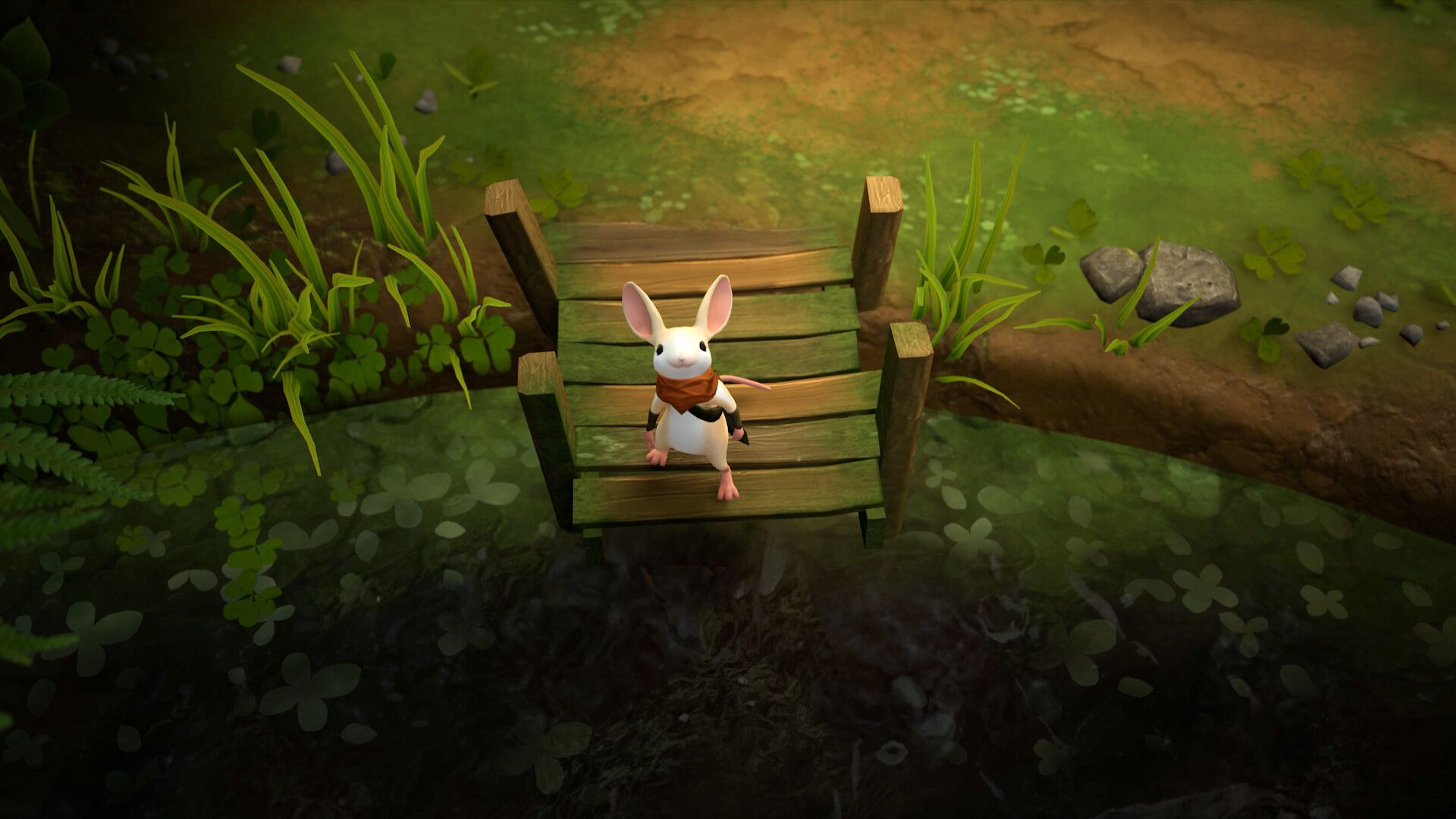
When Moss (later retroactively titled Moss: VR) launched in February 2018 as a PlayStation VR exclusive before expanding to Steam later that year, it was met with immediate, rapturous praise. Players controlled Quill with standard gamepad inputs, guiding her through sword fights, environmental obstacles, and intricate puzzles. Simultaneously, players used VR motion controllers to reach directly into the diorama-like 3D environments, moving massive stone blocks, healing Quill, and manipulating obstacles out of her path.
The synergy between player and mouse felt revolutionary. Quill herself was a triumph of character design and animation; she reacted to the player’s presence with waves, high-fives, and anxious glances, establishing an emotional attachment rarely seen in digital media.
2022: Expanding the Mythos with Moss: Book II
Capitalizing on the critical triumph of the original game, Polyarc returned in 2022 with Moss: Book II. The sequel expanded the scope, introducing new weapons (such as a heavy hammer and throwing chakrams), more complex puzzle mechanics, dynamic enemy types, and a darker, more emotionally resonant narrative arc.
Moss: Book II cemented Polyarc’s reputation as an elite studio capable of wringing every drop of capability out of hardware that was rapidly evolving. The game swept up nominations and awards across the VR ecosystem, particularly thriving on Meta Quest and PlayStation VR2 platforms. For a brief moment, Polyarc appeared to be the gold standard of sustainable, premium VR game development—a studio that could weather platform shifts through sheer creative excellence.
2023–2025: Strategic Missteps and Funding Cracks
Despite the critical success of the Moss franchise, the economic realities of targeting a niche hardware market began to squeeze independent studios by the mid-2020s. In an effort to diversify its portfolio and capture a broader esports and competitive gaming audience, Polyarc launched Glassbreakers: Champions of Moss in 2025. Set within the same beloved universe, Glassbreakers was conceived as a PvP strategy game. Unfortunately, the title struggled to find a sustainable player base in a crowded multiplayer market, failing to capture the magic or the commercial momentum of its single-player predecessors.
Behind closed doors, the financial situation deteriorated rapidly. Later in 2025, Polyarc suffered a catastrophic setback when a primary financial backer pulled funding for a major mid-development project. Desperate to keep the studio afloat, leadership sought out a third-party publishing partner for a “hail mary” rescue deal. When those negotiations fell through, Polyarc was forced into survival mode, laying off roughly two-thirds of its workforce earlier in the year.
July 2025: The Final Gamble—Moss: The Forgotten Relic
In a final attempt to salvage revenue and bring their beloved universe to a wider audience that lacked expensive VR hardware, Polyarc partnered with co-developer Blackbird Interactive to create Moss: The Forgotten Relic. Released in July, the project was a comprehensive compilation and remaster of the first two Moss games, alongside the original expansion The Twilight Garden, entirely reworked as a traditional, non-VR desktop experience.

While critics praised the transition—proving that the underlying level design and character work remained compelling even without stereoscopic immersion—the market response was lukewarm. The Forgotten Relic failed to generate the massive sales volume required to rescue a severely depleted studio facing insurmountable debt and operational overhead.
Supporting Context & Metrics: The Anatomy of a Studio Collapse
To fully grasp why Polyarc was forced to shut its doors, one must examine the broader economic pressures facing independent mid-tier developers in the mid-2020s.
- The VR Adoption Ceiling: While headsets like the Meta Quest 2 and 3 achieved impressive mainstream sales numbers compared to early-generation hardware, software attach rates for narrative-driven, single-player adventure games often failed to match the massive production budgets required to build them. Building high-fidelity VR assets is resource-intensive, and the addressable market remains a fraction of the traditional PC and console install base.
- Award-Winning Legacy: Across its lifetime, Polyarc’s flagship IP earned over 160 industry awards and nominations, establishing the studio as a titan of immersive storytelling.
- The Scale of the Layoffs: Prior to its closure, Polyarc was forced to slash its headcount by two-thirds in a desperate downsizing effort earlier in 2025, leaving only a skeletal crew to push out The Forgotten Relic and manage administrative wind-down duties.
- The Human Cost: The final closure impacts roughly 30 remaining developers. In a class act of solidarity and corporate responsibility, leadership ensured that these developers were not left stranded, publishing a comprehensive "reverse recruiting tracker" spreadsheet to help them transition into new roles across the industry.
Official Statements and Industry Impact
In a poignant farewell posted to LinkedIn and widely shared across developer networks, Polyarc expressed its gratitude to the community that sustained it for over a decade:
"After nearly 12 years riding the joyous rollercoaster of emotions that is making video games, our time together has come to and end. As we wind down active development, we are saying our farewells to each other. Working together over all of these years has been an honor. Bringing surprise and delight to those who played our games has been a privilege. Thank you to everyone at Polyarc, our work is now finished."
The industry response has been an outpouring of grief and respect. Independent developers, major platform holders, and journalists alike have taken to social media to highlight the cultural footprint left by Quill and the team in Seattle. Polyarc proved that virtual reality did not need to rely solely on adrenaline-pumping shooter mechanics to be compelling; it could evoke tenderness, awe, and quiet contemplation.
Future Outlook: Preserving a Legacy
As Polyarc officially closes its doors, the studio’s digital storefronts remain active, offering steep discounts on its catalog as a final parting gift to gamers. Moss: The Forgotten Relic is currently discounted by 20%, while the definitive VR versions of Moss and Moss: Book II are marked down by 50% on Steam and other digital platforms. Industry veterans strongly encourage anyone who owns a VR headset to experience the titles in their original, intended format—reminding players of the breathtaking sense of scale that occurs when you lean down from the heavens to high-five a tiny mouse.
For the 30 developers listed on Polyarc’s transition spreadsheet, the immediate future involves finding new homes within an industry that is currently reevaluating its financial models. For the gaming community at large, the closure of Polyarc Games serves as both a celebration of what was achieved and a sobering reminder of the fragility of independent creativity in the modern era. Quill’s journey may have reached its final page, but the footprints she left on the virtual reality landscape will endure for generations to come.




Belum ada komentar. Jadilah yang pertama berkomentar!