

By Adam Roarty
Senior Editor, Esports News
Last Updated: September 10, 2026
Executive Overview
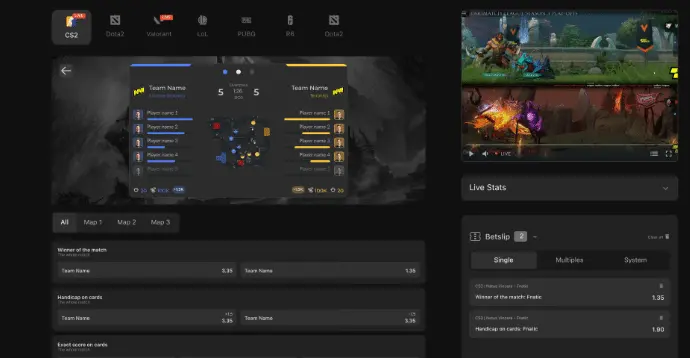
The landscape of esports wagering is undergoing a seismic structural shift. Leading esports data platform GRID has officially announced the launch of GRID Odds, a premier, data-driven esports betting service specifically engineered for gambling operators worldwide. The product is live and fully operational across the industry’s four heavyweight competitive titles: Counter-Strike 2 (CS2), Dota 2, Valorant, and League of Legends.
Built on the core conviction that elite sports and esports betting success is entirely tethered to official data access, GRID Odds represents the logical and scalable evolution of the company’s business model. Backed by exclusive official data rights partnerships with industry powerhouses such as Riot Games, Ubisoft, KRAFTON, ESL FACEIT Group, and BLAST, GRID is uniquely positioned to dominate the rapidly expanding live betting ecosystem.
This strategic expansion comes at a critical juncture for the industry. Live in-play wagering now accounts for approximately 70% of all stakes in esports markets, positioning competitive gaming as the fastest-growing in-play sport globally. By combining direct access to low-latency server-side data with a newly assembled, top-tier trading desk led by betting industry veteran Evgeniy Bekker, GRID is bridging the historical gap between raw game telemetry and sophisticated sportsbook architecture. Furthermore, this push extends beyond traditional sportsbooks into burgeoning prediction markets—evidenced by GRID’s high-profile partnership with Polymarket, which saw staggering trading volumes hit $790 million in July alone. As regulatory conversations around prediction markets begin to thaw in key regions like the United Kingdom, GRID’s aggressive expansion positions the company at the vanguard of modern digital wagering.
Detailed Chronology: The Evolution of GRID from Data Provider to Betting Powerhouse
To fully understand the significance of the GRID Odds rollout, one must examine the systematic trajectory of GRID as a company. For years, the platform focused primarily on B2B data distribution—supplying tournament organizers, media outlets, and teams with comprehensive telemetry, analytics, and broadcast integrations. However, the commercial reality of the esports ecosystem demanded a more integrated financial engine.
Building the Foundation
GRID’s journey toward an enterprise-grade odds-making product was not improvised; it was methodically constructed through a series of foundational milestones:
- Securing Official Rights: Over successive years, GRID systematically locked down official data partnerships with premier tournament operators and developers. Securing rights with Riot Games (League of Legends, Valorant), Ubisoft, KRAFTON, ESL FACEIT Group, and BLAST created a near-monopoly on official, low-latency telemetry. Without official rights, third-party oddsmakers are perpetually forced to rely on delayed video feeds or screen scraping—methods fraught with latency, inaccuracy, and vulnerability to integrity issues.
- The Leadership Pivot: Recognizing that data mastery alone does not automatically translate to a world-class trading product, GRID made strategic leadership appointments. Thomas Warburton, formerly of Sky Betting and Gaming, stepped in as Co-Founder and Chief Business Officer, bringing deep-rooted experience from traditional high-volume sports betting verticals.
- Constructing the Trading Desk: To operationalize its data assets into actionable odds, GRID appointed Evgeniy Bekker as Vice President of Trading. Bekker, formerly the Director of Trading at BETER, was tasked with building GRID’s dedicated trading desk completely "from the ground up."
The Official Launch of GRID Odds
Following months of testing, proprietary refinement, and infrastructure scaling, September 2026 marked the commercial debut of GRID Odds. Rather than positioning the service as a generic feed, GRID designed the product to solve the industry’s most persistent pain point: the ability to price complex, fast-moving in-round events reliably. By deploying its software suite directly to tier-one operators, GRID has bypassed the traditional friction points that have historically plagued esports trading desks.
Supporting Context & Metrics: The Dominance of In-Play and Micro-Markets
The launch of GRID Odds is a direct response to fundamental structural changes in consumer behavior within the esports betting demographic. Traditional pre-match betting—long the bread and butter of legacy sportsbooks—plays a secondary role in competitive gaming. Instead, modern bettors demand dynamic, real-time engagement.
The 70% In-Play Reality
According to internal metrics shared by GRID, live in-play betting now accounts for roughly 70% of all stakes placed across esports markets globally. This consumer preference outpaces many traditional sports categories, establishing esports as the undisputed leader in fast-paced, real-time wagering growth.
However, offering in-play markets for games as chaotic and fast-moving as CS2 or Valorant is technically prohibitive without direct server integration. Traditional odds-makers struggle to price events like individual round winners, pistol-round outcomes, or weapon-purchase decisions because traditional data pipelines introduce too much latency.
[Game Server / Developer API]
       │ (Low-Latency Official Feed)
       ▼
[GRID Data Infrastructure]
       │
       ├─────────────────────────────────┐
       ▼                                 ▼
[GRID Odds Engine]              [Polymarket / Prediction Markets]
       │                                 │
       ▼                                 ▼
[Sportsbook Operators]          [Global Speculative Volume ($790M+)]
  - Match/Map Winner              - Macro Events
  - Player Props                  - Speculative Outcomes
  - In-Round Micro Markets
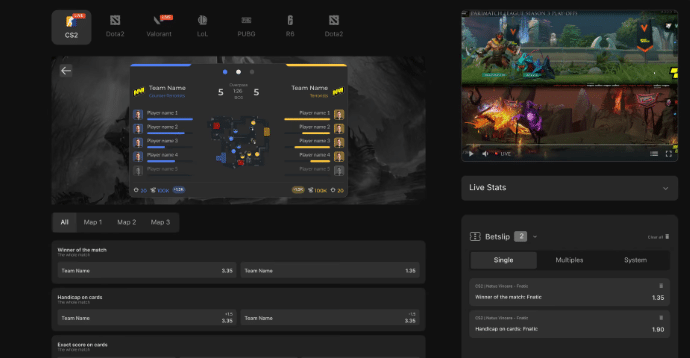
GRID Odds addresses this through absolute access. Because the platform communicates directly with official game data streams, it empowers operators to offer extensive markets that were previously deemed too risky or difficult to model:
- Match and Map Winners: Standard baseline offerings backed by precise historical telemetry.
- Player Props: Granular statistical tracking of individual athletes (e.g., K/D ratios, headshot percentages, entry-frag success rates).
- In-Round Micro Markets: Hyper-fast wagers settled within seconds or minutes, transforming every single round of a Counter-Strike map into an independent betting event.
Expanding into Prediction Markets
GRID’s ambitions are not confined strictly to traditional sportsbooks. In June 2026, the company forged a strategic partnership with Polymarket, a leading decentralized prediction market platform. This integration proved to be an immediate catalyst for growth, driving exponential volume spikes throughout the summer.
By July 2026, GRID-powered prediction markets recorded an astonishing $790 million in esports volume, representing a massive 33% month-over-month increase from June. This metric underscores a broader convergence between traditional gambling, crypto-native prediction platforms, and mainstream esports fandom. While platforms like Polymarket and Kalshi currently face regulatory roadblocks in the United Kingdom, recent signals from UK regulators indicate that restrictions on prediction markets are actively being reviewed for potential easing—a development that could unlock even greater market share for GRID in the near future.
Official Statements and Industry Insights
The rollout of GRID Odds has generated significant commentary across both the gaming and gambling sectors, highlighting the vital importance of official data integrity.
Addressing the philosophy behind the launch, Thomas Warburton, Co-Founder and Chief Business Officer of GRID, emphasized that success in this vertical is binary:
"GRID has been built on a single conviction: esports betting success depends on official data access. GRID Odds is the logical, scalable extension of that position."
Warburton further elaborated on why traditional modeling techniques fall short in competitive gaming, pointing directly to the structural advantage of GRID’s developer partnerships:
"In-map player options and in-round micro markets are not a modelling choice but rather are a question of access. Leveraging that access for our customers is why GRID Odds stands out in the market, letting us serve far more operators who are serious about esports."
Commenting on the structural integrity and internal capabilities of the newly formed trading division, Warburton expressed immense confidence in his leadership team:
"I am glad to have Evgeniy leading the trading side. He brings the experience to drive the business forward, with a team behind him that knows the success lies in the product."
Evgeniy Bekker, VP of Trading, whose background includes building sophisticated quantitative desks at BETER, has engineered GRID Odds to withstand the hyper-volatile nature of live esports spikes, ensuring that sportsbooks can manage risk effectively without closing markets prematurely.
Future Outlook: What GRID Odds Means for the Future of Esports Gambling
As GRID Odds solidifies its footprint across CS2, Dota 2, Valorant, and League of Legends, the secondary and tertiary effects on the broader esports economy will be profound.
1. Professionalization of Sportsbook Offerings
For years, mainstream bookmakers treated esports as an afterthought—appending generic, copy-pasted odds onto major tournament finals with minimal risk management. The introduction of institutional-grade products like GRID Odds forces sportsbooks to elevate their offerings. Operators who fail to provide deep, low-latency micro-markets will quickly lose market share to competitors powered by official, real-time data feeds.
2. Integrity and Ecosystem Sustainability
The monetization of official data directly benefits tournament organizers, developers, and, ultimately, the teams themselves. By ensuring that betting operators pay for authorized data feeds, revenue is funneled back into the competitive ecosystem. Furthermore, robust official data monitoring acts as an early-warning radar for match-fixing and suspicious betting patterns, safeguarding the competitive integrity of major leagues.
3. The Convergence of Gaming and Financial Speculation
The blistering success of GRID’s partnership with Polymarket points toward a future where esports outcomes are tied not just to traditional wagers, but to complex macroeconomic and cultural prediction contracts. As regulatory frameworks evolve—particularly in major Western markets like the UK—the line between traditional sports betting, esports micro-wagering, and financial prediction markets will continue to blur.
GRID stands squarely at the intersection of these trends. By pairing unrivaled developer relationships with institutional trading expertise, GRID Odds has redefined what operators should expect from an esports data partner, setting a new benchmark for the entire digital entertainment economy.
About the Author: Adam Roarty has spent five years covering the intersection of gambling, esports, and digital culture for leading industry publications including CasinoBeats, OddsChecker, Esports.net, Esports Insider, and Gambling Industry News.









Belum ada komentar. Jadilah yang pertama berkomentar!