

Executive Overview
The mobile gaming landscape is fiercely competitive, characterized by rapid hardware iterations, aggressive thermal management solutions, and specialized ergonomics designed to cater to high-performance eSports enthusiasts. Within this high-stakes ecosystem, Lenovo has steadily carved out a formidable presence through its dedicated Legion gaming smartphone lineup.
Following the global reception of the unconventional Lenovo Legion Duel 2, anticipation reached a fever pitch for its successor. Originally slated for an ambitious market debut on January 1, the anticipated release window passed without a commercial launch. In response to the missed timeline—and to quell mounting speculation within the enthusiast community—Lenovo shifted its strategy, releasing an official teaser video via social media platform Weibo.
This promotional material offered an uncompromising, first-hand look at the Lenovo Legion Y90, revealing a device that refines rather than reinvents its predecessor’s core design philosophy. While the physical rollout schedule remains fluid, the unveiled specifications, structural layout, and thermal architectures indicate that the Legion Y90 is poised to be a heavyweight contender in the 2022 mobile gaming arena.
This comprehensive report examines the design evolution, advanced display specifications, thermal engineering, and hardware ecosystem surrounding the Lenovo Legion Y90, contextualizing its position within the broader gaming smartphone industry.
Detailed Chronology: From Missed Deadlines to Visual Teasers
The January 1st Disruption
In the fast-paced world of consumer electronics, launch dates are sacred milestones. However, supply chain disruptions, firmware finalization stages, and strategic marketing adjustments frequently force manufacturers to pivot. Lenovo’s initial internal or whispered target of a January 1 launch for the Legion Y90 came and went quietly. For industry observers, missing a New Year’s Day release could have signaled developmental delays or regulatory hurdles.
The Weibo Reveal
Rather than leaving consumers and tech journalists in an information vacuum, Lenovo took to Weibo to control the narrative. By releasing a polished teaser video and corresponding promotional imagery, the company offered a transparent glimpse into the physical chassis and interface design of the Legion Y90. This strategic leak-prevention tactic shifted public discourse away from speculation and firmly toward appreciation of the device’s engineering choices.
The teaser highlighted several critical transformations:
- The transition away from the controversial motorized pop-up camera layout seen on the Legion Duel 2.
- The refinement of the central cooling hump and RGB integration.
- The structural arrangement of physical game-assist buttons and multi-vent airflow channels.
Design and Ergonomics: Evolution of the Gamer Aesthetic
Retaining the DNA of the Legion Duel 2
At first glance, the Legion Y90 bears a striking structural resemblance to its predecessor, the Legion Duel 2. Lenovo has deliberately maintained a symmetrical, landscape-oriented design philosophy. This acknowledges a fundamental truth of mobile gaming: enthusiasts rarely use their devices vertically during intense gaming sessions.
The rear profile of the Legion Y90 features a prominent central bump—a hallmark of the Legion aesthetic. This elevated central housing is not merely an aesthetic choice; it serves a crucial functional purpose. It accommodates the primary dual-camera configuration, a dual-tone LED flash, the signature Y-shaped RGB lighting array, and a central thermal extraction vent. By concentrating the heaviest components and heat-generating processors in the middle of the device, Lenovo ensures a balanced weight distribution when the phone is gripped horizontally in both hands.
Sidestepping the Pop-Up Camera
One of the most polarizing features of the Legion Duel 2 was its side-mounted, motorized pop-up selfie camera. While innovative for live-streamers who wanted to broadcast their reactions while gaming in landscape mode, the mechanical nature of the pop-up module introduced potential mechanical wear points and increased manufacturing complexity.
The Legion Y90 marks a distinct departure from this approach. Official renders and teaser footage confirm the complete absence of a notch, punch-hole cutout, or motorized mechanism in the traditional sense. Instead, the selfie camera is discreetly integrated into the top-right corner of the bezel. This decision prioritizes structural integrity, potential dust- and water-resistance ratings, and long-term mechanical durability over niche streaming hardware.
Button Layout and Airflow Integration
A closer examination of the chassis reveals a meticulous approach to peripheral layout:
- The Right Flank: The power button is positioned centrally on the right edge, cleverly flanked by two additional ventilation grilles. This layout facilitates unobstructed airflow while maintaining tactile accessibility.
- The Left Flank: The volume rocker occupies the left edge, positioned safely away from accidental palm presses during high-octane multiplayer matches.
- Ergonomic Curvature: The device incorporates gently curved edges on the rear glass panel, ensuring that despite its robust internal hardware and substantial battery capacity, the phone rests comfortably in the palm without causing hand fatigue during extended play sessions.
Display Technology: Immersive Visuals and Ultra-Responsive Touch
A gaming smartphone lives and dies by its display. Visual fidelity, motion smoothness, and touch latency directly dictate a player’s competitive edge in fast-twitch genres like Call of Duty: Mobile, PUBG Mobile, and Genshin Impact.
The 6.92-inch E4 AMOLED Panel
Lenovo has equipped the Legion Y90 with a sprawling 6.92-inch E4 AMOLED display panel. Manufactured using advanced emissive materials, E4 AMOLED panels are renowned for delivering exceptional peak brightness levels, deep contrast ratios, and superior energy efficiency compared to older display generations. This ensures that outdoor visibility remains uncompromised and indoor gaming sessions exhibit vivid, punchy color reproduction without crushing shadow details in dark game environments.
144Hz Refresh Rate and 720Hz Touch Sampling
To eliminate motion blur and deliver butter-smooth animations, the Legion Y90 pushes a high-end 144Hz refresh rate. While many flagship devices cap out at 120Hz, the extra headroom provided by a 144Hz panel allows compatible games to run with heightened fluidity.
Complementing the high refresh rate is an astonishing 720Hz touch sampling rate. Touch sampling rate determines how many times per second the screen registers input from the user’s fingers. A 720Hz rate drastically minimizes input lag, ensuring that every swipe, tap, and multi-finger gesture is translated into onscreen action instantaneously—a vital advantage in competitive eSports.
Eye Protection and HDR Support
Extended gaming sessions naturally raise concerns regarding digital eye strain and blue light fatigue. Addressing this, the Legion Y90 features hardware-level anti-blue light eye protection certification, minimizing harmful high-energy visible (HEV) blue light emissions without significantly distorting white balance or color accuracy. Additionally, comprehensive HDR support ensures that compatible media and games rendered in High Dynamic Range display a wider spectrum of luminance and color depth.
Hardware Architecture and Thermal Engineering
Double Engine Air Cooling Technology
Mobile processors generate immense thermal loads when pushed to their absolute limits. Thermal throttling—where a chip reduces its clock speed to prevent overheating—is the primary enemy of sustained gaming performance.
Lenovo combats this physical limitation through its proprietary Double Engine Air Cooling Technology. This system utilizes a combination of passive vapor chamber cooling and active air management (potentially aided by internal micro-fans, given the presence of multiple dedicated intake and exhaust vents on the chassis). By forcing cool air across the internal thermal dissipation plates and expelling hot air through the central and lateral vents, the Legion Y90 is engineered to maintain peak performance thresholds over hours of continuous, uncompromised gaming.
Processing Power: Snapdragon 8-Series Dominance
While specific silicon configurations were subject to final validation during the initial reveal, industry leaks and official teasers point toward top-tier Qualcomm architecture. The Legion Y90 is powered either by the battle-tested Snapdragon 888 or the bleeding-edge Snapdragon 8 Gen 1 System-on-Chip (SoC).
Built on advanced node architectures, these processors offer massive leaps in CPU performance, GPU rendering capabilities (via the Adreno graphics pipeline), and AI-driven processing efficiency. Coupled with high-bandwidth LPDDR5 RAM and UFS 3.1 (or UFS 4.0) storage solutions, the device handles heavy resource allocation effortlessly.
Software Ecosystem: ZUI 13
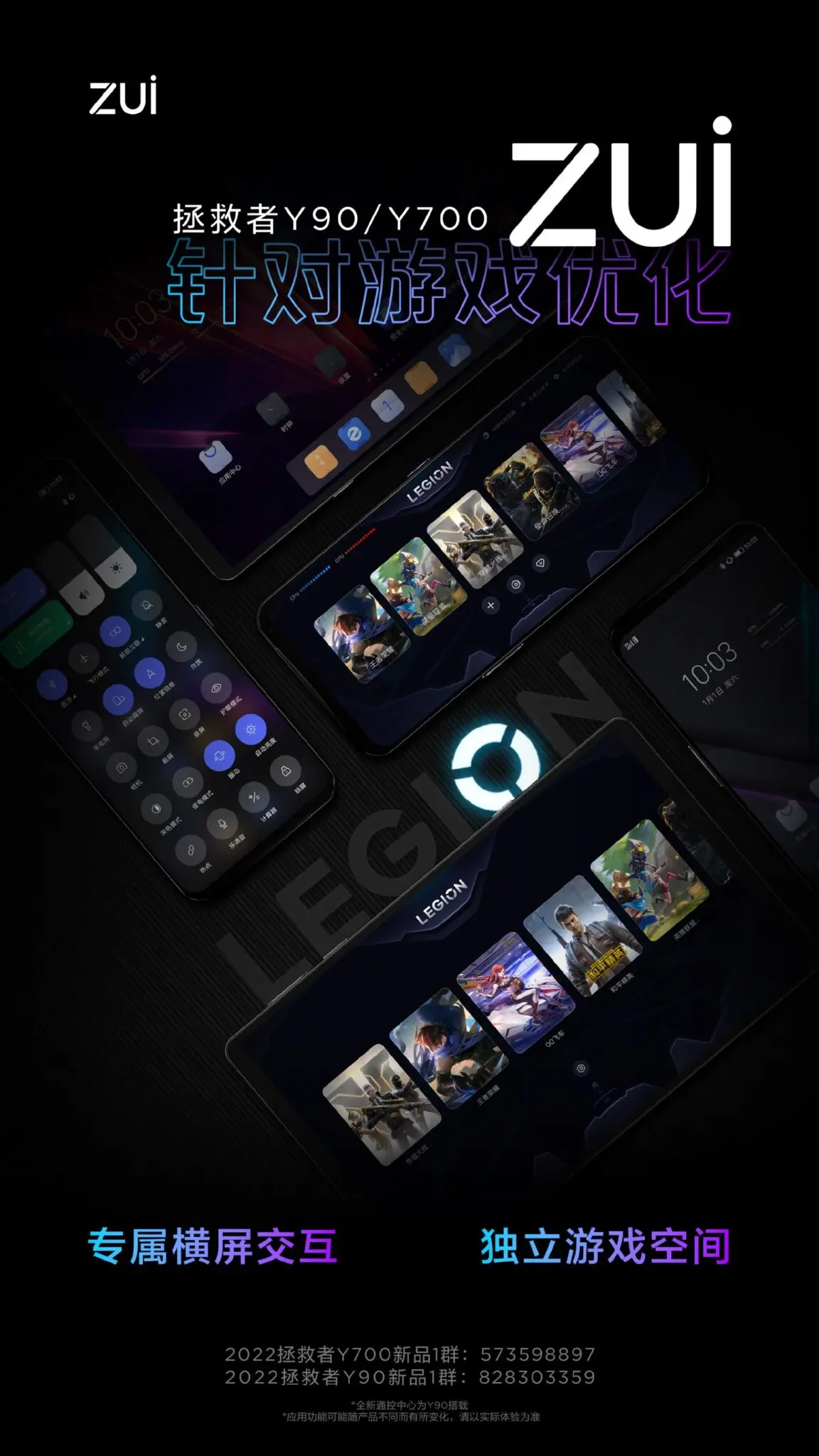
Hardware is only as effective as the software orchestrating it. The Legion Y90 operates on Lenovo’s custom user interface, ZUI 13, optimized specifically for the Android operating system. ZUI 13 brings a suite of gaming-centric enhancements, including:
- Dedicated game-space launchers for performance tuning.
- Real-time CPU and GPU monitoring overlays.
- Customizable touch-mapping profiles for physical shoulder triggers and gestures.
- Streamlined notification management to block interruptions during competitive matches.
Comparative Context: The Gaming Smartphone Landscape
To fully appreciate the design and engineering choices of the Lenovo Legion Y90, it is essential to examine its competitive positioning against contemporary rivals such as the ASUS ROG Phone series, the RedMagic lineup, and Black Shark offerings.
| Feature / Specification | Lenovo Legion Y90 | ASUS ROG Phone 5 / 5s | RedMagic 6S Pro / 7 Series |
|---|---|---|---|
| Display Size & Type | 6.92-inch E4 AMOLED | 6.78-inch AMOLED | 6.8-inch AMOLED |
| Refresh Rate | 144Hz | 144Hz | 165Hz |
| Touch Sampling Rate | 720Hz | 300Hz | 720Hz |
| Cooling System | Double Engine Air Cooling (Active + Vapor) | GameCool 5 (Vapor Chamber + External Fan) | ICE Cooling (Internal Turbo Fan + Vapor Chamber) |
| Camera Placement | Top-right corner (No punch-hole/notch) | Top bezel | Top bezel |
| Software Interface | ZUI 13 | ROG UI / ZenUI | RedMagic OS |
As illustrated above, Lenovo continues to carve out a distinct identity by emphasizing horizontal symmetry, ultra-responsive touch sampling, and sophisticated thermal routing that avoids the awkward hand placements often mandated by traditional smartphone layouts.
Future Outlook and Market Anticipation
As of this writing, Lenovo has yet to officially announce the finalized commercial launch date and global pricing structure for the Legion Y90. However, the release of comprehensive design teasers, hardware deep-dives, and software previews strongly suggests that the device is in the final stages of its pre-market pipeline.
What Lies Ahead?
- Regional Rollouts: Initial availability is expected to target mainland China, where mobile eSports command a massive demographic. Subsequent international rollouts under either the Legion branding or localized market names will dictate its global market share.
- Pricing Strategy: To successfully challenge established rivals from ASUS and Nubia, Lenovo must price the Legion Y90 competitively, balancing bill-of-materials costs for cutting-edge cooling systems and E4 display panels against aggressive consumer expectations.
- Ecosystem Expansion: Integration with Legion gaming accessories, such as clip-on game controllers, specialized cooling docks, and high-fidelity gaming earbuds, will likely form the core of Lenovo’s post-launch ecosystem strategy.
The Lenovo Legion Y90 represents a mature evolution in mobile gaming hardware. By doubling down on proven ergonomic layouts, refusing to compromise on display responsiveness, and refining its thermal architecture, Lenovo has positioned the device to capture the attention of uncompromising gamers worldwide.
Stay tuned as we continue to monitor Lenovo’s official announcements regarding the definitive launch date, pricing tiers, and global availability of the Legion Y90.








Belum ada komentar. Jadilah yang pertama berkomentar!