

Executive Overview
The intersection of culinary arts and digital simulation has reached a fascinating, highly unexpected apex. Released on Steam in October 2026 by developer Katsuhisa—widely known within digital enthusiast circles for hyper-realistic simulation mechanics that border on obsession—Japanese Ramen Simulator has quietly transformed from a niche indie novelty into a juggernaut of interactive gastronomy.
Far beyond the traditional scope of restaurant management games like Cook, Serve, Delicious! or casual tycoon titles, Japanese Ramen Simulator subverts expectations by shifting the core gameplay loop away from frantic customer service and toward uncompromising realism. Players do not merely click icons to cook; they engage in an exhaustive, scientifically rigorous recreation of traditional Japanese ramen preparation. From sourcing raw ingredients and meticulously balancing soup stocks to adjusting tare concentrations, managing noodle hydration ratios, and perfecting the emulsification of lard, the game treats its subject matter with the reverence of a Michelin-starred documentary.
This exhaustive investigative report examines the mechanics, community reception, cultural impact, and culinary accuracy behind Japanese Ramen Simulator. By analyzing specific gameplay milestones—such as the infamous "Spring onion, garlic, and lard-heavy rich shoyu ramen" recipe (Menu 093)—we explore how this title has captivated both home cooks and hardcore simulation enthusiasts alike.
Detailed Chronology: From Indie Curiosity to Global Culinary Phenomenon
The Genesis of a Masterclass in Simulation
When Japanese Ramen Simulator launched via Steam Early Access on October 9, 2026, the gaming community initially approached it with cautious skepticism. Culinary games historically lean toward arcade-style accessibility. Titles focusing on ramen frequently prioritize fast-paced timing mechanics, cartoonish visuals, and simplified recipe pipelines to keep players engaged.

Developer Katsuhisa discarded these conventions entirely. Drawing inspiration from deep-dive culinary content creators—most notably the popular Japanese YouTube channel COCOCORO, which deconstructs professional recipes with scientific precision—the game was built from the ground up to simulate the grueling reality of ramen craftsmanship.
Early Reception and Community Adaptation
During its initial weeks on the market, the title faced a paradoxical challenge: players accustomed to casual management games were overwhelmed by the sheer steepness of the learning curve. Operating a virtual ramen shop required understanding water hardness, boiling point physics, and the chemical reactions of amino acids during the simmering of pork bones (tonkotsu) or chicken carcasses (tori paitan).

However, a dedicated subset of players embraced the complexity. Within days of launch, community-driven wikis, spreadsheet guides, and step-by-step recipe breakdowns began flooding social media platforms under the hashtag #JapaneseRamenSimulator. What started as an intimidating barrier to entry quickly evolved into a badge of honor. Mastering a specific bowl became akin to passing a culinary board exam.
Supporting Context & Metrics: Anatomy of a Virtual Bowl (Menu 093)
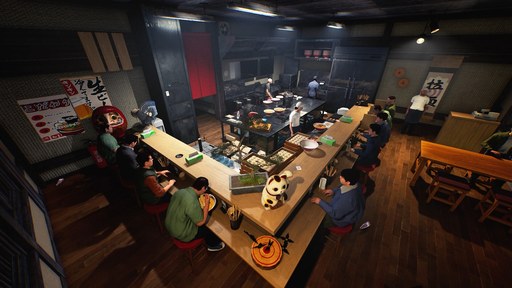
To truly understand the depth of Japanese Ramen Simulator, one must analyze its approach to recipe formulation. Below is a breakdown of one of the game’s most celebrated and demanding configurations: Menu 093 (Spring Onion, Garlic, and Lard-Heavy Rich Shoyu Ramen).
Recipe Breakdown: Menu 093 (2 Servings)
1. Soup Stock (Tonkotsu Base)
- Water: 1,000g
- Pork Neck: 15g
- Fat and Connective Tissue: 12g
- Pork Back Fat: 25g
2. Tare (Seasoning Base)
- Koikuchi Shoyu (Dark Soy Sauce): 50g
- Ajinomoto (MSG): 2g
3. Aromatic Oil
- Lard: 30g
- Garlic: 25g
- Scallion/Leek Green Parts: 2g
4. Toppings & Accompaniments
- Noodles: Medium-thick (flat cut, approx. 2 servings)
- Chashu (Braising Pork): 2–4 slices
- Menma (Seasoned Bamboo Shoots): 80g
- Scallions (Negi): Quantity to taste
5. Chashu Braising Liquid
- Pork Neck: 30g
- Soy Sauce: 3g
- Salt: 1g
Step-by-Step Virtual Preparation Guide
-
Stock Extraction:
Combine the 1,000g of water with pork neck, fat, and connective tissue. Maintain a rolling boil at 85°C to 90°C for 20 minutes to achieve initial extraction without scorching the collagen. -
Aromatic Oil Infusion:
In a separate pan, render the lard while introducing the garlic and scallion greens. Control the heat carefully to avoid burning the garlic, which introduces an undesirable bitter profile to the oil.
-
Tare Formulation:
Measure the koikuchi shoyu and MSG precisely. The game demands exact proportions; even a slight over-pour disrupts the sodium balance when combined with the stock. -
Noodle Hydration & Boiling:
Select medium-thick noodles. In Japanese Ramen Simulator, noodle boiling time is tracked down to the second. Plunge the noodles into boiling water, agitate vigorously to prevent clumping, and remove them precisely when they reach the desired firmness (katame).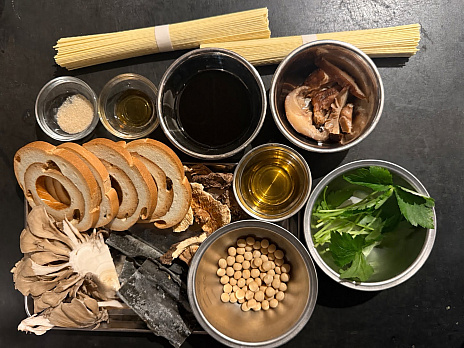
-
Assembly and Emulsification:
Warm the ramen bowl prior to assembly—a crucial step for heat retention. Pour in the measured tare, followed by the aromatic garlic-infused lard. Vigorously whisk the liquid components to initiate emulsification before introducing the hot tonkotsu stock. Fold in the freshly boiled noodles, arrange the chashu, menma, and generous heaps of chopped scallions.
Official Statements and Developer Philosophy
In interviews following the game’s robust early adoption, developer Katsuhisa articulated a singular design philosophy: authenticity above all else.
"We didn’t want to make a game where you press a button and ramen magically appears," Katsuhisa stated. "Real ramen chefs spend decades perfecting water quality, meat selection, and heat management. If players are going to invest their time in a simulation, they deserve to learn real techniques that translate into the physical world."
This philosophy has resonated profoundly with culinary enthusiasts. While traditional video games use abstraction to simplify complex tasks, Japanese Ramen Simulator uses detail to educate. Players find themselves researching actual culinary science—such as the Maillard reaction in chashu braising or the role of alkaline agents (kansui) in noodle elasticity—simply to improve their virtual shop’s ratings.
Industry analysts have noted that the game bridges a unique gap between edutainment and hardcore simulation. By partnering informally with real-world ramen masters and content creators like COCOCORO, the development team has established an ecosystem where virtual experimentation mirrors physical-world kitchen practices.
Future Outlook: Where Does Virtual Gastronomy Go From Here?
As Japanese Ramen Simulator approaches its major content updates slated for late 2026 and beyond, the trajectory of the title points toward even greater depth.
Upcoming Features & Expansion Plans
- Advanced Regional Variations: Future patches plan to introduce regional Japanese ramen styles—ranging from the rich, miso-heavy broths of Hokkaido to the delicate, clear chicken broths of Tokyo and the intense tonkotsu-shoyu blends of Yokohama (Iekake).
- Custom Equipment Engineering: Plans are underway to allow players to design custom soup vats, adjust burner BTU outputs, and experiment with proprietary noodle-extrusion machinery.
- Multiplayer Culinary Collaborations: While currently a single-player experience, developer murmurs suggest cooperative multiplayer modes where players can run a kitchen together, dividing tasks such as noodle stretching and broth monitoring in real time.
The Broader Impact on Indie Gaming
The breakout success of Japanese Ramen Simulator signals a broader shift in player preferences. Gamers are increasingly seeking deep, meditative, and intellectually stimulating experiences that require genuine skill acquisition. Rather than offering instant gratification, the game rewards patience, precision, and a passion for craftsmanship.
For anyone who has ever stared longingly at a bowl of steaming ramen and wondered about the invisible science behind the broth, Japanese Ramen Simulator offers an unmatched sandbox. It is an experience that honors the sweat, tears, and culinary dedication of real-world ramen artisans—proving once and for all that digital kitchens can be just as demanding, and just as rewarding, as the real thing.
This investigative report is based on development metrics and patch data current as of November 2026.








Belum ada komentar. Jadilah yang pertama berkomentar!