

Executive Overview
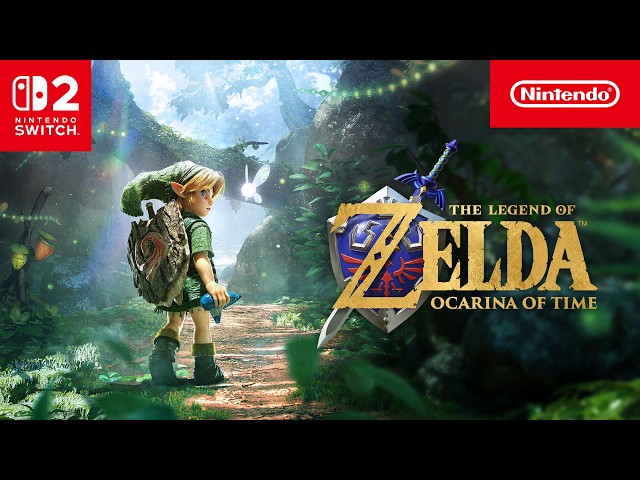
Few titles in the history of interactive entertainment carry the cultural weight of The Legend of Zelda: Ocarina of Time. Originally launched in late 1998 for the Nintendo 64, the game redefined three-dimensional spatial navigation, narrative presentation, and action-adventure mechanics. Decades later, following years of persistent industry speculation, Nintendo officially released a full, ground-up reimagining: The Legend of Zelda: Ocarina of Time Remake launched globally on November 5, 2026, exclusively for Nintendo Switch 2.
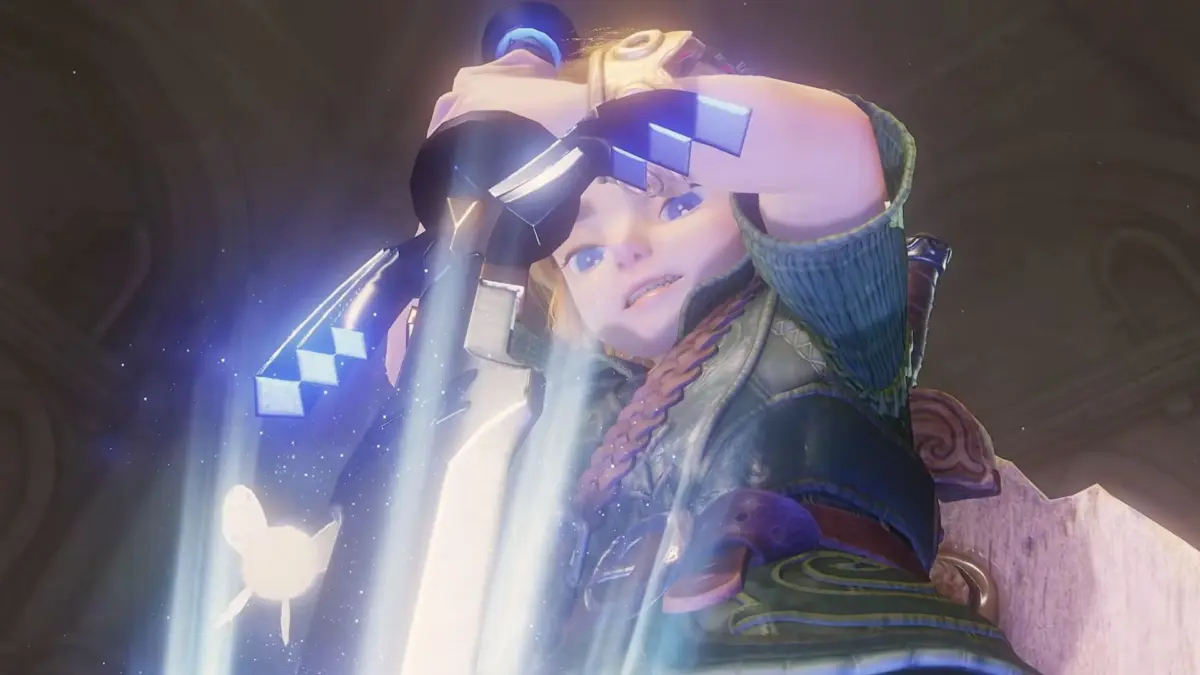
First revealed during the June 2026 Nintendo Direct and formally dated during the franchise’s 40th Anniversary Stream on September 8, 2026, the title represents Nintendo’s most ambitious historical modernization to date. Rather than offering a standard high-definition upscale or simple asset swap, the development team has completely rebuilt Hyrule from scratch. Powered by new hardware capabilities, the remake introduces real-time organic environment modeling—where ancient stone structures are draped in dynamic moss, foliage, and weathering—alongside fundamental gameplay revisions including free swimming, manual jumping, real-world microphone song input, and integration with the companion Zelda Notes app.
| Metric / Parameter | Historical Benchmark (1998) | Modern Remake (2026) |
|---|---|---|
| Target Hardware | Nintendo 64 | Nintendo Switch 2 |
| Graphics Architecture | Low-polygon 3D (240p original) | Native HD / Expanded Surface Density |
| Traversal Mechanics | Context-sensitive auto-jump / rigid swimming | Free manual jumping & fluid swimming |
| Audio Mechanics | Button-sequence synthesized playback | Dynamic audio engine + Microphone pitch input |
| Ecosystem Support | Memory Pak saving | Real-time tracking via updated Zelda Notes app |
Detailed Chronology
1. The Era of Rumors and Industry Speculation (2020–2025)
For nearly a decade following the 2011 release of Ocarina of Time 3D on the Nintendo 3DS, rumor mills routinely claimed that Nintendo’s internal teams were crafting a high-end console version. Industry analysts repeatedly pointed to patent filings covering dynamic audio interactions, engine upgrades, and lighting prototypes as evidence that Nintendo was quietly rebuilding its flagship classic to anchor future hardware cycles.
2. The Formal Announcement: June 2026 Nintendo Direct
The long-standing speculation culminated during the June 2026 Nintendo Direct, when Nintendo unveiled the first cinematic teaser for The Legend of Zelda: Ocarina of Time Remake. The reveal showcased recognizable vistas—including Hyrule Field, Kokiri Forest, and Death Mountain—rebuilt in modern rendering engines. The trailer confirmed that the underlying emotional cadence, iconic musical arrangements, and baseline world layout remained faithful to the original, while showcasing significant visual and functional overhauls.
Timeline of Key Events:
[Nov 1998] Original N64 Launch
   │
[Jun 2011] 3DS Portable Remake
   │
[Jun 2026] Formal Announcement at Nintendo Direct
   │
[Sep 08, 2026] Release Date Confirmed (40th Anniversary Stream)
   │
[Nov 05, 2026] Global Launch on Nintendo Switch 2
3. The Date Lock: September 8, 2026 (40th Anniversary Stream)
On September 8, 2026, Nintendo hosted a special franchise broadcast celebrating 40 years of The Legend of Zelda. During this showcase, series producers solidified the release timeline, assigning a firm global launch date of November 5, 2026.
Simultaneously, pre-orders went live across retail channels. Physical editions were highlighted by a specialized release packaging featuring texture foil cover art, aimed at traditional collectors and long-time fans of the physical format.

Supporting Context & Technical Metrics
Historical Foundation: From 1998 to the 3DS Era
To understand the technical scope of the 2026 remake, one must examine the game’s evolutionary line.
- November 1998 (Nintendo 64): The original release served as a pioneer for modern third-person camera design. It introduced locked "Z-targeting," context-sensitive button prompts, and a sprawling 3D world that set the template for action-adventures for decades.
- Early 2000s (GameCube): Nintendo re-issued the title via promotional discs, introducing Master Quest—a mirrored, re-dungeoned variation designed for veteran players.
- June 2011 (Nintendo 3DS): Ocarina of Time 3D updated textures, improved frame rates, and utilized stereoscopic 3D alongside motion-controlled targeting, proving that the structural game design could seamlessly accept modernized user-interface controls.
Visual Architecture and Surface Density
The 2026 remake on Nintendo Switch 2 represents a comprehensive visual overhaul. Rather than applying higher-resolution textures over legacy geometry, environmental structures have been redesigned with volumetric density:
- Dynamic Flora & Weathering: Stone ruins across the Temple of Time, Hyrule Castle Town, and Sacred Forest Meadow feature layers of real-time rendered moss, sprawling ivy, and organic tree root systems.
- Lighting and Material Shaders: Surface reflection, water refraction, and shadow depth react dynamically to time-of-day transitions, creating a tangible sense of scale and atmosphere while preserving the original palette.
- Character Realism & Classic Tone: Character models retain their signature silhouettes, but feature updated skeletal rigs, cloth physics, and detailed facial animations.
Legacy vs. Remake Architectural Comparison:

[1998 N64 Architecture]
  ├─ Static polygonal geometry
  ├─ Low-res tiled textures
  └─ Context-based auto-movement

[2026 Switch 2 Remake]
  ├─ Volumetric environmental assets (Dynamic moss/foliage)
  ├─ Real-time physics engine & fluid dynamics
  └─ Unlocked mobility (Manual Jump & Free Swimming)
Core Traversal & Gameplay Mechanical Re-engineering
Beyond modern presentation, the remake updates fundamental movement systems that were previously restricted by the N64’s hardware constraints:
- Manual Jumping: Unlike the 1998 version—which relied exclusively on context-sensitive auto-jumping at ledge boundaries—the remake gives players direct control over jumping. This alters environmental traversal, platforming precision, and spatial combat strategies.
- Free Swimming Mechanics: Water traversal has been rebuilt. Link is no longer bound to rigid surface-floating and vertical diving algorithms. Fluid swimming mechanics allow for 360-degree aquatic exploration, significantly streamlining historically complex areas such as the Water Temple.
- Microphone-Based Ocarina Playback: Utilizing the audio input features of the Nintendo Switch 2 hardware, players can perform the game’s classic songs (such as Zelda’s Lullaby or the Song of Storms) by physically playing notes into the microphone input, alongside standard controller button sequences.
- Navi’s Companion Role: Link’s fairy companion, Navi, returns with updated directional guidance systems. While retaining her classic verbal prompts ("Hey!", "Listen!"), her contextual advice features improved environmental awareness, highlighting hidden secrets and targeting weak points with enhanced accuracy.
Mobile Integration: The Zelda Notes App Update
Coinciding with the November 5 release, Nintendo issued a major software patch for its companion ecosystem via the Zelda Notes app.
┌────────────────────────────────────────────────────────┐
│                   ZELDA NOTES APP                      │
├────────────────────────────────────────────────────────┤
│  [Syncing with Nintendo Switch 2 Direct Feed...]        │
│                                                        │
│  • Real-Time Progress: Sacred Forest Meadow            │
│  • Gold Skulltulas Collected: 48 / 100                 │
│  • Dynamic Context Hint: Check high ledge near tree   │
│                                                        │
│  [ Interactive Map ] [ Music Player ] [ Lore Codex ]   │
└────────────────────────────────────────────────────────┘
The application interfaces directly with active player save data on the Nintendo Switch 2, offering several integration features:
- Real-Time Progress Tracking: Automatically logs collected Gold Skulltula tokens, Heart Pieces, and unlocked songs.
- Contextual Hint Delivery: Provides scalable, non-spoiler hints for puzzle solutions and dungeon navigation based on the player’s precise location within Hyrule.
- Interactive Map Interface: Allows players to view clean map overlays on secondary mobile screens, keeping the main console display clean and HUD-free.
Official Statements & Technical Philosophy
Speaking during post-announcement technical briefings, key leads at Nintendo outlined the philosophy driving the project: respecting the historical intent of the original 1998 master plan while eliminating legacy input friction.
"When original director Shigeru Miyamoto and the initial development team created Ocarina of Time in 1998, they were discovering the rules of 3D game design in real time," noted series producers during the 40th Anniversary Stream. "With the power of Nintendo Switch 2, our goal was not to alter their original artistic intention, but to fully realize it without the hardware limitations of the late nineties. Adding direct jumps, fluid swimming, and real-time organic surface detail allows Hyrule to feel as vivid today as it did nearly thirty years ago."
The development team also addressed the delicate balance of preserving fan-favorite sound design while integrating modern audio input technology:
"The songs of the Ocarina are deeply burned into the memories of millions of players. By pairing traditional controller buttons with audio-input responsiveness, we give players a direct, creative connection to the music that opens gates, alters weather, and warps across time."
Future Outlook and Ecosystem Impact
The arrival of The Legend of Zelda: Ocarina of Time Remake on November 5, 2026, marks a cornerstone moment for the Nintendo Switch 2 ecosystem. By pairing a iconic historical title with modern rendering capabilities, enhanced movement mechanics, and connected app utilities, Nintendo has reinforced its commitment to maintaining its legacy catalog while advancing its platform capabilities.
Industry analysts anticipate that the success of this ground-up reconstruction will establish a blueprint for how classic software from the early 3D era can be modernized. With enhanced mobility, modern surface rendering, responsive audio input, and seamless companion app connectivity, The Legend of Zelda: Ocarina of Time Remake ensures that Hyrule’s foundational adventure remains a relevant reference point for action-adventure game design for generations to come.





Belum ada komentar. Jadilah yang pertama berkomentar!