

Executive Overview
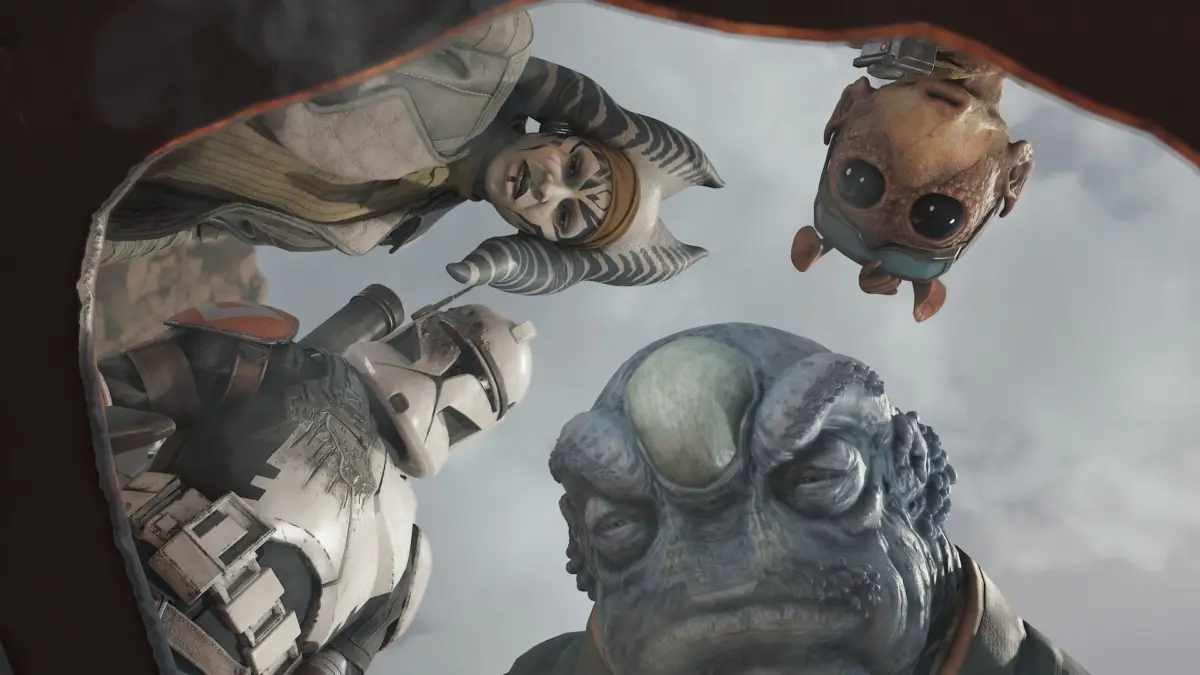
The tactical strategy landscape has shifted slightly with the rollout of the 1.2 update for Star Wars Zero Company, developed by Bit Reactor. Launched to critical acclaim—including a stellar 90% review score—the title successfully bridged the gap between classic tactical traditions and modern, streamlined mechanics. However, while its initial release was widely praised for its accessibility and slick production values, some veteran strategy purists argued that the game went down a bit too smooth, lacking the punishing, unyielding constraints of genre forebears like XCOM.
The newly deployed 1.2 patch addresses this directly. Rather than relying on lazy artificial intelligence (AI) inflation—such as simply inflating enemy health pools or artificially boosting damage values—Bit Reactor has introduced a granular, modular difficulty system. These targeted tactical modifiers restrict player options, force creative problem-solving, and elevate the overall challenge in ways that evoke survival-mode toggles or classic Halo skulls.
Beyond game balance, the success of Star Wars Zero Company represents a major corporate and creative win for Bit Reactor. Following critical triumph and robust commercial performance, the studio has reportedly begun bringing back previously furloughed employees, marking a remarkable stabilization for a development team featuring industry veterans from the XCOM lineage. This report explores the nuances of the 1.2 patch, evaluates its impact on tactical design philosophy, examines ongoing debates surrounding maps and fog of war, and details the broader recovery and future outlook for Bit Reactor.
Detailed Chronology: From Launch to the 1.2 Paradigm Shift
To understand the significance of the 1.2 patch, it is essential to trace the developmental trajectory of Star Wars Zero Company and its reception within the strategy gaming community.
The Launch Era and the "Smoothness" Debate
When Star Wars Zero Company first debuted, it immediately turned heads. Developed by veterans of the tactical strategy genre—many of whom cut their teeth on Firaxis Games’ seminal XCOM reboots—the game combined beloved Star Wars lore with deep, turn-based combat. Critics praised its slick interface, dynamic pacing, and the integration of ideas borrowed from both XCOM and Marvel’s Midnight Suns.
Yet, even among high praise, a subtle debate simmered. Traditionalists observed that Zero Company was notably more forgiving than its spiritual ancestors. Mistakes that would typically trigger a catastrophic cascade in a classic XCOM Ironman run could often be easily mitigated or corrected. While this made the game exceptionally accessible to newcomers and casual strategy fans, veteran players hungered for deeper friction—rules that forced agonizing compromises.
The Road to Patch 1.2
Recognizing the diverse palate of their player base, Bit Reactor set to work on post-launch support. The studio aimed to bridge the gap between casual accessibility and hardcore tactical masochism without disrupting the baseline experience that made the game a commercial hit.
The culmination of this effort is the 1.2 update. Rolled out alongside standard bug fixes, performance optimizations, and quality-of-life adjustments, the patch introduces a suite of togglable, granular difficulty modifiers. Rather than forcing players into a singular, punishing "Hard" or "Ironman" preset, the 1.2 update hands the metaphorical scalpel directly to the player, allowing them to curate their own tactical nightmare.
Supporting Context & Metrics: Dissecting the Modular Difficulty System
The core innovation of the 1.2 patch lies in its philosophy of constraint rather than inflation. In many traditional video games, increasing the difficulty is treated as a math problem: enemies receive 50% more health, deal 30% more damage, and the player suffers resource penalties. Bit Reactor has sidestepped this trope in favor of systemic, mechanical friction.
Why Restrictive Modifiers Win Over Stat Inflation
In tactical turn-based strategy, player agency is everything. When a developer simply pads an enemy’s health bar, it lengthens combat without making it inherently more interesting; it simply forces the player to repeat optimal rotations more times.
Conversely, restrictions on player actions—such as limiting healing items, reducing overwatches, restricting movement ranges, or imposing steeper penalties for operative injuries—force players to fundamentally alter their cognitive approach. As observed by tactical enthusiasts, these modifiers transform default encounters into high-wire acts. They encourage lateral thinking, punishing sloppy positioning and rewarding deep mastery of line-of-sight, terrain manipulation, and action economy.
The Fog of War Disconnect: A Remaining Frontier
Despite the triumphs of the 1.2 patch, one foundational design choice continues to divide strategy purists: the handling of the fog of war and enemy tracking.

In traditional XCOM titles, the fog of war is absolute. Maps are shrouded in darkness, and enemy units remain entirely invisible until a player’s operative physically breaches line of sight or utilizes specialized scanning equipment. This mechanics breeds tension, paranoia, and careful scouting.
Conversely, Star Wars Zero Company takes a radically transparent approach. From the moment a mission loads, players are often granted a view of the full map layout along with the precise locations of enemy patrols and objectives. PC Gamer online editor and strategy connoisseur Fraser Brown noted this design choice in his critique, pointing out that while Zero Company is a brilliantly executed safe descendant of XCOM, its most experimental DNA actually stems from Midnight Suns.
While some players embrace this transparency—arguing that it eliminates frustrating RNG-based ambushes and shifts the focus entirely to execution and puzzle-solving—others feel it strips away the psychological dread inherent to guerrilla warfare in a hostile galaxy. The 1.2 patch does not overhaul the fog of war system, meaning this philosophical divide within the community remains unresolved, leaving room for future updates or community mods to address it.
Official Statements and Industry Impact
The release of Star Wars Zero Company and its subsequent 1.2 patch arrive against a backdrop of significant industry volatility. Game development studios, particularly mid-to-large-scale independent and publisher-backed developers, have faced severe economic pressures over recent years, leading to widespread layoffs, studio closures, and furloughs.
Bit Reactor’s Resilience and Re-hiring
Bit Reactor was not immune to these systemic industry tremors. Prior to the launch of Star Wars Zero Company, the studio experienced economic headwinds that resulted in the furloughing of several staff members. For a time, the long-term viability of the studio and its post-launch roadmap hung in a delicate balance.
However, the critical and commercial success of Zero Company completely altered the trajectory of the studio. Buoyed by enthusiastic reviews—including a prestigious 90% designation from major outlets—and strong sales figures, Bit Reactor has achieved the rare feat of reversing workforce reductions. Industry reports confirm that the studio has actively begun bringing back previously furloughed employees, restoring team capacity just as post-launch development on patches like version 1.2 ramps up.
This development serves as a beacon of hope in a turbulent games market, proving that polished, well-executed single-player tactical games with a beloved intellectual property anchor can still achieve the financial runway necessary to sustain development teams through difficult cycles.
Future Outlook: What’s Next for Bit Reactor and Zero Company?
With the 1.2 patch successfully deployed and studio staffing stabilizing, the immediate future for Bit Reactor and Star Wars Zero Company looks remarkably bright.
Expanding the Tactical Toolkit
The success of the granular difficulty system in patch 1.2 opens the door for future expansions. If Bit Reactor continues down this path, subsequent updates could introduce even more creative modifiers, community-requested rule sets, or endgame challenge modes. Furthermore, the modular nature of the difficulty suite means that future downloadable content (DLC) or expansion campaigns can be balanced across a wide spectrum of player skill levels without alienating either newcomers or hardcore veterans.
Addressing Community Feedback
As Bit Reactor looks toward the horizon, listening closely to the discourse surrounding features like the fog of war will be paramount. Whether through future toggle options in subsequent patches or entirely new game modes, bridging the gap between transparent tactical puzzles and shrouded survival horror could cement Zero Company as an all-time classic of the genre rather than merely a successful genre exercise.
Studio Independence and Long-Term Viability
Perhaps the most significant long-term takeaway from this chapter in Bit Reactor’s history is the proof of concept for the studio itself. Composed of industry veterans with proven pedigree, Bit Reactor has demonstrated that it can weather corporate and economic storms through sheer quality of output. As they continue to support Star Wars Zero Company and potentially look toward future intellectual properties, the studio stands as a testament to the enduring power of smart, mechanically rich strategy design.
For strategy fans, the message is clear: Star Wars Zero Company is no longer just a smooth, accessible entry point into the genre. With the arrival of patch 1.2, it has evolved into a deeply customizable tactical sandbox capable of testing the mettle of even the most hardened commanders in the galaxy.





Belum ada komentar. Jadilah yang pertama berkomentar!