

By Chadley Kemp, Senior Editor
Published September 1, 2026
Executive Overview
For millions of enthusiasts across the globe, the digital colosseum of competitive gaming is entirely accessible from the comfort of a home desk. Major esports tournaments—spanning Counter-Strike, League of Legends, Dota 2, and VALORANT—are broadcast free of charge on platforms like Twitch and YouTube. In theory, following the world’s elite teams costs nothing.
Yet, for a growing segment of dedicated followers, digital viewing is merely the gateway. The modern esports economy thrives on a spectrum of engagement that quickly translates into financial commitment. Once a fan moves past free livestreams into the realms of creator subscriptions, official team merchandise, and, most crucially, live in-person events, the cost of fandom skyrockets.
Nowhere is this financial friction more apparent than in the United Kingdom. While advertised ticket prices for major domestic tournaments often appear reasonable, they tell only a fraction of the story. For a fan travelling from outside major metropolitan hubs—such as a base in Manchester—attending a weekend event introduces a cascading wave of ancillary expenses: intercity rail fares, local public transport, multi-night hotel accommodations, and stadium-inflated food costs. These overheads routinely dwarf the initial price of admission.
To investigate the economic reality of modern fandom, this report establishes a financial profile of the contemporary British esports follower. By tracking expenditure across four distinct tiers—ranging from the digital-only spectator to the domestic superfan—we examine how much it truly costs to support the esports industry from British soil.
Detailed Chronology: From Digital Viewer to Arena Superfan
To quantify how expenses accumulate over an annual cycle, we mapped out four hypothetical fan profiles. Each tier builds cumulatively upon the last, adding new layers of financial commitment. Our model assumes an adult supporter based in Manchester, traveling alone, lodging independently, and operating without regional travel discounts such as a UK Railcard.
The Fan Tiers at a Glance
| Fan Profile | Core Description | Cumulative Annual Cost |
|---|---|---|
| Free Viewer | Exclusively consumes online livestreams via Twitch or YouTube without financial outlays. | £0 |
| Paying Supporter | Incorporates a continuous 12-month Twitch creator subscription and a single professional team jersey. | £134.91 |
| Travelling Fan | Adds a three-legged trip to DreamHack Birmingham, covering event entry, return rail fares, hotel nights, and sustenance. | £619.74 |
| The Superfan | Further incorporates a three-day weekend pass for VALORANT Masters London, encompassing high-tier event access, transit, and extended lodging. | £1,458.66 |
Note: Baseline calculations reflect market rates checked on September 1st, 2026. Figures exclude ancillary costs such as booking fees, merchandise shipping, local taxi fares, alcohol, in-game microtransactions, and underlying hardware investments like PCs or consoles.
The Economics of Digital Engagement: Case 1
For the baseline digital consumer, esports remains a remarkably cost-effective hobby. However, the ecosystem heavily encourages micro-monetization through platform subscriptions and apparel.
Supporting from Home
While watching matches on Twitch or YouTube incurs no mandatory fee, viewers often bridge the gap between spectator and patron through recurring channel subscriptions. A standard Tier 1 subscription to a single favorite Twitch creator costs £4.99 per month in the UK market, totaling £59.88 annually, according to official platform pricing structures.
Beyond digital support, physical merchandising forms a core pillar of team revenue. Official professional team jerseys are priced at a premium. During recent market checks, the 2026 Fnatic Pro Jersey retailed at €79.99, while G2 Esports’ equivalent was listed at €95.20. Converted via the European Central Bank’s exchange rate of €1 to £0.85648 at the close of August, these figures translate to approximately £68.51 and £81.54 respectively. Taking the midpoint, a fan can expect to spend roughly £75.03 on a single jersey.
Crucially, this figure excludes delivery overheads. Major organizations frequently lock free shipping behind high minimum order thresholds—Fnatic, for instance, restricts free UK delivery to orders exceeding €120—meaning standalone apparel purchases often incur postal penalties. Consequently, the baseline annual expenditure for a dedicated digital supporter sits at £134.91 before stepping foot inside a venue.
The Domestic Event Circuit: Case 2 – DreamHack Birmingham
The financial shift from digital viewer to live attendee is severe. This is best illustrated by examining a weekend trip to DreamHack Birmingham, which took place at the National Exhibition Centre (NEC) from March 27th to 29th, 2026.
While early-bird introductory passes were priced at £39, the standard three-day weekend admission settled at £59.00. Yet, ticket costs represented a minor fraction of the overall budget for our Manchester-based fan.
| DreamHack Expense Item | Calculation Basis | Total Cost (£) |
|---|---|---|
| Three-Day Ticket | Standard weekend admission tier | £59.00 |
| Return Rail Fare | Average Manchester to Birmingham International fare (£19 each way) | £38.00 |
| Local Transit | Walking transfer from station to the NEC concourse | £0.00 |
| Accommodation | Two nights lodging at Birmingham’s weekend market average (£151/night) | £302.00 |
| Subsistence | Two hotel meal deals combined with three arena-side lunches | £85.83 |
| Total Weekend Spend | £484.83 |
Transport and Accommodation Realities
According to transit data via Omio, the average single fare from Manchester to Birmingham International sits at approximately £19, bringing standard return travel to £38.00. While advanced booking options via platforms like Trainline can lower this baseline to roughly £15.60 each way, route averages provide a more reliable benchmark for spontaneous travellers. Fortunately, local transit costs within Birmingham can be mitigated entirely; the NEC sits a mere five-minute covered walk from Birmingham International station, bypassing taxi or bus fees.
The true financial bottleneck of live attendance, however, is accommodation. Skyscanner hotel indices place Birmingham’s average weekend room rate at £151 per night. Securing a Friday-through-Sunday stay adds £302.00 to the ledger—over five times the cost of the event ticket itself.
Sustenance Inside and Outside the Venue
Food budgets require careful navigation. Utilizing budget hotel packages—such as Premier Inn’s £27.99 dinner-and-breakfast meal deal—provides baseline nourishment. However, eating on-site at major exhibitions introduces steep markups. Official DreamHack Birmingham food menus listed basic stadium lunches (such as a single pasty and cold drink) at roughly £9.95, while hot meals like burgers and chips scaled to £15.95. Factoring in two hotel meal deals and three venue lunches brings the food subtotal to £85.83.
When combined with baseline digital support costs, a single weekend trip pushes the annual expenditure for a travelling fan to £619.74.

The Premier League of Gaming: Case 3 – VALORANT Masters London
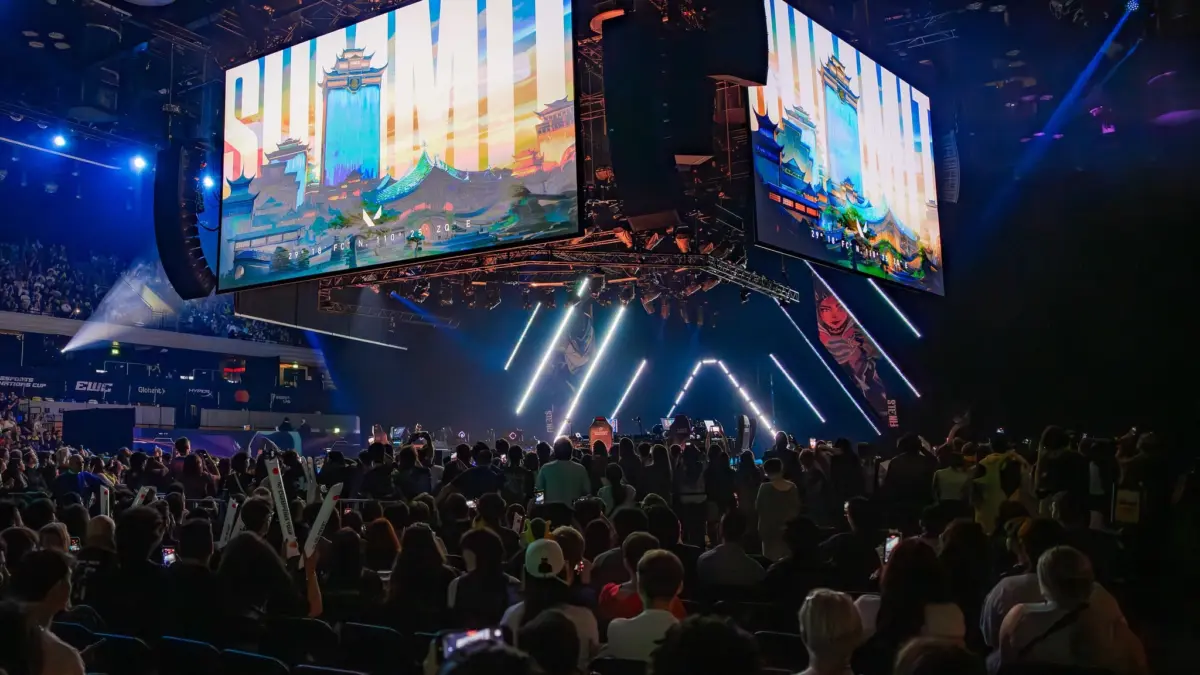
For fans seeking elite international competition on home soil, tier-one global tournaments represent the apex of live esports—and the peak of personal expenditure. The arrival of VALORANT Masters London at the Copper Box Arena laid bare the financial implications of high-profile international finals.
Riot Games structured ticket pricing across distinct tiers for the upper-lower finals and the grand final. Standard Tier 3 seating cost £50 for each of the preliminary finals days, rising to £75 for the grand final, bringing a three-day finals pass to £175.00. Premium Tier 1 seats across the same schedule commanded £325.00.
| Masters London Expense Item | Calculation Basis | Total Cost (£) |
|---|---|---|
| Finals Access Pass | Tier 3 seating across three days (£50 + £50 + £75) | £175.00 |
| Intercity Rail | Manchester-to-London return booked 30 days in advance | £78.00 |
| London Underground | Two off-peak journeys covering Zones 1–2 via contactless transit | £6.20 |
| Stratford Lodging | Three nights near the venue at the local weekend average (£161/night) | £483.00 |
| Subsistence | Three hotel meal deals paired with three budget supermarket lunches | £96.72 |
| Total Event Spend | £838.92 |
Navigating the Capital
Booking intercity travel 30 days in advance via Rail Europe keeps Manchester-to-London return fares at a manageable £78.00 (~£39 each way). Failing to plan ahead penalizes the consumer heavily; seven-day booking windows routinely inflate fares closer to £128 return.
Once in the capital, navigating to the Queen Elizabeth Olympic Park via the London Underground incurs modest costs. Under TfL’s off-peak fare structure, standard contactless journeys across Zones 1 and 2 cost £3.10 each, totaling £6.20 for mandatory transit runs. Because the Copper Box Arena is within walking distance of Stratford station, additional bus or tube transfers can be avoided.
The Accommodation Premium
London’s hotel market exerts severe pressure on the touring fan’s wallet. Trip.com data indicates that the average weekend room rate near Stratford hovers around £161 per night. Because major tournament grand finals routinely conclude late on Sunday evenings, attempting an immediate return journey to Manchester is logistically impractical. A mandatory three-night stay (Friday, Saturday, and Sunday) inflates lodging costs to £483.00—nearly triple the price of the tournament tickets.
Furthermore, strict venue security policies prohibiting outside food and beverage force attendees to rely on internal concessions or external meal planning. Factoring in three budget supermarket meal deals (e.g., Tesco lunch bundles at £4.25 each) alongside hotel dining brings the food subtotal to £96.72, though individuals purchasing alcohol or arena-side hot meals will see these figures escalate rapidly.
Supporting Context & Metrics: Where Does the Money Go?
When evaluating the comprehensive financial profile of our hypothetical esports superfan—who consumes digital content, purchases merchandise, and attends two major domestic tournaments annually—the macro-level data reveals stark realities about modern event economics.
Total annual expenditure for the superfan settles at £1,458.66. A macro-analysis of this figure demonstrates that the financial burden of fandom is heavily skewed away from the game developers and tournament organizers, and toward the hospitality sector:
| Expense Category | Annual Cost (£) | Percentage of Total Spend |
|---|---|---|
| Hotels & Accommodation | £785.00 | 53.8% |
| Event Admission Tickets | £234.00 | 16.0% |
| Food & Sustenance | £182.55 | 12.5% |
| Twitch Subscriptions & Apparel | £134.91 | 9.2% |
| Rail & Local Transit | £122.20 | 8.4% |
| Total Annual Outlay | £1,458.66 | 100% |
Over 53% of a superfan’s annual budget is absorbed entirely by hotel beds. By comparison, live event admission tickets account for a mere 16% of the financial burden. Put simply: The ticket is rarely the real price of admission.
Official Statements and Industry Perspective
While these hypothetical models illustrate a standardized expenditure for an isolated traveler, industry stakeholders frequently emphasize that fan economics are highly malleable.
Event organizers have increasingly sought to introduce tiered ticketing structures to accommodate varying disposable incomes. However, external macroeconomic pressures—particularly surging inflation across the UK hospitality and transport sectors—continue to outpace ticket price adjustments.
Speaking on the shifting landscape of live entertainment economics, consumer advocacy groups note that regional disparities remain the single largest barrier to accessible fandom. Fans residing in London, Birmingham, or Manchester absorb significantly lower logistical friction than those commuting from peripheral regions.
Future Outlook: The Sustainability of Live Esports Fandom
As the British esports calendar matures, the industry faces a delicate balancing act. On one hand, competitive gaming has successfully scaled into mainstream arenas, packing venues like the Copper Box and the NEC. On the other hand, the financial barrier to physical participation risks alienating the grassroots demographic that forms the bedrock of digital viewership.
Several mitigating factors can reduce these financial barriers for dedicated followers:
- Shared Accommodations: Splitting twin hotel rooms among peer groups can nearly halve per-capita lodging costs, stripping hundreds of pounds from annual totals.
- Railcards and Advance Booking: Utilizing national rail discount cards (such as the 16–25 Railcard or Network variants) can discount intercity transit by up to one-third.
- Geographic Proximity: Localized fan bases situated directly within major event hubs effectively bypass multi-night hotel fees and intercity rail tickets entirely.
Conversely, fans travelling from Scotland, Wales, Northern Ireland, or England’s South West face exacerbated penalties, routinely requiring domestic flights, extended hotel stays, and complicated multi-leg transit.
Conclusion
The data confirms a tale of two distinct fan experiences. Following competitive gaming online remains an egalitarian, frictionless, and entirely free pursuit. However, transitioning from a digital spectator to a physical participant places esports firmly in line with traditional sports entertainment. For the modern British esports fan, the true cost of passion is not measured in the price of a ticket, but in the price of a hotel room.
Disclosures & Methodology Notes
All figures quoted are illustrative, derived from market research conducted on September 1st, 2026, and reflect prevailing economic conditions at that time. Actual consumer expenditure will vary based on geographic origin, travel dates, booking latency, ticket tier selection, hotel availability, currency exchange fluctuations, and personal spending habits. This analysis excludes incidental expenses such as booking fees, delivery surcharges, arena concessions, local taxi services, travel insurance, and hardware investments (PCs, consoles, mobile devices). Esports News UK maintains no affiliate commercial partnerships or financial commissions with any brands, venues, or transit providers referenced within this report.







Belum ada komentar. Jadilah yang pertama berkomentar!