

Executive Overview
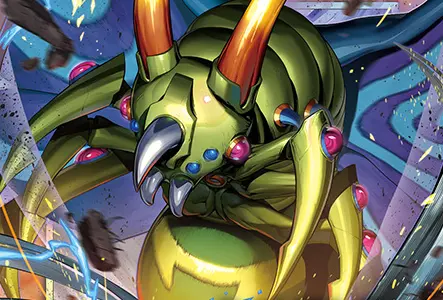
The Yu-Gi-Oh! Trading Card Game (TCG) and Official Card Game (OCG) communities have weathered decades of evolutionary shifts, power-creep plateaus, and nostalgic revivals. Yet, few announcements capture the collective imagination of duelists quite like the modernization of iconic anime milestones. Konami’s latest reveal from the upcoming set—cataloged under the identifier YAC1-JP002—brings forth a monumental reimagining of one of the most notoriously difficult boss monsters in the franchise’s history: Kanzennaru Uka – Kyuukyoku Kanzentai Great Moth [Perfect Eclosion – Perfectly Ultimate Great Moth].
For veterans of the game, the original Perfectly Ultimate Great Moth, introduced during the early eras of the franchise, was more of a mythical artifact than a playable card. Requiring an agonizingly complex setup involving Petit Moth, Cocoon of Evolution, and six turns of continuous protection on the field, bringing out the original 3500 ATK/3000 DEF Insect behemoth was an achievement reserved strictly for casual duels and anime-accurate roleplay. It was slow, wildly impractical, and violently vulnerable to common removal traps like Trap Hole or Smashing Ground.
Fast forward to the modern era of the OCG, and Konami has fundamentally rewritten the rules of evolutionary biology within the game. YAC1-JP002 bridges a twenty-five-year design gap, transforming an unplayable meme into a high-octane, modern Special Summon Effect Monster. Boasting a streamlined summoning condition centered around the Graveyard (GY), a board-clearing bounce effect, a massive scaling attack boost, and a punishing continuous ATK-drain disruption tool, this new iteration of the Great Moth is poised to send shockwaves through competitive and casual ecosystems alike.
This investigative report provides a comprehensive breakdown of YAC1-JP002. We examine its exact card text, dissect the intricate lore and real-world scientific references woven into its design, analyze its potential competitive impact on the meta-game, evaluate the community reaction, and project its long-term viability within modern deck-building architectures.
Detailed Chronology: From Duelist Kingdom to Modern OCG Design
To truly appreciate the engineering marvel that is YAC1-JP002, one must understand the historical lineage of the card it replaces. The journey of the Great Moth spans multiple eras of Yu-Gi-Oh!, reflecting the dramatic evolution of card design philosophy at Konami.
Era 1: The Anime Myth and the Impossible Summon (1999–2002)
In the Yu-Gi-Oh! manga and anime, Weevil Underwood (Haga in the Japanese version) utilized the combination of Petit Moth and Cocoon of Evolution during his Duelist Kingdom duel against Yugi Mutou. The premise was conceptually terrifying: an insect maturing inside a cocoon, eventually hatching into a magnificent, all-powerful creature that could dominate the battlefield.
However, translating this into the physical card game resulted in one of the most notoriously clunky cards ever printed. The original Perfectly Ultimate Great Moth required players to Tribute a Cocoon of Evolution that had been equipped to Petit Moth for six turns. In a fast-paced card game, surviving six turns without your monster being destroyed, removed, or Tributed was virtually impossible. It earned a legendary status not for its competitive dominance, but for its sheer impracticality. It was the ultimate "flex" card—something you pulled from a booster pack, marveled at the foil artwork, and promptly placed back into a binder.
Era 2: Incremental Support and Lost Potential (2010s)
Over the years, Konami occasionally flirted with Insect-type support. Archetypes like Inzektor, Beetrooper, Digital Bug, and Battlewasp attempted to make Insect monsters a formidable competitive tribe. While cards like Inzektor Dragonfly and Inzektor Hornet achieved terrifying meta dominance in their prime, the classic, vintage Insect bosses—such as Great Moth and Insect Queen—remained entirely detached from modern synergy. They were trapped behind archaic mechanics that refused to mesh with the explosive, GY-centric nature of modern Yu-Gi-Oh!.
Era 3: The "Perfect Eclosion" Revolution (Present Day)
The reveal of YAC1-JP002 marks a definitive turning point. Rather than issuing a direct errata to the original card—a practice Konami reserves for historical balance adjustments—the development team opted to print a modernized, standalone variant. By incorporating modern terminology (such as "Special Summon," "Graveyard," and "hand"), YAC1-JP002 bypasses the structural flaws of its predecessor entirely. It honors the thematic identity of Weevil’s ace monster while equipping it with the explosive utility required to survive in an environment defined by hand traps, multi-negate boards, and high-speed resource recycling.
Supporting Context & Metrics: Card Breakdown & Mechanics
Let us examine the precise specifications of YAC1-JP002 as revealed by official OCG channels.
Card Profile: Kanzennaru Uka – Kyuukyoku Kanzentai Great Moth
- Card Name (EN): Perfect Eclosion – Perfectly Ultimate Great Moth
- Card Name (JP): 完全なる羽化-究極完全態・グレート・モス (Kanzennaru Uka – Kyuukyoku Kanzentai Gurēto Mosu)
- Set ID: YAC1-JP002
- Card Type: Effect / Special Summon Monster
- Attribute: EARTH
- Type: Insect
- Level: 8
- ATK: 3500
- DEF: 3000
Summoning Conditions
Cannot be Normal Summoned/Set. Must be Special Summoned (from your hand) by having 6 or more Insect monsters in your GY. You can only Special Summon "Perfect Eclosion – Perfectly Ultimate Great Moth" once per turn this way.
This summoning clause is a masterclass in modern card design. Abandoning the turn-counter mechanic of the past, it ties the monster’s emergence directly to the Graveyard—the primary resource hub for Insect strategies. Modern Insect decks (such as Beetrooper or general Insects with resonance to cards like Gokipole and Resonance Insect) can easily mill or send six or more Insect monsters to the GY within a single turn.
Because it is a Special Summon from the hand that does not start a Chain, it provides an immediate, proactive body on the board without consuming your Normal Summon. However, the hard once-per-turn restriction prevents degenerate looping loops if multiple copies are held in hand.
Effect (1): The Board Bounce and Scaling ATK Buff
(1) If this card is Special Summoned: You can return as many cards your opponent controls as possible to the hand, then if you have a Normal Monster in your GY, this card gains 300 ATK for each Insect monster in your GY.
This effect is staggering in its potential board-clearing power:
- Mass Removal: Returning "as many cards your opponent controls as possible to the hand" is a non-targeting, non-destruction removal effect. In a metagame where monsters possess destruction protection, floating effects, or targeting immunity, returning cards to the hand bypasses nearly all of them. It completely clears the opponent’s board of established negates, backrow, and troublesome floodgates.
- The Secondary Condition: "Then if you have a Normal Monster in your GY…" This is a brilliant nod to the original card’s reliance on Petit Moth (which is typically a Normal Monster). Running a single copy of a low-level Normal Insect (like Petit Moth or Neo Bug) in modern Insect builds is a negligible deck-building cost that unlocks a catastrophic offensive output.
- ATK Scaling: Gaining 300 ATK for each Insect monster in your GY means that if you have the minimum 6 Insects required to summon it (plus potentially more), its base 3500 ATK skyrockets by an additional 1800+ points, easily pushing it past 5000–6000 ATK. It transforms into an insurmountable offensive juggernaut capable of ending games in a single attack.
Effect (2): The Poison Pollen Disruption
(2) Each time your opponent Normal or Special Summons a monster(s): All face-up monsters they currently control lose ATK equal to their own Level x 100.
Once the Moth has taken flight, it actively degrades the enemy’s fighting force. Every time the opponent summons a monster—whether via Normal Summon or Special Summon—every face-up monster they control suffers an ATK penalty calculated by multiplying its Level (or Rank/Link Rating, treated via standard game mechanics where applicable) by 100.
- A Level 4 monster loses 400 ATK.
- A Level 8 boss monster loses 800 ATK.
Over the course of an opponent’s turn as they attempt to build a board, their monsters’ attack values steadily wither away to dust, neutralizing their offensive counter-push and leaving them vulnerable to counter-attacks.
Flavor, Lore, and Scientific Nuances
Konami’s card design team often injects deep thematic and scientific lore into their card texts, and YAC1-JP002 is no exception. The official notes accompanying the reveal highlight three fascinating design inspirations:
1. The Gale-Force Wing Beats
The return-to-hand effect is a direct mechanical translation of lore established in the Yu-Gi-Oh! anime and supplemental guidebooks. Weevil Underwood famously boasted that the wing beats of the Perfectly Ultimate Great Moth are so violently powerful that they generate gale-force winds capable of turning anything on land into dust. Bouncing every card the opponent controls back to the hand captures this apocalyptic gust of wind, sweeping the field completely clean.
2. Poison Pollen
The continuous ATK-drain effect references the toxic pollen emitted by the Great Moth in the lore. As opposing monsters attempt to enter the battlefield, they are choked and weakened by the suffocating spores drifting from the giant insect’s wings, eroding their strength before they can even execute their effects.
3. The Science of "Eclosion"
The name Kanzennaru Uka utilizes the Japanese biological term for eclosion—the scientific process by which an adult insect emerges from its pupa or cocoon. By officially integrating this term into the card name and concept, Konami elevates the monster from a simple fantasy creature to a scientifically-grounded biological marvel within the game’s universe.
Official Statements and Community Reception
The announcement of YAC1-JP002 sent shockwaves across social media platforms, particularly on X (formerly Twitter), Reddit, and specialized Yu-Gi-Oh! Discord servers.
Community Consensus
Reactions from competitive players and casual collectors alike have been overwhelmingly positive.
- Casual Players and Anime Fans: Nostalgia enthusiasts expressed pure joy at seeing one of the most iconic, unplayable cards of their childhood receive a functional, powerful modern adaptation. The ability to pull off a legitimate "Great Moth" strategy without needing a six-turn setup was universally praised.
- Competitive Analysts: While Insect-type decks have historically hovered around rogue or tier-3 status in competitive play, analysts noted that YAC1-JP002 provides the exact kind of explosive payoff and non-destruction board wipe that the type was previously missing. The ease of dumping six Insects into the GY via modern engines means the card can be consistently accessed in dedicated builds.
Developer Intent
While formal interviews with the core OCG design team regarding YAC1-JP002 are forthcoming, the card’s structural architecture clearly signals Konami’s ongoing initiative to revisit vintage anime archetypes and modernize them for contemporary play. Following similar treatments given to classic monsters over recent years, the "YAC1" identifier suggests a focused push toward celebrating the rich history of the franchise while ensuring older fans can play with modernized versions of their childhood favorites.
Future Outlook: Meta Impact and Deck-Building Strategies
As YAC1-JP002 prepares to enter the OCG ecosystem (with eventual TCG importation on the horizon), duelists are already brainstorming how to optimize deck lists around its unique requirements.
1. Engine Integration in Insect Decks
To maximize YAC1-JP002, deck builders will rely heavily on efficient mill and search engines:
- Resonance Insect & Gokipole: Essential staples that facilitate searching and sending Insects directly to the Graveyard.
- Beetrooper Core: Provides robust field presence and additional Insect bodies that naturally transition into the GY during standard combo lines.
- The Normal Monster Inclusion: Including a single copy of Petit Moth or another low-level Normal Insect is no longer a liability; it is the key that unlocks the massive ATK-scaling payoff of the Moth’s bounce effect.
2. Going-Second Utility
Because YAC1-JP002’s primary board-wipe effect triggers upon its Special Summon, it serves as an exceptional going-second breaker. Resolving its non-targeting bounce against a heavily established opponent’s board can completely dismantle their interruption grid, allowing the player to freely launch follow-up plays and swing with an attack value that easily eclipses 5000.
3. Long-Term Viability
Will Insect decks suddenly dominate Tier 1 of the competitive meta-game? That remains to be seen, as the tribe still faces traditional vulnerabilities to common hand traps like Ash Blossom & Joyous Spring and Nibiru, the Primal Being. However, YAC1-JP002 elevates Insect strategies from a niche casual novelty into a genuine, highly threatening rogue contender capable of stunning unwary opponents.
Conclusion
YAC1-JP002 (Perfect Eclosion – Perfectly Ultimate Great Moth) is a triumph of card design. By taking an unplayable relic of 1990s anime history and reimagining it through the lens of modern OCG mechanics, Konami has delivered a masterclass in nostalgic fan-service paired with legitimate strategic depth.
Whether you are a competitive duelist looking to sweep your opponent’s board with a gale-force bounce or a nostalgic collector eager to see Weevil’s ultimate monster finally take flight, this card represents the very best of what the Yu-Gi-Oh! TCG/OCG has to offer. The cocoon has opened, the pollen has settled, and the Perfectly Ultimate Great Moth has officially claimed its rightful place in the modern sky.







Belum ada komentar. Jadilah yang pertama berkomentar!