

Executive Overview
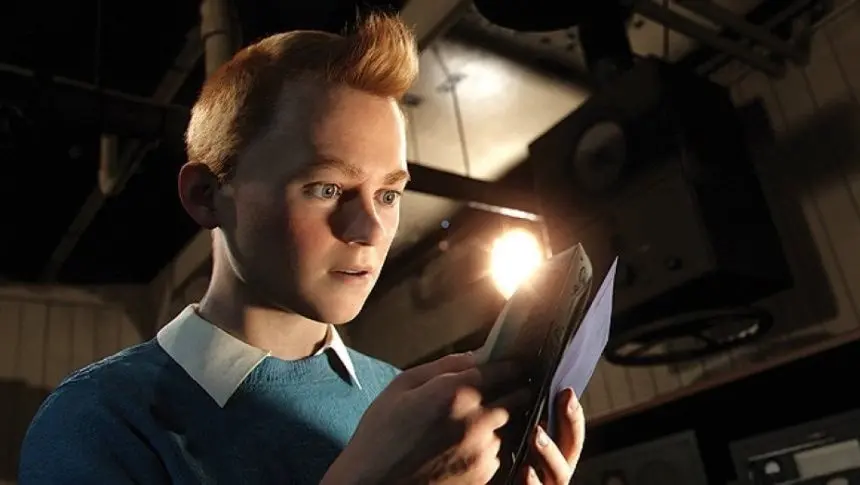
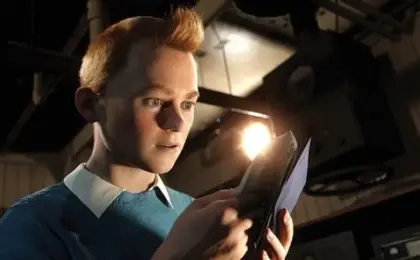
In a cinematic landscape perpetually saturated by reboots, superhero universes, and predictable IP extensions, the announcement of a long-dormant sequel often arrives with a heavy dose of skepticism. However, the latest revelation from Academy Award-winning filmmaker Sir Peter Jackson has sent shockwaves of genuine excitement through the global film community. Fifteen years after Steven Spielberg brought Hergé’s legendary investigative journalist to life in The Adventures of Tintin (2011), Jackson has officially confirmed that the long-gestating sequel will be his next feature film as a director.
The announcement was made during a keynote appearance at the prestigious Sitges Film Festival in Catalonia, Spain, where Jackson was honored with the 2026 Honorary Grand Prize. Amidst providing updates on his extensive, ongoing producing duties in Middle-earth—including the final stages of principal photography on The Hunt for Gollum and the early script development of The Shadow of the Past—Jackson dropped the definitive bombshell regarding his own directorial return.
“We have The Shadow of the Past, which is in the scriptwriting stage. The Hunt for Gollum is almost finished filming. I think there are about two weeks of shooting left,” Jackson stated to an enraptured audience. “And we’ve also already written the script for Tintin 2, the second Tintin film. That will be the next film I make.”
This declaration definitively breaks a fifteen-year silence that had convinced many cinephiles and animation enthusiasts that the motion-capture adaptation had been permanently relegated to the graveyard of unproduced Hollywood sequels. With the script already completed and Jackson stepping firmly back into the director’s chair—swapping roles with Spielberg, who produced the first film—Tintin 2 is poised to transition from an elusive myth into a concrete reality.
Detailed Chronology: A Fifteen-Year Journey to the Sequel
To fully grasp the magnitude of Jackson’s announcement, one must retrace the remarkably protracted and winding path of the Tintin film franchise. The partnership between Steven Spielberg and Peter Jackson began in the mid-2000s when both visionary directors, who shared a profound childhood love for Georges Remi’s (Hergé) iconic Adventures of Tintin comics, realized they held the rights to adapt the material.
Originally, the plan was structured as a groundbreaking back-to-back cinematic event: Spielberg would direct the first film, Jackson would direct the second, and a potential third film would be helmed by a yet-to-be-determined director or co-directed by the pair. Utilizing cutting-edge performance-capture technology developed by Jackson’s Wētā FX (then Wētā Digital), the inaugural film aimed to bridge the gap between photo-realism and the stylized, caricature-driven aesthetic of Hergé’s original artwork.
Released globally in late 2011 (under the title The Adventures of Tintin: The Secret of the Unicorn in regions outside the United States), the film was met with widespread critical acclaim. Reviewers lauded its breakneck pacing, stunning visual effects, jaw-dropping single-take camera movements, and John Williams’ swashbuckling orchestral score. However, its domestic box office performance in the United States—pulling in a modest $77 million—created immediate hesitation among studio executives at Paramount Pictures and Sony Pictures regarding the financial viability of rushing a sequel into production.
Despite the lukewarm domestic haul, the film exploded on the international stage, grossing $296 million overseas for a worldwide cumulative total of approximately $373 million against a production budget of $135 million. While profitable, the heavy reliance on foreign markets and the immense logistical hurdles of performance-capture production caused continuous delays.
Throughout the 2010s, updates regarding Tintin 2 emerged sporadically, usually oscillating between optimistic confirmations and indefinite stalls. Spielberg periodically reassured fans that the script was being written—with rumors pointing toward a combined adaptation of the classic diptych The Seven Crystal Balls and Prisoners of the Sun—while noting that other commitments kept pushing the start date further down the horizon. Meanwhile, Jackson found himself consumed by Middle-earth once more with The Hobbit trilogy, followed by monumental, critically acclaimed historical and musical documentaries like They Shall Not Grow Old (2018) and The Beatles: Get Back (2021).
By the arrival of the mid-2020s, public consensus had largely settled on the idea that the window for a direct sequel had closed. Voice actors aged, technology evolved past the specific production pipeline of the 2011 film, and the primary creative forces moved on to other pastures. Jackson’s Sitges revelation shatters this assumption entirely, proving that behind the scenes, the creative engine never truly stopped turning.
Supporting Context & Metrics: Analyzing the Franchise’s Footprint
Evaluating the commercial and cultural impact of the Tintin cinematic enterprise requires analyzing both its box office ledger and its unique technological pedigree.
Box Office Breakdown (2011 Original)
- Domestic Gross (USA & Canada): $77.5 million
- International Gross: $296.6 million
- Global Box Office Cumulative: $374.1 million
- Estimated Production Budget: $135 million
While Hollywood conventional wisdom historically punished films that underperformed domestically relative to their international numbers, The Adventures of Tintin proved that globally beloved intellectual properties could thrive on worldwide appeal. The film overperformed significantly in European markets—particularly in France and Belgium, where Hergé’s creation holds the status of cultural royalty—as well as across Asia and Latin America.
The Creative Heavyweights Behind the Lens
The original film’s success was driven by an astonishing convergence of top-tier talent both in front of and behind the computer-generated camera:
- Directors & Producers: Steven Spielberg (Director of Film 1, Producer of Film 2) and Peter Jackson (Producer of Film 1, Director of Film 2).
- Screenwriters: The initial screenplay brought together a powerhouse trio of modern genre writing: Steven Moffat (Doctor Who, Sherlock), Joe Cornish (Attack the Block), and Edgar Wright (Shaun of the Dead, Hot Fuzz).
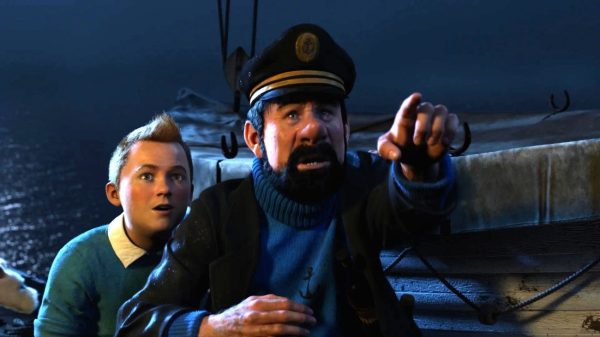
- Star-Studded Mo-Cap Ensemble: Jamie Bell infused youthful determination and physical agility into Tintin, while Andy Serkis delivered a career-best performance capture portrayal of the perpetually inebriated, fiercely loyal Captain Archibald Haddock. The supporting cast boasted luminaries such as Daniel Craig (as the villainous Red Rackham/Ivan Ivanovitch Sakharine), Simon Pegg and Nick Frost as the bumbling detectives Thomson and Thompson, Toby Jones, and Cary Elwes.
Official Statements and Industry Impact
Jackson’s disclosure at Sitges serves as a masterclass in how to command industry-wide attention without relying on standard, corporate press releases. Delivered in an intimate, retrospective setting during his acceptance of the Honorary Grand Prize, his comments laid bare the current state of his production slate at WingNut Films.
By explicitly linking the timeline of Tintin 2 to his imminent wrap on The Hunt for Gollum and the script-phase development of The Shadow of the Past, Jackson has established a clear professional trajectory. The veteran auteur is systematically clearing his plate of Middle-earth ancillary commitments to dedicate his full, undivided creative focus to the world of Hergé.
Industry analysts note that the passage of fifteen years, rather than acting as a detriment, may actually serve the production positively. Wētā FX has spent the intervening decade and a half pioneering unprecedented advancements in performance capture, facial animation, and real-time rendering—technologies heavily tested and refined during Jackson’s monumental work on The Beatles: Get Back and subsequent documentary restoration projects. The visual leap from 2011’s rendering standards to what Wētā can achieve today promises to make Tintin 2 one of the most visually staggering animated features ever produced.
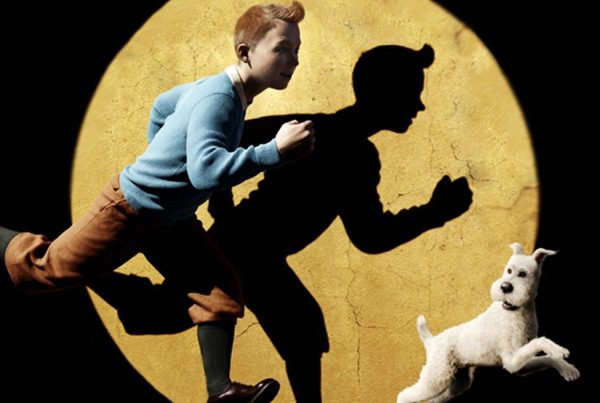
Future Outlook: What Lies Ahead for Tintin, Snowy, and Captain Haddock?
As the industry processes Jackson’s confirmation, attention immediately pivots to narrative and logistical specifics. Which comic book volumes will the sequel adapt? While earlier development reports heavily favored the chilling, mystical dual-adventure of The Seven Crystal Balls and Prisoners of the Sun, Jackson and his team have yet to formally verify the exact storyline of the completed script.
The inclusion of these supernatural and anthropological elements—involving an Incan expedition, a mysterious curse affecting members of a scientific polar expedition, and the kidnapping of Professor Calculus—would offer a markedly different tonal palette compared to the aquatic, treasure-hunt dynamics of The Secret of the Unicorn. It would introduce sweeping South American landscapes, ancient temples, and high-stakes psychological dread, perfectly suited to Jackson’s historical penchant for grand-scale cinematic adventure and horror-adjacent thrills.
Furthermore, questions remain regarding the returning cast. Given that the medium relies entirely on performance capture, the physical aging of actors like Jamie Bell and Andy Serkis presents zero impediment to reprising their iconic roles. Voice and movement tracking can seamlessly recreate the youthful energy required for the intrepid reporter and his delightfully bombastic seafaring companion.
With principal photography on The Hunt for Gollum drawing to a close and the script for Tintin 2 finalized, the gears of pre-production are expected to spin up rapidly in the coming months. For millions of fans who spent over a decade uttering metaphorical cries of “Jumping Jellyfish!” in despair that the sequel would never materialize, the wait is finally nearing its end. Sir Peter Jackson is heading back into the director’s chair, and the cobblestone streets, high seas, and uncharted jungles of Hergé’s universe are ready to spring back to life.



Belum ada komentar. Jadilah yang pertama berkomentar!