

Executive Overview
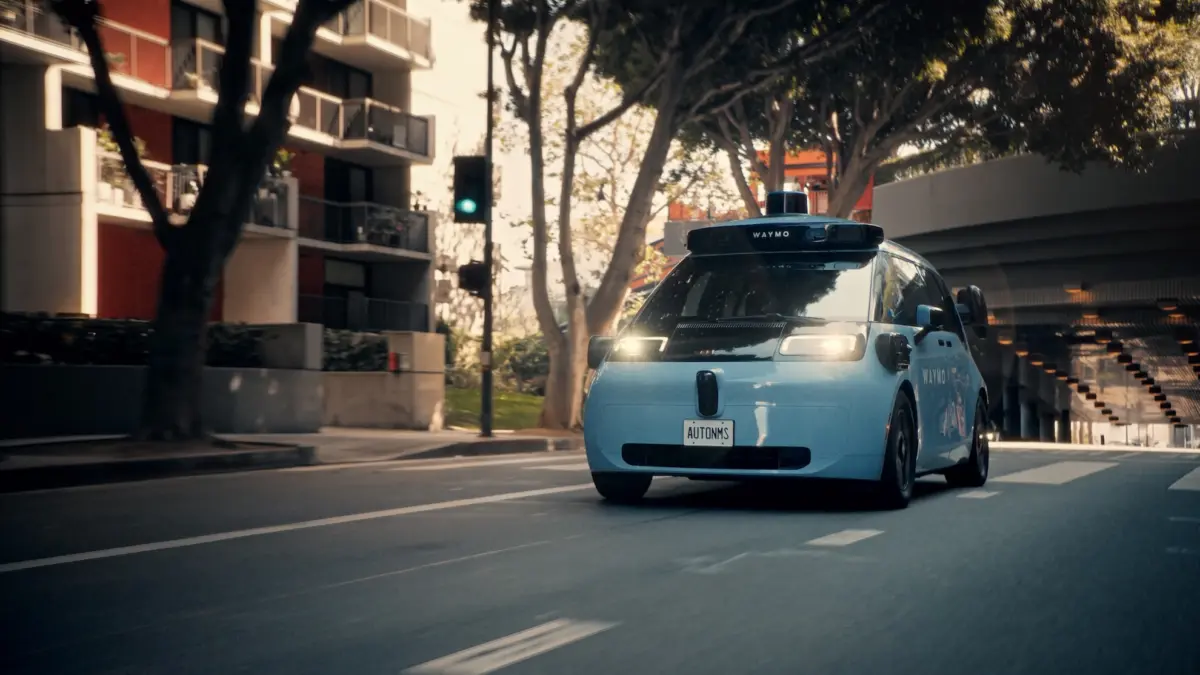
Alphabet-owned autonomous driving pioneer Waymo has officially opened access to its next-generation commercial robotaxi to the general public across Los Angeles, Phoenix, and San Francisco. This marks a critical inflection point in the company’s long-term commercial strategy. Designated as the "Ojai" (pronounced oh-hi), this new custom-built platform represents a radical departure from Waymo’s historical reliance on retrofitted consumer vehicles. Engineered from the ground up for the rigorous demands of commercial fleet operations, the Ojai is designed to be significantly cheaper to build, operate, and maintain than its predecessors.
For the time being, customers hailing rides in these three launch markets will be randomly matched with either an Ojai vehicle or Waymo’s older, familiar fleet of modified Jaguar I-Pace electric SUVs. However, as supply scales, the company plans to introduce an in-app vehicle preference feature, allowing riders to manually select between the two platforms. Currently, Waymo operates approximately 300 Ojai vehicles in its commercial rotation, but maritime and trade shipping data indicate that this figure is poised for exponential growth.
Driven by the imperative to achieve long-term profitability, Waymo’s leadership views the Ojai not merely as a hardware upgrade, but as the foundational vehicle for mass scalability. Packed with cutting-edge hardware—including the modular sixth-generation Waymo Driver system and Google’s Gemini AI acting as an advanced in-car assistant—the Ojai merges state-of-the-art software with a purpose-built automotive architecture. Yet, the vehicle’s journey from a drawing board in 2021 to bustling American streets is a complex story of international manufacturing partnerships, supply chain navigation, and regulatory hurdles, highlighted by its manufacturing roots in China via Geely Holding Group.
Detailed Chronology
The Genesis: Partnering with Geely (2021)
The story of the Ojai began years before the vehicle ever turned a wheel on U.S. asphalt. In December 2021, Waymo announced a strategic partnership with Chinese automotive giant Geely Holding Group. The objective was clear: design and manufacture a dedicated, all-electric autonomous vehicle (AV) specifically tailored for ride-hailing networks in the United States.
While Waymo had spent years refining its autonomous software suite using platforms like the Lexus RX450h and later the Jaguar I-Pace, these legacy vehicles were fundamentally consumer cars adapted for self-driving hardware. They were expensive to procure, featured cramped interiors unoptimized for ride-hail passengers, and lacked the structural durability required for a 24/7 commercial fleet.
Geely provided the solution through its specialized SEA-M platform—an evolution of its "Sustainable Experience Architecture." Unlike traditional automotive platforms built for human drivers, the SEA-M architecture was conceptualized explicitly for driverless robotaxis and commercial delivery vans. It prioritized cabin spaciousness, ease of entry and exit via sliding doors, flat floors, and a low step-in height, transforming the interior into a passenger-centric lounge environment.
Prototyping, Testing, and Refinement (2022–2025)
Following the 2021 agreement, the vehicle spent years in development. Waymo and Geely engineers worked closely to transition the concept from digital renderings to physical prototypes. Testing occurred across secretive proving grounds and controlled environments before moving to public roads.
During this multi-year prototyping phase, the vehicle underwent rigorous endurance testing to evaluate how its chassis, braking systems, and electrical architecture would hold up under the relentless strain of commercial ride-hailing. Simultaneously, Waymo’s engineering teams integrated the nascent iterations of its sixth-generation hardware suite. Unlike previous generations that required bulky, expensive sensor arrays bolted haphazardly onto vehicle roofs, the sixth-generation system was engineered to be deeply integrated into the vehicle’s design language, optimizing aerodynamics, sensor field-of-view, and manufacturability.
The Commercial Breakthrough (May 2026)
By late spring 2026, the vehicle—officially named the Ojai—transitioned from experimental status to commercial reality. In May 2026, TechCrunch and other industry outlets reported that Waymo was officially securing regulatory and operational clearances to place the Ojai into its active fleet.
The initial rollout began quietly, focusing on validating system performance with real-world passengers in controlled batches. By opening the Ojai to all riders in Los Angeles, Phoenix, and San Francisco simultaneously, Waymo signaled immense confidence in the vehicle’s stability, safety record, and system integration.
Supporting Context & Metrics
Hardware Innovation and the Sixth-Generation Waymo Driver
The technological heartbeat of the Ojai is Waymo’s sixth-generation self-driving system. For a commercial robotaxi enterprise, software modularity is just as important as raw computing power. The sixth-generation system was designed from the outset to be platform-agnostic, meaning it can be scaled across various vehicle types, from sedans and minivans to future commercial delivery vehicles.
This generation features a refined suite of custom-designed lidar, radar, and camera sensors. By optimizing the sensor layout, Waymo has managed to reduce the bill of materials (BOM) cost significantly while expanding the system’s operational design domain (ODD) capabilities—allowing the vehicle to handle complex urban environments, adverse weather conditions, and dense pedestrian traffic with heightened precision.
Furthermore, the passenger experience inside the Ojai has been fundamentally overhauled. The vehicle features a redesigned user interface tailored specifically for autonomous travel. In a major leap forward for in-car software integration, the Ojai incorporates Google’s Gemini AI. Acting as an intelligent in-car assistant, Gemini helps riders manage climate controls, audio preferences, route adjustments, and real-time trip inquiries, creating a seamless, conversational interface that bridges the gap between human-centric luxury and autonomous utility.
Supply Chain Realities: Manufacturing, Tariffs, and Assembly
Despite its advanced American software and localized fleet management, the Ojai is fundamentally a minivan manufactured by Zeekr, a premium electric vehicle brand owned by Geely.
Strip away the camera pods, computer racks, and lidar housings, and the underlying chassis is a product of Chinese automotive engineering. This cross-border manufacturing arrangement introduces notable geopolitical and economic complexities, most notably regarding trade policy. Under current U.S. federal trade policy, vehicles imported from China face steep, punitive import tariffs. These tariffs artificially inflate the capital expenditure required for Waymo to scale its physical fleet.
To mitigate these cost pressures and comply with national security and telematics regulations, Waymo employs a hybrid supply chain model:
- Bare-Bones Export: Zeekr manufactures the base Ojai minivans in China, stripping them of any native Chinese connected-car technology, telematics hardware, or proprietary software components.
- Transoceanic Shipping: The stripped vehicles are shipped across the Pacific Ocean in massive cargo volumes.
- Domestic Integration: Upon arrival in the United States, the vehicles are transported to Waymo’s specialized Arizona facility. Here, American technicians outfit the minivans with Waymo’s proprietary sixth-generation autonomous hardware suite, safety redundancies, and computing brains.
Fleet Expansion Metrics and Economic Projections
The scale of Waymo’s current and projected deployment is staggering. According to shipping records and industry data analyzed by New York-based research firm MoffettNathanson, Waymo’s import pipeline is operating at a breakneck pace.
In July alone, logistics data revealed that 725 Ojai vehicles entered the United States. MoffettNathanson projects that, based on current shipping manifests and sustained import velocities, Waymo is on track to integrate 5,000 Ojai vehicles into its U.S. fleet by the end of 2026.
To put this in perspective, reaching this milestone would more than double Waymo’s entire active fleet size compared to its legacy Jaguar I-Pace operations. This rapid acceleration underscores the immense financial backing of parent company Alphabet and highlights Waymo’s aggressive push to capture market share across major metropolitan transit corridors before traditional automakers or rival autonomous startups can mount a substantive challenge.
Official Statements & Industry Perspective
While Waymo has maintained tight-lipped operational discipline regarding the exact financial margins of the Ojai, company spokespersons and mobility executives have consistently emphasized that vehicle unit economics are the ultimate gatekeeper to widespread profitability.
A company spokesperson highlighted that the Ojai was engineered explicitly to solve the structural cost hurdles that have historically plagued the autonomous vehicle industry. Building a robotaxi that requires expensive, hand-built modifications on luxury consumer chassis is an unsustainable path to mass scale. By partnering with a volume manufacturer like Geely/Zeekr, Waymo has tapped into world-class automotive manufacturing efficiencies.
Industry analysts have largely praised the strategic pivot. For years, critics argued that Waymo’s reliance on the Jaguar I-Pace—a luxury European electric vehicle—was a luxury the company could only afford due to Alphabet’s deep pockets. The I-Pace, while reliable and technologically capable, was never designed for commercial ride-hailing; it lacked automated sliding doors, had a restricted interior volume for luggage, and carried a high replacement part cost.
MoffettNathanson’s tracking of the Ojai imports validates the thesis that Waymo is transitioning from a high-tech experimental project into a high-volume industrial transit utility. By aggressively importing thousands of chassis despite tariff headwinds, Waymo is demonstrating that the cost-per-mile efficiencies gained by deploying a purpose-built AV outweigh the near-term capital penalties of international trade friction.
Future Outlook
As Waymo cements its footprint in Los Angeles, Phoenix, and San Francisco with the Ojai, the company’s roadmap for the remainder of the decade is exceptionally ambitious.
Upcoming Market Expansions
During its latest corporate briefings, Waymo confirmed that the Ojai rollout is far from complete. The company plans to introduce the Ojai robotaxi to three additional major metropolitan markets later this year:
- Denver, Colorado: Offering new operational challenges related to high-altitude driving, cold-weather performance, and variable winter precipitation.
- Las Vegas, Nevada: A high-density tourism and entertainment hub characterized by complex pedestrian behaviors, strip traffic congestion, and convention-driven surge demand.
- San Diego, California: Expanding Waymo’s footprint in its home state with a sprawling coastal urban geography.
These expansions will bring Waymo’s total operating footprint well beyond its current baseline, testing the scalability of its remote support operations and maintenance depots.
The Path to Profitability and Long-Term Viability
The ultimate test for the Ojai will not be whether it can drive autonomously—Waymo’s software has already proven its safety and reliability across tens of millions of commercial miles. Rather, the test is economic.
Can a robotaxi fleet powered by the Ojai lower the cost-per-ride below the threshold of human-driven rideshare services and public transit options? By utilizing a modular software stack that reduces integration overhead, capitalizing on Zeekr’s high-volume manufacturing economies of scale, and designing a cabin optimized for reduced maintenance and cleaning times, the Ojai positions Waymo closer to self-sustaining profitability than any competitor in the autonomous vehicle landscape.
As the 5,000-vehicle import milestone approaches by late 2026, the Ojai will transition from a bold corporate experiment into the ubiquitous face of urban mobility across the United States. For riders stepping into a driverless minivan equipped with Google Gemini and custom sliding doors, the future of transportation will no longer feel like science fiction—it will simply be the daily commute.








Belum ada komentar. Jadilah yang pertama berkomentar!