

Published: September 12, 2026
Author: Global Automotive & Technology Desk
Executive Overview
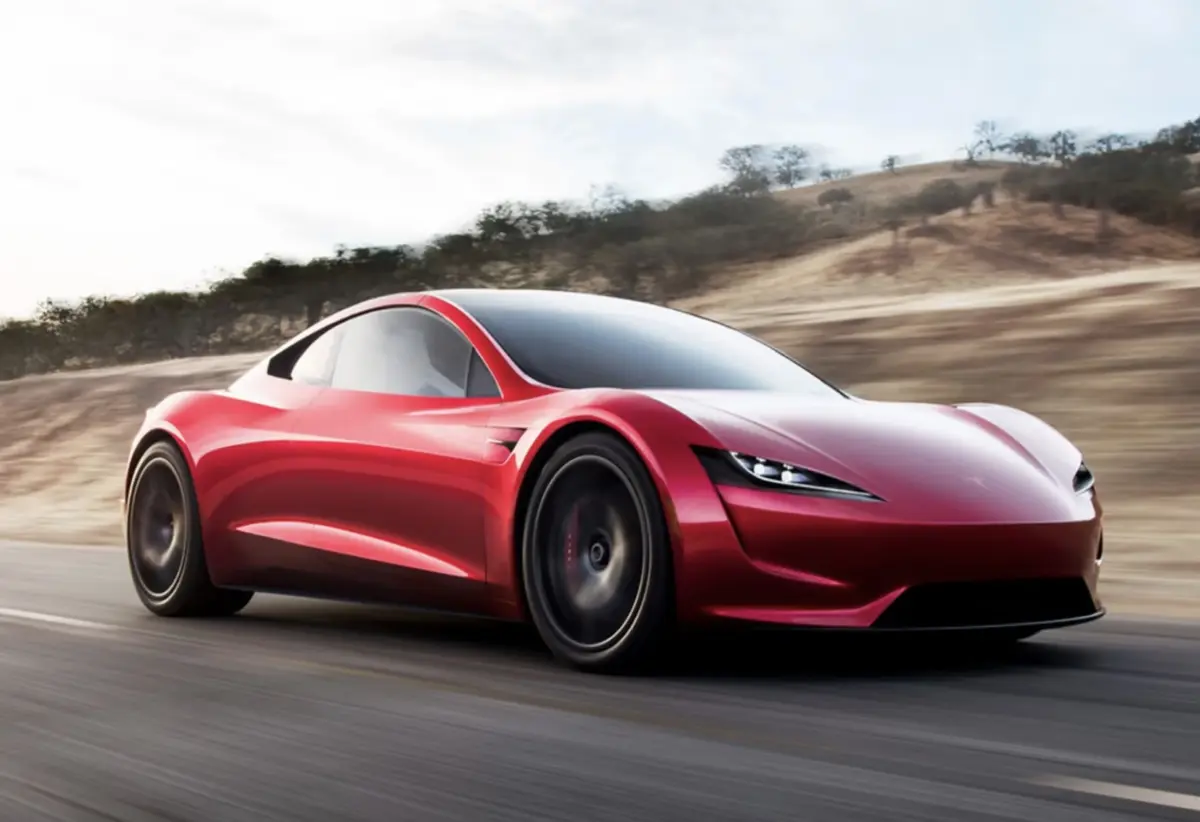
After nearly a decade of high-profile delays, shifting specifications, and growing skepticism from the automotive community, Tesla’s long-gestating second-generation Roadster is finally stepping into the spotlight. In a cryptic yet unambiguous social media post on Saturday, September 12, 2026, the pioneering electric vehicle manufacturer signaled that the wait is nearly over. Teasing a simple command—“Go for launch”—alongside a prominent date stamp of October 1, Tesla has set the stage for what could be one of the most disruptive reveals in automotive history.
The teaser graphic released on X (formerly Twitter) did more than just announce a date; it reignited fervent speculation regarding the vehicle’s most audacious feature: SpaceX-derived cold gas thrusters. Long promised by CEO Elon Musk as a mechanism to briefly allow the vehicle to "fly" or achieve unprecedented acceleration and handling, these thrusters appear to be a central focus of the upcoming October unveiling.
However, the road to this milestone has been anything but smooth. First unveiled to a stunned audience in November 2017 with a targeted production date of 2020, the second-generation Roadster has weathered repeated setbacks, supply chain disruptions, engineering overhauls, and even public squabbles between tech luminaries over delayed reservations. Recent industry reports indicate that Tesla completely scrapped the original 2017 architecture in favor of a radical, clean-sheet design.
As the October 1 debut approaches, the automotive and technology sectors are watching closely. While the unveiling marks a monumental psychological milestone for the project, industry analysts caution that the journey from reveal to customer deliveries remains fraught with traditional manufacturing timelines. Musk has previously stated that production will likely commence 12 to 18 months following the official debut, meaning earnest deliveries may not begin until late 2027 or early 2028.
Detailed Chronology: A Nine-Year Journey to Production
To understand the magnitude of the upcoming October 1 unveiling, one must trace the winding, often turbulent history of the second-generation Roadster project. What was initially pitched as a triumphant victory lap for Tesla’s engineering prowess turned into an epic saga of iterative design and shifting priorities.
Phase 1: The Initial Shockwave (November 2017)
On a crisp evening in Hawthorne, California, Tesla upended the supercar establishment. Amid the dramatic unveiling of the Tesla Semi, a sleek, crimson-red sports car silently rolled out of the trailer, completely unannounced. Elon Musk took the stage to outline jaw-dropping specifications that sounded more like science fiction than attainable engineering:
- 0 to 60 mph: 1.9 seconds
- Quarter-mile time: 8.8 seconds
- Top speed: Over 250 mph
- Battery capacity: 200 kWh
- Range: 620 miles on a single charge
At the time, reservations opened immediately, requiring a hefty $50,000 deposit for standard production slots, while affluent early adopters rushed to secure one of the first 1,000 "Founder’s Series" slots priced at a cool $250,000 upfront.
Phase 2: The Cascading Delays (2020–2023)
The original production target of 2020 came and went quietly. As Tesla threw its collective weight behind scaling the Model Y, ramping up production at Gigafactory Shanghai and Austin, and engineering the polarizing Cybertruck, the Roadster was pushed to the back burner.
Musk repeatedly cited shifting engineering priorities. In various updates, he emphasized that while the Roadster was an incredible halo product, higher-volume vehicles essential for accelerating the world’s transition to sustainable energy had to take precedence. Frustration began to mount among early reservation holders who had parked significant capital with the company for half a decade with little to no communication regarding vehicle architecture updates.
Phase 3: Public Friction and Design Pivots (2024–2025)
By late 2025, public tension over the delays spilled into the open. In November 2025, a high-profile social media dispute erupted between Elon Musk and OpenAI CEO Sam Altman. Altman publicly aired his grievances, noting that waiting 7.5 years after paying a $50,000 reservation fee felt like an eternity. Musk countered by insisting that Altman had ultimately requested and received a refund, turning a spotlight back onto the stagnant status of the vehicle.

Behind closed doors, however, major shifts were occurring. According to investigative reports by The Information, Tesla’s engineering teams had made a radical pivot: the original 2017 prototype architecture had been entirely abandoned. In its place, Tesla developed a completely new, highly classified design intended to push the boundaries of vehicle physics even further. Musk himself alluded to these continuous improvements, noting that the delays were justified by the incorporation of breakthrough technologies.
Phase 4: The Final Countdown (2026)
Following false starts—including a teased April Fools’ Day reveal in 2025 that was subsequently pushed back—Tesla finally mobilized its marketing and engineering machinery in September 2026. The "Go for launch" campaign signifies that the internal design lock has been achieved, and the physical vehicle is ready to be showcased to the world on October 1, 2026.
Supporting Context & Metrics: Redefining Performance Physics
While the technical data sheet for the redesigned October 1 model remains strictly under wraps, the legacy metrics established in 2017—coupled with subsequent hints from executive briefings—provide a fascinating baseline for what the new Roadster aims to achieve.
Comparative Performance Metrics
| Metric | Original 2017 Roadster Specs | Projected / Rumored New Architecture | Industry Benchmark (e.g., Rimac Nevera) |
|---|---|---|---|
| 0–60 mph Acceleration | 1.9 seconds | < 1.9 seconds (potentially lower with thrusters) | 1.74 seconds |
| Top Speed | 250+ mph | 250+ mph | 256 mph |
| Battery Pack | 200 kWh | Next-gen high-density cells | 120 kWh |
| Range (Per Charge) | 620 miles | Optimized for aerodynamic & weight efficiency | ~300 miles |
| Base Price | $200,000 | Expected upward adjustment | $2,100,000 |
| Reservation Deposit | $50,000 | Maintained / Updated tiers | Varies |
The SpaceX Package: Myth vs. Reality
The most polarizing and anticipated aspect of the second-generation Roadster is the integration of aerospace technology. Elon Musk first floated the idea of utilizing "cold gas thrusters" powered by compressed air systems similar to those used on SpaceX rockets.
- How it Works: In theory, high-pressure composite air tanks—replacing the rear seats—would feed thrusters placed around the vehicle’s exterior.
- The Purpose: These thrusters are designed to dramatically enhance cornering grip, braking distances, and straight-line acceleration by artificially augmenting downforce and vectoring thrust.
- The "Flying" Capability: While automotive engineers have long debated the literal interpretation of Musk’s claims that the car would "fly," insiders suggest the system will allow for short, controlled hops or sustained low-altitude suspension lifts under specific, highly controlled test conditions. The October 1 teaser graphic heavily features aerospace-themed iconography, suggesting that this option will be front and center during the presentation.
Official Statements and Industry Reaction
Reactions from the broader automotive and tech ecosystems to the sudden October 1 announcement have been a mixture of palpable excitement and cautious reservation.
Industry analysts point out that while Tesla has a well-documented history of missing ambitious release timelines, its ability to completely reinvent vehicle platforms yields products that fundamentally alter market expectations.
"Tesla does not play by traditional automotive rules. While legacy automakers spend five to seven years on predictable platform lifecycles, Tesla treats its halo cars as moving physics experiments. Abandoning the 2017 design for a radical new approach shows they are unwilling to release a car that merely matches today’s hyper-EVs like the Rimac Nevera or Lotus Evija—they want to make them obsolete before production even starts."
— Senior Automotive Technology Analyst, Global Market Research
Financial markets have also responded. Following the "Go for launch" post on X, Tesla’s stock experienced moderate upward momentum, driven by renewed investor enthusiasm for the company’s high-margin luxury segments and technological innovation narrative.
However, consumer advocates and early reservation holders remain cautiously optimistic. Online forums dedicated to Tesla reservation updates are flooded with a mixture of celebration and skepticism. Many note that while the reveal on October 1 is an exciting spectacle, the true test will be whether production timelines hold firm against the backdrop of global supply chain complexities and the ongoing scaling of next-generation manufacturing platforms.
Future Outlook: The Road Beyond October 1
As the clock ticks down to October 1, 2026, the unveiling of the redesigned Tesla Roadster will serve as a critical litmus test for the company’s innovation pipeline.
Key Milestones to Watch:
- The October 1 Unveiling Event: Observers will look for concrete details regarding production readiness, final interior layouts (including the rumored yoke-plus steering configurations), and the operational reality of the SpaceX thruster package.
- Pricing and Reservation Adjustments: With inflation and significant engineering overhauls defining the past nine years, analysts will monitor whether the base $200,000 and $250,000 Founder’s Series pricing structures remain intact for legacy reservation holders.
- Production Line Integration: Following the reveal, attention will immediately shift to manufacturing footprints. Musk’s guidance of a 12-to-18-month production ramp-up places the first assembly-line rollouts squarely in late 2027 or early 2028.
Ultimately, the second-generation Roadster is more than just a low-volume luxury toy for the ultra-wealthy. For Tesla, it represents the absolute technological ceiling of electric vehicle engineering—a rolling showcase of battery density, aerodynamic efficiency, and aerospace integration designed to prove that the limits of sustainable performance have yet to be reached. Whether it can finally deliver on its decade-long promise is a question the world will begin to answer on October 1.






Belum ada komentar. Jadilah yang pertama berkomentar!