

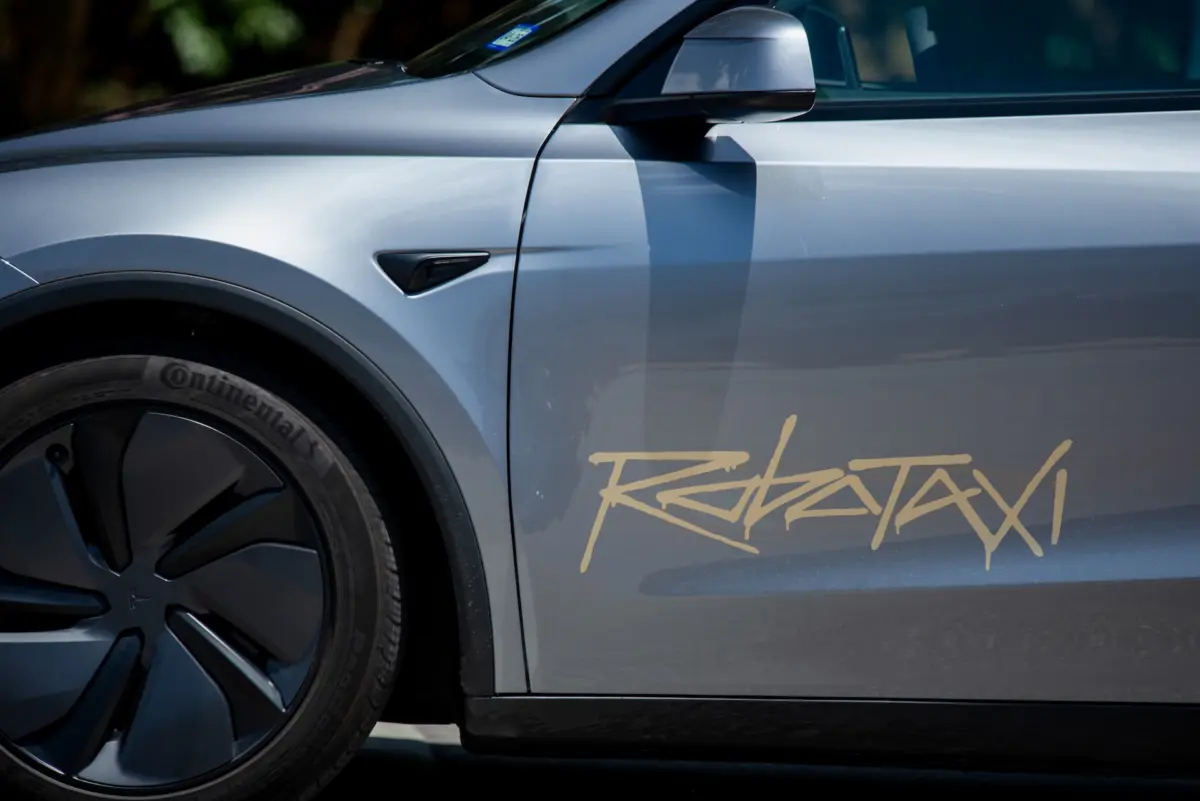
Executive Overview
Las Vegas, the neon-lit epicenter of entertainment, tourism, and high-stakes gambling, is about to become the backdrop for an entirely different kind of gamble. In a unanimous decision that marks a watershed moment for the autonomous vehicle (AV) industry, the Nevada Transportation Authority (NTA) has approved commercial permits for three heavyweight contenders: Tesla, Uber, and Waymo.
This regulatory milestone paves the way for up to 8,000 autonomous robotaxis to flood the streets of Clark County—which encompasses the Las Vegas metropolitan area and the famed Las Vegas Strip—over the next 12 months. If executed to its absolute ceiling, this rapid influx of driverless technology will transform the desert oasis into one of the densest and most fiercely contested robotaxi deployment zones on the planet.
However, beneath the headline-grabbing numbers lies a more nuanced reality. Executives from the participating companies have already tempered expectations, admitting that regulatory ceilings do not necessarily translate to immediate street-level deployments. Supply chain realities, infrastructure limitations, and logistical hurdles mean the actual number of vehicles hitting the road will likely be a fraction of the authorized total.
Even so, the implications are profound. The coming year will test whether the sprawling infrastructure of Clark County can successfully absorb an army of algorithmic vehicles without causing gridlock, and whether human-driven transport can coexist with software-guided cars. As tech giants, ride-hailing platforms, and local labor unions lock horns, Las Vegas is evolving into the ultimate proving ground for the future of urban mobility.
Detailed Chronology: How the Nevada Approvals Unfolded
The path to Thursday’s historic NTA vote was years in the making, built upon a foundation of incremental testing, regulatory lobbying, and shifting corporate strategies. Understanding how Clark County arrived at this flashpoint requires examining the timeline of events leading up to the board’s unanimous decision.
The Rise of Testing in the Desert
For years, Las Vegas and its surrounding municipalities have served as testing grounds for autonomous technology. Waymo, Motional (a joint venture between Hyundai and Aptiv), and Amazon-backed Zoox have quietly mapped roads, fine-tuned sensor suites, and accumulated millions of autonomous miles in the region.
Much of this early testing concentrated heavily within the "Golden Triangle"—a high-traffic commercial corridor stretching from Harry Reid International Airport to the heart of Las Vegas Boulevard and its surrounding arteries. Additionally, companies like Motional expanded their footprint into downtown Las Vegas and suburban shopping hubs like Town Square, slowly acclimating local commuters and tourists to the sight of steering wheels turning themselves.
The NTA Hearing and Unanimous Approval
The tension culminated during Thursday’s pivotal NTA hearing. Board members listened to hours of testimony from tech representatives, local union advocates, traditional taxi operators, and legal counsel before casting their votes.
The outcome was a clean sweep: unanimous approval for three separate commercial permits authorizing aggressive scaling over the next year.
- Tesla secured the largest allocation, winning approval to deploy up to 5,000 robotaxis.
- Waymo secured a permit to operate up to 1,000 autonomous vehicles.
- Uber secured authorization for 1,000 robotaxis, which it plans to deploy through strategic partnerships with Motional and Zoox. (Zoox already holds a separate autonomous vehicle network company permit allowing it to operate 100 vehicles in the state.)
While the collective total of 8,000 permits signals an aggressive regulatory green light, the tone of the hearing quickly shifted from celebratory to pragmatic as corporate representatives took the microphone to manage expectations.
Supporting Context & Metrics: Parsing the Numbers
To truly understand the scale of what is happening in Clark County, one must look closely at the math behind the permits and compare it to the gritty operational realities articulated by industry insiders.
The Authorized Allocations vs. Operational Reality
The aggregate figures authorized by the NTA are staggering:
| Company | Authorized Permit Ceiling (Next 12 Months) | Partner Networks / Notes |
|---|---|---|
| Tesla | Up to 5,000 vehicles | Operated independently via the upcoming Cybercab ecosystem. |
| Waymo | Up to 1,000 vehicles | Standalone deployment leveraging Waymo Driver technology. |
| Uber | Up to 1,000 vehicles | Deployed via partnerships with Motional and Zoox. |
| Zoox | 100 vehicles (Pre-existing) | Operates independently under existing network permits. |
Despite these large figures, corporate transparency during the NTA hearings painted a much more conservative picture. Eric Early, Tesla’s Cybercab chief engineer, offered a reality check during the proceedings.
"The 5,000 has always been a ceiling for us," Early stated explicitly during the meeting. "I don’t think we’ll be in a position by this time next year to deploy 5,000 vehicles, and it’s not [because of] the technology. […] I think we would be extremely happy and satisfied if we could get ourselves up to 2,500, maybe a bit higher than that in the next year."
When factoring in similar logistical and manufacturing constraints across Waymo, Motional, and Zoox, industry analysts estimate that the actual fleet size hitting Las Vegas streets over the next year will likely hover closer to 3,000 or 4,000 vehicles—still a massive deployment, but far below the maximum legal ceiling of 8,000.
The Infrastructure Challenge
Deploying thousands of autonomous vehicles requires heavy physical and digital infrastructure. Fleets require dedicated depots for overnight parking, routine maintenance, sensor calibration, internal cleaning, and high-speed electrical charging.
As these fleets scale toward the thousands, real estate in and around the Las Vegas valley will face a new kind of demand: industrial plots retrofitted as robotaxi care facilities. Furthermore, local cellular and 5G networks will be pushed to their limits to maintain low-latency communication streams for remote monitoring and telemetry data.
Official Statements and Industry Friction
The introduction of autonomous behemoths into a market traditionally dominated by human-driven taxis and gig workers has predictably sparked intense opposition and strategic maneuvering among industry stakeholders.
Traditional Transport Pushback
Representatives of the established ground-transportation sector did not mince words during the NTA hearings. Arguing that the regulatory body was moving "too far, too fast," traditional transit advocates warned of severe economic and logistical consequences.
Kimberly Maxson-Rushton, a seasoned attorney representing the Livery Operators Association and local taxi companies, laid out two primary grievances during her testimony.
"These applications raise two grave concerns," Maxson-Rushton told the board. "One deals with the oversaturation of the commercial transportation industry as a whole in Nevada. And the second one deals with the overcrowding of the roadways, and specifically the Golden Triangle."
Traditional operators argue that flooding the market with automated vehicles during non-peak tourist hours will decimate the earnings of human drivers who rely on steady passenger flows to make a living. They also point out that concentrated AV testing has already created localized bottlenecks, fears that could multiply exponentially once thousands of automated cars are dispatched onto the Strip simultaneously.
The Labor Dilemma: Creation vs. Destruction
At the heart of the socio-economic debate is the impact on employment. Labor advocates and economists view the NTA’s decision through two opposing lenses:
- The Job Destruction Thesis: Thousands of human taxi drivers, limousine operators, and rideshare gig workers face the existential threat of technological displacement. For many lower- and middle-class residents in Clark County, driving is a primary source of stable income.
- The New Economy Thesis: Tech proponents argue that the robotaxi ecosystem will birth an entirely new category of jobs. Maintaining thousands of complex, sensor-laden electric vehicles requires technicians, fleet managers, remote-assistance operators, detailers, and charging infrastructure specialists.
Whether the newly created technical jobs will match the sheer volume of displaced driving jobs remains one of the most contentious, unanswered questions of the autonomous revolution.
Uber’s "Goldilocks" Strategy and the Hybrid Vision
Amidst the high-stakes clash between all-out autonomy (championed by Tesla and Waymo) and traditional human driving, Uber has attempted to position itself as the pragmatic middle ground.
Rather than advocating for a complete, sudden replacement of human labor, Uber has aggressively lobbied for a hybrid model. Under this approach, urban ride-hailing networks would seamlessly blend human-driven vehicles and robotaxis, allowing municipalities to absorb new technology gradually to meet peak demand spikes rather than flooding the market all at once.
This hybrid stance serves a dual purpose for Uber. On one hand, it aligns with city planners concerned about urban congestion and labor disruption. On the other hand, it acts as a strategic hedge for Uber itself—ensuring that if its autonomous vehicle partnerships with Motional and Zoox scale more slowly than Tesla’s Cybercab or Waymo’s established fleet, the company’s core human-driven network can pick up the slack.
However, this positioning has put Uber on a direct collision course with Waymo, showcasing the deep ideological splits dividing Silicon Valley’s transit visionaries.
Future Outlook: What Lies Ahead for Clark County
As the dust settles on the NTA’s unanimous vote, attention shifts from the courtroom to the asphalt. The next 12 months will serve as a high-stakes crucible for the commercial viability, safety, and societal acceptance of widespread robotaxis.
The Battle for the Rider
With Tesla, Uber, and Waymo all vying for the same pool of tourists, conventioneers, and local residents, Las Vegas will witness an unprecedented mobility price and service war. Consumers can expect introductory promotions, app integrations, and intense marketing campaigns as these tech giants attempt to build brand loyalty on the Strip.
For Waymo, the expansion into Las Vegas represents a natural continuation of its scaling strategy following successful rollouts in cities like Phoenix, San Francisco, and Los Angeles. For Tesla, the rollout will serve as the ultimate real-world stress test for its highly anticipated Cybercab platform. For Uber, it represents a crucial test of its aggregator model, proving whether it can successfully orchestrate third-party autonomous fleets alongside its legacy human network.
Regulatory Watchdogs and Safety Metrics
State and local regulators will maintain a microscopic focus on safety records, traffic incident reports, and emergency vehicle interactions. Any major malfunction, multi-vehicle traffic jam, or failure to yield to emergency responders on the Las Vegas Strip could trigger immediate political blowback and prompt the NTA to reevaluate permit restrictions.
Ultimately, Clark County is no longer just a destination for weekend getaways and rolling dice. Over the next year, the streets of Las Vegas will host a high-stakes technological gamble—one that will signal to the rest of the world whether society is truly ready to hand the steering wheel over to the machines.






Belum ada komentar. Jadilah yang pertama berkomentar!