

Executive Overview
For decades, the unwritten social contract of venture capital was absolute and sacrosanct: a premier VC firm does not back direct competitors. This ironclad rule of exclusivity was designed to protect intellectual property, prevent conflicts of interest, and foster an environment of radical trust between founders and their early-stage backers. It was the bedrock upon which legendary venture partnerships were built, ensuring that a firm’s fiduciary duty and strategic guidance remained undivided.
Today, that foundational pillar of Silicon Valley culture is fracturing under the relentless, high-velocity pressure of the generative artificial intelligence boom.
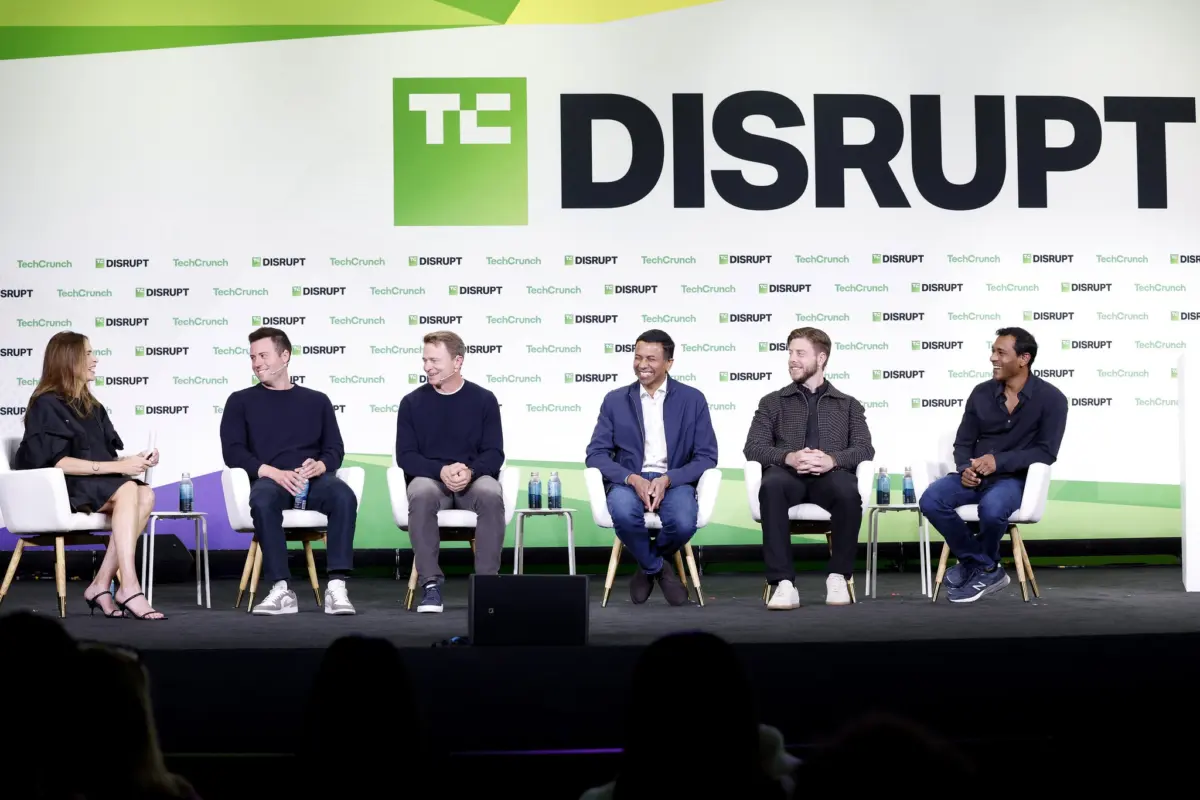
Speaking on stage at TechCrunch Disrupt, partners from the storied venture capital firm Benchmark candidly acknowledged what many insiders have whispered for months: the old rules of engagement no longer apply. Driven by hyper-ambitious founders, collapsing software development costs, and an unprecedented land grab for market share, AI startups are expanding their scopes at breakneck speeds. As these companies rapidly pivot and scale, they are inevitably colliding in each other’s backyards, dragging their shared investors into unprecedented conflicts of interest.
The strain on this traditional boundary is no longer theoretical. Recent high-profile public feuds—most notably a bitter war of words between AI coding agent startups Factory and Cognition, catalyzed by overlapping investors like Khosla Ventures—have laid bare the toxic potential of multi-backed rivalries. While elite firms like Benchmark continue to preach the virtues of early-stage exclusivity and radical transparency, the harsh economic realities of the AI gold rush suggest that the era of clean, conflict-free portfolios may be drawing to a close.
Detailed Chronology: The Anatomy of a Venture Capital Clash
To understand how drastically the venture landscape has shifted, one must examine the series of structural tremors and high-drama events that brought the issue of VC conflicts to a boiling point.
The Macro Convergence: OpenAI, Anthropic, and Shared Cap Tables
The erosion of the exclusivity rule did not happen overnight; it was foreshadowed by the sheer capital requirements of foundational AI models. Developing frontier models demands billions of dollars in compute, a financial reality that sidelined traditional single-firm backing models. Consequently, towering AI labs like OpenAI and Anthropic began sharing dozens of the exact same venture capital and institutional investors. While industry observers initially wrote this off as a necessary anomaly exclusive to foundational model layer players, the trend quickly bled down-stack into the application layer.
September: The Factory-Cognition Fallout
The latent tensions of overlapping AI investments erupted into open warfare at the end of September. Factory, a high-profile startup building AI agents designed to autonomously write software, took drastic public action against its board observer and adviser, Chris Degnan.
Factory’s leadership fired Degnan, citing "unethical conduct involving Cognition," a direct market rival and the creator of the popular Devin coding agent. According to allegations leveled by Factory’s CEO, Degnan had engaged in discussions regarding a prospective job opportunity at Cognition while simultaneously maintaining a front-row seat to Factory’s confidential, board-level strategic discussions.
The fallout was immediate and acrimonious:
- The Defense: Degnan vehemently denied sharing any confidential proprietary information, countering that he had already tendered his resignation prior to the public accusation. Shortly thereafter, he officially announced his appointment as the chief revenue officer at Cognition.
- The Investor Intervention: Legendary powerhouse investor Vinod Khosla waded directly into the fray on social media platform X. Khosla, whose eponymous firm, Khosla Ventures, maintains financial stakes in both competing companies, publicly sided with Degnan. In a blistering rebuke of Factory’s leadership, Khosla blasted the CEO and dismissed the company as "a struggling second tier competitor."
This public brawl served as a terrifying cautionary tale for founders everywhere: when VCs cross-pollinate investments across direct rivals, the governance structure can quickly devolve into a toxic conflict of interest where founders feel exposed, and investors feel justified in picking winners.
Supporting Context & Metrics: Why AI is Accelerating the Collision Course
The breakdown of traditional venture boundaries is not merely a symptom of bad actors or isolated governance failures; it is the logical consequence of a macroeconomic and technological paradigm shift.
The Collapse of Software Creation Costs
During their TechCrunch Disrupt panel, Benchmark general partner Chetan Puttagunta pointed to the fundamental economics of modern software development as the primary catalyst for the chaos. As generative AI tools mature, the cost of building software is "effectively going to zero."
In previous technological eras—such as the early SaaS boom or the mobile revolution—building a competitive software product required years of engineering effort, substantial capital outlays, and deliberate, linear scaling. This high barrier to entry naturally limited the number of direct competitors in any given sub-sector, making VC exclusivity easy to maintain.
Today, a handful of engineers equipped with advanced AI models can spin up a prototype in days, iterate rapidly, and challenge incumbents almost overnight.
The Expanding "Surface Area" of Startups
Because capital and engineering barriers have collapsed, contemporary founders possess unprecedented ambition. Puttagunta noted that modern entrepreneurs perceive a vast "surface area" of opportunity and immediately try to claim all of it.
A startup that begins as a niche workflow automation tool will frequently pivot, acquire new capabilities, or expand its product roadmap until it directly intersects with another portfolio company managed by the exact same venture firm. What starts as a peaceful coexistence in a venture portfolio often devolves into a fierce turf war by Series B or Series C funding rounds.
Official Industry Statements: Navigating the "Kryptonite" of Venture Capital
The tension between maintaining fiduciary loyalty to founders and capitalizing on the generational wealth of the AI boom has forced venture capitalists to publicly grapple with their evolving code of ethics.
Benchmark on the "Harsh Reality"
Benchmark has long maintained a reputation as an elite, founder-first firm, anchoring its brand on 10-to-15-year partnerships formed at the earliest seed stages. Yet, even Benchmark’s partners concede that the landscape has fundamentally shifted.
"The harsh reality of this world is every company is evolving very quickly. You are going to get conflicts, and that’s just the reality of the current dynamic."
— Eric Vishria, General Partner at Benchmark
Vishria emphasized that Benchmark remains deeply committed to safeguarding founder trust and maintaining strict confidentiality. He downplayed the notion that venture capitalists possess the deep technical mastery required to intentionally cross-pollinate trade secrets, noting wryly, "We are not product or technology experts."
While noting that Benchmark has successfully avoided "that type of insane direct conflict" seen in episodes like the Factory-Cognition dispute, Vishria conceded that while early-stage exclusivity remains a core tenet of their strategy, the broader ecosystem is undergoing a permanent transformation.
Peter Fenton on the Spectrum of Venture Capital
Peter Fenton, another veteran Benchmark partner, didn’t mince words, describing portfolio conflicts as venture capital’s ultimate "kryptonite" and its single toughest governance challenge.
Fenton framed the venture capital identity as a delicate spectrum:
- The Co-Founder End: At one extreme sits the classic early-stage venture partner who acts almost as an extension of the founding team—someone who builds a deep, personal relationship and would never dream of backing a competing entity.
- The Public-Market Stock Picker: At the opposite end sits the public-market institutional investor or hedge fund manager, who routinely buys shares in competing mega-corporations (e.g., holding both Apple and Microsoft) because their sole objective is capital allocation rather than active operational governance.
Benchmark, Fenton stressed, situates itself firmly on the "co-founder" end of the spectrum. For Benchmark, the golden rule has always been radical transparency: founders should never be blindsided by portfolio overlaps after the fact. If a strategic conflict inevitably arises as companies scale, the foundational principle must be that no founder ever feels shortchanged or betrayed by their advocates.
Future Outlook: What the Death of Exclusivity Means for Founders
As the dust settles on the TechCrunch Disrupt revelations and the fallout from corporate espionage accusations, the venture capital industry stands at a critical crossroads.
For founders navigating the hyper-competitive AI landscape, the implications are profound:
- Heightened Due Diligence: Founders raising capital can no longer assume that taking a term sheet from a Tier-1 VC guarantees a conflict-free cap table. Entrepreneurs must aggressively interrogate prospective investors regarding their existing portfolios and potential overlap vectors.
- The Rise of Boutique and Specialized VCs: As mega-funds increasingly build "hedge fund-style" portfolios saturated with overlapping AI bets, smaller boutique firms and specialized micro-VCs may find a powerful competitive advantage in offering strict, uncompromised exclusivity.
- Redefining Governance: Board observer seats and advisory roles will likely face stringent legal and contractual guardrails. The Factory-Cognition incident has signaled that traditional gentleman’s agreements are no longer sufficient to prevent conflicts of interest involving dual-backed advisors and executives.
Benchmark is not explicitly declaring the death of the exclusivity pact. However, when a firm whose legendary status was built on unwavering loyalty and early-stage purity openly admits that portfolio collisions are becoming an inevitable reality, the warning bell has officially been rung. In the cutthroat gold rush of artificial intelligence, the old rules of venture capital are dead—and founders must adapt to a brave new world where their biggest rivals might just be sharing their investors.







Belum ada komentar. Jadilah yang pertama berkomentar!