

Executive Overview
At its inaugural Config India event, design and collaboration platform Figma announced a sweeping suite of features aimed at redefining how software products are conceptualized, built, and shipped. Centered around a new Markdown-based editor called Figma Specs, the updates seek to bridge the historical chasm between design rules, human workflows, and autonomous artificial intelligence agents.
By allowing teams to centralize their design languages, code libraries, and brand guidelines into a single, structured workspace, Figma is directly confronting one of the software industry’s most persistent bottlenecks: the unpredictable, non-deterministic nature of generative AI. Alongside Figma Specs, the company expanded its "Code Layers" feature into a public beta, broadened access to its canvas-based AI agents, announced a deep integration with the recently acquired headless content management system Payload, and expanded its Model Context Protocol (MCP) integrations to support over 20 new developer tools.
These announcements come at a strategic inflection point for Figma. Having opened its first office in India late last year to support robust regional growth—where it now counts partnerships with 40% of the top 100 companies listed on the Bombay Stock Exchange—the company is positioning itself not merely as a vector for static UI/UX layouts, but as the foundational operating system where cross-functional software teams decide what to build.
Detailed Chronology & Core Product Announcements
Figma Specs: Bringing Context and Guardrails to AI
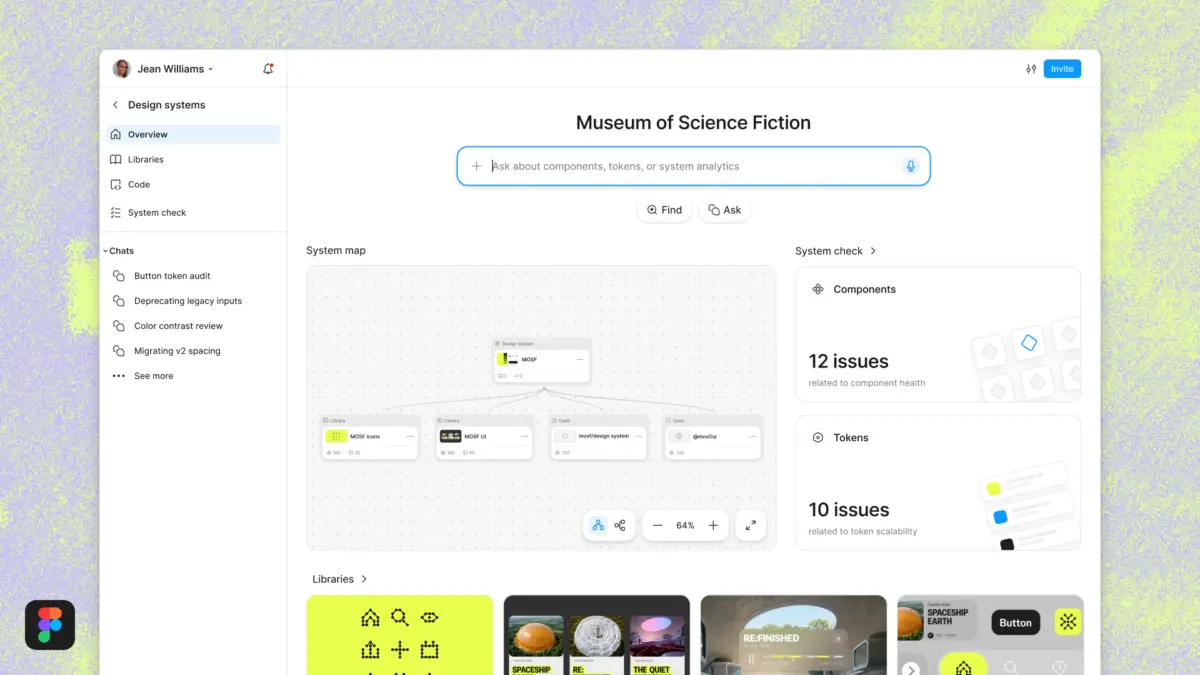
The headline announcement of Config India was the debut of Figma Specs, a lightweight, Markdown-powered editor designed to simplify how companies codify their design languages. Historically, design systems, brand guidelines, and engineering rules have lived in fragmented third-party document repositories like Notion, Confluence, or internal wikis. This fragmentation frequently created friction between designers, developers, and, more recently, AI agents attempting to interpret brand guidelines.
Figma Specs solves this by enabling teams to write and maintain design documentation directly alongside or within the Figma canvas. Key attributes of Figma Specs include:
- Dual-Mode Presence: Specs can operate either as standalone files within a Figma project or coexist directly on the canvas alongside visual wireframes and prototypes.
- Rich Object References: Beyond acting as a plain-text Markdown editor, Specs allows users to actively reference other Figma elements—linking text descriptions directly to canvas components, embedded FigJam diagrams, code layers, and specific design assets.
- Centralized System Guardrails: By aggregating design libraries, code repositories, and structural rules into a single centralized system, Figma Specs acts as an authoritative source of truth.
This centralization is particularly critical for AI integration. As Figma rolls out its agent-on-canvas capabilities to a wider user base, the non-deterministic output of generative AI models has remained a persistent design hurdle. By feeding structured contextual guidelines via Figma Specs, both Figma’s native agents and third-party AI agents can adhere strictly to a brand’s unique design system, significantly reducing erratic visual or structural outputs.
Code Layers Enter Public Beta
Building upon a private beta introduced in June, Figma has officially pushed its Code Layers feature into public beta. Code layers inject direct coding capabilities into designs on the canvas, allowing creators to produce highly interactive, code-backed prototypes rather than traditional, simulation-based mockups.
During the demonstration at Config India, users showcased the ability to prompt the native Figma AI agent to convert static visual designs into functional code segments, or alternatively, modify existing code snippets directly within the canvas environment to rapidly iterate on prototypes. This tight coupling of visual design and underlying code addresses the modern reality of software development, where prototyping often requires production-grade technical validation before a single line of application code is deployed to production.

Payload Integration and Figma Make
Last year, Figma made headlines with its acquisition of Payload, an open-source, TypeScript-first headless content management system (CMS). At Config India, the company revealed its first major integration of Payload into the ecosystem via Figma Make.
Designed to empower users to generate dynamic websites and manage content seamlessly, the integration leverages Payload’s flexible backend architecture. According to Figma data, Payload’s downloads have surged sixfold over the past 12 months, highlighting strong developer appetite for headless architecture. By coupling Payload directly with Figma Make, teams can bridge the gap between design generation and live content administration, enabling dynamic, data-driven sites to be spun up straight from design workflows.
Expanding the Ecosystem with MCP
Figma also announced deep updates to its Model Context Protocol (MCP) support, expanding its compatibility to over 20 new tools. Notable additions to the ecosystem include Open Code, Dia, Grok Bot, and Sarvam—a prominent Indian AI startup focusing on localized foundational models. This expanded MCP support ensures that Figma’s design artifacts and system contexts can fluidly exchange information with external developer tools and specialized AI applications.
Supporting Context & Strategic Metrics
To fully understand the weight of Figma’s Config India announcements, one must examine the macro-level shift occurring in global software engineering. During the event, Figma’s Chief Design Officer, Loredana Crisan, pointed to a profound productivity paradox introduced by generative AI:
"We see Figma as the place where software teams come to decide what they build and ship. And so for that, I think one of the key things to keep in mind about what AI has changed and what it made available is the ability to build. There are 17-times more lines of code being produced today than in the past. But when you’re looking at releases, only 1.3-times more releases. A lot of that code actually is not necessarily built to ship, but really built to discover what the product is. It’s built to design."
Crisan’s observation underscores a fundamental evolution in software creation. Generative AI has drastically lowered the friction of code generation, resulting in a massive glut of experimental, exploratory code. However, the bottleneck has shifted upstream and downstream: teams are struggling to decide what to build, how to maintain design system consistency across thousands of AI-generated components, and how to govern what eventually makes it into a production release.
By introducing tools like Figma Specs and Code Layers, Figma is positioning itself as the governor of this AI-driven development boom. Rather than letting teams drown in unmanaged, disparate code fragments, Figma aims to capture the "discovery phase" of software development within its controlled, collaborative canvas environment.
Furthermore, the choice of India for this major product showcase is far from accidental. Late last year, Figma established its first physical office in India, housing comprehensive functions across sales, partnerships, go-to-market strategies, and product support. The strategic bet has paid off rapidly: India is now Figma’s largest user base outside of the United States, with the platform deeply embedded in the digital workflows of 40% of the top 100 companies listed on the Bombay Stock Exchange (BSE). Hosting Config India signaled a definitive pivot toward acknowledging the subcontinent as a powerhouse of global engineering and product design talent.

Official Statements & Industry Perspectives
The convergence of AI agents, design specs, and headless architecture reflects a maturing market that demands deterministic business outcomes from creative technologies. Industry analysts note that enterprise adoption of generative AI has frequently stalled due to "hallucinations" and style drift—instances where AI-generated UI components violate corporate branding guidelines, accessibility standards, or design system tokens.
Figma’s executive team emphasizes that AI cannot operate in a vacuum. By coupling canvas-level agents with structured metadata files like Figma Specs, the platform is creating a symbiotic loop:
- Definition: Human architects and system designers define the rules via Markdown and component libraries in Figma Specs.
- Generation: AI agents ingest these structured boundaries to draft layouts, generate code via Code Layers, and build dynamic templates.
- Execution: Developers and content managers refine the output, utilizing integrations like Payload CMS to push live, production-ready experiences.
This closed-loop system mitigates the chaotic variance of LLMs, transforming AI from an unpredictable novelty into a reliable enterprise productivity engine.
Future Outlook
Figma’s rapid deployment of public betas—such as Code Layers—alongside heavy architectural investments like Payload CMS integration and expanded MCP tool support, points toward an aggressive roadmap for the coming years.
As software engineering increasingly blurs the boundaries between visual design, system architecture, and machine-generated code, platforms that successfully govern the handoff points will capture immense enterprise value. By establishing Figma Specs as the universal translator between human intent, system rules, and AI execution, Figma is setting the stage for a future where designing software and writing software are virtually indistinguishable.
With its expanding footprint in high-growth markets like India and a tightening grip on the end-to-end product lifecycle, Figma is successfully evolving from a collaborative whiteboard into the undisputed control center for modern digital product development.









Belum ada komentar. Jadilah yang pertama berkomentar!