

Executive Overview
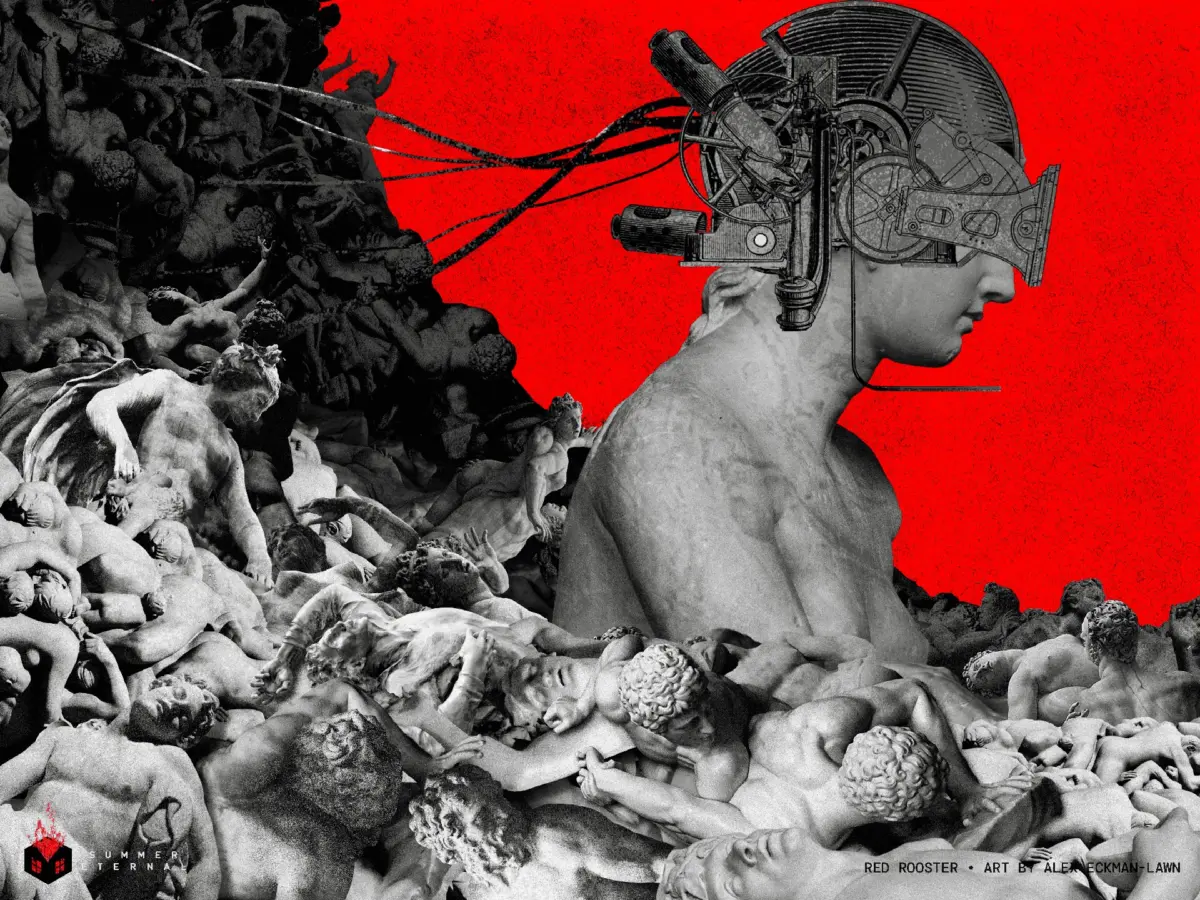
In the upper echelons of independent game development, few entities operate with the defiant, avant-garde ethos of Summer Eternal. Helmed by veteran creators known for pushing structural boundaries, the studio has consistently rejected conventional design paradigms in favor of experiences that interrogate the medium itself. Their latest project, Red Rooster, stands as their most daring endeavor yet—a title that marries high-concept, multi-threaded narrative design with the visceral mechanics of classic retro-style role-playing games.
Directed by Argo Tuulik, a celebrated auteur recognized for his work on critically acclaimed narrative-driven titles, Red Rooster is a masterclass in tonal dissonance. It presents a world where historical tragedy meets hallucinatory surrealism, challenging players to navigate morally ambiguous paths through a decaying, hyper-stylized landscape.
This deep dive explores the mechanics, themes, and development philosophy behind Red Rooster, offering a comprehensive look at what promises to be one of the most provocative releases of the decade.
Detailed Chronology: The Evolution of a Modern Masterpiece
To understand the weight of Red Rooster, one must first trace the trajectory of its development and the pedigree of its creators. The project’s genesis can be traced back to the early conceptual meetings held by Summer Eternal in late 2023. However, the intellectual and aesthetic roots of the game run much deeper, drawing inspiration from 1980s dark-fantasy literature, post-Soviet architectural aesthetics, and the idiosyncratic storytelling traditions of Eastern European art-house cinema.
Phase 1: Conceptualization and the "Arta-Tantor" Influence
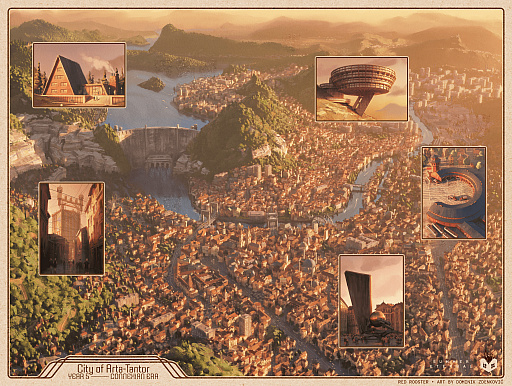
At the core of Red Rooster’s world-building lies a fictional, three-tier province known as Arta-Tantor. This setting acts as a crucible for the game’s overarching themes: generational trauma, systemic institutional decay, and the psychological weight of memory.
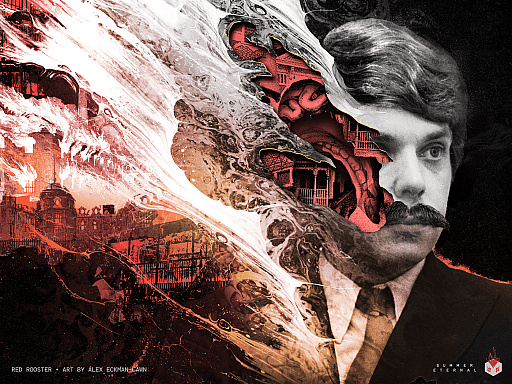
Influenced heavily by 1980s cyberpunk aesthetics, Eastern European literary traditions, and archaic civic architectures, the design team sought to construct a world that feels simultaneously ancient and hyper-futuristic. The visual identity of Arta-Tantor is defined by towering, brutalist monoliths juxtaposed against decaying organic machinery—a visual metaphor for a society consuming itself from the inside out.
Phase 2: Mechanics and the Subversion of RPG Tropes
Unlike traditional role-playing games where player progression is linear and goal-oriented, Red Rooster operates on a principle of cyclical narrative decay. The game’s director, Argo Tuulik, noted in early interviews that the team wanted to weaponize player nostalgia.
"We aren’t just building a world for the player to conquer," Tuulik explained. "We are building a mirror that forces the player to confront the ugly, cyclical nature of their own choices within the game’s socio-political framework."
Players control Redrick, an aging protagonist burdened by a lifetime of professional regret and institutional complicity. Redrick’s journey takes him through the administrative intestines of Arta-Tantor’s bureaucratic machinery, where every decision carries permanent, irreversible consequences. The game deliberately strips away the comfort of the "save scumming" mechanic; while players can record their progress at designated checkpoints, the narrative remembers past failures, permanently altering NPC behaviors, faction alignments, and available dialogue trees based on prior actions.
Supporting Context & Metrics: World-Building and Design Philosophy
The world of Red Rooster is mechanically dense, functioning less like a traditional fantasy realm and more like an interactive, psychological simulation.
The Architecture of The Coop
Redrick’s primary operational base is known as The Coop—a heavily fortified, subterranean bunker that serves as both a sanctuary and a prison. The Coop is not merely a hub for inventory management; it is a living ecosystem that reflects the psychological state of its inhabitants. As players make morally gray decisions in the outside world, the internal dynamics of The Coop shift. NPCs begin to harbor doubts, alliances fracture, and the physical integrity of the bunker itself seems to mirror Redrick’s failing mental health.
Character Dynamics and Narrative Support
Redrick does not walk his path alone. He is accompanied by Astrid Albers, a hardened pragmatist specializing in historical preservation, and Rico, a cynical, cybernetically enhanced courier whose allegiances remain perpetually ambiguous. Their interactions provide the emotional anchor for a game that could otherwise buckle under the weight of its own cynicism.
| Feature / System | Implementation in Red Rooster | Player Impact |
|---|---|---|
| Save System | Checkpoint-locked with permanent narrative consequences | Eliminates trial-and-error optimization; forces acceptance of failure. |
| Faction Dynamics | Dynamic reputation tracking across three distinct socio-political tiers | Alliances shift organically; helping one faction actively alienates another. |
| UI Design | Minimalist, diagetic interface integrated into the game world | Enhances immersion by removing floating minimaps and quest markers. |
Official Statements & Creative Vision
Speaking on the creative philosophy behind the project, Summer Eternal’s leadership has emphasized that Red Rooster is designed to challenge, rather than comfort, the modern gamer.
"In an era where AAA titles frequently prioritize frictionless engagement and immediate gratification, Red Rooster demands patience," says lead writer Astrid Albers. "We want players to feel uncomfortable. We want them to question whether their victories were actually worth the collateral damage inflicted along the way."
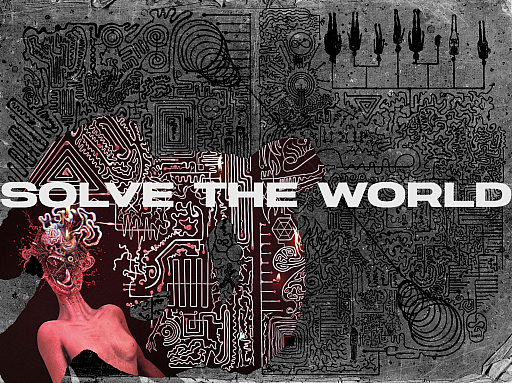
The game’s art direction mirrors this philosophy. Eschewing the hyper-realistic, photogrammetry-heavy style dominant in current-gen blockbusters, Red Rooster opts for a striking, high-contrast visual style that evokes classic graphic novels combined with low-poly, expressionist 3D modeling. This stylistic choice serves a functional purpose: by leaving certain visual details to the player’s imagination, the game creates an atmosphere of psychological dread that high-fidelity graphics often fail to capture.
Future Outlook & Release Strategy
As development enters its final phases, anticipation within the indie gaming community continues to reach a fever pitch. Summer Eternal has confirmed that Red Rooster will launch with a simultaneous multi-platform release strategy, bringing the title to PC, PlayStation 5, Xbox Series X|S, and next-generation Nintendo hardware.
While an exact release date has yet to be formally announced, industry insiders suggest a late 2026 window. Given the pedigree of Argo Tuulik and the uncompromising vision of Summer Eternal, Red Rooster is well-positioned to redefine the boundaries of narrative RPGs for years to come. Players looking for an experience that respects their intelligence—and challenges their moral compass—would do well to keep this title firmly on their radar.





Belum ada komentar. Jadilah yang pertama berkomentar!