

Executive Overview
Nestled in the heart of northern Kyoto Prefecture stands Fukuchiyama Castle, the enduring architectural and cultural symbol of Fukuchiyama City. Steeped in the dramatic narrative of the Sengoku (Warring States) period, the fortress is inextricably linked to the legendary warlord Akechi Mitsuhide, who established the stronghold in 1579 following his pacification of the Tamba region. Though largely dismantled in the wake of the Meiji Restoration’s sweeping modernization policies, the castle underwent a remarkable, citizen-led renaissance in the late 20th century. Today, the reconstructed watchtower-style main keep houses a rich repository of artifacts, detailing the region’s feudal history and the governance of Mitsuhide and his successors.
![[Kyoto Prefecture ] Let's go see Fukuchiyama Castle, the symbol of Fukuchiyama City | Highlights and seasonal events](https://resources.matcha-jp.com/resize/720x2000/2026/02/12-258435.webp)
Beyond its historical gravity, Fukuchiyama Castle functions as a vibrant anchor for modern tourism. Surrounded by tranquil gardens, award-winning illumination events, and a walkable network of museums, heritage sites, and railway exhibits, the castle grounds offer travelers a comprehensive immersion into regional Japanese culture. With seamless transit connectivity linking the site to major metropolitan hubs like Kyoto and Osaka, Fukuchiyama Castle bridges centuries of feudal heritage with accessible, contemporary tourism, making it an indispensable destination for history enthusiasts and casual explorers alike.
![[Kyoto Prefecture ] Let's go see Fukuchiyama Castle, the symbol of Fukuchiyama City | Highlights and seasonal events](https://place.matcha-jp.com/resize/200x2000/2024/08/23-12-52-56-15800e9f58a38392616cda11e16d1680b0f2.webp)
Detailed Chronology: From Sengoku Fortress to Modern Landmark
The historical tapestry of Fukuchiyama Castle spans over four centuries, marked by strategic foundations, political volatility, structural devastation, and a passionate grassroots restoration movement.
![[Kyoto Prefecture ] Let's go see Fukuchiyama Castle, the symbol of Fukuchiyama City | Highlights and seasonal events](https://place.matcha-jp.com/resize/200x2000/2026/07/14-10-41-25-314784a1eab486d19d4c05b43ed28ef50122.webp)
1. Foundation and the Akechi Era (1579–1582)
The genesis of Fukuchiyama Castle dates back to 1579 (Tensho 7). Akechi Mitsuhide, a formidable general under Oda Nobunaga, successfully pacified the Tamba province and recognized the strategic necessity of a secure stronghold in the area. Constructing the fortress along the banks of the Yura River, Mitsuhide laid the groundwork for a burgeoning castle town. Upon completion, he appointed his son-in-law, Akechi Hidemitsu, as the castle lord, tasking him with regional governance.
![[Kyoto Prefecture ] Let's go see Fukuchiyama Castle, the symbol of Fukuchiyama City | Highlights and seasonal events](https://resources.matcha-jp.com/resize/720x2000/2026/02/12-258471.webp)
This initial era of Akechi rule was abruptly cut short following the Honnoji Incident in 1582 and the subsequent Battle of Yamazaki, where both Mitsuhide and Hidemitsu met their demise. Despite their brief tenure, the administrative framework and infrastructural footprints established during these years permanently shaped the geography of Fukuchiyama.
![[Kyoto Prefecture ] Let's go see Fukuchiyama Castle, the symbol of Fukuchiyama City | Highlights and seasonal events](https://resources.matcha-jp.com/resize/720x2000/2026/02/12-258472.webp)
2. Feudal Transitions and the Kutsuki Clan (1583–1868)
Following the collapse of the Akechi administration, Fukuchiyama Castle underwent successive rounds of renovation and expansion under various prominent figures, including Hashiba Hidenaga, a close relative of Toyotomi Hideyoshi.
![[Kyoto Prefecture ] Let's go see Fukuchiyama Castle, the symbol of Fukuchiyama City | Highlights and seasonal events](https://resources.matcha-jp.com/resize/720x2000/2026/02/12-258473.webp)
As Japan transitioned into the Edo period, the castle changed hands frequently due to shifting shogunate domains and territorial confiscations. However, a period of administrative stability finally took root in 1669 (Kanbun 9) when the Kutsuki clan assumed control. Demonstrating remarkable administrative longevity, the Kutsuki family governed the Fukuchiyama Domain across 13 generations, steering the castle town through periods of peace, economic development, and cultural refinement until the threshold of the Meiji Restoration.
![[Kyoto Prefecture ] Let's go see Fukuchiyama Castle, the symbol of Fukuchiyama City | Highlights and seasonal events](https://place.matcha-jp.com/resize/200x2000/2024/06/25-11-53-38-24628e82b0b8e5397a095fb2810be181b03c.webp)
3. Destruction and the Meiji Era (1873)
The dawn of modern Japan brought existential threats to the nation’s feudal architecture. In accordance with the Castle Demolition Decree issued by the Meiji government in 1873 (Meiji 6), the vast majority of Fukuchiyama Castle was systematically dismantled.
![[Kyoto Prefecture ] Let's go see Fukuchiyama Castle, the symbol of Fukuchiyama City | Highlights and seasonal events](https://resources.matcha-jp.com/resize/720x2000/2026/02/12-258475.webp)
The sweeping wave of modernization stripped the site of its soaring keeps and defensive structures, leaving behind only the foundational ishigaki (stone walls) surrounding the keep and the historic copper gatehouse as silent testaments to its former grandeur.
![[Kyoto Prefecture ] Let's go see Fukuchiyama Castle, the symbol of Fukuchiyama City | Highlights and seasonal events](https://resources.matcha-jp.com/resize/720x2000/2026/02/12-258477.webp)
4. The Grassroots Renaissance (1986–Present)
For over a century, the site of the former fortress remained largely a landscape of stone foundations and collective memory. However, by the Shōwa era, a powerful community-led momentum grew to reclaim the castle as the civic heart and symbol of Fukuchiyama City.
![[Kyoto Prefecture ] Let's go see Fukuchiyama Castle, the symbol of Fukuchiyama City | Highlights and seasonal events](https://resources.matcha-jp.com/resize/720x2000/2026/10/15-272509.webp)
Fuelled by passionate citizen initiatives—most notably the renowned "One Tile Movement," wherein local residents contributed funds and materials—reconstruction efforts materialized. In 1986 (Shōwa 61), relying meticulously on historical drawings and architectural records, workers successfully rebuilt a three-story, four-tiered watchtower-style main keep alongside a two-story secondary keep.
![[Kyoto Prefecture ] Let's go see Fukuchiyama Castle, the symbol of Fukuchiyama City | Highlights and seasonal events](https://resources.matcha-jp.com/resize/720x2000/2026/10/15-272510.webp)
The triumph of this civic dedication was formally recognized in 2017 when Fukuchiyama Castle was selected as one of the "Continued Top 100 Japanese Castles" (designated as number 158), cementing its status as an architectural and historical treasure of northern Kinki.
![[Kyoto Prefecture ] Let's go see Fukuchiyama Castle, the symbol of Fukuchiyama City | Highlights and seasonal events](https://place.matcha-jp.com/resize/200x2000/2026/01/30-13-33-42-31472f3b7dad024bacdbcf119ba44c19ec6d.webp)
Supporting Context & Metrics: Architecture, Infrastructure, and Access
Architectural Highlights & Unique Engineering
Fukuchiyama Castle features several distinct structural elements that set it apart from other fortresses in the region:
![[Kyoto Prefecture ] Let's go see Fukuchiyama Castle, the symbol of Fukuchiyama City | Highlights and seasonal events](https://place.matcha-jp.com/resize/200x2000/2026/01/30-13-02-50-3147ce246ab0588cb6fe7d21d69bcbbbf2f0.webp)
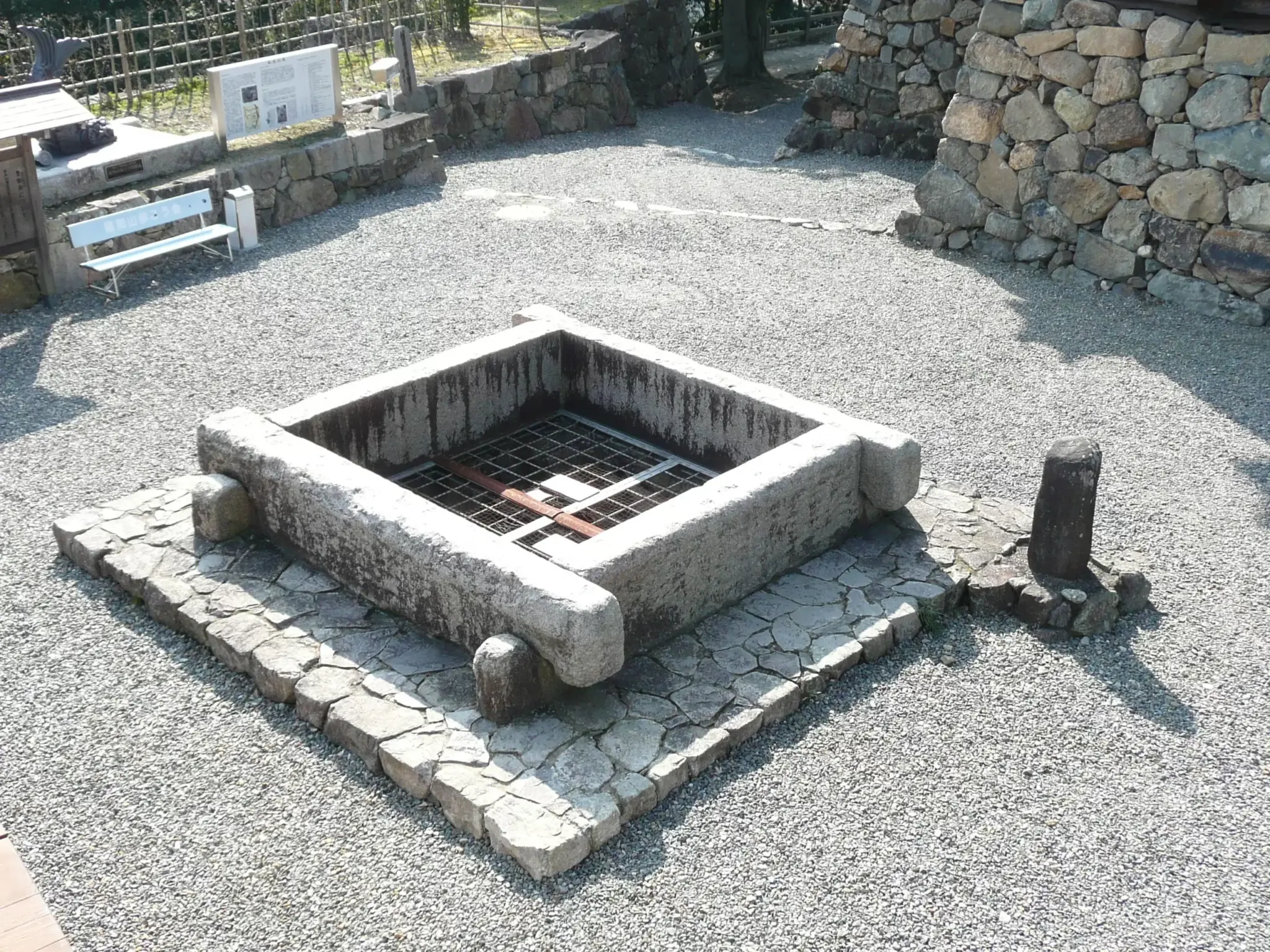
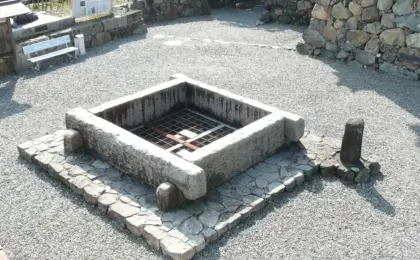
- The Master Well: Located on the east side of the castle tower, this impressive well boasts a diameter of 2.5 meters and a staggering depth of 50 meters. It remains one of the deepest castle-keep wells in Japan and is famously filled to the brim with water to this day.
- The Copper Gatehouse: Originally positioned at the entrance to the second bailey, this historic structure was relocated to the castle tower base during the Taisho era, and subsequently moved to the main bailey site during the 1986 reconstruction, serving as a rare, surviving structural artifact.
- Nozurazumi Stone Walls: The ishigaki spanning from the castle tower base to the main enclosure utilize the nozurazumi (rough stone masonry) technique. Having withstood earthquakes, weathering, and over four centuries of history, these walls feature a fascinating historical anomaly: numerous repurposed tombstones, Buddhist statues, and religious stone structures integrated directly into the defensive building materials.
- The Akechi Yabu (Thicket): Visible from the castle’s observation deck, this historic embankment was constructed under Mitsuhide’s direction to mitigate the destructive seasonal flooding of the notoriously volatile Yura River.
Transportation and Accessibility
Fukuchiyama serves as the primary transportation gateway to northern Kinki, anchored by the major multi-line hub of JR Fukuchiyama Station.
![[Kyoto Prefecture ] Let's go see Fukuchiyama Castle, the symbol of Fukuchiyama City | Highlights and seasonal events](https://place.matcha-jp.com/resize/200x2000/2026/02/03-15-18-36-31470614301c813ba7aceb62e68af4b536dd.webp)
- Train Access: Travelers can reach JR Fukuchiyama Station via limited express services in approximately 80 minutes from Kyoto and 100 minutes from Osaka. The station integrates the JR San’in Main Line, the Fukuchiyama Line, the Maizuru Line, and the Kyoto Tango Railway’s Miyafuku Line.
- Walking & Local Transit: The castle is a pleasant 15-minute walk north from JR Fukuchiyama Station. Visitors can also utilize bicycle rental services at the station’s tourist information center.
- Car Access: For motorists, the site is accessible via the Maizuru Wakasa Expressway. Exiting at the Fukuchiyama Interchange and proceeding along National Route 9 for approximately 3 kilometers brings drivers to the area. Free parking is available at the Yurano Garden Parking lot, which accommodates roughly 70 vehicles.
Official Visitor Information & Operations
Plan your visit to Fukuchiyama Castle and its surrounding cultural facilities with the following operational details:
![[Kyoto Prefecture ] Let's go see Fukuchiyama Castle, the symbol of Fukuchiyama City | Highlights and seasonal events](https://place.matcha-jp.com/resize/200x2000/2026/02/03-16-30-05-314797508e018cc05289091bc87d611dbadd.webp)
- Official Website: Fukuchiyama Castle Official Website
- Opening Hours: 9:00 AM to 5:00 PM
- Closed Days: December 28th through December 31st; January 4th through January 6th
- Standard Admission Fee:
- Adults: 360 yen
- Children (Elementary and junior high school students): 110 yen
- Combined 3-Facility Ticket (Includes Fukuchiyama Castle, Sato Taisei Memorial Museum, and Fukuchiyama Railway Museum Fukureru):
- Adults: 900 yen
- Children (Elementary and junior high school students): 400 yen
- Address: 5 Naiki, Fukuchiyama City, Kyoto Prefecture, 620-0035
- Telephone Inquiry: 0773-23-9564
Essential Neighborhood Attractions Within Walking Distance
- Fukuchiyama Railway Museum (Fukureru): Opened in 2023 within Castle Park, this family-friendly museum celebrates Fukuchiyama’s century-long identity as a railway town. It features historical exhibitions and an immersive CG train-driving simulator.
- Yurano Garden: Located directly east of the castle, this natural garden complex houses select shops and dining venues where visitors can dine while overlooking the fortress walls.
- Goryo Shrine: Dedicated in part to Akechi Mitsuhide to honor his benevolent local governance, this shrine preserves invaluable historical documents, including handwritten letters and household military regulations authored by the warlord.
- Sato Taisei Memorial Museum: Situated within Castle Park, this castle-styled art museum showcases the profound works of the late Order of Culture-recipient Japanese painter Taisei Sato.
- Fukuchiyama City Tamba Living Clothing Center: Housing approximately 3,600 items of traditional dyed and woven textiles—including everyday garments known as "Tamba Living Clothing"—the facility offers interactive handloom weaving experiences.
Future Outlook: Festivals, Illumination, and Cultural Preservation
Fukuchiyama Castle is far more than a static museum piece; it functions as an active cultural engine that drives regional tourism through seasonal events and community engagement.
![[Kyoto Prefecture ] Let's go see Fukuchiyama Castle, the symbol of Fukuchiyama City | Highlights and seasonal events](https://place.matcha-jp.com/resize/200x2000/2026/02/04-09-22-27-3147ef4f037a7388629036b7e27d890be3d1.webp)
Annual Seasonal Events
- Fukuchiyama Castle Festival (Spring): Held over two action-packed days centered around Goryo Park and the castle town, this major spring tradition features dynamic stage performances and a historical procession celebrating Akechi Mitsuhide.
- Fukuchiyama Dokkoise Festival (Summer): A vibrant summer dance festival rooted in a 400-year-old tradition. The festival honors the laborers who chanted "Dokkoise" while hauling stones and timber for Mitsuhide’s castle construction, echoing through the streets to this day.
- Castle Night Illumination (Autumn): A premier autumn evening event launched in 2018, blending cutting-edge light and sound installations across Fukuchiyama Castle and the adjacent Yurano Garden. The event achieved national acclaim by winning the Grand Prix (Prime Minister’s Award) at the prestigious 2024 "Hometown Event Awards," cementing the castle’s reputation as a pioneer in nighttime heritage tourism.
Preservation and Sustainable Tourism
Looking ahead, municipal authorities and local tourism associations are prioritizing sustainable heritage management to protect the delicate nozurazumi stone walls and reconstructed wooden keeps while expanding international outreach. By integrating digital accessibility, multilingual resources at the JR Fukuchiyama Station Tourist Information Center, and collaborative multi-facility ticketing, Fukuchiyama City ensures that the legacy of Akechi Mitsuhide and the indomitable spirit of the castle’s citizen restorers will inspire generations of global travelers for decades to come.





Belum ada komentar. Jadilah yang pertama berkomentar!