

Executive Overview
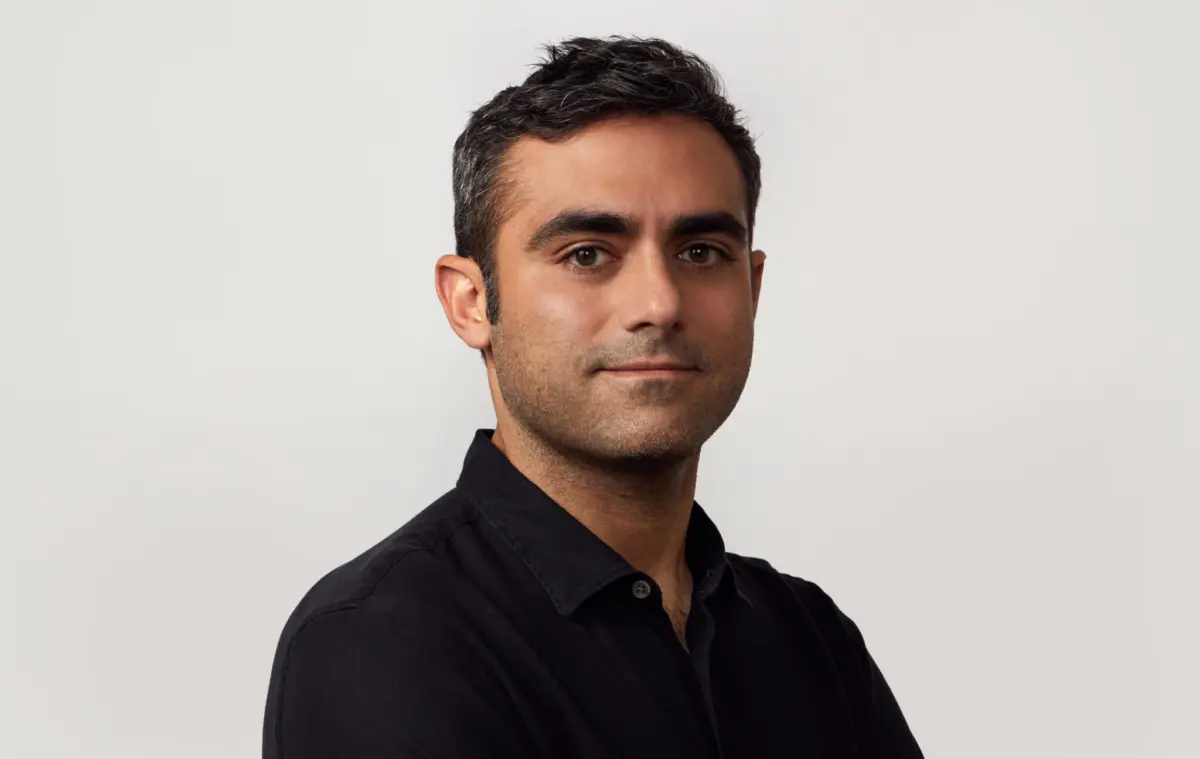
For someone operating at the intersection of high-stakes venture capital, cutting-edge biotechnology, and global pop culture, Michael Polansky cuts a remarkably unassuming figure. Seated at a leafy patio outside a popular bakery in Mill Valley—an affluent enclave roughly 15 miles north of San Francisco—Polansky looks less like a high-powered corporate executive and more like a youthful university professor. With his neat, dark hair threaded with gray, wire-rimmed glasses, and an easy, unassuming demeanor, he radiates a calm entirely uncharacteristic of the outsized egos typically populating Silicon Valley.
Yet, Polansky is quietly leading a double life that defies conventional categorization. On one front, he navigates the blindingly public, high-octane sphere of international celebrity as the creative, business, and romantic partner to Stefani Germanotta—better known to the world as Lady Gaga. On another front, he serves as the co-founder and CEO of Outer Biosciences, an ultra-stealth artificial intelligence and biology startup that has spent years working in total secrecy on a staggering scientific breakthrough: keeping living human skin tissue alive outside the human body for more than a month.
While the tech world races to train massive, cloud-heavy language models on scraped internet data, Outer Biosciences has taken a radically different, physical path. By fusing proprietary AI architecture with living human tissue sourced ethically from surgical waste, Polansky’s 19-person team is cracking open a rate of discovery in dermatology and skin biology that has never existed before. Having raised roughly $23 million to date from backers like Wing Ventures, Initialized, and his own investment firm Hawktail, Polansky and his team are finally stepping out of the shadows. This in-depth profile explores Polansky’s fascinating trajectory from applied mathematics at Harvard to the helm of a biotechnology revolution, offering a rare look inside a company poised to reshape the future of human biology.
Detailed Chronology: From Minnesota Roots to the Silicon Valley Elite
Michael Polansky’s journey to the bleeding edge of biotechnology was neither linear nor planned. Growing up in Minnesota, a young Polansky cultivated an analytical mind that naturally led him to Harvard University, where he immersed himself in applied mathematics and computer science. He graduated in 2006, stepping immediately into the hyper-competitive financial sector with a three-year stint at Bridgewater Associates, the world’s largest hedge fund.
Reflecting on his time at the legendary firm over coffee in Mill Valley, Polansky describes it as “a very unique place” and a “really good experience.” However, it lacked the creative spark he truly craved. “It wasn’t a place I was going to wake up and be excited about every day,” he admits.
The catalyst that pulled Polansky out of finance and thrust him into the heart of Silicon Valley came through a remarkable coincidence rooted back in his home state. Coincidentally, an assistant working for billionaire tech mogul and entrepreneur Sean Parker at the time had been Polansky’s childhood neighbor in Minnesota.
At a 2009 wedding back home, the assistant mentioned in passing that Parker was looking for operational talent. Polansky was already deeply familiar with Parker’s legendary status in the tech ecosystem—having co-founded Napster and served as Facebook’s founding president—and was actively looking to move west. The two met for dinner in New York City, “hit it off immediately,” and, as Polansky recalls, he walked into Bridgewater the very next day, handed in his resignation, and packed his bags for San Francisco.
The Founders Fund Years and the Parker Family Office
Polansky’s introduction to venture capital began as a principal at Founders Fund during its foundational era. Back when the firm was run by its four original visionary partners—Peter Thiel, Sean Parker, Luke Nosek, and Ken Howery—Polansky shared an office with fellow young principal Brian Singerman.
“It was a really, really great experience,” Polansky says of the crucible that formed his early venture career.
When Sean Parker eventually became liquid on his early Facebook stock and decided to step back from Founders Fund to build out his own private family office, he brought Polansky with him. For years, Polansky managed that complex office, overseeing Parker’s sprawling business ventures, private investments, and high-impact philanthropic interests. Notably, this included helping to stand up the Parker Institute for Cancer Immunotherapy (PICI), where Polansky continues to serve as executive director. His tenure there embedded him deeply in the life sciences, laying the groundwork for his eventual leap into biotechnology.
Everything shifted during the COVID-19 pandemic, when Polansky’s life—like so many others—pivoted dramatically, largely catalyzed by a fateful introduction at one of Parker’s birthday parties in late 2019.
Supporting Context & Metrics: Navigating the Worlds of Pop Culture and Biotech
The turning point in Polansky’s personal and professional life came through an introduction engineered by Cynthia Germanotta, president of the Born This Way Foundation. Polansky had grown close to the elder Germanotta through his extensive philanthropic work.
“She had said, you know, for months and months, ‘I want to set you up with my daughter,’” Polansky recalls with a smile. “I was like, I think you’re making fun of me.”
She wasn’t. When their respective mothers eventually met, Polansky laughs, “it all made perfect sense.” Today, his mother and Lady Gaga’s mother are close friends.
A High-Stakes Partnership
The relationship between Polansky and Germanotta is a profound full-spectrum partnership, spanning both their personal lives and massive professional enterprises. This dynamic was vividly demonstrated during Lady Gaga’s most recent international world tour, which ran from July of last year through April. The massive logistical undertaking required managing complex operations across three chartered Boeing 747 aircraft. Polansky compares the undertaking to running “a 200-person startup that travels around the world every day.”
Beyond touring, Polansky is deeply involved in Haus Labs, the clean cosmetics brand Germanotta famously built “on her kitchen floor” rather than simply licensing her name to an established conglomerate. Based in El Segundo, California, Haus Labs operates with a tight-knit team of roughly 70 employees and is widely reported to be thriving as a dominant player in the modern beauty industry.
The couple’s professional worlds occasionally intersect. Germanotta sits on the board of Outer Biosciences, and the two companies maintain strategic collaborative ties at the margins. For instance, Outer Biosciences’ chief scientist, Kyung-Jin Jang, sits on Haus Labs’ scientific advisory board, and the two entities have occasionally pooled resources for joint research initiatives.
Beaming as he speaks of his partner from their sun-dappled table in Mill Valley, Polansky emphasizes a side of the global superstar the public rarely gets to witness: “People really haven’t gotten to know a certain side of her publicly… She’s such a brilliant businessperson.”
Official Statements: From Cancer Immunotherapy to Tissue in a Dish
While Polansky is a seasoned business operator, he is not a trained scientist. He entered the life sciences “accidentally,” spending over a decade shoulder-to-shoulder with Sean Parker navigating the arduous trenches of cancer immunotherapy—a therapeutic approach that was considered deeply “fringe” when they first entered the space.
Outer Biosciences was co-founded in 2022 by Polansky (Chief Executive Officer), Kyung-Jin Jang (Chief Scientist), Chris Hinojosa (Chief Technology Officer), and Stanley King (Chief Business Officer). The startup was born out of a shared frustration: while software, computing power, and artificial intelligence had advanced at an exponential rate, the pace of fundamental innovation in biology and chemistry had lagged far behind. The primary bottleneck? There is simply no ethical way to run iterative, unconstrained experiments directly on living human beings.
Consequently, life sciences researchers have historically relied on flawed proxies: animal models, simplified cell cultures, and lab-grown organoids. Yet, as Polansky points out, these remain poor stand-ins for the intricate, dynamic behavior of real human organs.
Sourcing and Sustaining Human Tissue
Outer Biosciences circumvented this dilemma by developing a radically different methodology. Instead of attempting to engineer a synthetic organ from scratch, the company sources human skin tissue that would otherwise be discarded during elective surgeries—predominantly plastic surgeries.
This sourcing is conducted through vetted, non-profit, and commercial biobanks and tissue brokers operating under stringent institutional review board (IRB) oversight and documented donor consent. Principal suppliers include the National Disease Research Interchange (NDRI) and the Cooperative Human Tissue Network (CHTN). Both organizations receive federal funding from the National Institutes of Health (NIH) and the National Cancer Institute (NCI), though they operate as independent entities rather than government-run facilities.
Polansky is careful to clarify the logistics:
- Cost-Recovery Sourcing: Outer Biosciences pays standard administrative fees to suppliers on a strict cost-recovery basis rather than purchasing tissue outright.
- Rapid Logistical Pipeline: The startup spent roughly two years building a robust supply pipeline and establishing rigorous compliance protocols to receive tissue within hours of surgery while the cells are still actively living.
- Absolute Donor Anonymity: Every tissue sample arrives at Outer Biosciences completely de-identified. Supplying organizations strip all names, contact information, and direct identifiers upstream to protect donor privacy.
Once the living tissue arrives at the laboratory, a proprietary support system developed by Polansky’s team continuously feeds the tissue essential nutrients and removes metabolic waste. This technological feat extends the viable life of the tissue well past the traditional industry norm.
"The industry norm for keeping human skin tissue alive in a laboratory setting is a matter of days," Polansky explains. "That is enough time to test for acute toxicity, but entirely insufficient for observing slower biological processes like collagen remodeling, pigmentation changes, or barrier repair, which take weeks to unfold."
By contrast, Outer Biosciences’ proprietary system maintains tissue viability for up to a full month. According to Polansky, the tissue retains its “day-zero architecture and preserves its day-zero epidermal, stromal, and immune-associated molecular programs.” In plain terms, 30-day-old tissue maintained by the company looks remarkably similar to tissue on its first day of harvest, bridging a massive historical gap in preclinical dermatology testing.
The AI-Driven Discovery Loop
The true power of Outer Biosciences, however, does not lie solely in its tissue-preservation capabilities, but in how it merges those living samples with artificial intelligence.
The startup feeds data generated from controlled experiments—such as inducing UVB damage in living tissue to monitor stress, inflammatory responses, and subsequent recovery over weeks—into a closed, self-enforcing AI model.
- Prediction: The AI model analyzes chemical compounds and predicts which untested molecules are likely to elicit a beneficial biological response in specific skin functions.
- Testing: Those candidate chemicals are run through the living-tissue system to observe real-world efficacy.
- Feedback Loop: The experimental results—whether the prediction succeeded or failed—are immediately fed back into the AI model, refining its algorithms and exponentially improving subsequent rounds of molecular design.
In its early days, the company relied on a brute-force approach, mining existing scientific literature and partnering with the National Cancer Institute to explore natural compounds sourced from extreme environments. That phase yielded only a couple of viable leads over an 18-month span. Today, with the AI loop fully operational, Outer Biosciences generates a new candidate molecule roughly every six weeks, boasting six active leads in its pipeline alongside dozens of logged secondary “hits.”
Future Outlook: Commercialization and the Road Ahead
As the landscape of biotechnology evolves, Outer Biosciences finds itself sitting on a treasure trove of proprietary biological data. The company is charting a deliberate, highly strategic path toward commercialization.
Because Outer Biosciences focuses primarily on discovering novel cosmetic and dermatological ingredients rather than pharmaceutical drugs, it bypasses the grueling, multi-year FDA clinical trial approval process required for systemic therapeutics. Instead, the commercialization pipeline involves two core steps:
- Securing a standardized, recognized industry nomenclature for each newly discovered ingredient.
- Executing rigorous safety testing under guidelines established by the OECD (Organisation for Economic Co-operation and Development), a Paris-based international body whose member nations mutually accept properly executed toxicological and safety studies across more than 40 participating countries.
Rather than building out its own consumer-facing retail brand, Outer Biosciences plans to license or sell its finished, validated ingredients to established global beauty and pharmaceutical conglomerates. These partners will then formulate the compounds into commercial products—such as advanced anti-aging serums and protective creams—and bring them to market under their own brand names. Already, four of Outer Biosciences’ six current pipeline leads are on a clear trajectory toward commercialization.
Simultaneously, the startup is generating robust revenue through high-value collaborative research partnerships. These include joint studies with a major pharmaceutical partner investigating why specific cancer treatments cause severe dermatological rashes, alongside collaborations with prominent consumer beauty brands validating proprietary product-development data.
Navigating the Competitive Landscape
Outer Biosciences is not alone in the quest to revolutionize preclinical biological testing. Competitors like Philadelphia-based Vivodyne—which recently announced it has raised close to $80 million in total funding, including a $38 million seed round and a $40 million Series A led by Khosla Ventures—are building lab-grown human organ tissues and microphysiological "organ-on-a-chip" systems.
Yet, Polansky remains remarkably unperturbed by market competition. His calm stems less from arrogance than from an intense focus on execution and the unique defensibility of his company’s assets. Unlike standard software startups training Large Language Models on easily scrapable internet data, “there is no ‘biology internet’ to scrape,” Polansky notes. The wet-lab data Outer Biosciences generates is entirely proprietary, creating a massive moat—even if building physical biological systems is inherently slower than traditional software development.
Notably, Outer Biosciences maintains strict operational security over its digital infrastructure. All of the company’s AI workloads run entirely on-premise rather than on public cloud servers because, as Polansky bluntly states, “we don’t want the data in the cloud.”
Whether Outer Biosciences eventually evolves into a standalone commercial ingredients powerhouse, licenses its breakthrough discoveries en masse, or pivots around a single blockbuster compound remains unwritten. For Michael Polansky, the ultimate goal is singular and profound: building a predictive model so accurate that scientists can reliably forecast breakthroughs in skin biology without needing to physically run every preliminary experiment first, unlocking a velocity of dermatological innovation the world has never seen.
As the wait staff at the Mill Valley bakery begin flipping wooden chairs onto tabletops to signal closing time, Polansky reflects on his decision to finally step out of years of near-total silence.
“Trying to do this in private is hard,” he says with a light shrug. “We kind of want to start working in public now.” With a 19-person team operating just outside Cambridge, Massachusetts, a robust pipeline of active molecular leads, and a partner who commands global stages, Michael Polansky is proving that his most impactful production might just be happening quietly behind a laboratory glass door.









Belum ada komentar. Jadilah yang pertama berkomentar!