

Executive Overview
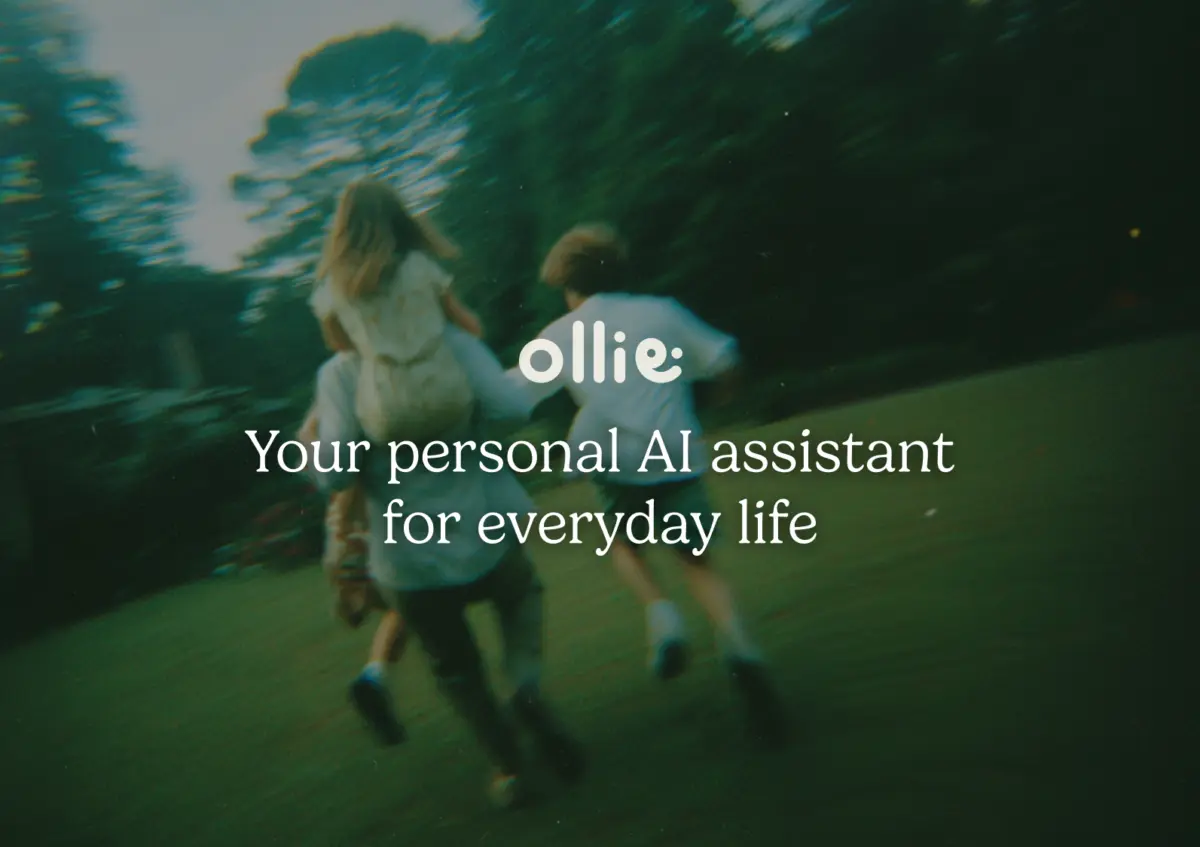
The race to dominate the personal AI assistant landscape is characterized by a high-stakes paradox: for an artificial intelligence to be genuinely useful, it must intimately understand your life, yet handing over that data often requires sacrificing personal privacy. As big tech companies and heavily funded startups push the boundaries of automated daily management, consumers are increasingly wrestling with the digital footprint they leave behind. Enter Ollie, a San Diego-based personal AI assistant designed to streamline everyday family life. While competitors grapple with invasive data collection practices and broad terms of service that spark consumer outrage, Ollie is banking its entire future on a radical, trust-first framework.
Positioning itself as a mainstream family-focused assistant that prioritizes security, Ollie has achieved SOC 2 compliance—a rare milestone for consumer-facing AI products. By relying on a sustainable subscription business model rather than ad-driven monetization or aggressive user-data harvesting for AI model training, co-founder and CEO Bill Lennon aims to prove that convenience does not have to come at the expense of confidentiality.
However, entering this hyper-competitive market is no small feat. Ollie faces off against a slew of text-based and work-oriented assistants, ranging from newly acquired startups to viral sensations pulling in hundreds of millions in funding before even launching. This investigative deep dive explores how Ollie is attempting to carve out a sustainable niche, the engineering hurdles of securing stochastic large language models (LLMs), and whether consumers will ultimately embrace an assistant that puts security ahead of frictionless convenience.
Detailed Chronology & Market Landscape
The Rise of the Text-Based Personal Agent
Over the past several years, personal productivity and lifestyle management have shifted dramatically from clunky, app-switched interfaces to conversational text-based agents. Users can now coordinate via group chats, manage multi-person household logistics, and delegate daily chores through conversational prompts.
Yet, this rapid evolution has triggered an explosion of market entrants. Today, Ollie competes in an intensely crowded arena. Competitors like Poke (recently acquired by automation heavyweight Cognition), Fambot, Ohai, Folk, Saner.ai, and Tomo are all positioning themselves as consumer-friendly lifestyle companions. Meanwhile, workplace-adjacent solutions such as Town, Lindy, and Reclaim.ai target corporate calendars, scheduling, and email management.
At the top of the financial food chain sits Instinct, a viral AI startup that shook the venture capital ecosystem by landing a staggering $350 million funding round at a $2.5 billion valuation before its product had even officially launched. By comparison, Ollie’s origins are much more grounded. The company has raised a modest $7.5 million seed round, backed primarily by prominent venture firms including Khosla Ventures and AI House.

The Privacy Backlash
As venture funding pours into consumer AI at unprecedented rates, consumer anxiety surrounding data harvesting has reached a boiling point. The breaking point for many users came when companies like Instinct faced intense public scrutiny over overly broad Terms of Service and privacy policies.
Critics discovered that Instinct’s policy granted the company a “perpetual and irrevocable” license to “access, use, host, cache, store, reproduce, transmit, display, publish, distribute, and modify” any user material—including private communications and documents—explicitly reserving the right to utilize this deeply personal data for training future AI models.
This aggressive land grab for user data has alienated privacy-conscious consumers, creating an opening for a disruptive alternative. Recognizing this vulnerability, Ollie’s leadership team mapped out a counter-strategy centered around radical transparency and verifiable data protections.
Supporting Context & Metrics: Architecture and Security
The SOC 2 Advantage
For enterprise software, SOC 2 compliance is a standard baseline, validated through independent audits to ensure formal controls protect customer data and secure operational systems. In the consumer AI space, however, SOC 2 compliance remains virtually unheard of. Ollie’s achievement positions it as one of the very first family-oriented mainstream AI assistants to meet these rigorous auditing standards.
Achieving this milestone sends a clear signal to potential users: Ollie is not scooping up personal logs, family photos, or private communications to refine background machine learning models.
Zero Credentials: The Cloud-Browser Paradigm
Ollie’s security philosophy extends far beyond compliance frameworks into its core technical architecture. Traditional assistants often require users to hand over raw usernames, passwords, or persistent API tokens to execute tasks like booking appointments, paying bills, or ordering groceries.

Ollie bypasses this massive security vulnerability entirely. The assistant never requests or stores user passwords. Instead, when Ollie needs to log into an external website on a user’s behalf, it initiates a secure, isolated browser session within its own cloud infrastructure. It then sends the user a secure link to a remote session of that browser. A remarkably similar protocol is deployed when the assistant executes financial transactions or e-commerce purchases.
While this architecture dramatically reduces the risk of credential theft, it introduces a friction point: users occasionally find themselves manually logging in to complete complex actions. Lennon acknowledges this UX hurdle, noting that it is an inherent byproduct of protecting user data on the technological frontier.
"This is… new territory," Lennon noted during an interview. "I think in the future, we will do some form of hard tokenization, in a secure way, so you’re not going to have to re-enter [your information] every time. That’s frontier stuff… we want to find the right user experience that balances convenience and trust."
Financial Integration and Founder Background
Ollie currently connects natively to personal email and calendar applications to synchronize family calendars, orchestrate daily schedules, and manage to-do lists. Current features support meal planning, grocery shopping, appointment booking, and group-chat bill payments, with household budgeting tools slated for future rollouts.
To handle more sensitive integrations—such as linking bank accounts through secure data networks like Plaid—establishing absolute trust is a prerequisite. Fortunately, Ollie’s leadership is uniquely positioned for this leap. Co-founder and CEO Bill Lennon holds a Ph.D. in Artificial Intelligence and boasts a strong pedigree in fintech, having successfully founded and exited Groundwork, a neobank tailored for nonprofits, in 2021.
Official Statements & Industry Perspectives
The Subscription Business Model as a Trust Anchor
In the digital economy, the adage "if you’re not paying for the product, you are the product" has never rung truer. AI companies relying on ad-supported models or free tiers are heavily incentivized to monetize user behavior, conversations, and data streams.

Ollie is rejecting this model entirely, opting for a straightforward paid subscription structure. Lennon argues that this financial alignment is the only way to prove whose side the AI is truly on.
"We fundamentally think that trust and privacy are absolutely imperative, and that’s why our business model is a subscription, because we want our users to know that Ollie works for you," Lennon emphasized. "We’re not sharing your data with anyone. This is super sensitive, and that is necessary to win the trust of the users."
Despite competing in an ecosystem where rivals boast massive war chests and vanity metrics, Lennon remains confident. While declining to disclose precise user counts or paying subscriber tallies due to competitive sensitivity, he notes that Ollie’s user retention curves track closely with the industry’s leading paid AI subscriptions.
The Stochastic Reality: Taming Unreliable LLMs
Building an assistant that touches real-world chores also exposes a harsh underlying truth about modern artificial intelligence: large language models are inherently stochastic, meaning they operate on probabilities and can be stubbornly unreliable.
During early hands-on testing of prominent market alternatives, minor prompting often resulted in systemic failures—such as booking entirely incorrect hotel rates. Similarly, early testers of Ollie experienced temporary service interruptions when third-party infrastructure outages halted text-provider responses.
In a consumer market where a single glitch can cause a user to abandon an app forever, these engineering realities present an existential threat. Lennon pulls no punches when discussing the difficulty of building bulletproof consumer agents.

"This is the challenge with LLMs, in general — because they’re stochastic, they’re inherently unreliable," Lennon explained. "We have to essentially build the harness — the agent harness — in a defensive way to catch and prevent those things… It’s almost like there’s just 1,000 cuts that you’ve got to solve first."
To survive, companies like Ollie must engineer defensive code wrappers around probabilistic engines, anticipating edge cases before they frustrate the end user.
Future Outlook
The personal AI assistant market is hurtling toward a critical consolidation phase. Consumers are increasingly fatigued by hollow productivity promises, invasive data practices, and unpredictable agent behavior. While well-funded giants chase viral growth through aggressive marketing and sweeping data-harvesting policies, a counter-movement is taking shape around digital sovereignty.
Ollie’s strategic gamble is clear: trade short-term, frictionless user onboarding for long-term, unshakeable consumer trust. By combining SOC 2 compliance, a password-free cloud-browser execution model, and a predictable subscription revenue stream, the company is attempting to build a fortress in a wild west of consumer software.
Whether everyday consumers will willingly pay for a privacy-first family assistant—and whether Ollie can successfully engineer away the unpredictable quirks of foundational LLMs—will determine if this San Diego startup can outlast its heavily financed rivals. One thing is certain: as personal AI weaves itself deeper into the fabric of daily life, the companies that respect user privacy will no longer just be offering a feature; they will be offering a lifeline.








Belum ada komentar. Jadilah yang pertama berkomentar!