

Executive Overview
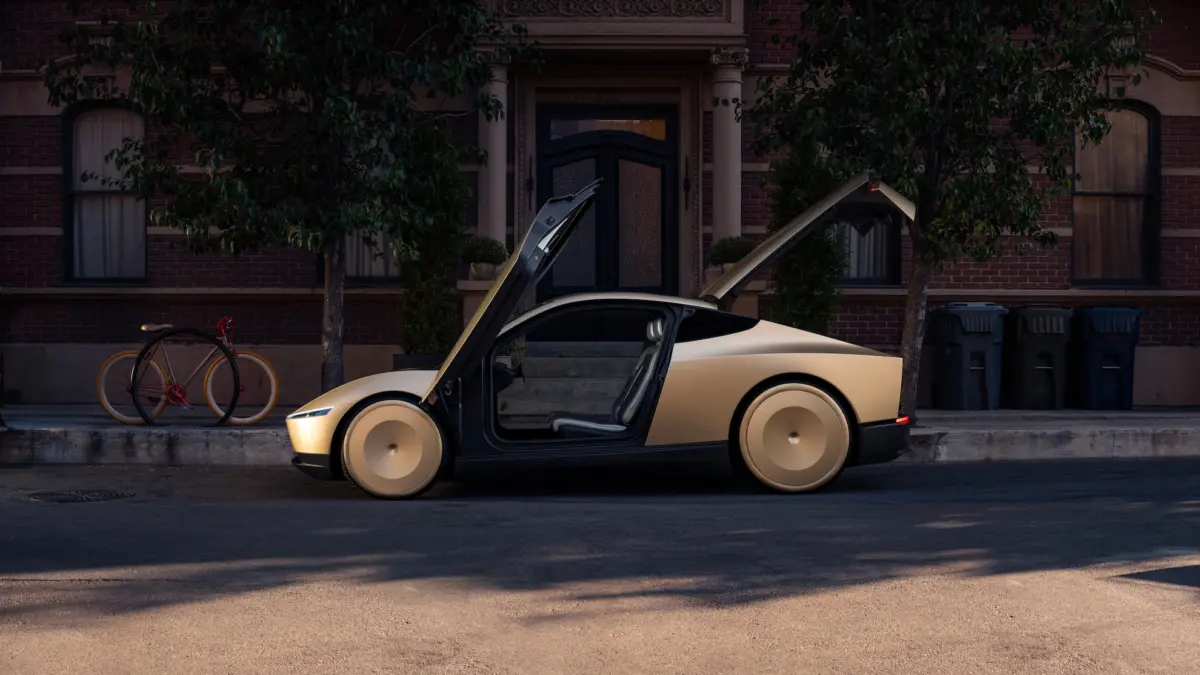
In a strategic pivot that signals a fundamental evolution in its autonomous vehicle ambitions, Tesla has published an online interest form targeting businesses looking to acquire Cybercab fleets or supply critical infrastructure for its growing network. Launched ahead of the company’s heavily anticipated Cybercab unveiling event in Austin, Texas, this development offers the clearest indication yet that Tesla’s gold-hued autonomous vehicle vision extends far beyond operating as an isolated, vertically integrated robotaxi provider.
While the deployment of the digital intake form does not constitute an explicit, legally binding guarantee that Tesla will sell its bespoke autonomous vehicles to third-party operators, it serves as a potent barometer of the company’s long-term commercial roadmap. Historically, Tesla has tightly controlled its vehicle ecosystem, manufacturing, software development, and network orchestration in-house. However, the sheer capital intensity, logistical complexity, and regulatory fragmentation inherent in scaling a global autonomous ride-hailing network appear to have prompted a reevaluation. Tesla wants to scale aggressively, and it is increasingly clear that the company does not intend to shoulder that massive burden alone.
By opening the door to third-party fleet operators, mobility hub developers, and infrastructure providers, Tesla is positioning itself to mirror or even disrupt traditional automotive and ride-sharing supply chains. This shift carries profound implications for the burgeoning autonomous vehicle (AV) landscape, inviting comparisons to established industry dynamics while creating new commercial opportunities for fleet management startups, rental car giants, and logistics providers.
Detailed Chronology: The Evolution of Tesla’s Autonomous Ambitions
To fully understand the weight of Tesla’s latest move, one must examine the protracted timeline of CEO Elon Musk’s public statements and strategic shifts regarding autonomous ride-sharing. The journey from consumer-owned vehicle fleets to purpose-built robotaxis spans nearly a decade of shifting timelines, missed projections, and architectural redesigns.
2016–2019: The Era of the Consumer-Owned "Tesla Network"
Long before the term "Cybercab" entered the public lexicon, Musk’s vision for autonomous commercialization centered squarely on a peer-to-peer model. Dating back to 2016, Musk publicly articulated a future where individual Tesla owners—whose vehicles would be equipped with advanced self-driving (FSD) hardware and software—could monetize their idle cars. The concept was simple: when an owner was not using their vehicle, they could deploy it onto the "Tesla Network," allowing it to operate as an autonomous taxi and generate passive income.
This vision was formally christened during Tesla’s inaugural Autonomy Day in April 2019. At the event, executives detailed plans to launch a commercial robotaxi network by 2020. The business model heavily mirrored ride-sharing giants like Uber and Lyft, with Tesla acting as the software orchestrator and platform owner, while individual consumers supplied the rolling stock.
2020–2023: Regulatory Roadblocks and Strategic Realignment
As the self-imposed 2020 deadline approached, the realities of artificial intelligence validation, regulatory approval, and hardware limitations caught up with the company. During a 2020 earnings call, Musk remained defiant, stating, "I feel very confident predicting that there will be autonomous robotaxis from Tesla next year — not in all jurisdictions because we won’t have regulatory approval everywhere."
That milestone, like many of Tesla’s historical timeline predictions, failed to materialize. Rather than deploying a decentralized fleet of consumer-owned vehicles operating autonomously in the wild, Tesla’s software required iterative refinement. Recognizing that private owners might be hesitant to subject their personal family cars to the wear-and-tear of commercial ride-hailing—or assume the liability risks—Tesla quietly shifted its internal focus.
The company transitioned from a consumer-sharing model to an in-house operational strategy. Instead of relying on retail owners, Tesla began laying the groundwork to operate its own dedicated fleet. Initial testing commenced using modified Tesla Model Y crossovers equipped with proprietary autonomy suites, gradually paving the way for the development of a purpose-built, steering-wheel-free vehicle: the Cybercab.
The Present Day: Opening the Aperture
Until recently, Tesla’s trajectory pointed toward a closed ecosystem. The company appeared determined to follow the path of traditional closed-loop operators, maintaining strict control over vehicle ownership, maintenance, dispatching, and revenue collection.
The release of the robotaxi interest form on Tesla’s official portal upends that assumption. By explicitly soliciting interest from external entities for fleet acquisition, charging infrastructure, and mobility hubs, Tesla is acknowledging a fundamental tenet of transportation economics: scaling a physical fleet to millions of vehicles requires a distributed partner ecosystem.
Supporting Context & Metrics: The Maturing Robotaxi Fleet Economy
Tesla’s outreach to third-party operators does not occur in a vacuum. Over the past several years, an entire B2B ecosystem has emerged around autonomous fleet management, vehicle financing, depot maintenance, and localized operations. Understanding this backdrop highlights why Tesla’s pivot is both timely and necessary.
The Rise of Autonomous Fleet Management (AFM)
While autonomous technology developers—such as Alphabet’s Waymo, Baidu’s Apollo, and Zoox—focus heavily on the software stack, perception systems, and safety validation, managing the physical assets presents a distinct set of operational challenges. Autonomous vehicles require secure depots, automated cleaning, round-the-clock sensor calibration, remote assistance routing, and heavy capital expenditure for vehicle procurement.
This operational gap has given rise to specialized Autonomous Fleet Management (AFM) providers. A prime example is Moove, an African fintech startup that originally gained prominence by providing vehicle financing to traditional ride-hailing drivers. Moove has rapidly transformed itself into a critical structural backbone for the global robotaxi industry.
Last month, Moove secured a staggering $250 million in funding, pushing its valuation to $2.1 billion. The company serves as the designated fleet operator for Waymo across major metropolitan markets, including Phoenix, Miami, and Las Vegas, with future deployment slated for London. While Moove does not currently own the Waymo vehicles it operates, leadership has signaled clear intentions to expand into direct vehicle ownership as the asset class matures.
Diversified Partnerships and Legacy Rental Giants
Beyond specialized startups like Moove, legacy players and tech-enabled platforms are carving out positions in the AV value chain. Uber, which divested its own internal self-driving division (ATG) years ago to focus on marketplace integration, has constructed a web of strategic partnerships with autonomous vehicle developers and fleet managers. Uber’s recent AV deal tracker highlights collaborations with emerging fleet networks like Avomo and New Horizon, alongside traditional rental car behemoths such as Avis and Hertz, which are actively seeking to adapt their massive physical infrastructure to the age of autonomy.
By extending an invitation to third-party operators, Tesla is effectively positioning the Cybercab as an open platform for commercial entrepreneurs. If small- and medium-sized fleet operators can purchase Cybercabs directly from Tesla, it lowers the barrier to entry for localized transportation businesses, enabling them to launch localized autonomous taxi services without needing to develop proprietary AI. This distributed approach could dramatically accelerate Tesla’s market saturation compared to relying solely on corporate balance sheets.
Official Insights: Decoding the Intake Form
A close examination of the parameters established within the official Tesla robotaxi interest form reveals how the company envisions structuring these relationships. The form, which explicitly states its objective is to "help us build our robotaxi network," requires prospective business partners to categorize their capabilities and areas of interest.
Rather than presenting a monolithic contract, Tesla has segmented the intake questionnaire into several distinct business verticals:
- Cybercab Fleet Purchasing: Aimed at entities looking to acquire physical units of the autonomous vehicle in volume, acting as commercial owners and operators within specific geographic zones.
- Mobility Hubs and Infrastructure: Targeting real estate developers, parking garage operators, and energy companies capable of providing physical spaces for vehicle staging, cleaning, passenger pickup/drop-off, and high-speed inductive or plug-in charging.
- Event Collaboration: Focused on strategic partnerships for localized launch events, promotional activations, and regional market entry campaigns.
- "Other": A catch-all category designed to capture innovative business models, software integrations, insurance partnerships, or municipal collaborations that do not neatly fit into traditional asset-ownership buckets.
The lack of rigidly defined parameters suggests that Tesla is currently in an exploratory phase, using the form to gauge market appetite, capital availability, and regional readiness. However, the breadth of options confirms that leadership understands that operating a global robotaxi network requires robust collaboration with real estate, energy, and fleet logistics partners.
Future Outlook: Challenges and Strategic Implications
As Tesla prepares to roll out its commercial autonomous ecosystem, the company faces a complex matrix of technological hurdles, regulatory barriers, and competitive pressures.
Regulatory Fragmentation
The single greatest determinant of how quickly Tesla’s third-party fleet strategy can scale is not vehicle production volume, but regulatory approval. Autonomous vehicle deployment in the United States and international markets is governed by a patchwork of state, provincial, and municipal laws. While some states have embraced autonomous operations with minimal friction, major metropolitan areas maintain stringent permitting processes, geofencing restrictions, and mandatory safety reporting requirements.
For third-party operators purchasing Cybercabs, navigating these regulatory mazes will introduce a layer of operational complexity. Tesla will likely need to provide robust compliance support and regulatory software layers to ensure that partner-owned fleets operate within legal boundaries.
The Competition for Capital and Fleet Dominance
Tesla enters an increasingly crowded commercial AV space. While Waymo continues to scale commercial driverless operations in major U.S. cities with proven safety records, and international competitors expand rapidly across Asian markets, Tesla must prove that its camera-only Full Self-Driving (FSD) architecture can achieve unmonetized, level 4 autonomy safely and reliably at scale.
Furthermore, convincing external businesses to invest millions of dollars into Cybercab fleets will hinge on compelling unit economics. Fleet operators will evaluate metrics such as cost-per-mile, maintenance frequency, vehicle lifespan, insurance premiums, and net revenue-sharing splits. If Tesla offers an attractive commercial framework paired with vehicles that boast lower acquisition costs than competitors relying on expensive LiDAR and radar suites, the company could unlock a massive influx of third-party capital.
Conclusion
Tesla’s decision to publish a B2B robotaxi interest form marks a definitive turning point in its corporate strategy. By pivoting away from a strictly closed, in-house operational model toward an inclusive partner network, Tesla is acknowledging that the realization of a global autonomous transportation grid is too vast an undertaking for any single company to tackle alone. Whether through fleet acquisition by startups like Moove, partnerships with legacy rental giants, or real estate integrations for mobility hubs, Tesla’s Cybercab is poised to become the focal point of a sprawling, third-party commercial ecosystem. As the company refines these partnerships, the future of urban mobility may soon be defined not just by who builds the car, but by who manages the network behind it.







Belum ada komentar. Jadilah yang pertama berkomentar!