

Executive Overview
In the high-stakes, hyper-accelerated ecosystem of modern venture capital, few firms evoke as much reverence—or as much deliberate contradiction—as Benchmark. For 31 years, the storied Silicon Valley partnership has resisted the temptation to bloat its headcount, institutionalize bureaucratic voting committees, or chase every fleeting technological bubble. Yet, the tech landscape around them is unrecognizable from the one they navigated even a few years ago. Faces change, macroeconomic pressures mount, and the artificial intelligence (AI) gold rush has infused billions of dollars into unproven visions at a dizzying pace.
This summer, Benchmark signaled a rare structural evolution, announcing a combined $2 billion deployment across two distinct funds—marking only the second time in its three-decade history that the firm has veered away from its traditionally small, lean vehicles. Despite this capital expansion and a shifting roster of general partners (GPs), the firm’s core philosophy remains stubbornly rooted in low-volume, high-conviction bets.
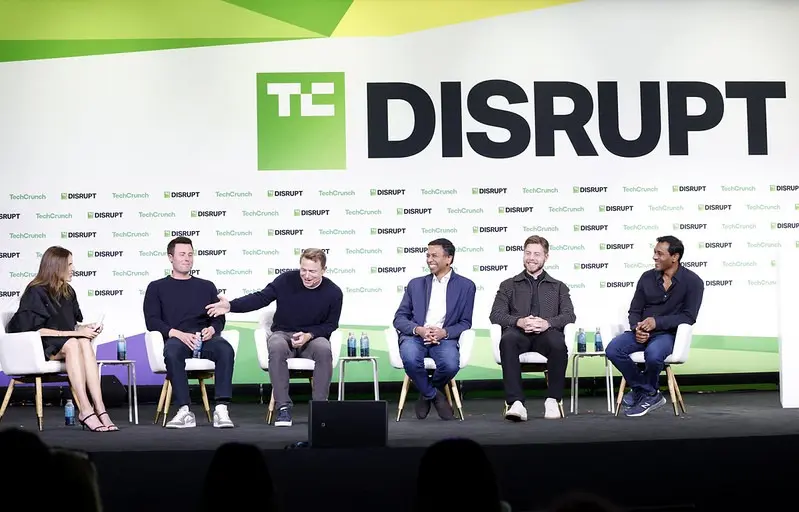
At TechCrunch Disrupt, all five of Benchmark’s current general partners—Peter Fenton, Chethan Puttagunta, Eric Vishria, Ev Randall, and Jack Altman—took the stage together. In a wide-ranging, candid conversation, the team unpacked how they are adapting to an AI-driven world without losing the specialized, shoulder-to-shoulder craft that built their reputation. From their infamous Monday partner meetings that run entirely without an agenda to their unfiltered thoughts on AI market corrections, public market volatility, and the undisputed gravitational pull of San Francisco, Benchmark laid bare the inner workings of one of venture capital’s last true partnerships.
Detailed Chronology: Evolution, Expansion, and the Anatomy of a Deal
To understand Benchmark’s current posture, one must examine how the firm has selectively adapted while guarding its cultural gates. Three years ago, a seat at Benchmark’s partner table looked noticeably different; today, three of those individuals have moved on, replaced by fresh market operators like Ev Randall (formerly of Founders Fund, Bond, and Kleiner Perkins) and Jack Altman, who joined the firm earlier this year after running his own agile investment vehicle.
The most visible shift is financial. For two decades, Benchmark maintained its core early-stage fund at a strict $500 million ceiling. Recognizing the inescapable reality of economic inflation, the firm recently adjusted its core vehicle and introduced a new $1.25 billion growth fund. According to Peter Fenton, this expansion was born out of historical necessity rather than a desire to chase vanity metrics.
"The craft that hasn’t changed is the core fund: working closely with founders at the beginning," Fenton explained on stage. "It’s usually a 10-to-15-year commitment, working shoulder to shoulder, and that doesn’t scale. There’s also been inflation. We held the core fund at $500 million for 20 years, and it has just inflated to be consistent with the existing economy, which we hadn’t done and that was probably a tactical error on our part."
Regarding the new growth fund, Fenton noted that it plugs a historical leak in their mandate. Previously, Benchmark was forced to watch passively as portfolio companies grew past the early stage, missing out on massive multi-hundred-fold secondary expansions. With the growth fund, Fenton expects a heavily concentrated portfolio—targeting just four to six, perhaps seven to eight bets—embracing what he calls "the agony and ecstasy of a concentrated portfolio," where one or two investments will ultimately drive 90% of returns.
Despite these massive capital commitments, the firm’s operational cadence remains agonizingly deliberate. Each partner continues to make only two or three new investments per year. There are no automated customer relationship management (CRM) pipelines, no multi-tiered voting systems, and no rigid investment thesis templates.
When asked about deal vetoes, Chethan Puttagunta offered a characteristic shrug: "Nobody knows. We don’t have rules around it."
Jack Altman, reflecting on his transition from an independent podcaster and fund manager to a Benchmark GP, noted that the absence of corporate bureaucracy is liberating. "If we invested in 100 or 200 companies a year, you’d want a CRM and a formal voting process," Altman observed. "Because it’s so rare, the lack of structure is a huge asset."
Supporting Context & Metrics: The AI Boom, Market Volatility, and the Cerebras Gamble
The conversation inevitably pivoted to the elephant in the room: the generative AI boom, the dizzying pace of infrastructure spending, and the growing disconnect between fundamental business metrics and public market hysteria.
Critics have long warned of an AI bubble, pointing to soaring capital expenditures, compressed free cash flows, and recent high-profile stumbles, including the Chapter 11 bankruptcy filing of interactive chatbot platform Character.AI. However, Benchmark’s partners view these panic-driven headlines as products of a hyperactive online echo chamber—specifically, the "X-fueled hysteria" propagated by anonymous social media accounts.
Ev Randall contextualized the Character.AI bankruptcy as an anomaly—the corporate shell of a company whose core engineering talent and founders were acqui-hired by Google years prior. "What has changed most since I started investing is the information environment," Randall argued. "Its Chapter 11 being read as an AI chill effect shows that the info environment for public equities in tech has been drawn so much into this, like, hyperactive X echo chamber."
Instead of a systemic demand crisis, Benchmark’s portfolio companies are reporting the opposite problem: insatiable demand for compute power that outstrips supply. "Our companies see so much demand that they can’t get enough compute to serve customers who are willing to pay them at good gross margins," Randall added.
The Heretical Bet on Cerebras
To understand how Benchmark evaluates unorthodox, high-risk outlier companies, one need look no further than its 2016 investment in AI chipmaker Cerebras Systems. Eric Vishria recalled the initial resistance within the partnership when the chip startup first pitched its radical hardware architecture—a bet that flew in the face of a decade of venture capital avoidance in deep hardware.
"On the Sunday night before they came back to pitch the partnership, Peter told me it went against everything he’d learned in venture," Vishria recalled. "Then, after the Monday pitch, he had flipped."
Peter Fenton expanded on the philosophy behind embracing polarizing founders: "Andrew and his co-founders are heretics. What they were saying was unorthodox, and you see it today, with people dumping on the stock because it’s polarizing. That’s exactly where we have to be as investors. If it’s consensus, why is there a startup?"
Addressing the roller-coaster performance of Cerebras stock—which priced at $185 ahead of its IPO, surged to $350, and subsequently drifted back toward its baseline—Vishria noted that public market volatility is par for the course for category-defining infrastructure plays. Drawing parallels to the historical volatility of tech giants like Amazon, Datadog, and DoorDash, Vishria emphasized that public companies require a "stomach of titanium."
When the discussion turned to the traditional initial public offering (IPO) process and the controversial "IPO pop"—a mechanism long criticized by former Benchmark partner Bill Gurley for favoring investment bankers over issuing companies—Vishria conceded that while direct listings have their place, the sheer capital requirements of modern AI infrastructure dictate a different path. "At the end of the day, IPOs raise money. Cerebras raised $6 billion. That matters, so I think it’s probably unlikely for this crop [of AI companies] just because most of them need capital."
Official Statements & Partner Insights: Inside the Monday Meetings
One of the most enduring myths of modern venture capital is that successful funds operate like well-oiled, metrics-driven software enterprises. Benchmark shatters this illusion entirely. Every Monday, the five general partners gather for a meeting that famously operates without a formal agenda.
"Jack tried to make an agenda," Chethan Puttagunta joked on stage, drawing laughs from the audience.
"I’ve got an agenda for next Monday," Altman quipped back.
Eric Vishria explained that the lack of structure is intentional, facilitating a continuous, decades-long intellectual dialogue. "In a time of rapid change, you’re trying to figure out what’s becoming possible that wasn’t possible six months ago, and who’s bending light," Vishria said. "You can try to systematize it, but one of the beauties of five people is you don’t have to. It’s a decades-long conversation that only works if you’re small and actually enjoy spending time together."
This tight-knit dynamic also extends to how the partners handle competitive conflicts in an era where AI companies rapidly expand their surface areas and step on each other’s toes. As the cost of coding plummets toward zero, founders are increasingly attacking overlapping product spaces, forcing venture firms to navigate delicate ethical boundaries.
"The harsh reality of this world is every company is evolving very quickly," Vishria noted. "You are going to get conflicts… Of course, we’re maintaining confidentiality and doing those things and fortunate to not end up in that type of insane direct conflict… But things are evolving. There’s no doubt about that."
Puttagunta echoed this sentiment, emphasizing that mutual respect and strict exclusivity commitments remain paramount, even as hyper-ambitious AI founders push the boundaries of their initial mandates.
Future Outlook: The Undisputed Gravity of San Francisco
As the conversation drew to a close, the panel addressed a geographic reality shaping the current technology cycle: the undeniable resurgence of San Francisco as the absolute epicenter of the global AI movement. While remote work and distributed startups dominated headlines during the post-pandemic era, the gravitational pull of the Bay Area has tightened.
Jack Altman noted that while exceptional companies can technically be built anywhere, San Francisco remains unmatched in its concentration of talent, specialized capital, and early adopters. "I don’t know that you have to be here as a founder, but I think it is right now by far the easiest place to get talent, capital, and customers," Altman stated.
Peter Fenton offered a historical perspective, pointing out that over 90% of historical capital returns have originated from companies rooted in the Bay Area ecosystem. "The ecosystem effect that occurs when you have a successful company and that leads to a background of great executives and ambitious people—the bar of success gets raised. I don’t think it has systemically happened anywhere quite like here."
Ev Randall reinforced this observation, noting that nearly every out-of-state founder he has met with over the past 18 months is either opening a San Francisco office, splitting their time between regions, or actively planning a full relocation. "Iron sharpens iron," Randall concluded. "If you want to be around peers who are going to make you the best version of yourself, it’s hard to think of a city that does that better than San Francisco in the current era that we’re in now with AI here."
Conclusion
As Benchmark steps into its fourth decade, the firm is navigating a paradox of its own making. By expanding its core fund and launching a major growth vehicle, it has acknowledged the economic gravity of an inflated global market. Yet, by fiercely protecting its low-volume, high-conviction ethos, it refuses to succumb to the mass-production mentality plaguing much of the venture capital landscape. In an industry obsessed with scaling at all costs, Benchmark’s greatest luxury remains its deliberate, unapologetic refusal to speed up.








Belum ada komentar. Jadilah yang pertama berkomentar!