

By Craig Robinson, Senior Editor
Last Updated: September 3, 2026
Executive Overview
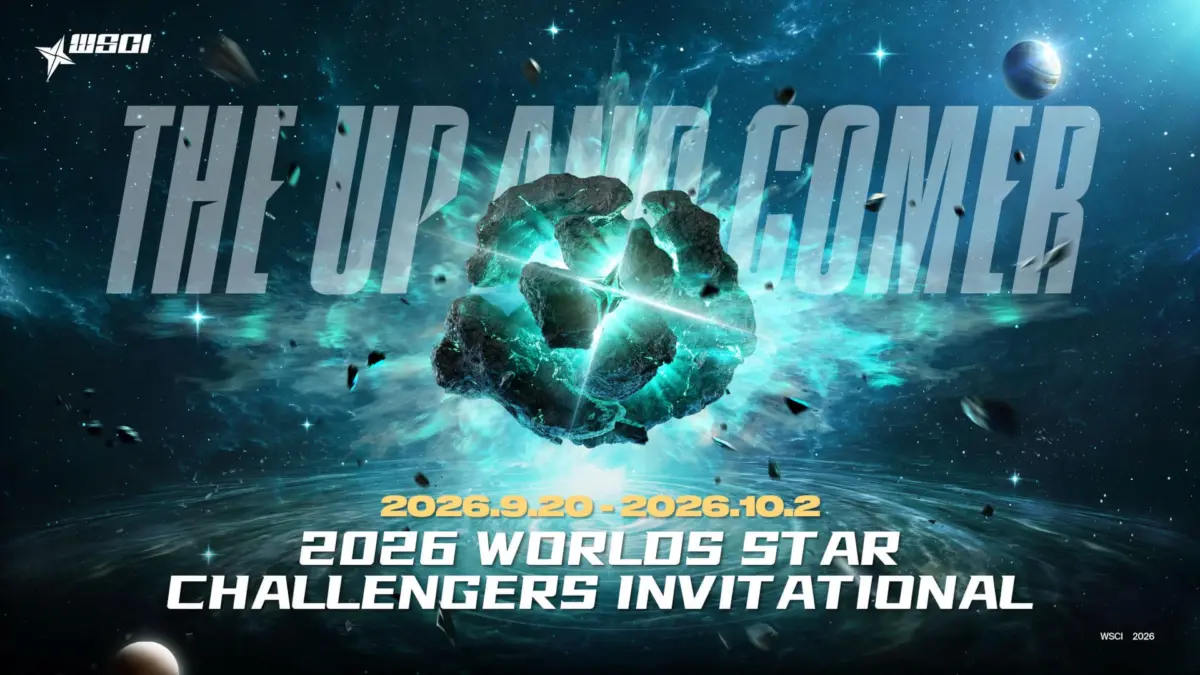
In a landmark announcement for the global competitive ecosystem, Riot Games and TJ Sports have officially unveiled the 2026 World Star Challengers Invitational (WSCI). Set to run from September 20 through October 2, 2026, this international tournament marks a historic milestone as the very first global event exclusively dedicated to Tier 2 League of Legends competition.
Bringing together 16 elite teams from across all major LoL Esports regions—including China, Korea, APAC, the Americas, and EMEA—the WSCI is structured to serve as a high-stakes proving ground for up-and-coming talent. Rather than a standalone exhibition, the tournament has been conceived as a crucial development-focused pilot program. Organizers aim to evaluate how cross-regional Tier 2 competition can accelerate professional growth, fortify connections between distinct regional pipelines, and give global fans an early look at the next generation of esports superstars.
The tournament arrives at a critical juncture in the 2026 competitive calendar. As the main-season leagues wind down and the industry pivots toward the global off-season—magnified by recent tectonic shifts such as Fnatic missing the World Championship for the first time in a decade—the WSCI introduces a vital layer of international exposure. For organizations, players, and talent scouts alike, the tournament promises to redefine how Tier 2 ecosystems are valued, scrutinized, and integrated into the global League of Legends landscape.
Detailed Chronology and Tournament Format
The inaugural World Star Challengers Invitational is designed with a rigorous competitive structure that mirrors the high-pressure environment of premier global tournaments like the World Championship.
Regional Allocation and Qualification Pathways
The 16-team field is drawn from five major global operational regions:
- China (LPL Tier 2 Pathways)
- Korea (LCK Challengers League Pathways)
- APAC (Asia-Pacific Development Circuits)
- Americas (North and South American Tier 2 Ecosystems)
- EMEA (European, Middle Eastern, and African Regional Leagues, including the LFL and EMEA Masters circuits)
Each of the five participating regions qualifies three teams through a carefully curated mix of regional pathways and domestic playoffs. To complete the 16-team roster, the reigning Asia Masters Champion is granted a direct invitation, bringing the total complement to 16 teams.
Seeding, Draw Mechanics, and Group Stage
The qualified teams are divided into three distinct seeding pools designed to ensure competitive balance and a diverse cross-pollination of regional playstyles.
- Group Formation: Groups are drafted systematically by placing one team from Pool 1, one team from Pool 2, and two teams from Pool 3 into each group.
- Regional Safeguards: Mirroring the draw protocols of the premier World Championship, strict rules prevent over-saturation: no single group may contain more than two teams from the same region, and teams originating from Pools 1 and 2 of the same region cannot be drawn into the same group.
The Group Stage will take place from September 20 to September 25. The 16 teams are split into four groups, playing a double round-robin format consisting entirely of Best-of-One (Bo1) matches. At the conclusion of the group stage, the top two teams from each group will advance to the knockout rounds, narrowing the field to the final eight contenders.
Bracket Stage and Finals
The intensity ramps up significantly during the Bracket Stage, running from September 27 through October 2.
- Quarterfinals & Semifinals: Moving away from the volatility of single-game formats, all matches in the knockout phase—including the quarterfinals, semifinals, and the grand finale—will be contested in a grueling Best-of-Five (Bo5) series format.
- The Grand Final: Across the bracket stage, a total of seven high-stakes series will be played, culminating on October 2 with the crowning of the very first World Star Challengers Invitational Champion.
Supporting Context and Metrics: The Tier 2 Landscape in 2026
To fully understand the significance of the WSCI, one must examine the broader macroeconomic and structural shifts occurring within professional League of Legends throughout 2026.
The Off-Season Convergence
The launch of the WSCI intersects with a heavily congested and evolving autumn schedule. Earlier this year, Riot Games and tournament organizers restructured the prestigious Demacia Cup, transforming it into a globalized competition featuring 12 teams drawn from all major regions. Running in close proximity to the Worlds Play-Ins—which traditionally accommodate teams ranked 4th through 6th depending on regional allocation—the competitive calendar has become exceptionally crowded.

However, whereas the Demacia Cup and Worlds target established first-tier rosters and mid-tier organizations fighting for international relevance, the WSCI fills a glaring structural void. Historically, Tier 2 rosters—such as those competing in the European Regional Leagues (ERLs) like the French LFL, or the LCK Challengers League—have been confined to domestic play or regional cross-border events like EMEA Masters. They rarely receive opportunities to test their mettle against Asian powerhouses or American developmental squads in an official offline LAN environment.
EMEA and Western Talent Pipelines
For European and UK-based fans, the stakes are particularly high. The EMEA region’s three qualifying teams enter the tournament under intense scrutiny. With the premier LEC leagues heavily occupied by the concurrently running World Championship, the WSCI thrusts the secondary tier directly into the international spotlight.
European development pathways have faced ongoing debate regarding whether regional leagues sufficiently prepare players for the rigors of international competition. The WSCI offers French, British, Spanish, and broader European prospects an invaluable platform to gain LAN experience. This exposure arrives at a pivotal moment, preceding what is projected to be one of the most volatile and aggressive off-season roster rebuild cycles in esports history.
Furthermore, the psychological and competitive weight of this tournament cannot be overstated for legacy brands. Following historic upsets—such as Fnatic failing to qualify for the World Championship for the first time in a decade—major organizations are being forced to re-evaluate their entire talent acquisition pipelines. Scouts, general managers, and coaching staff from tier-one franchises will undoubtedly monitor WSCI matches closely to unearth cost-effective, high-upside rookies.
Independent Brands and Non-Franchised Organizations
The creation of a global Tier 2 tournament also alters the calculus for independent organizations and streamer-backed projects operating outside the primary franchise systems. Speculation has already mounted within the community regarding whether independent fan-favorite entities—such as the community-driven projects spearheaded by prominent content creators like Caedrel and the Los Ratones lineage—could find expanded purpose in a system that offers tangible international hardware beyond domestic leagues. When pathways to franchise slots remain constrained, global Tier 2 events provide an alternative zenith for competitive achievement.
Official Statements and Industry Perspective
While formal press releases from Riot Games and TJ Sports have emphasized the developmental philosophy underpinning the WSCI, industry analysts have been quick to dissect the long-term implications of the pilot program.
"Alongside TJ Sports, we’re bringing an international event to Tier 2! 16 teams from Asia, Europe, and the Americas will compete from September 20 – October 2. Make sure to follow your regional Tier 2 social channels for more info…"
— LoL Esports Official Announcement
In official communications, Riot Games has framed the WSCI as an exploratory initiative. The organization has explicitly noted that for its inaugural 2026 run, the tournament is being operated as a pilot program. The primary objective is to gather empirical data on logistics, competitive balance, viewer engagement, and player development metrics.
By analyzing how cross-regional Tier 2 competition influences talent maturation, Riot intends to determine whether a global secondary-tier tournament can be sustained or expanded into a permanent fixture of future competitive roadmaps. If successful, the WSCI could pave the way for a formalized, multi-tiered global ecosystem that permanently connects regional academies and independent Challengers leagues on the international stage.
Future Outlook: What the WSCI Means for LoL Esports
As the countdown to September 20 ticks down, the 2026 World Star Challengers Invitational stands as a bold experiment with the potential to reshape the developmental philosophy of professional League of Legends.
Key Questions Moving Forward:
- Talent Conversion Rate: Will stand-out performances at the WSCI directly translate into tier-one franchise starting jobs during the upcoming off-season transfer window?
- Competitive Disparity: How will Western Tier 2 structures (EMEA and the Americas) stack up against the traditionally dominant academy and challenger systems of the LPL and LCK?
- Viewer Engagement: Can a tournament dedicated entirely to Tier 2 teams capture the global audience’s imagination while running concurrently with the prestigious World Championship?
- Structural Permanence: Will the 2026 pilot prove successful enough to secure a permanent, recurring spot on the annual global calendar, complete with increased funding and broader broadcast integration?
For fans, players, and organizations, the answers to these questions will unfold over two intense weeks of competition this autumn. As regional Tier 2 social channels begin rolling out specific qualification updates and co-streaming details, the global esports community prepares to witness the birth of what could become the most important developmental stepping stone in League of Legends history.







Belum ada komentar. Jadilah yang pertama berkomentar!