

By Craig Robinson, Senior Editor
Published: August 27, 2026
Executive Overview
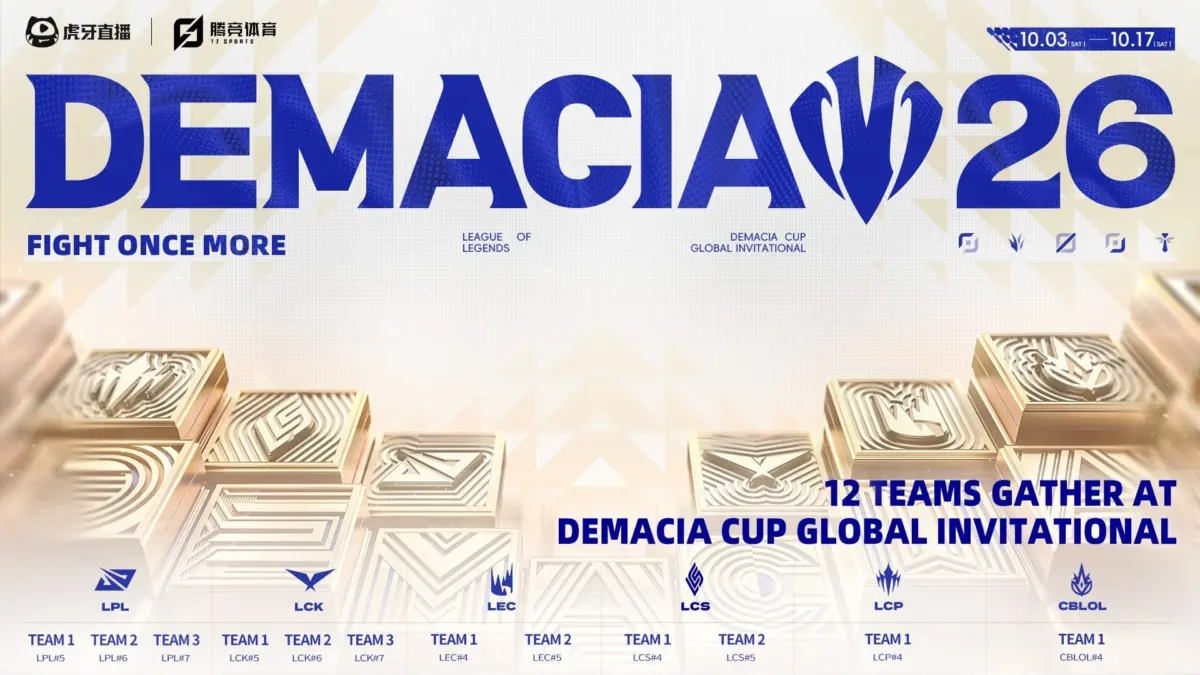
In a monumental shift for the competitive League of Legends ecosystem, Riot Games—in close collaboration with TJ Sports and Huya Inc.—has officially announced a massive structural expansion for the Demacia Cup. Historically recognized as a regional, LPL-centric tournament designed to showcase domestic talent and offseason adjustments, the newly minted 2026 Demacia Cup Global Invitational is breaking through its traditional borders.
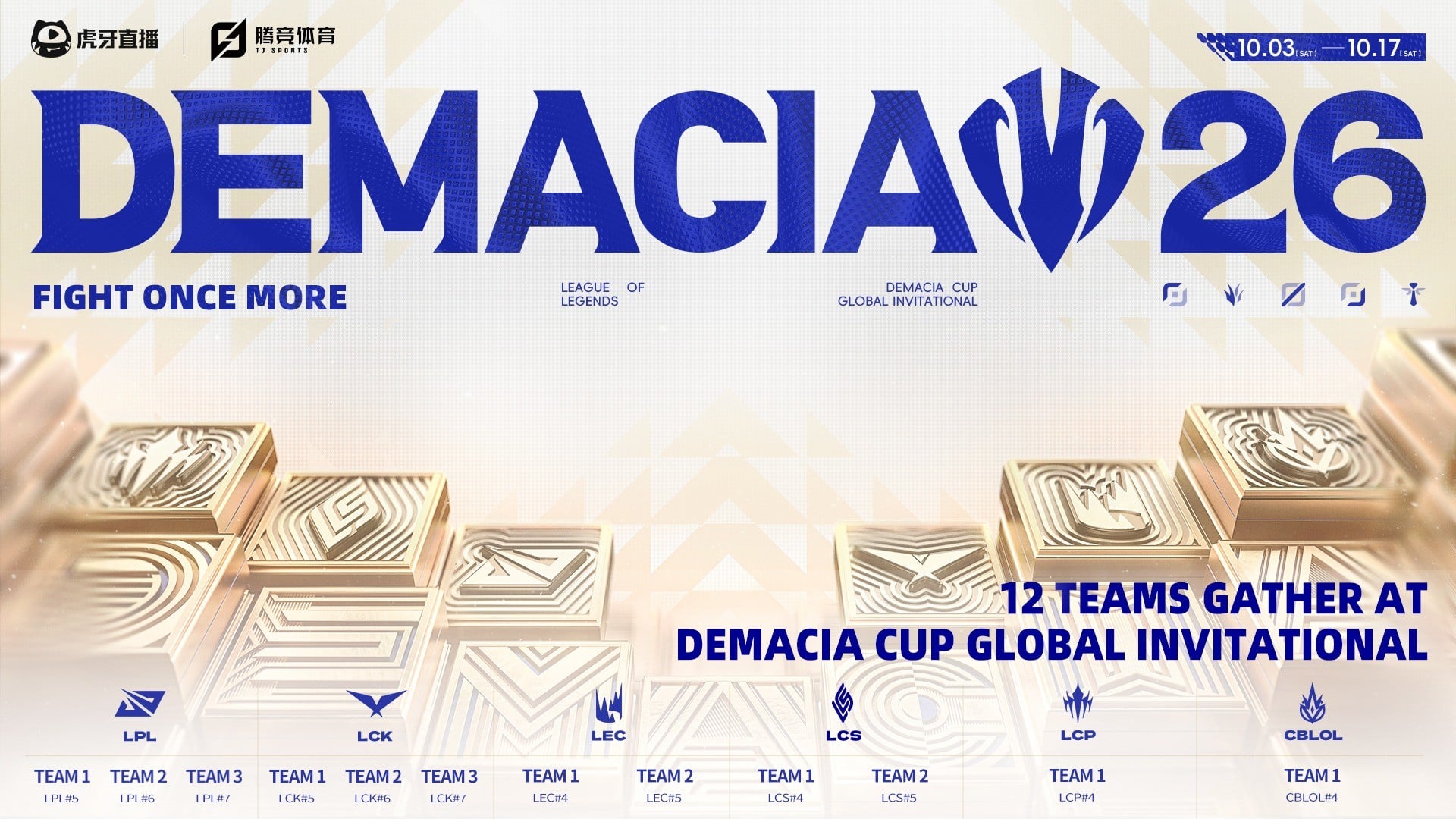
For the first time in its history, the competition is transforming into a premier six-region global event. Running from October 3rd to October 17th, 2026, the tournament will feature a 12-team roster drawn from the upper echelons of the global professional scene. By inviting representation from the LPL, LCK, LEC, LCS, LCP, and CBLOL, Riot Games is addressing a long-standing criticism from players, organizations, and fans alike: the over-reliance on the annual World Championship as the sole barometer of inter-regional competition.
This strategic expansion provides much-needed international exposure for mid-tier powerhouse squads that narrowly miss out on Worlds qualification. Furthermore, with a hybrid online-to-offline format culminating in the heart of Beijing, the tournament promises high-stakes action just weeks before the global League of Legends calendar shifts entirely to the World Championship. As slot allocations, regional implications, and organizational strategies take shape, the 2026 Demacia Cup Global Invitational stands poised to redefine the competitive landscape of professional esports.
Detailed Chronology & Tournament Structure
The path to the 2026 Demacia Cup Global Invitational has been carefully mapped out to integrate smoothly with the dense late-season schedule of professional League of Legends.
The Timeline
- August 27, 2026: Official global announcement by Riot Games, TJ Sports, and Huya Inc. detailing the expansion, slot distributions, and overarching format.
- October 3, 2026: Tournament commencement. The initial stages of the competition will be played online, allowing all 12 participating teams to battle through the preliminary rounds from their respective regional training facilities or bases.
- Mid-October 2026: Transition to the offline phase. The field of 12 will be pruned down to the final eight surviving contenders, who will travel to Beijing, China.
- October 17, 2026: Grand Finals. The tournament concludes with a high-profile offline playoff bracket hosted at the state-of-the-art home venue of JD Gaming (JDG).
- October 15 – November 14, 2026: Immediately following the conclusion of the Demacia Cup, attention shifts directly to the World Championship, creating an unprecedented autumn gauntlet of elite-tier international competition.
The Hybrid Format
The decision to utilize a hybrid format serves a dual purpose. By beginning online on October 3rd, tournament organizers can manage logistical hurdles efficiently while accommodating the tight turnaround times following the conclusion of regional summer playoffs. However, the true test of championship mettle will occur live on stage in Beijing.
The progression from an expansive online group or Swiss-style phase down to an exclusive top-eight offline bracket ensures that fans in attendance—and those tuning in globally—are treated to peak competitive play. Hosting the finals at the JDG venue guarantees a world-class broadcast environment complete with live studio audiences, professional analysis desks, and the electric atmosphere characteristic of top-tier Chinese esports productions.
Supporting Context & Metrics: Slot Allocations and Prize Pool
To ensure competitive integrity and reward regions based on current strength, Riot Games has tied the slot distributions directly to performance at the Mid-Season Invitational (MSI) 2026. This merit-based allocation system prevents arbitrary representation and ensures that the most competitive regions secure a stronger foothold in the tournament.
The Breakdown of Regional Slots
The 12 available slots have been distributed across the six participating leagues according to the following performance-weighted formula:
- Top Two Regions (3 slots each): The regions that demonstrated peak dominance at MSI 2026 receive the maximum allocation of three slots, giving them deeper representation and a wider net to catch top-tier talent.
- Third and Fourth Place Regions (2 slots each): Highly competitive regions sitting just shy of the absolute pinnacle receive two slots.
- Remaining Regions (1 slot each): All other participating leagues are guaranteed at least one representative, ensuring true global representation across the LPL, LCK, LEC, LCS, LCP, and CBLOL.
Note: While official team rosters and exact slot confirmations are being finalized as regional summer splits conclude, the structure clearly paves the way for a diverse clash of playstyles, drafting philosophies, and macro strategies.
Financial Stakes
While prestige and international practice are major incentives, the tournament also features a competitive financial incentive. The 2026 Demacia Cup Global Invitational boasts a total prize pool of 1.5 million RMB (approximately €191,000 / $205,000 USD). While this figure may be modest compared to the multi-million-dollar bounty of the World Championship, it represents a substantial payout for an offseason-adjacent international tournament, adding serious monetary stakes to every single match.
Regional Implications: A Lifeline for LEC Contenders and Beyond
For major Western leagues like the LEC, the expansion of the Demacia Cup carries profound strategic implications. Historically, the conclusion of regional summer playoffs signaled an abrupt end to the competitive year for any team failing to secure a coveted Worlds qualification spot. Players and coaching staffs would enter long, grueling months of the offseason without official stage matches, stunting team growth and leaving fans starved for cross-regional play.
The inclusion of the LEC changes this dynamic entirely. Under the tournament’s framework, fourth and fifth-placed teams who narrowly miss out on Worlds qualification will instead pivot directly toward preparing for the Demacia Cup Global Invitational.
What This Means for the LEC Bubble Teams
Realistically, this bracket positions organizations on the bubble—such as Fnatic, NaVi, Team Vitality, and GiantX—right into the international spotlight. Depending on how the remainder of the LEC summer split concludes and which specific rosters punch their tickets to Worlds, these storied franchises have a legitimate, high-stakes platform to redeem their seasons.
For the UK esports community in particular, this development is immensely exciting. With organizations like Fnatic and GiantX maintaining deep roots, historical bases, or significant fan communities within the United Kingdom, local fans will have a vested interest in watching these rosters battle it out against elite Asian and American competition on a global stage. Securing international practice against LPL and LCK squads outside of Worlds scrims is an invaluable developmental tool that could reshape the competitive baseline of European League of Legends moving into the 2027 season.
Official Statements and Industry Perspective
The announcement has sent ripples of optimism throughout the global League of Legends ecosystem. For years, professional players, analysts, and organization executives have advocated for a more robust international calendar that reduces the heavy reliance on a single annual World Championship.
In joint statements released alongside the initial announcement, representatives from Riot Games, TJ Sports, and Huya Inc. emphasized their shared vision for the sport’s future:
"The expansion of the Demacia Cup into a global invitational is a direct response to the evolving needs of our global community. By leveraging the infrastructure of the LPL and partnering with industry leaders like Huya and TJ Sports, we are able to create a bridge between regional competition and global aspiration. This event is not merely an exhibition; it is a serious international battleground designed to test the limits of regional metas and provide our athletes with the high-pressure stage time they deserve."
Industry analysts have similarly lauded the move, noting that a hybrid online-to-offline tournament held in October serves as the ultimate litmus test for global team depth. Whereas Worlds focuses exclusively on the absolute summit of each region, the Demacia Cup Global Invitational highlights the resilience, adaptability, and high-ceiling potential of the second tier of global contenders.
Future Outlook: Looking Beyond October 2026
As the esports world turns its collective gaze toward October 3rd, the 2026 Demacia Cup Global Invitational is shaping up to be far more than a simple curtain-raiser for the World Championship. It represents a fundamental structural evolution for competitive League of Legends.
If this expanded six-region format proves successful, it could serve as a permanent blueprint for future international scheduling, paving the way for more frequent, multi-region tournaments that break down the traditional isolation of regional leagues. Fans can expect further announcements regarding detailed broadcast schedules, talent lineups, and official team rosters in the coming weeks as the summer split reaches its climax.
One thing is certain: the autumn of 2026 will test the endurance, adaptability, and skill of the world’s best League of Legends teams like never before. From the online skirmishes on October 3rd to the roaring crowds in Beijing on October 17th, a new chapter of international esports history is about to be written.





Belum ada komentar. Jadilah yang pertama berkomentar!