


Executive Overview
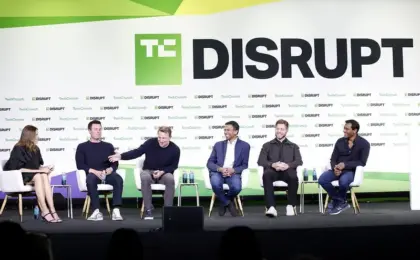
The journey from an unproven concept to a resilient, enterprise-grade corporation has never been more treacherous, nor has it required such high operational agility. As the global tech ecosystem navigates a post-hype reality defined by compressed funding cycles, structural shifts in human labor via artificial intelligence, and heightened investor scrutiny, founders face unprecedented hurdles. Enter the Builders Stage—returning in full force to TechCrunch Disrupt 2026, scheduled for October 13–15 at the Moscone Center in San Francisco.
Serving as one of six cornerstone industry stages at the premier technology conference, the Builders Stage is meticulously engineered for founders, startup operators, and forward-thinking investors who are done entertaining surface-level growth tactics. Bringing together more than 10,000 technology leaders, the three-day program bypasses generic startup platitudes to deliver actionable, real-world blueprints. Attendees will hear directly from heavyweights shaping the current economic cycle—including Gamma CEO and co-founder Grant Lee, Precedent.vc founder and general partner Leah Solivan, and Google VP of Product Robby Stein.
From mastering capital allocation in a multi-model AI ecosystem to redefining go-to-market (GTM) benchmarks where $0 to $10 million ARR is the new baseline, the Builders Stage acts as a masterclass in modern corporate survival. This comprehensive preview outlines the foundational pillars, crucial sessions, and defining strategies that will dictate the next generation of category-defining enterprises.
Detailed Chronology and Thematic Breakdown
The 2026 Builders Stage agenda has been curated to reflect the harsh realities of the contemporary fundraising and operational climate. Across more than a dozen masterclasses, firesides, and panel discussions, speakers will dissect how early-stage and hyper-growth companies can insulate themselves against macroeconomic volatility and technological displacement.
Phase One: Navigating the Post-AI Hype and Defensibility
The narrative that every startup must incorporate generative AI to secure venture capital is rapidly giving way to a more nuanced, sober reality. Several key sessions on the agenda directly address the existential threats and operational shifts confronting founders today:

- How to Win When You’re Not Building AI: Featuring Shan Shan (Baillie Gifford) and Yuri Sagalov (General Catalyst), this session challenges the prevailing venture obsession. Panelists will argue that enduring, durable businesses are often built on superior unit economics, sticky retention, and disciplined execution rather than raw technological novelty.
- What Happens When OpenAI Ships Your Roadmap: For founders building software wrappers or distinct applications, the looming specter of a major LLM provider cannibalizing their product is an ever-present anxiety. Michel Tricot (Airbyte), Rob Toews (Radical Ventures), and Linda Tong (Webflow) will examine true defensibility, asking how startups can maintain proprietary moats when tech giants shift downstream.
- The Real Tokenmaxxing — How the Best AI Companies Navigate a Multi-Model World: Moving beyond single-model dependency, Mo Jomaa (Capital G) and Zuzanna Stamirowska (Pathway) will explore how advanced AI startups orchestrate across multiple foundational models to optimize cost, latency, and reliability at enterprise scale.
Phase Two: Redefined Benchmarks for Capital, Growth, and GTM
The metrics that unlock early-stage funding have shifted dramatically. Pre-seed and Series A expectations demand faster execution and higher initial traction than ever before.
- Winning Pre-Seed Without a Product: Puneet Agarwal (True Ventures), Austin Clements (Slauson & Co.), and Sandhya Venkatachalam (Axiom Partners) unpack the art of securing institutional backing solely on conviction, founder-market fit, and narrative before a line of code has been monetized.
- The 90-Day GTM — Why $0–$10M ARR Is the New Baseline: Ryan Meadows (Lovable), Tomasz Tunguz (Theory Ventures), and Ben Broca (Polsia) break down how compressed GTM timelines and AI-enabled distribution have rewritten historical growth curves, detailing the tactical levers required to scale revenue at breakneck speed.
- The Series A in 2027: Looking forward to the next funding cycle, Jahanvi Sardana (Index Ventures), Shailendra Singh (Peak XV), and Janelle Teng Wade (Bessemer Venture Partners) analyze the shifting definitions of "fundable," identifying which outdated playbooks have been permanently retired by discerning VCs.
Supporting Context & Operational Metrics
To fully appreciate the gravity of the discussions taking place at the Builders Stage, one must examine the macro-environmental data points shaping venture capital and startup operations in 2026.
The Compression of Early-Stage GTM Timelines
Historically, startups could afford an 18-to-24-month horizon to establish product-market fit (PMF) and iterate toward their first million in Annual Recurring Revenue (ARR). Modern benchmarks, accelerated by automated code generation, programmatic customer acquisition, and aggressive product-led growth (PLG) strategies, have compressed this window. As highlighted in the 0–$10M ARR track, investors now look for rapid velocity out of the gate, forcing founders to automate their early-stage sales funnels and build distribution mechanisms into the core product architecture from day one.
The Evolution of Human Infrastructure and AI Co-Founders
The debate surrounding talent acquisition and corporate culture has intensified. With companies like Gusto—led by CEO Josh Reeves—pioneering hybrid operational structures where AI agents shoulder engineering, customer support, and administrative overhead, the definition of team size has fundamentally changed. Startups are generating millions in revenue with lean, highly leveraged teams of humans directing fleets of autonomous agents. However, this shift introduces complex challenges in compensation, secondary sales, equity retention, and employee psychological safety, all of which will be unpacked by talent leaders from Redpoint Ventures, Wylder.co, and Runware.
Official Perspectives and Industry Insights
The caliber of leadership represented across the Builders Stage underscores TechCrunch Disrupt’s position as the definitive crucible for tech innovators.

- On Product Evolution at Massive Scale: Google VP of Product Robby Stein will offer an exclusive fireside chat detailing the stark differences between iterating on a Minimum Viable Product (MVP) and making architectural decisions that impact billions of active users. Balancing velocity with institutional trust remains one of the hardest transitions for high-growth engineering teams.
- On the Psychology of Entrepreneurship: Company-building is frequently accompanied by severe psychological strain, decision fatigue, and burnout. A dedicated panel featuring Nell Daly (Revenge Capital), Harvard Medical School’s Dr. David H. Rosmarin, and Jack Withinshaw (Airspeeder) brings mental performance out of the shadows, offering actionable frameworks to safeguard founder health under sustained pressure.
- On Investor Expectations and High-Conviction Filters: The event will culminate with direct interactions between top-tier investors—including Stacy Brown-Philpot (Cherryrock Capital), Chi-Hua Chien (Goodwater Capital), Dayna Grayson (Construct Capital), Carter Reum (M13), and Alexa von Tobel (Inspired Capital)—during the Ask the Investors and Startup Battlefield debrief sessions. These leaders will strip away the noise to reveal precisely what indicators turn a tentative investor "maybe" into an aggressive term sheet.
Future Outlook: Building for the Next Decade
As the technology sector looks past the initial shockwaves of the generative AI revolution toward a mature, multi-model, agent-driven operational reality, the playbook for building enduring companies has had to be entirely rewritten.
The insights shared at the TechCrunch Disrupt 2026 Builders Stage will not merely document these changes—they will establish the baseline standards for how the next wave of unicorns and category creators will scale. Whether it is engineering a compounding "Second Act" product line (featuring Filip Kaliszan of Verkada and NEA’s Aaron Jacobson) or treating early-stage M&A as a proactive corporate strategy from day one, founders attending the Moscone Center this October will leave equipped with the tactical depth required to outmaneuver uncertainty.
Secure Your Pass Today
Early-bird pricing for TechCrunch Disrupt 2026 is currently active. Founders, investors, and operators looking to save up to $330 before the next ticket price increase are encouraged to secure their passes to Disrupt 2026 today. Do not miss your chance to connect with over 10,000 industry pioneers at the epicenter of global innovation.








Belum ada komentar. Jadilah yang pertama berkomentar!