

Executive Overview
In the fast-paced, highly competitive landscape of global fast food, innovation is often synonymous with excess. Chains routinely compete by introducing towering, gravity-defying monstrosities laden with specialized sauces, deep-fried add-ons, and experimental cheeses. Yet, in a striking subversion of industry norms, Burger King Japan has achieved viral status by stripping the burger down to its absolute, unadorned core.
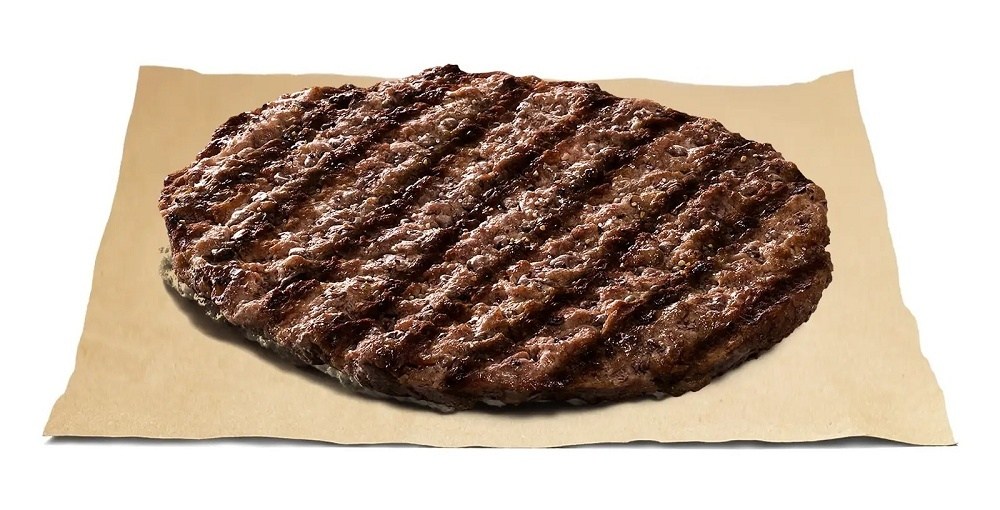
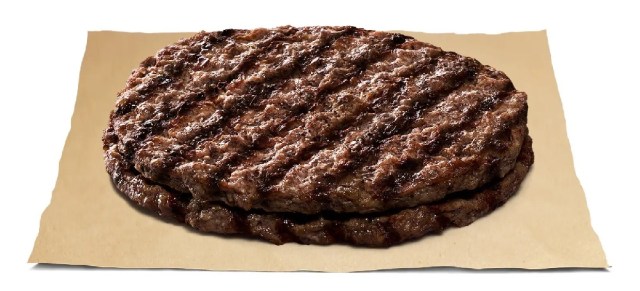
Enter the "On the Beef"—a menu item that is as linguistically baffling as it is culinarily minimalist. At its most fundamental level, the On the Beef is precisely what it sounds like: a single, salt-and-pepper-seasoned flame-broiled beef patty served entirely by itself. There is no bun, no crisp head of lettuce, no juicy tomato slice, no sliver of onion, and no melt of cheese. It is a solitary, naked hamburger patty presented on a plate or in a wrapper, available for purchase as a standalone item.
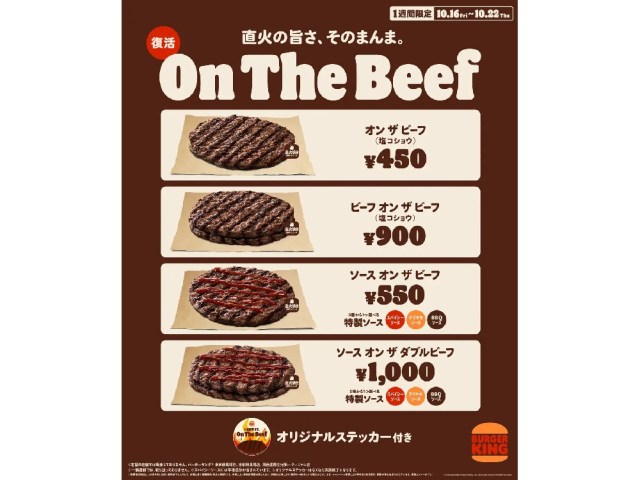
First returning to menus on October 16 for a remarkably brief, week-long engagement concluding on October 22, the On the Beef has quickly evolved into an irregular autumn tradition for Burger King Japan. While Western consumers might view a bun-less burger as a dietary compromise, a niche keto-friendly hack, or an outright corporate misfire, the item occupies a fascinating cultural and culinary middle ground in Japan. It bridges the gap between American fast-food heritage and the domestic ubiquity of standalone hamburger steaks (hambāgu).
This comprehensive report investigates the mechanics, marketing strategy, pricing models, and cultural implications of Burger King Japan’s most Spartan creation. Through detailed structural analysis, we explore why a fast-food giant is willingly selling its core product minus the very structural components that define a sandwich, and how Japanese consumers have embraced this unconventional delicacy.
Detailed Chronology and Menu Iterations
The genesis of the On the Beef stems from a desire by Burger King Japan to highlight the raw, unmasked quality of its signature beef patties. While special limited-time offerings often lean heavily on complex flavor profiles, the chain recognized a subset of consumers who wanted to experience the pure, flame-broiled taste of the beef used in its iconic Whopper line without the distraction of condiments or bread.
However, the rollout of the On the Beef lineup introduces a series of cascading naming conventions that border on the comedic.
The Core Lineup and Pricing Structure
-
The Base "On the Beef"
- Price: 450 yen (approximately US$2.85)
- Composition: A single standard Burger King beef patty, lightly seasoned with a dash of salt and pepper. Notably, even basic ketchup or house sauces are omitted from the standard build.
- The Catch: Despite costing 450 yen—making it technically more expensive than Burger King Japan’s baseline 360-yen cheeseburger—the patty utilized here is the larger-format variety associated with the Whopper line rather than the smaller patties used in budget items.
-
The "Sauce on the Beef"
- Price: 550 yen (approximately US$3.48)
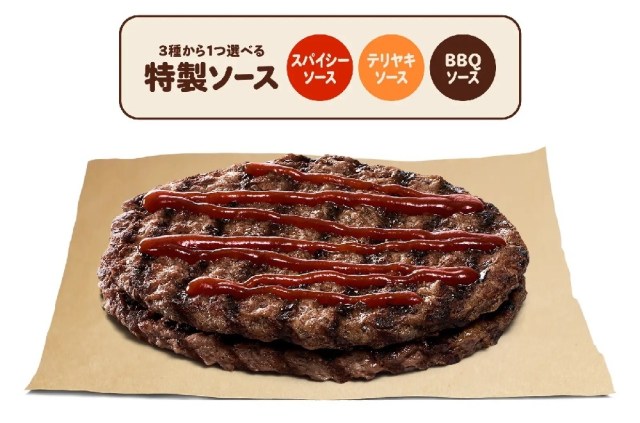
- Composition: For customers unwilling to consume their meat entirely dry, the chain offers specialized flavor profiles. Patrons can request a squirt of spicy tomato jalapeno sauce, smoky barbecue sauce, or traditional teriyaki sauce for an additional fee.
-
The "Beef on the Beef"
- Price: 900 yen (approximately US$5.70)
- Composition: Doubling down on the minimalism, this iteration stacks two salt-and-pepper-seasoned patties directly on top of one another, completely devoid of supporting ingredients or sauce.
-
The "Sauce on the Double Beef"
- Price: 1,000 yen (approximately US$6.33)
- Composition: The crown jewel of the Spartan menu, this top-of-the-line offering features two meat patties paired with the customer’s choice of signature sauce. (As food critics have wryly pointed out, linguistically speaking, this item might more accurately be termed the "Sauce on the Beef on the Beef.")
Promotional Perks and the 2026 Engagement Window
To sweeten the deal for adventurous diners willing to brave the counter service and order a plate of plain meat, Burger King Japan bundled a minor collectible incentive with the release: a custom sticker distributed with every On the Beef purchase, available strictly while supplies lasted.
The promotional window opened on October 16 and shuttered sharply on October 22. Yet, as culinary observers have noted, the fundamental spirit of the On the Beef remains indefinitely accessible to anyone willing to exercise basic deconstruction skills at any standard Burger King location worldwide.
Supporting Context & Metrics: Cultural Adaptation vs. Fast-Food Logic
To understand why the On the Beef does not cause an immediate revolt among Japanese consumers, one must examine the broader architecture of the Japanese food industry. In the West, the hamburger is inextricably linked to the sandwich format—the bun is the vessel, the structural integrity of the meal, and the psychological anchor of the fast-food experience.
In Japan, however, ground beef patties occupy a profoundly different cultural space through the enduring popularity of hambāgu (Japanese-style hamburger steak).
The Hambāgu Paradigm
Unlike the Western hamburger, which is almost exclusively consumed within a bun, hambāgu is a staple of family restaurants, school lunches, and home-cooked meals across Japan. It is frequently served plated alongside a melange of seasonal vegetables, accompanied by a side of white rice or sliced bread, integrated into bento boxed lunches, or ladled over a steaming bed of curry rice.
Because the concept of eating a hamburger patty independently of bread is deeply entrenched in the local culinary psyche, the psychological barrier of "where is the bun?" is significantly lower in Japan than it is in the United States or Europe. Supermarkets across the country regularly stock pre-made, ready-to-eat hamburger steaks designed to be warmed up and eaten with chopsticks or a fork.
The Fast-Food Disconnect
Despite this cultural predisposition toward standalone hamburger steaks, introducing the concept into a fast-food paradigm creates a unique logistical friction point.
- The Missing Accompaniments: When a consumer purchases a hambāgu at a family restaurant (famiresu) or a supermarket, it is part of a holistic meal strategy. It comes drenched in demi-glace, accompanied by corn, carrots, potatoes, and a carbohydrate source. Burger King, conversely, is structurally unequipped for this. The chain does not sell rice, curry, or side vegetables.
- DIY Dining: Patrons purchasing the On the Beef find themselves in possession of a lone, flame-broiled disc of meat. To transform it into a complete meal, diners are forced to improvise—either by preparing side dishes at home, cooking a batch of white rice to pair with their fast-food purchase, or treating the item as an ultra-low-carb, high-protein snack.
Financial Analysis: Cost Versus Value
From a purely economic perspective, evaluating the On the Beef requires careful arithmetic.
- The Cheeseburger Baseline: Burger King Japan’s standard cheeseburger retails for approximately 360 yen. By this metric, the On the Beef (at 450 yen) is visibly more expensive despite offering significantly less raw material (no bun, no cheese, no pickles, no ketchup, no mustard).
- The Whopper Comparison: However, when analyzed through the lens of patty quality, the narrative shifts. The On the Beef utilizes the larger, premium-grade beef patty found in Burger King’s flagship Whopper sandwiches, rather than the junior patties used in budget items. A standard Whopper starts at 690 yen. By purchasing an On the Beef for 450 yen, the consumer saves 240 yen by entirely jettisoning the bun, lettuce, tomato, mayonnaise, and onion components. For strict low-carb dieters or culinary purists looking to study the baseline flavor of Burger King’s flame-broiling process, the financial breakdown holds a strange, niche logic.
Official Statements and Corporate Strategy
Burger King Japan has historically leaned into eccentric, boundary-pushing marketing campaigns that generate viral chatter across social media platforms like X (formerly Twitter) and Instagram. Previous stunts—such as the "Pickleball Burgers" introduced earlier in the month of October—demonstrate the brand’s appetite for playful menu experimentation tailored specifically to the Japanese market.
In promotional materials released via PR Times, corporate representatives framed the On the Beef not as a bizarre joke, but as an exercise in culinary transparency. The official corporate stance emphasizes that the product is designed to provide customers with an unadulterated appreciation for the proprietary flame-broiling technique that defines the chain’s meat production.
By removing all variables—the sweetness of the bun, the acidity of the pickles, the tang of the ketchup—Burger King effectively invites its customer base to grade the core product on its own merits. It is a bold, almost audacious move in an industry where ingredients are traditionally used to mask or complement one another. Corporate communications positioned the limited-time offering as a seasonal treat for the true connoisseur of fast-food protein, playing on themes of exclusivity and autumnal indulgence.
Future Outlook: The Longevity of Minimalist Fast Food
As the October 22 expiration date for the On the Beef came and went, industry analysts are left pondering whether this specific brand of minimalist marketing will become a permanent fixture of Burger King Japan’s seasonal rotation, or if it will fade into the annals of fast-food trivia alongside other eccentric menu items.
The success of the On the Beef points to a broader, growing macro-trend within the global food and beverage sector: deconstruction and customization. Modern consumers increasingly demand agency over their food, whether through extreme ingredient tailoring, hyper-specific dietary alignment (such as keto, carnivore, and low-carb diets), or a desire to inspect the individual components of mass-produced meals.
Key Takeaways for the Industry
- The Power of Novelty Marketing: Even items that appear counterintuitive can generate massive earned media value. The sheer linguistic confusion of "On the Beef" guarantees digital engagement, reviews, and curiosity-driven purchases.
- Cross-Cultural Adaptability: Fast-food chains operating internationally must remain deeply attuned to local culinary idioms. An item that reads as an absurdity in Chicago or London can find a logical, culturally adjacent home in Tokyo due to pre-existing dietary habits like hambāgu.
- The Rise of Functional Protein: With the continued surge of high-protein, low-carbohydrate lifestyle choices, fast-food chains are increasingly challenged to offer items that bypass traditional grain-based delivery systems. While the On the Beef was marketed primarily as a novelty, it inadvertently serves the burgeoning fitness demographic looking for clean, accessible sources of grilled beef.
Ultimately, whether viewed as a stroke of genius, a depressing culinary exercise, or simply a brilliant PR stunt designed to capture fleeting internet attention, the On the Beef underscores Burger King Japan’s willingness to challenge convention. It proves that sometimes, less isn’t just more—less can be an entire headline-grabbing marketing strategy.







Belum ada komentar. Jadilah yang pertama berkomentar!