

Executive Overview
In an era defined by hyper-connectivity and frictionless digital communication, genuine artistic collaboration across vast geographical divides remains a formidable challenge. For Salt Lake City-based singer-songwriter and musician Josaleigh Pollett, however, collaboration is not merely a method of production; it is the lifeblood of their creative output. Since stepping onto the independent music scene with their 2017 debut album Strangers, Pollett has consistently thrived within collaborative ecosystems, seeking out kindred spirits to push the boundaries of their idiosyncratic bedroom pop sound.
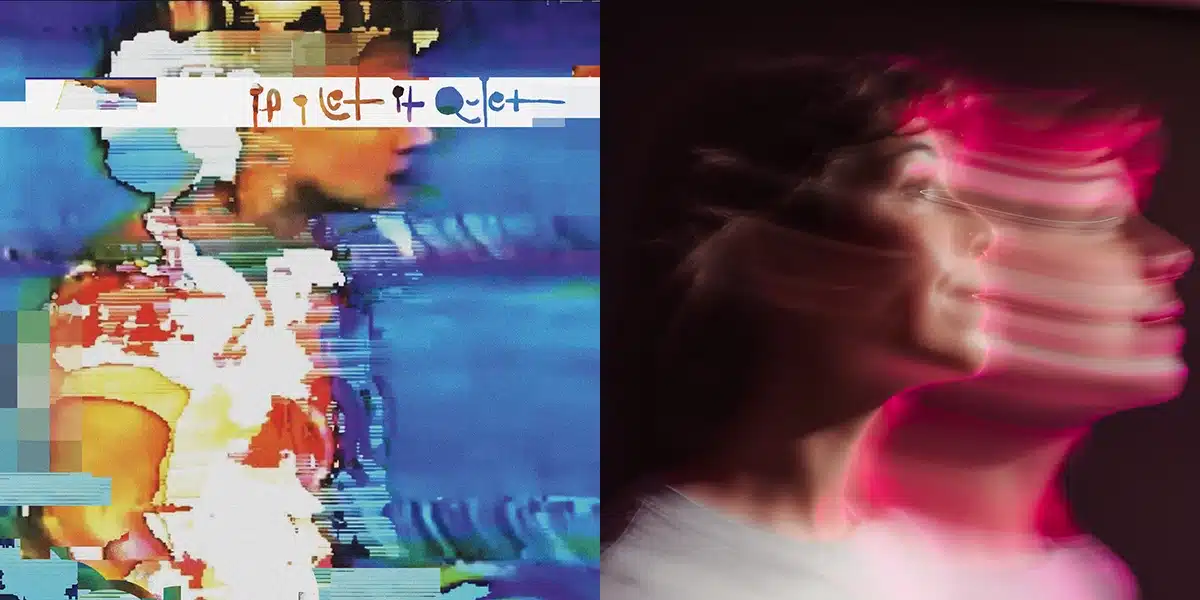
The crowning achievement of this ethos arrives with If I Let It Quiet, a transcontinental masterwork forged across thousands of miles between Utah and Japan. Partnering once again with close friend and long-term creative collaborator Jordan Watko—the mastermind behind Crowd Shy—Pollett has crafted a record that serves as both a triumph of remote studio engineering and an intimate exploration of emotional resonance. Joined by co-producer, engineer, and mixer Andrew Goldring, alongside a select ensemble of auxiliary musicians, the duo has engineered an album that defies the limitations of oceans and time zones.
Described by Pollett as "an exploration of what it takes to quiet the noise of geographical and emotional distance in order to hear ourselves and ones who see us," If I Let It Quiet stands as a defining statement in modern indie rock. It successfully synthesizes organic instrumentation with synthetic textures, resulting in a beautifully chaotic yet sharply focused sonic landscape. Drawing comparisons to the avant-garde domestic warmth of Wilco’s landmark Yankee Hotel Foxtrot, the album bridges gaps between raw vulnerability and top-shelf composition. This comprehensive review examines the genesis, execution, and thematic depth of one of the year’s most compelling musical releases.
Detailed Chronology: From Salt Lake City to Tokyo and Back
To truly understand the sonic architecture of If I Let It Quiet, one must trace the winding trajectory of Pollett and Watko’s creative partnership. The relationship took root shortly after the release of Pollett’s 2017 debut, Strangers. Bonding over shared artistic sensibilities and an affinity for textured, confessional songwriting, Pollett and Watko quickly established a symbiotic working dynamic.
This partnership yielded its first major fruits with the 2019 release of No Woman Is the Sea, a record that established the duo’s penchant for moody, atmospheric arrangements. However, it was the global upheaval of the COVID-19 pandemic that catalyzed their most intense period of collaboration. Living together as roommates during lockdown, Pollett and Watko channeled the claustrophobia and quiet introspection of the era into 2023’s In the Garden, By the Weeds, a critically praised home recording that showcased their ability to conjure vast emotional spaces out of domestic confines.
The momentum of In the Garden, By the Weeds tested its limits when Watko eventually relocated to Japan. For many creative partnerships, such a drastic geographical shift would spell the end of the line. Yet, the vastness of the Pacific Ocean proved insufficient to sever the creative bond between the two musicians. Pollett briefly branched out, collaborating with notable alternative acts such as Ekko Astral, phoneswithchords, and Icarus Phoenix, but the pull of the Watko collaboration remained irresistible.
Rather than allowing the distance to dissolve their partnership, Pollett and Watko embraced modern file-sharing technology and remote production techniques, setting the stage for If I Let It Quiet. To bridge the physical void, the duo enlisted Andrew Goldring to act as a crucial linchpin in the studio. Operating out of the physical recording space, Goldring served as co-producer, engineer, and mixer, while also contributing vital instrumentation on guitar, drums, and vocals. Bolstered by drummer Ken Vallejos and cellist Hal Jean, the project gained an essential physical anchor, allowing Pollett and Watko to focus entirely on honing their signature brand of cracked, intimate bedroom pop.
Supporting Context & Metrics: Deconstructing the Sound of If I Let It Quiet
The production ethos of If I Let It Quiet is defined by a delicate tension between the pristine and the degraded, the organic and the synthetic. According to promotional materials surrounding the release, Goldring’s presence in the studio was instrumental in "closing any gaps between oceans." By providing an extra set of hands on the ground, Goldring liberated Pollett and Watko to experiment wildly with textures without losing the thread of traditional songcraft.
Musically, the album sits comfortably within the lineage of avant-garde folk and textured bedroom pop. Reviewers and industry insiders have frequently reached for high-water marks to contextualize its sound, noting that listening to If I Let It Quiet is akin to experiencing a home-recorded, lo-fi iteration of Wilco’s monumental Yankee Hotel Foxtrot. The production is deliberately messy—fraught with analog warmth, tape hiss, and subtle glitches—yet it is meticulously framed by sophisticated arrangements and elite-tier performances.
The tracklist unfolds as a carefully curated psychological journey. The album opens with "Shed Piano, Birds," a brief, curious experimental field recording. Rather than offering a traditional melody, this idiosyncratic overture eases the listener into the album’s headspace, sliding effortlessly into the driving synths and acoustic guitars of "Cherry."
Lyrically, Pollett’s pen remains as sharp and unvarnished as ever. On "Cherry," they deliver striking imagery with deadpan precision:
"The blood’s not blood / It’s the juice from a cherry / And it hurt my mouth / Sucking stones, spitting empty."
Where "Cherry" operates as a moody, eloquent tone poem, the standout single "The Witness" evokes a full-band shimmer. Ken Vallejos’s sturdy, driving percussion locks in with Pollett’s vocals—which oscillate between natural deliveries and subtle vocal processing—while deep synth washes construct a multitextured atmospheric canopy.
The thematic core of the album is further illuminated by "Radio Player," a single released in October prior to the full album drop. Built upon beds of twitching, subtle noise, precise drum programming, and sweeping keyboard flourishes, the track serves as a masterclass in atmospheric tension. On their Bandcamp page, Pollett contextualized the song’s origins:
"It is a song about memory and fear, loosely based on seeing the movie Poltergeist at too young an age… it is a journey through the hallways of childhood that we leave a light on within."
This vulnerability is palpable in the song’s refrain:
"When I fell asleep, it was dark / Now a light is coming from the TV / I told you that I saw a ghost / I just need you to believe me."
Other standout cuts further enrich the album’s sonic palette. "Second Guesser" offers unmoored, anthemic balladry, bolstered by low-end, growling synth ebbs weaving through acoustic guitar strumming. The single "Like a River" chugs along with a low-key, buzzing midtempo groove, demonstrating the rhythm section’s ability to anchor Pollett’s drifting melodies. Meanwhile, the gorgeous ambient instrumental soundscape "Yasaka, Natsu" acts as a meditative bridge, transitioning seamlessly into the closing track, "Tacit." Beginning as a delicate, acoustic guitar-driven performance, "Tacit" gradually swells over time as layers of additional instruments and audio effects accumulate, providing a cathartic, lingering conclusion to the record.
Official Statements & Artistic Philosophy
At the heart of If I Let It Quiet is a profound philosophical inquiry into human connection, geography, and perception. In official statements accompanying the album’s release, Josaleigh Pollett elaborated on the overarching thematic framework that guided the writing and recording process:
"If I Let It Quiet is an exploration of what it takes to quiet the noise of geographical and emotional distance in order to hear ourselves and ones who see us."
This statement encapsulates the dual nature of the project. On a literal level, the "noise" refers to the logistical hurdles of collaborating across an ocean—the time-zone discrepancies, the delayed digital transfers, and the physical separation from a closest creative confidant. On a metaphorical level, however, the noise represents the internal anxiety, memory, and trauma that cloud human perception, themes explicitly explored in tracks like "Radio Player" and "Cherry."
Jordan Watko’s contributions, despite being channeled through digital infrastructure from across the Pacific, maintain the telepathic synergy that defined their previous collaborative efforts. Through the strategic utilization of Andrew Goldring’s engineering prowess, the collaborative trio managed to bypass the clinical detachment that often plagues modern remote recordings. Instead, If I Let It Quiet breathes with a living, pulsing warmth, proving that artistic chemistry is entirely immune to physical borders.
Future Outlook: The Evolution of Transcontinental Collaboration
As the music industry continues to adapt to decentralized models of creation, If I Let It Quiet establishes a compelling blueprint for how artists can maintain intimate, high-caliber collaborations across global distances. The success of the Pollett-Watko partnership demonstrates that physical displacement does not necessitate creative stagnation; rather, when paired with the right engineering talent and a shared artistic vision, distance can actually sharpen focus and yield unprecedented sonic innovation.
For Josaleigh Pollett, the release of If I Let It Quiet marks a pivotal milestone in an already distinguished career. By pushing their bedroom pop aesthetic into more experimental, texturally rich territory—without ever sacrificing the lyrical vulnerability that initially won over their fanbase—Pollett has cemented their status as a vital voice in contemporary independent music.
Looking forward, the critical acclaim greeting If I Let It Quiet signals a bright horizon for both Pollett and Watko, whether their future endeavors find them sharing a physical room once again or continuing to bend time zones across the Pacific. What remains certain is that as long as Pollett continues to seek out and nurture creative collaboration, the resulting music will demand our undivided attention.









Belum ada komentar. Jadilah yang pertama berkomentar!