

Executive Overview
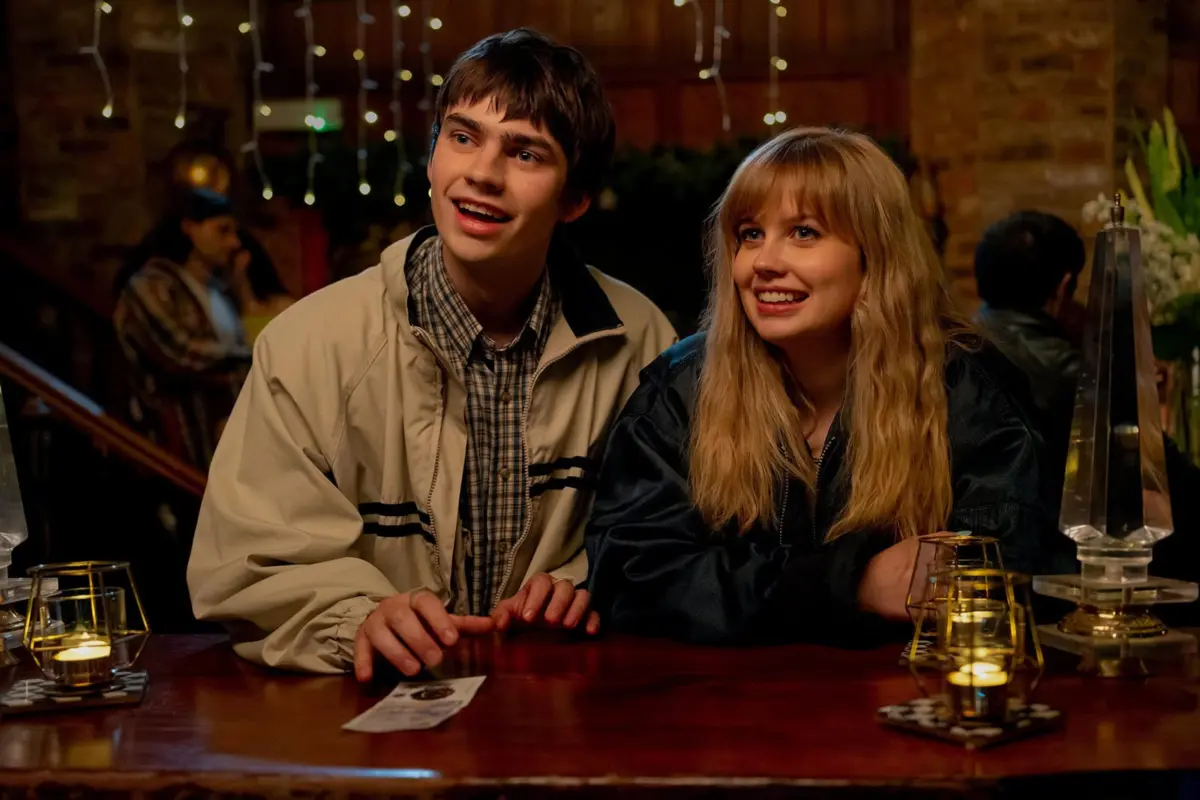
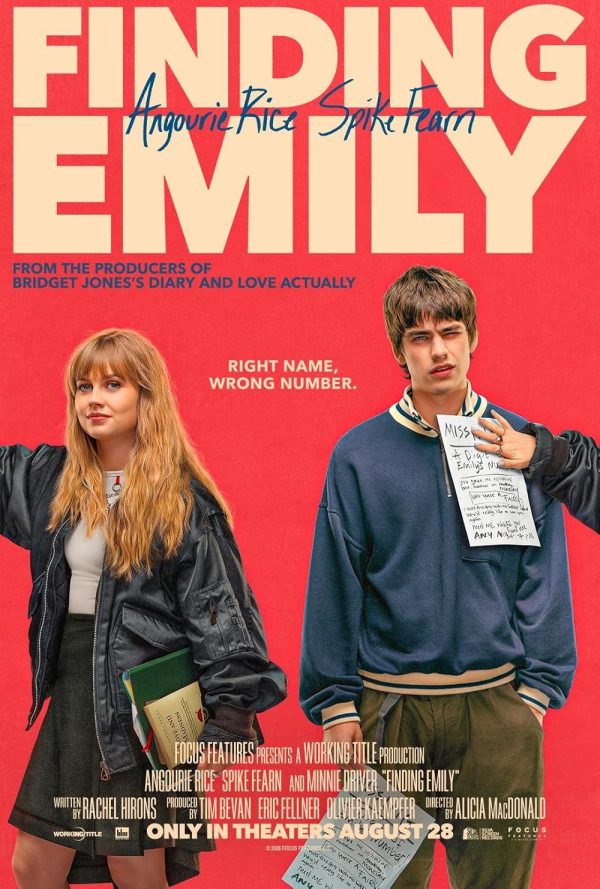
Transitioning from the highly scrutinized domains of television advertising and award-winning short-form cinema to the demanding arena of feature-length filmmaking is a formidable hurdle for any emerging auteur. Yet, director Alicia MacDonald navigates this career milestone with astonishing dexterity in her debut feature film, Finding Emily. A perceptive, witty, and intellectually curious romantic comedy, the film charts the misadventures of Owen—played by Spike Fearn—a young sound engineer and aspiring musician on a quest to track down a girl with whom he shared an immediate, electric connection at a party. The narrative catalyst is as frustrating as it is classic: an incorrectly transcribed phone number with a missing final digit.
What follows is not merely a conventional urban pursuit, but an intellectual and emotional exploration of human connection. Set against the atmospheric backdrop of Manchester University, Owen’s desperate search leads him to cross paths with another student named Emily—portrayed by Angourie Rice. A brilliant psychology major, this second Emily is currently testing a bold academic thesis: that romantic attachment is an outdated, ultimately self-destructive evolutionary anomaly. Recognizing Owen as the ideal living subject for her hypothesis, she integrates him into her academic study. In doing so, she blurs the boundaries of ethics and affection, occasionally treating him more like a laboratory specimen than a sentient partner in misadventure.
In this comprehensive interview conducted by Robert Kojder, MacDonald pulls back the curtain on the creative mechanics of her breakout feature. From transforming an actor into a credible musician through an intense three-week boot camp, to utilizing Carl Jung’s psychological frameworks to inform character dynamics, MacDonald articulates a distinct directorial vision. Blending the rhythmic sensibilities of musical editing with a profound appreciation for character agency, MacDonald proves herself to be a major new voice in contemporary cinematic storytelling.
Detailed Chronology: From Concept to Manchester
The genesis of Finding Emily underwent several geographical and structural evolutions before arriving on the damp, cinematic streets of Northern England. Originally conceived as a Los Angeles-based narrative, the script’s transition to the United Kingdom fundamentally altered its texture. Interestingly, MacDonald admits that she never actually read the original Los Angeles draft of the screenplay. By the time the project landed on her desk, the localization to Manchester had already been completed by the creative team.

This geographic shift proved serendipitous. Manchester’s distinct architectural character, institutional weight, and urban grit provided a grounded, lived-in reality that contrasted sharply with the sun-drenched clichés often associated with American rom-coms.
Once attached to the project, MacDonald faced a massive logistical and creative challenge regarding the film’s musical core. Spike Fearn, cast in the role of Owen, entered the production with no prior musical background. Recognizing that the character’s aspirations as a musician needed to feel completely authentic, MacDonald instituted a rigorous three-week training regimen.
"I just had absolute faith that he would [succeed]," MacDonald explained during the interview. "Now that you mentioned it, I didn’t even have a doubt. He had this amazing guitar teacher and a singing teacher, and he was so dedicated."
Through daily rehearsals and an unyielding boot camp, Fearn mastered the guitar and vocal performances required for the role, executing live musical sequences that anchor the emotional stakes of the film. This dedication extended to the film’s conclusion, which features an ambitious, music-video-style sequence over the end credits. Shot in a grueling half-day window against a backdrop of deteriorating weather conditions and sudden downpours, the sequence showcases MacDonald’s capacity to corral chaotic production realities into a cohesive, rhythmic cinematic statement.
Supporting Context & Metrics: The Mechanics of Modern Rom-Coms
Finding Emily occupies a rare space in contemporary cinema: a film that respects the conventions of the romantic comedy while subverting its tropes through intellectual engagement. Much of this success stems from MacDonald’s deliberate stylistic choices, particularly her approach to camera movement and actor framing.
Rather than relying on the traditional, hyper-fragmented coverage typical of modern studio comedies—which often cuts rapidly between close-ups to manufacture artificial energy—Macdonald favors the two-shot. By anchoring the camera in physical proximity to both Fearn and Rice, she allows their physical chemistry to dictate the scene’s rhythm.
[Audition Phase]
       │
       ▼
[Chemistry Testing] ──► (Observing physical dynamics in a shared two-shot)
       │
       ▼
[Principal Photography] ──► (Minimizing close-ups; prioritizing continuous spatial interaction)
       │
       ▼
[Editing Suite] ──► (Syncing narrative cuts to pre-planned musical rhythms)
This stylistic methodology was validated during the initial casting phase. Chemistry tests in romantic comedies are frequently described by filmmakers as a "dark art"—an abstract search for an intangible spark between two strangers. For MacDonald, the moment of clarity arrived the very first time she framed Fearn and Rice together within the same physical boundary. Their contrasting physicalities and acting styles complemented one another, establishing a visual baseline that guided the rest of the production.
Furthermore, the film’s integration of academic psychology elevates the narrative beyond standard boy-meets-girl territory. Angourie Rice’s character operates under a specific psychological thesis, prompting extensive academic preparation between the actor and director. Rather than relying on superficial character traits, MacDonald and Rice immersed themselves in the literature of feminist psychoanalyst Jessica Benjamin and social theorist bell hooks, alongside attending live university lectures on Jungian psychoanalysis in Manchester.

This intellectual rigor forms the bedrock of the film’s thematic exploration. By utilizing Carl Jung’s premise that a psychoanalyst can be fundamentally altered and impacted by their patient—a direct rejection of rigid Freudian detachment—MacDonald establishes a thematic parallel for the romantic entanglement at the center of the story. Rice’s character attempts maintain clinical objectivity, yet she is inevitably transformed by her subject.
Official Statements & Directorial Influences
The artistic DNA of Finding Emily draws heavily from cinematic mentors and genre peers, though often through unconventional trajectories. When reviewers and audiences noted stylistic similarities between her debut and the work of Irish filmmaker John Carney—renowned for music-centric narratives like Once, Begin Again, and Sing Street—Macdonald confessed a surprising truth: she had not yet seen Sing Street during the production of her film.
"I watched it recently, and I’d never seen it before," MacDonald noted regarding Carney’s acclaimed musical drama. "A lot of people had said, ‘Oh, it reminds me of Sing Street. It’s got that kind of tone.’ And I watched it and was like, ‘Yeah, I see that.’ It’s just such a gorgeous film. I think his career is so interesting because his music is always such a big part of his films, and I think having done this, music will always be a really big part of my films too."
Beyond contemporary influences, MacDonald’s transition from the visual arts to feature directing was deeply shaped by her time working under legendary British filmmaker Mike Leigh. Initially operating within the realm of production design and serving briefly as Leigh’s personal assistant on Mr. Turner, MacDonald witnessed firsthand an auteurist approach to actor direction that permanently altered her career aspirations.

"Working for Mike and watching his process was really inspiring… I think particularly the way he works with actors; he’s unafraid of them, and I think that really taught me to be unafraid of them too and to use them. They’re wonderful."
This mentorship culminated in a poignant full-circle moment during the UK publicity campaign for Finding Emily, when Leigh agreed to conduct an official interview with his former production assistant turned feature director—an experience MacDonald describes as the highlight of the release phase.
Future Outlook: The Ethos of the Modern Romantic Gesture
As Finding Emily secures its position as a critical darling of the release calendar, conversations naturally turn toward the broader cultural message of the film and MacDonald’s trajectory within the industry.
In an era defined by digital detachment, hyper-curated online personas, and the erosion of spontaneous public interaction, Finding Emily serves as an unapologetic defense of the "yearner"—the hopeless romantic willing to execute grand, vulnerable gestures. MacDonald’s artistic philosophy is rooted in a pragmatic existentialism: time is finite, and human connection requires active, unshielded participation.

+--------------------------------------------------------------------------+
|                      THE DIRECTOR'S MANIFESTO                            |
|                                                                          |
|  1. Embrace Vulnerability: Reject digital detachment in favor of direct  |
|     human confrontation and communication.                               |
|                                                                          |
|  2. Honor Actor Agency: Create collaborative environments where physical |
|     chemistry and spatial performance supersede rigid cutting.           |
|                                                                          |
|  3. Integrate Sound and Vision: Use musical rhythms not as background    |
|     accompaniment, but as structural pillars for editing and pacing.      |
+--------------------------------------------------------------------------+
When discussing the moral ambiguity of her characters—such as Emily sharing Owen’s personal emails, an action that leads to complications on a public podcast—Macdonald fiercely defends her protagonist’s agency while acknowledging human fallibility.
"She does give him the emails, but it’s still his choice to… appear on the podcast," MacDonald clarified. "He has agency here… He’s a human being in the world, and he has to learn as well."
By refusing to paint her characters as flawless archetypes, MacDonald preserves their realism, ensuring they remain deeply endearing despite their questionable choices. With Finding Emily, Alicia MacDonald has not only delivered one of the most refreshing romantic comedies of recent years, but has also established a creative blueprint defined by rigorous actor collaboration, deep psychological framing, and an unwavering belief in the power of human connection. As she looks toward her next cinematic endeavor, audiences and critics alike will be watching closely to see how she applies her distinct sonic and visual grammar to new storytelling frontiers.




Belum ada komentar. Jadilah yang pertama berkomentar!