


Executive Overview
As the global media ecosystem undergoes a radical, irreversible transformation, public service broadcasting faces an existential imperative: adapt or become obsolete. In an era dominated by hyper-personalized algorithmic feeds, frictionless on-demand streaming, and the rapid commodification of digital culture, traditional broadcasting models are being rewritten from the ground up. At the vanguard of this paradigm shift is Japan’s public broadcaster, Nippon Hoso Kyokai (NHK).
With its ambitious 2026 strategic roadmap—spearheaded by landmark programming initiatives and innovative cross-platform distribution models—NHK is redefining what it means to be a public media institution in the twenty-first century. This comprehensive report explores the structural changes, technological integrations, philosophical debates, and future horizons shaping NHK’s sweeping new vision.
By analyzing the broadcaster’s recent shifts toward digital-first delivery, its delicate balancing act between universal accessibility and niche personalization, and its evolving relationship with a rapidly changing audience, this article provides an authoritative investigative overview of NHK’s strategic evolution in 2026.
Detailed Chronology: The Road to 2026
The institutional pivot currently being executed by NHK did not occur overnight. It represents the culmination of years of calculated structural adjustments, legislative reviews, and digital prototyping. Understanding the gravity of NHK’s 2026 framework requires a rigorous examination of the timeline that brought the broadcaster to this critical juncture.
Phase 1: The Post-Pandemic Acceleration (2021–2023)
In the wake of global disruptions caused by the COVID-19 pandemic, consumer behavior shifted permanently toward digital consumption. Traditional television viewing metrics saw structural declines, particularly among younger demographics (ages 12–34), who increasingly favored subscription video-on-demand (SVOD) platforms and user-generated content ecosystems.

During this initial window, NHK leadership recognized that linear broadcasting alone could no longer secure the institution’s relevance or financial sustainability under the traditional receiving fee system (受信料, Jushinryo). Early experiments with simultaneous internet streaming via NHK Plus laid the technical groundwork, yet institutional inertia and regulatory constraints hampered sweeping transformations.
Phase 2: Regulatory Modernization and Digital Mandates (2024–2025)
By 2024, pressure from the Japanese government and internal advisory boards culminated in formal mandates requiring public media to treat internet distribution as an essential, co-equal service alongside terrestrial broadcasting.
- The Revision of Broadcasting Standards: Legislative adjustments allowed NHK to expand its digital footprint more aggressively, paving the way for targeted content delivery without abandoning its core public service obligations.
- Algorithmic Integration: NHK began deploying sophisticated, privacy-compliant recommendation engines on its digital platforms, moving away from a one-size-fits-all programming schedule toward dynamic, user-tailored content curation.
- Internal Restructuring: Departments traditionally siloed into "TV production" and "Radio operations" were systematically merged into unified audio-visual content divisions, streamlining workflows to maximize multi-platform output.
Phase 3: The 2026 Paradigm Implementation
Entering 2026, NHK officially rolled out its comprehensive audio-visual programming overhaul. The strategy is characterized by three core pillars:
- Decoupling from Linear Dependency: Content is no longer conceived merely as a "program for a specific timeslot," but as modular intellectual property designed to circulate fluidly across linear channels, catch-up portals, and social media micro-clips.
- Hyper-Segmentation and Niche Empowerment: Recognizing that a unified national audience is a relic of the past, NHK has developed targeted verticals catering to sub-cultures, regional identities, and specialized interest groups that were historically underserved by broad-net broadcasting.
- Ecosystem Synergy: Deep integrations with third-party tech platforms, podcast networks, and educational app ecosystems ensure that NHK content meets users wherever they consume media.
Supporting Context & Metrics: Navigating the Digital Transition
To fully appreciate the magnitude of NHK’s 2026 strategy, one must analyze the quantitative and qualitative data driving these institutional reforms. Public media funding models face distinct pressures globally, and Japan is no exception.
The Receiver Fee (Jushinryo) Conundrum
For decades, NHK’s financial bedrock has been the Jushinryo—a legally mandated fee collected from households equipped with television receivers. However, as younger generations increasingly live in households without traditional television sets (relying instead on smartphones, tablets, and laptops for all media consumption), the traditional collection model has faced severe erosion.

[Traditional Household Setup] ---> Decline in TV Ownership among Gen Z/Millennials
                                        │
                                        ▼
[Digital-First Consumption]  ---> Erosion of Traditional Jushinryo Base
                                        │
                                        ▼
[2026 NHK Strategic Pivot]   ---> Universal Digital Access & Multi-Platform Monetization
Recent internal metrics indicate a steady, multi-year contraction in linear-only households. Conversely, active users on NHK’s digital streaming extensions have expanded exponentially. This divergence forms the statistical justification for the 2026 pivot: NHK is aggressively shifting its resource allocation from legacy infrastructure maintenance toward cloud-based content delivery, artificial intelligence-driven translation and accessibility tools, and interactive digital interfaces.
Audience Fragmentation and Demographic Shifts
Data from audience research divisions highlight a stark generational divide:
- Older Demographics (Ages 65+): Remain highly loyal to linear terrestrial broadcasting, valuing its reliability, emergency broadcast integration, and familiar presentation styles.
- Core Working Age (Ages 35–64): Exhibit hybrid consumption habits, heavily utilizing catch-up services (見逃し配信, Minogashi Haishin) during evening and weekend hours.
- Digital Natives (Ages 12–34): Demonstrate near-total reliance on algorithmic discovery, short-form video snippets, and on-demand audio podcasts. For this cohort, traditional linear scheduling is virtually non-existent.
In response, NHK’s 2026 programming matrix does not attempt to force these disparate groups into a single viewing experience. Instead, it deploys a dual-track architecture: robust, authoritative linear programming designed for public safety and broad community cohesion, running parallel to agile, highly modular, digitally native content streams designed for viral distribution and individual engagement.
Official Statements and Institutional Perspectives
The rollout of the 2026 programming strategy has generated intense debate among media scholars, government regulators, and NHK executives. Below is a synthesis of official viewpoints and critical discourse surrounding the transformation.
Executive Leadership: Embracing the "Public Media Ecosystem"
In recent policy addresses, NHK’s senior directorate emphasized that public service broadcasting can no longer afford to remain a passive medium.
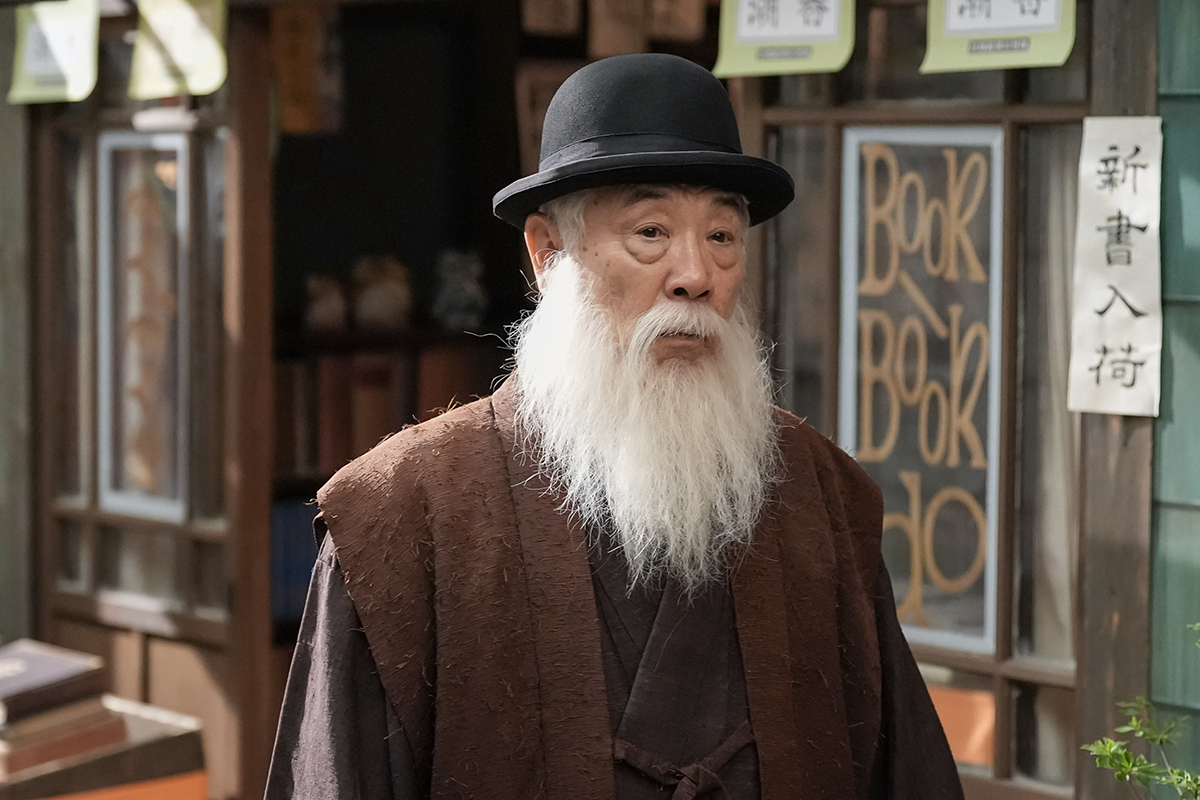
"Our mission is not merely to broadcast into the ether, but to serve as an indispensable cognitive anchor in an era of digital noise and information overload," noted a senior programming executive during the 2026 strategic unveiling. "If the public migrates to digital spaces, public service media must build its fortress within those exact same spaces. We must be rigorous, accessible, and radically flexible without compromising our editorial independence."
Leadership has repeatedly stressed that the transition to digital-first workflows is not an abandonment of traditional broadcasting, but an evolution. By utilizing advanced data analytics—while strictly adhering to privacy safeguards—NHK aims to understand audience needs more granularly, ensuring that educational, cultural, and journalistic resources reach marginalized or specialized communities that terrestrial schedules could never adequately accommodate.
Internal Labor and Editorial Concerns
The transformation has not been without internal friction. Representatives from broadcasting labor unions and editorial staff have voiced nuanced concerns regarding the rapid pace of digital restructuring:
- Workforce Strain: The demand for multi-platform content creation—simultaneously producing long-form investigative documentaries, digestible social media clips, interactive web articles, and audio podcasts—has placed unprecedented pressure on production staff.
- Maintaining Editorial Rigor: Editors have raised questions about whether the relentless pursuit of engagement metrics and algorithmic optimization might inadvertently compromise the depth and nuance required for complex journalistic investigations.
- The Commercialization Creep: Critics within and outside the institution watch closely to ensure that collaborations with global tech platforms and digital distribution networks do not introduce commercial pressures that could dilute NHK’s strictly non-commercial, public-interest mandate.
Despite these internal deliberations, a consensus has emerged: standing still is far riskier than navigating the turbulent waters of digital transformation.
Future Outlook: The Next Decade of Public Broadcasting
As we look beyond the immediate implementation of the 2026 roadmap, several critical questions define the trajectory of NHK and, by extension, the broader landscape of global public service media.

1. The Sustainability of Funding Models
The most pressing long-term challenge remains economic. As the legal definition of a "receiver" evolves in an era of ubiquitous mobile internet, Japan’s legislative bodies will inevitably have to revisit the framework governing public media funding. Whether this will lead to a universal digital levy, device-agnostic subscription models, or direct state funding remains a subject of fierce legislative debate. NHK’s performance and public trust ratings throughout 2026 will heavily influence these policy decisions.
2. Artificial Intelligence and Personalization
Looking toward 2030, NHK is investing heavily in AI-driven localization and accessibility technologies. Future iterations of NHK’s digital platforms are projected to feature real-time sign language generation, automated multi-lingual translation for inbound and outbound content, and hyper-personalized news summaries tailored to an individual’s civic interests and reading comprehension level. However, balancing hyper-personalization with the traditional public service goal of exposing citizens to diverse, unexpected viewpoints will require meticulous algorithmic governance.
3. Preserving the Civic Core
Ultimately, NHK’s 2026 strategy serves as a stress test for the viability of public media in the digital age. In a global media market increasingly fractured by polarization, misinformation, and sensationalism, the ultimate value proposition of a public broadcaster lies in its unwavering commitment to verified truth, cultural preservation, and democratic discourse.
By successfully bridging the gap between traditional broadcasting heritage and cutting-edge digital delivery, NHK is attempting to prove that public service media is not an antiquated relic of the twentieth century, but an indispensable navigational tool for the complex societies of the future. The success or failure of the 2026 initiative will undoubtedly serve as a global benchmark for public broadcasters worldwide as they chart their own courses through the digital frontier.
For further reading and official updates on NHK’s ongoing programming evolution, consult the NHK Corporate Information Portal.






Belum ada komentar. Jadilah yang pertama berkomentar!