For decades, the Massive Multiplayer Online (MMO) genre has marched relentlessly toward maximalist efficiency. Modern powerhouses like World of Warcraft function with the cold precision of industrial engines. They are meticulously calibrated machines designed to eliminate friction, respect the player’s time, and funnel users from one quantifiable gear-score milestone to the next through rapid-fire weekly directives and automated queue systems.
Yet, a growing undercurrent of industry commentary and player exhaustion points to a profound paradox: in perfecting the mechanics of play, modern MMOs have frequently stripped away the magic of dwelling within a virtual world.
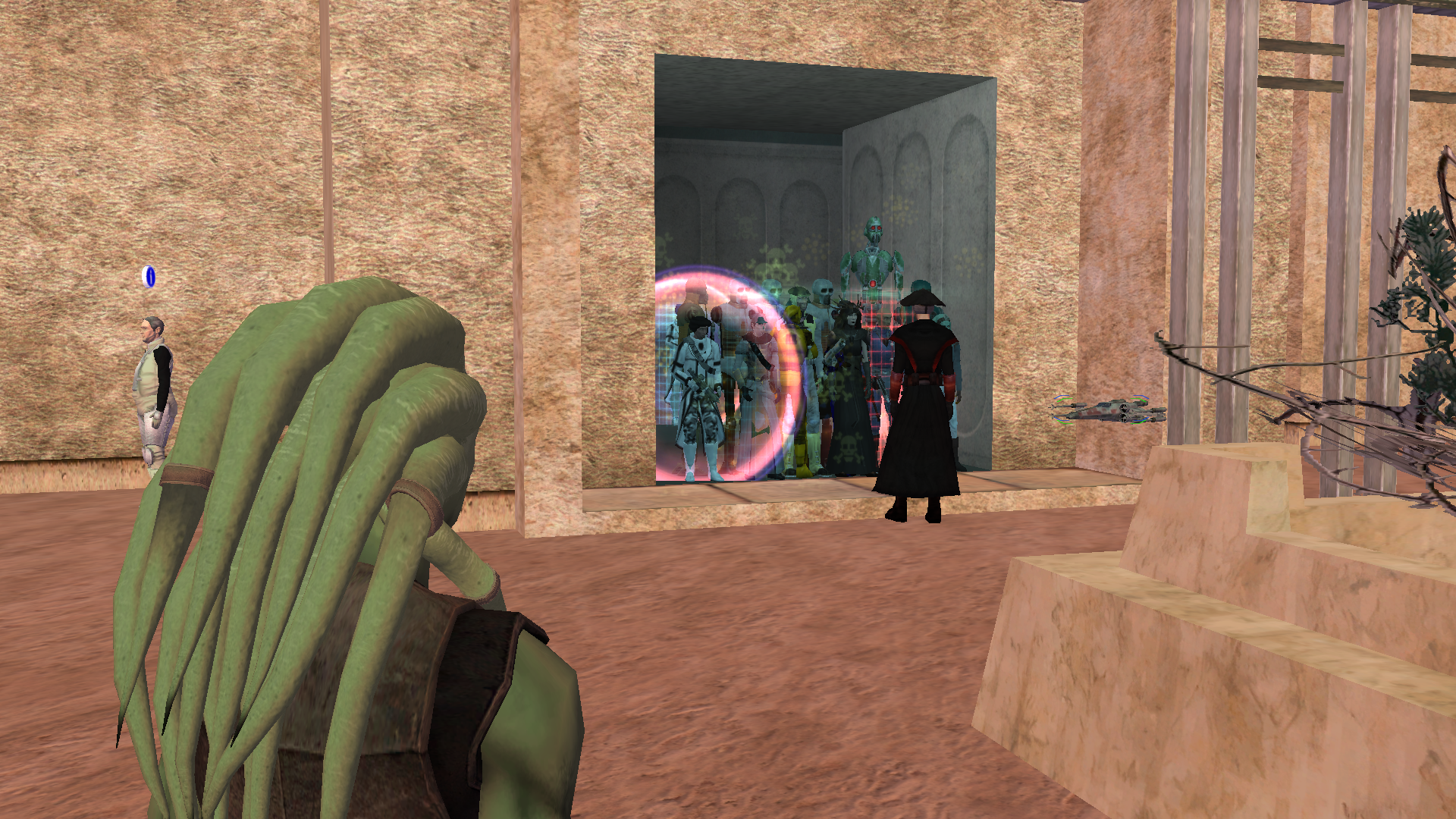
To understand what has been lost, one must step backward—way backward—into the digital ruins of a galaxy far, far away. In community columns such as PC Gamer’s Terminally Online, writers revisiting bygone digital spaces like Star Wars Galaxies (SWG) report a startling realization. Released by LucasArts in 2003, shuttered in 2011, and kept alive today through dedicated community-run private servers, SWG represents an entirely different philosophy of virtual space. It is a game content to let players accomplish nothing of structural importance, offering no gleaming gear treadmills, yet succeeding brilliantly in fostering a living, breathing digital society. This investigative analysis explores the architectural shift from the "living worlds" of early-2000s MMOs to the "theme-park efficiency" of contemporary design, examining what today’s developers can learn from the ghosts of virtual worlds past.
Detailed Chronology: The Rise, Fall, and Resurrection of Star Wars Galaxies
The Ambition of 2003
When Star Wars Galaxies: An Empire Divided launched in June 2003, it arrived with a staggering level of ambition. Developed by Sony Online Entertainment (SOE) in partnership with LucasArts, SWG was not structured around traditional character classes or linear questlines. Instead, it offered a sandbox playground where players could forge entirely unique identities.
You could choose to be a bounty hunter tracking real players across planets, a doctor healing fatigue in a cantina, a master artisan running a crafting empire, or—for those who endured an infamously arduous, secret unlock process—a Jedi. The game mapped out vast, seamless planets like Tatooine, Naboo, and Corellia without loading screens, empowering players to erect cities, establish economies, and alter the literal geography of the frontier.
The Controversies and the NGE
SWG’s history was notoriously turbulent. The game suffered from severe launch bugs, complex mechanics that alienated casual users, and a holy grail class system that baffled many. However, the true turning point arrived in late 2005 with the implementation of the New Game Enhancements (NGE).
In a panicked bid to capture the mainstream, theme-park audience popularized by World of Warcraft, SOE overhauled the game overnight. They discarded the deep, multi-tiered proficiencies in favor of standard, fast-paced action classes, instantly alienating the core sandbox community. Though subsequent years saw valiant efforts to restore some of the game’s depth, the damage was done. On December 15, 2011, the official servers were permanently powered down, ending an era of open-ended space-faring.
The Private Server Renaissance
The story of SWG did not end in 2011. Like many foundational MMOs, its passing catalyzed a passionate preservation movement. Over the subsequent decade, a network of independent engineers, reverse-engineers, and nostalgic fans poured thousands of hours into establishing robust private server projects—most notably SWG Restoration and SWGemu.
Operating in legal grey areas but fueled by preservationist zeal, these communities reconstructed pre-NGE builds from archival code and client packets. Today, logging into one of these passion projects reveals a surreal phenomenon: thriving digital ghost towns populated by veteran players and curious newcomers alike, proving that the appetite for unhurried, player-driven sandbox spaces remains entirely unquenched.
Supporting Context & Metrics: The Efficiency Trap vs. The Wonder of Friction
To evaluate the philosophical divide between past and present virtual worlds, it is helpful to contrast the structural metrics of a 2003 sandbox with a 2026 theme-park MMO.
Design Metric
Early Sandbox MMOs (Star Wars Galaxies)
Modern Theme-Park MMOs (World of Warcraft)
Primary Incentive
Social immersion, emergent roleplay, economy building.
In modern MMO design, "wasted time" is viewed as a cardinal sin. If a player spends ten minutes walking across a zone without encountering a combat encounter or receiving experience points, developers worry engagement metrics will plummet.
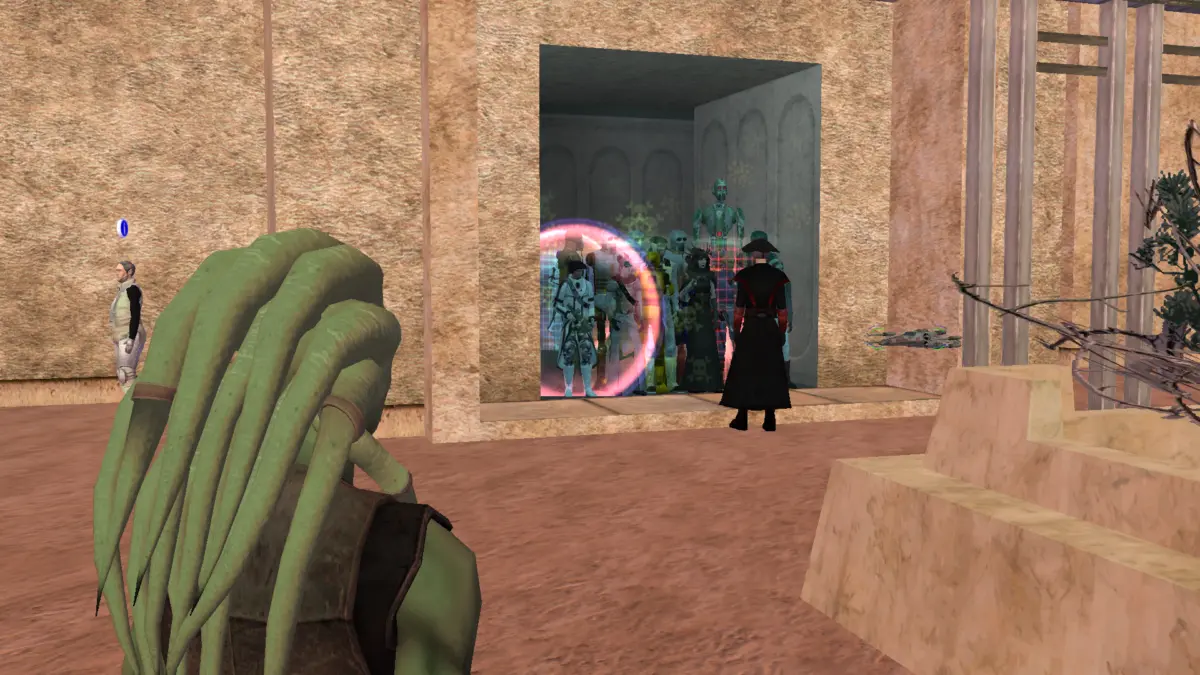
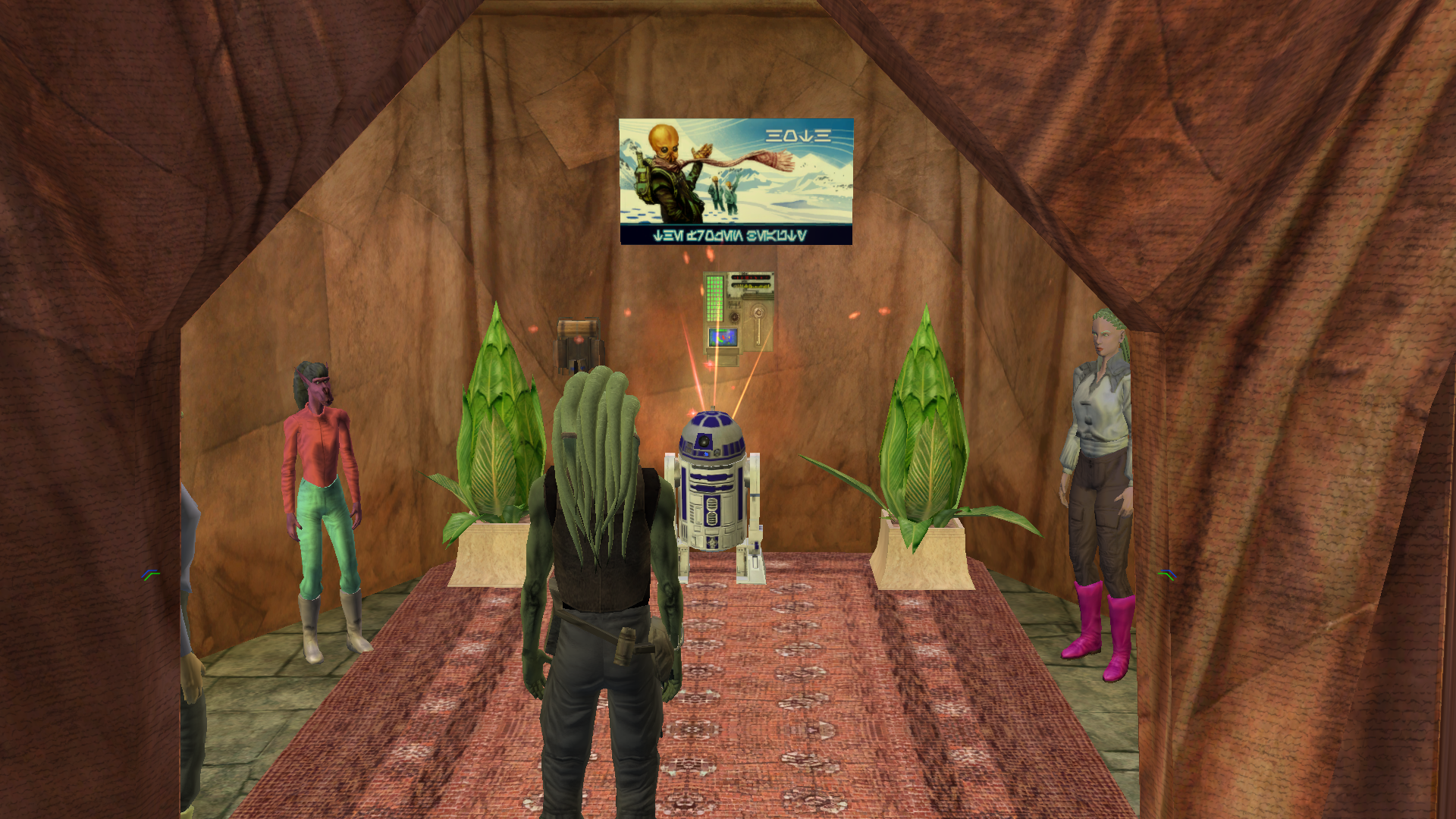
Yet, as critics and veteran players frequently note, it is precisely within those unscripted, frictionless spaces that memorable emergent gameplay occurs. In Star Wars Galaxies, wandering across the dunes of Tatooine without a waypoint marker transforms a mundane journey into an atmospheric experience. Hearing the distant roar of a speeder bike carrying a bounty hunter on grim business, or stumbling upon an abandoned, player-constructed village complete with dormant droid stalls and weathered tents, instills a distinct sense of history.
These incidental encounters cannot be procedurally generated or injected via a seasonal roadmap; they require a persistent canvas where players are permitted to simply exist.
Official Statements & Industry Perspectives
The dichotomy between systemic simulation and modern optimization has long been a subject of debate among game designers and industry veterans.
Raph Koster, the lead designer of Star Wars Galaxies, has frequently spoken about the design philosophies that governed early-2000s virtual worlds. In various post-mortems and design retrospectives, Koster emphasized that a true virtual world must prioritize ecology, economy, and player agency over authored narrative rails:
"When you build a theme park, you are building a ride. When you build a sandbox, you are providing the sandbox, the bucket, and the shovel, and you are stepping back to see what the children build. The hardest part for modern developers is trusting the players enough to let them build something boring—or even something destructive—because that freedom is the exact prerequisite for building something truly magical."
Conversely, current market leads in the MMO space point to player retention data and demographic shifts to justify streamlined progression. Modern audiences, burdened by real-world time constraints, often demand predictable loops that respect their limited leisure hours. As one prominent contemporary MMO producer noted anonymously during a recent industry roundtable:
"Nostalgia often paints early design choices as romantic, but we have to look at churn rates. If a player logs in and spends three hours accomplishing nothing tangible due to lack of direction, modern metrics show they simply cancel their subscription and move on to a battle royale or single-player RPG. Efficiency isn’t an artistic choice; it’s an economic necessity for survival in a crowded market."
Future Outlook: Can the Two Worlds Merge?
As we look toward the future of persistent online spaces—spanning traditional MMORPGs, survival crafting games, and emergent metaverse platforms—the tension between structured content and sandbox freedom remains unresolved.
While mega-corporations continue to refine the theme-park model for maximum engagement and monetization, a counter-cultural movement is brewing. The enduring popularity of SWG private servers, alongside the breakout success of deep systemic sandboxes like EVE Online, Project Gorgon, and complex survival titles, demonstrates that a significant cohort of players actively rejects the seasonal treadmill.
The challenge for the next generation of MMO architects will not be how to render higher-polygon models or process faster zone transitions, but how to reintroduce friction and wonder. If developers can find a way to merge the accessibility of modern quality-of-life features with the unscripted, player-driven agency of early digital ecosystems, the genre might finally escape its own ghost towns and build something genuinely revolutionary for the decades to come.







Belum ada komentar. Jadilah yang pertama berkomentar!