The global gaming community’s gaze has firmly shifted toward Cologne, Germany, as the sprawling exhibition halls of Gamescom 2026 open their doors to showcase the vanguard of interactive entertainment. Among the most talked-about titles captivating both critics and attendees alike is Helcast, an ambitious psychological thriller developed by indie powerhouse Ricpau Studios. Distributed in partnership with cutting-edge publisher HYPER REAL, Helcast stands out not merely as a visually striking entry in the psychological horror genre, but as a deeply atmospheric descent into madness, grief, and moral ambiguity.
Scheduled for a commercial release on PC (via Steam) in the first quarter of 2027, Helcast made a profound impact during its Gamescom showcase. The developer and publisher tandem delivered haunting new gameplay footage, atmospheric trailers, and hands-on developer demonstrations that left industry insiders questioning the boundaries of psychological storytelling in video games.
This article provides an exhaustive, journalistic exploration of Helcast. Drawing from exclusive developer insights, Gamescom presentation metrics, and structural analyses of the game’s core mechanics, we delve deep into what makes Helcast one of the most anticipated indie titles of the coming decade.
Detailed Chronology of the Helcast Reveal at Gamescom 2026
The journey of Helcast from a conceptual indie project to a marquee title at the world’s largest gaming convention has been meticulously managed by Ricpau Studios and publisher HYPER REAL. While early murmurs of the project began circulating within closed-door industry circles late last year, Gamescom 2026 served as the definitive global stage for its grand unveiling.
The Buildup and Press Briefings
In the days leading up to the public opening of Gamescom 2026, HYPER REAL hosted a series of exclusive media briefings for select gaming journalists and industry analysts. These intimate sessions were designed to set the tone for the experience, utilizing low lighting, ambient soundscapes, and focused presentations that mirrored the bleak, oppressive atmosphere of the game itself.
Rather than relying on fast-paced action reels or explosive cinematic trailers, the presentation focused on the slow burn of psychological tension. Attendees were walked through atmospheric trailers that highlighted the game’s signature visual motif: "The Shadow," a recurring thematic element that mirrors the protagonist’s inner demons and repressed memories.
As the convention halls opened to the public, the Helcast booth became an instant focal point. Long queues formed hours before the exhibition floor opened, driven by social media buzz and word-of-mouth praise from early press attendees. Ricpau Studios crafted a specialized, enclosed demo booth that isolated players from the chaotic sounds of the convention floor, plunging them directly into the eerie, isolated world of the game.
The demo, while brief, offered a masterclass in tension-building. Players assumed the role of an unnamed protagonist navigating decaying industrial landscapes, dilapidated apartments, and shifting corridors where reality bends under the weight of psychological trauma. The reaction from the public was overwhelmingly positive, with many praising the tactile nature of the puzzle-solving and the seamless blending of narrative exposition with environmental design.
Gameplay Mechanics, Atmosphere, and Structural Design
At its core, Helcast is structured as a narrative-driven psychological thriller that prioritizes mood, exploration, and psychological puzzle-solving over traditional combat. Ricpau Studios has engineered an experience where the environment itself acts as an antagonist, reacting dynamically to the player’s psychological state.
Environmental Storytelling and Exploration
The gameplay loop of Helcast revolves heavily around investigation, information gathering, and atmospheric exploration. Players find themselves navigating labyrinthine spaces—ranging from cramped, decaying urban apartments to vast, echoing industrial complexes that feel as though they were abandoned decades ago.
What sets Helcast apart from standard walking simulators is its approach to environmental responsiveness. As the protagonist uncovers more unsettling truths about their past, the game world subtly shifts. Doors that were once unlocked may suddenly lead to entirely different rooms; corridors loop back onto themselves in impossible geometries; and auditory hallucinations begin to distort the player’s perception of distance and time.
Puzzle Design and Psychological Mechanics
Puzzles within Helcast are deeply intertwined with the overarching narrative. Rather than relying on abstract item-combination puzzles typical of classic adventure games, Helcast forces players to parse through emotional clues, diary entries, audio logs, and environmental debris.
The Memory Reclamation System: Players must collect fragmented memories scattered throughout the environment. These fragments can be reassembled to alter the protagonist’s perception of reality, opening up new paths or exposing hidden truths about past traumas.
Sanity and Focus Mechanics: The game features a dynamic focus mechanic. Staring directly into anomalies or lingering too long in oppressive environments drains the protagonist’s mental fortitude, leading to visual distortions, distorted audio cues, and increased vulnerability to environmental hazards.
Non-Euclidean Level Design: Utilizing advanced rendering techniques, Helcast frequently alters spatial layouts behind the player’s back, creating a persistent sense of disorientation and paranoia. Players cannot rely on standard mapping techniques; instead, they must pay close attention to auditory cues and subtle visual indicators to navigate safely.
Supporting Context, Metrics, and Market Position
The partnership between Ricpau Studios and HYPER REAL represents a strategic alignment within the independent games sector. HYPER REAL, known for championing atmospheric, narrative-heavy, and artistically daring titles, has found a flagship project in Helcast.
Industry Positioning and Target Audience
The psychological horror and thriller genres have experienced a massive resurgence over the past several years, driven by a mature gaming demographic that hungers for narrative depth, philosophical inquiry, and emotional resonance. Helcast sits squarely at the intersection of high-art cinema and interactive media.
Market analysts at Gamescom noted that the demographic interest in Helcast spans a wide range—from hardcore survival horror enthusiasts to fans of narrative-driven indie masterpieces like Silent Hill, Alan Wake, and Layers of Fear. The game’s ability to generate intense word-of-mouth buzz during a convention dominated by AAA blockbusters underscores the growing appetite for distinctive, auteur-driven indie projects.
Technical Ambitions
Running on modern PC hardware via Steam, Helcast leverages advanced lighting engines, binaural 3D audio design, and photogrammetry-based asset creation to achieve an unprecedented level of realism. The development team has placed a heavy emphasis on optimization, ensuring that the suffocating atmosphere translates effectively across a wide range of PC configurations without sacrificing visual fidelity.
Official Statements and Developer Insights
During the Gamescom 2026 press events, key members of the development and publishing teams shared their visions for the project, emphasizing the emotional core that anchors the horror elements.
"With Helcast, we didn’t want to rely on cheap jump scares or gratuitous violence," noted the lead director during a closed-door roundtable. "True psychological horror comes from the realization that you cannot trust your own mind. Every corridor, every sound, and every fragmented memory is a reflection of the protagonist’s unresolved guilt. We want players to feel uncomfortable, not because something is jumping out at them, but because they are slowly uncovering truths they wish had stayed buried."
Publishing partners at HYPER REAL echoed this sentiment, highlighting the studio’s uncompromising artistic vision:
"Ricpau Studios represents the absolute best of modern indie development," stated a HYPER REAL representative. "When we first saw the early prototypes of Helcast, we knew it was something special. The depth of the narrative writing combined with the oppressive, magnetic atmosphere makes it a perfect fit for our catalog. Gamescom 2026 has proven that the global audience is ready for an experience as bold and uncompromising as this."
Future Outlook and What Lies Ahead
As Gamescom 2026 draws to a close, the spotlight on Helcast is only set to intensify. With its official commercial release slated for Q1 2027 exclusively on PC via Steam, Ricpau Studios has a clear runway to refine the experience based on the invaluable feedback gathered from hands-on playtests at the convention.
Over the coming months, fans can expect deeper dives into the game’s lore, developer diaries exploring the creation of its haunting soundscapes, and additional trailers teasing the complex web of trauma and mystery that defines the protagonist’s journey.
For indie horror aficionados and narrative purists alike, Helcast is shaping up to be a watershed moment for the genre. As the industry looks toward 2027, one thing is certain: when the doors of Helcast finally swing open on Steam next year, players had better be prepared to face what lingers in the dark.


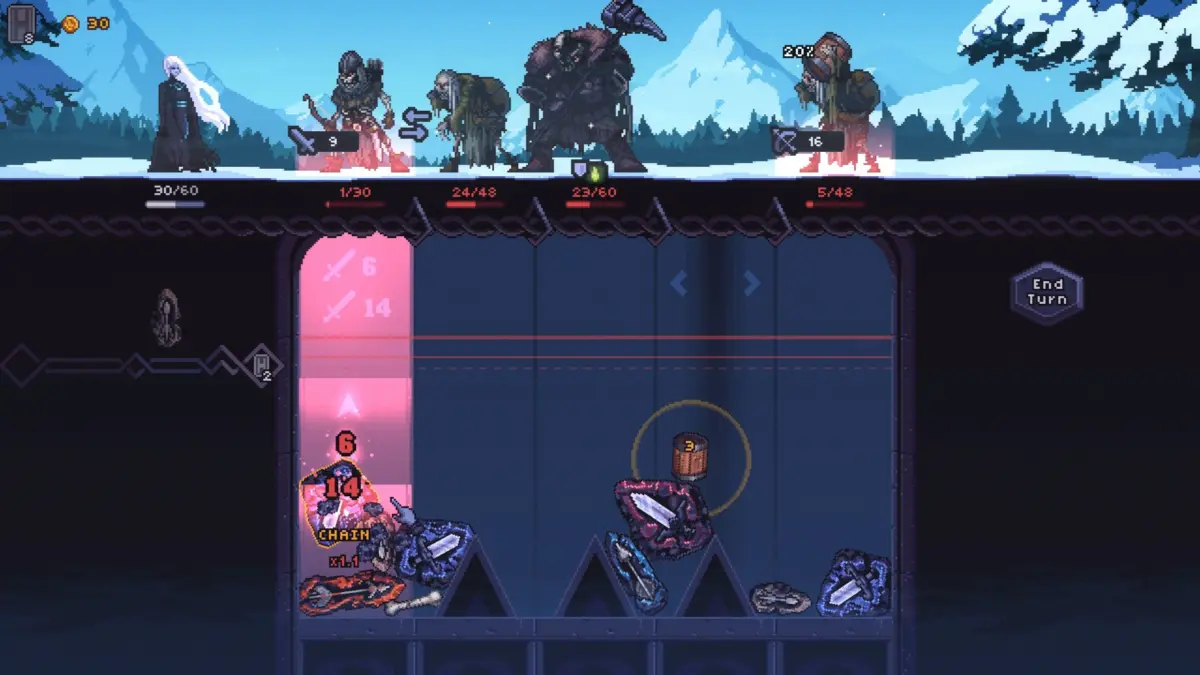
![武器を落とし,投げ,マージして神を討つ。物理演算パズル×デッキ構築ローグライト「Helcast」を世界初試遊[gamescom]](https://www.4gamer.net/games/035/G103532/20260829027/SS/001.jpg)
![武器を落とし,投げ,マージして神を討つ。物理演算パズル×デッキ構築ローグライト「Helcast」を世界初試遊[gamescom]](https://www.4gamer.net/games/035/G103532/20260829027/TN/001.jpg)
![武器を落とし,投げ,マージして神を討つ。物理演算パズル×デッキ構築ローグライト「Helcast」を世界初試遊[gamescom]](https://www.4gamer.net/games/035/G103532/20260829027/TN/004.jpg)
![武器を落とし,投げ,マージして神を討つ。物理演算パズル×デッキ構築ローグライト「Helcast」を世界初試遊[gamescom]](https://www.4gamer.net/games/035/G103532/20260829027/TN/005.jpg)
![武器を落とし,投げ,マージして神を討つ。物理演算パズル×デッキ構築ローグライト「Helcast」を世界初試遊[gamescom]](https://www.4gamer.net/games/035/G103532/20260829027/TN/006.jpg)
![武器を落とし,投げ,マージして神を討つ。物理演算パズル×デッキ構築ローグライト「Helcast」を世界初試遊[gamescom]](https://www.4gamer.net/games/035/G103532/20260829027/TN/007.jpg)
![武器を落とし,投げ,マージして神を討つ。物理演算パズル×デッキ構築ローグライト「Helcast」を世界初試遊[gamescom]](https://www.4gamer.net/games/035/G103532/20260829027/TN/008.jpg)









Belum ada komentar. Jadilah yang pertama berkomentar!