

Executive Overview
Odaiba, the sprawling, futuristic man-made island suspended in Tokyo Bay, has long been a symbol of late-90s and early-2000s urban optimism—a glittering playground of shopping malls, observation wheels, and futuristic architecture. Yet, over the past several years, a wave of high-profile closures has swept across the district, triggering alarmist rumors across social media that Odaiba has quietly transformed into a post-modern ghost town.
![Is Tokyo’s Odaiba, once one of its trendiest neighborhoods, becoming a ghost town? [Photos]](https://soranews24.com/wp-content/uploads/sites/3/2026/08/53.jpg?w=640)
To determine whether these rumors hold weight, an investigative team recently journeyed to Tokyo Teleport Station to survey the pulse of the island firsthand. What they discovered was far more nuanced than a simple binary of "dead or alive." Odaiba is not a ghost town, but it is undergoing a profound, sometimes jarring identity crisis.
![Is Tokyo’s Odaiba, once one of its trendiest neighborhoods, becoming a ghost town? [Photos]](https://soranews24.com/wp-content/uploads/sites/3/2026/08/a.jpg?w=640)
The closure of legendary entertainment anchors—such as the Oedo Onsen Monogatari hot spring bathhouse, the Venus Fort shopping center, and the Giant Sky Wheel—has irrevocably dismantled the island’s old centralized leisure ecosystem. Where visitors once found a continuous, buzzing plaza of day-to-night entertainment, they now encounter isolated pockets of high activity interspersed with vast, quiet expanses and eerie, vacant structures. While new developments like the Toyota Arena Tokyo and ongoing events inject explosive, localized energy into the district, the overall visitor experience has become fragmented. With the impending removal of Odaiba’s iconic life-size Unicorn Gundam statue, the island stands at a critical historical crossroads, forcing urban planners, businesses, and tourists alike to question what the future holds for Tokyo’s favorite waterfront escape.
![Is Tokyo’s Odaiba, once one of its trendiest neighborhoods, becoming a ghost town? [Photos]](https://soranews24.com/wp-content/uploads/sites/3/2026/08/b.jpg?w=640)
Detailed Chronology: The Slow Dismantling of Odaiba’s Golden Era
To understand Odaiba’s current psychological weight among Tokyo residents, one must trace the steady drumbeat of closures that has defined the district since 2021. The systematic dismantling of the island’s primary tourism drivers has occurred in rapid succession, leaving noticeable physical and cultural scars on the urban landscape.
![Is Tokyo’s Odaiba, once one of its trendiest neighborhoods, becoming a ghost town? [Photos]](https://soranews24.com/wp-content/uploads/sites/3/2026/08/4_75dbfd.jpg?w=640)
The Great Exits (2021–2026)
- September 2021: The beloved Oedo Onsen Monogatari hot spring bathhouse closed its doors for good. Offering an Edo-period-themed indoor bath and festival streetscape, its closure stripped the neighborhood of its most popular relaxing, all-weather tourist draw.
- December 2021: Downtown Tokyo’s premier automotive sanctuary, the Megaweb Toyota History Garage, shut down, ending a long-running celebration of car culture that allowed visitors to drive, view, and interact with automotive history.
- March 2022: The Mediterranean-themed Venus Fort shopping center officially closed. Famous for its shifting artificial sky ceilings and cobblestone European alleys, its loss gutted the retail heart of the Aomi and Odaiba blending zone.
- August 2022: The iconic Giant Sky Wheel Ferris wheel took its final spin, removing a towering visual landmark that had defined the Tokyo Bay skyline for over two decades.
- February 2026: In the most recent blow, the short-lived Immersive Fort Tokyo indoor theme park closed permanently. Having moved into the vacant Venus Fort footprint in March 2024 with high ambitions for large-scale, walk-through immersive horror and mystery experiences, it failed to survive even two years due to unsustainable operating costs and a narrow target demographic.
Beyond these commercial closures, institutional pillars of the district have faltered. Broadcaster Fuji TV, whose spherical-observation-deck headquarters remains an architectural anchor of Odaiba, has scaled back its public-facing fan events and maintained a lower profile in the wake of internal corporate scandals in 2024. Furthermore, the Museum of Maritime Science, whose English-named Fune-no-kagakukan facility scaled back operations in 2011, saw its primary buildings completely demolished between 2024 and 2025.
![Is Tokyo’s Odaiba, once one of its trendiest neighborhoods, becoming a ghost town? [Photos]](https://soranews24.com/wp-content/uploads/sites/3/2026/08/5_969792.jpg?w=640)
Supporting Context & Metrics: Navigating the Modern Island Landscape
Stepping out of Tokyo Teleport Station on the Yurikamome Line immediately challenges the narrative of absolute desolation. A steady, purposeful stream of pedestrian traffic flows outward toward Diver City, Aqua City, and the Joypolis video game arcade along the shoreline. These commercial hubs retain robust foot traffic, proving that the core retail centers remain viable.
![Is Tokyo’s Odaiba, once one of its trendiest neighborhoods, becoming a ghost town? [Photos]](https://soranews24.com/wp-content/uploads/sites/3/2026/08/6_36571c.jpg?w=640)
However, a shift in gaze toward the southern and western blocks reveals the stark reality of the district’s structural void. Looking toward the massive, multi-facility husk that once housed Venus Fort, Megaweb, and Immersive Fort Tokyo, the absence of life is palpable. Though pedestrians still walk past the perimeter, the building sits as a silent, vacant monolith with no public roadmap for its future redevelopment.
![Is Tokyo’s Odaiba, once one of its trendiest neighborhoods, becoming a ghost town? [Photos]](https://soranews24.com/wp-content/uploads/sites/3/2026/08/7_8b8559.jpg?w=640)
[Tokyo Teleport Station]
       │
       ├─► (North/East Flow) ──► Diver City, Aqua City, Joypolis [Active & Crowded]
       │
       └─► (South/West Flow) ──► Former Venus Fort / Immersive Fort [Vacant / Unused]
                                      │
                                      └─► Toyota Arena Tokyo [High Surge Activity]
The Rise of New Anchors: Toyota Arena Tokyo
While older attractions have vanished, new blood has been introduced to the Aomi-Odaiba corridor. Opened in October 2025, Toyota Arena Tokyo has swiftly established itself as a major regional magnet. With an 11,000-seat capacity, the venue hosts high-profile concerts and sporting events.
![Is Tokyo’s Odaiba, once one of its trendiest neighborhoods, becoming a ghost town? [Photos]](https://soranews24.com/wp-content/uploads/sites/3/2026/08/8_258a0b.jpg?w=640)
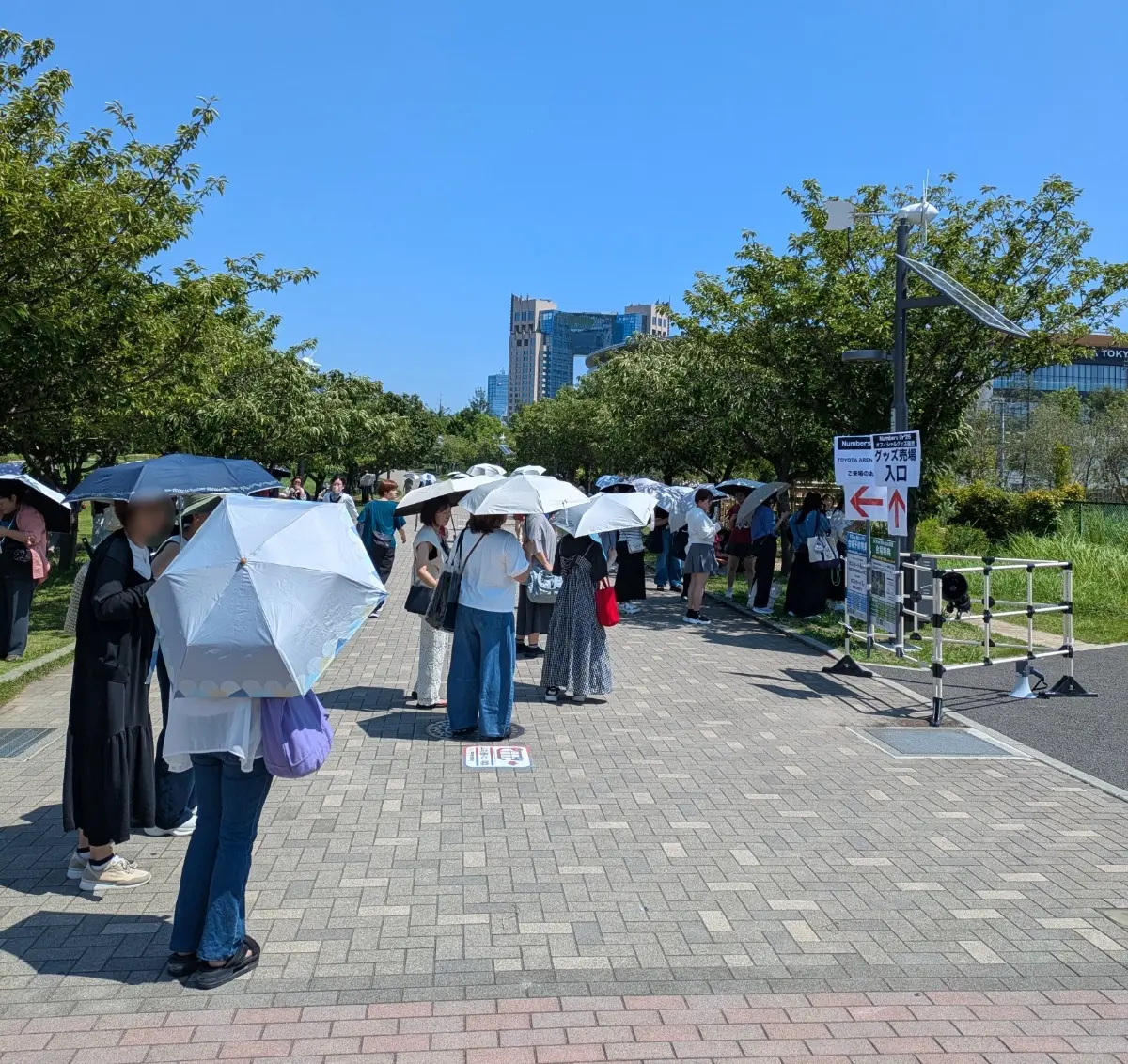
During a recent site visit coinciding with an up-and-coming boy band Number_i concert, the surrounding area underwent a dramatic transformation. Hours before the doors opened, the paddock area of the nearby City Circuit Tokyo Bay go-kart track was flooded with fans queuing for merchandise. Simultaneously, crowds poured out of the nearby Aomi Station.
![Is Tokyo’s Odaiba, once one of its trendiest neighborhoods, becoming a ghost town? [Photos]](https://soranews24.com/wp-content/uploads/sites/3/2026/08/10_f04073.jpg?w=640)
Yet, this influx exposes the core structural issue of modern Odaiba: intermittent volatility. When an event at Toyota Arena Tokyo or a convention at the nearby Tokyo Big Sight (situated just across the canal in Ariake) is active, the streets overflow with energy. On quiet weekdays, however, those same pathways revert to beautifully landscaped, eerily silent liminal spaces. Even massive neighborhood overflow parking lots sit completely empty, serving as quiet green-fringed buffers rather than bustling urban arteries.
![Is Tokyo’s Odaiba, once one of its trendiest neighborhoods, becoming a ghost town? [Photos]](https://soranews24.com/wp-content/uploads/sites/3/2026/08/11_2090e3.jpg?w=640)
Official Statements & Community Sentiment
Public sentiment regarding Odaiba’s trajectory is heavily polarized between online commentators and on-the-ground reality. Digital forums in Japan have frequently labeled the district a haikyo (ruin) or a ghost town, pointing to the empty lots, demolished maritime museums, and shuttered theme parks as proof of a failed municipal project.
![Is Tokyo’s Odaiba, once one of its trendiest neighborhoods, becoming a ghost town? [Photos]](https://soranews24.com/wp-content/uploads/sites/3/2026/08/12_279edd.jpg?w=640)
Urban planners and local business operators, however, view the transition through the lens of evolution rather than extinction. City officials emphasize that Odaiba is shifting away from its 2000s identity as a static, novelty-driven amusement zone toward a multi-functional hub balancing residential living, international maritime transport, and targeted event-driven entertainment.
![Is Tokyo’s Odaiba, once one of its trendiest neighborhoods, becoming a ghost town? [Photos]](https://soranews24.com/wp-content/uploads/sites/3/2026/08/13_ad9e88.jpg?w=640)
The Tokyo International Cruise Terminal, which opened in 2020 near the former Museum of Maritime Science, exemplifies this structural pivot. While the terminal’s cavernous interior is strictly functional—devoid of the restaurant rows or souvenir emporiums tourists might expect—it serves a vital logistical purpose for international cruise operations. Its primary public amenity, the outdoor observation deck, remains a quiet sanctuary for photography enthusiasts and maritime spotters, anchored by the enduring presence of the historic Antarctic icebreaker ship Soya, which remains docked as a permanent museum piece despite the surrounding demolition.
![Is Tokyo’s Odaiba, once one of its trendiest neighborhoods, becoming a ghost town? [Photos]](https://soranews24.com/wp-content/uploads/sites/3/2026/08/14_899b60.jpg?w=640)
Future Outlook: Challenges and Opportunities Ahead
As Odaiba looks toward the remainder of the decade, its economic vitality will face a delicate balancing act. Several key developments will dictate the island’s long-term viability:
![Is Tokyo’s Odaiba, once one of its trendiest neighborhoods, becoming a ghost town? [Photos]](https://soranews24.com/wp-content/uploads/sites/3/2026/08/15_dab272.jpg?w=640)
- The Loss of the Unicorn Gundam: Perhaps the most immediate looming threat to daily foot traffic is the scheduled dismantling of the life-size Unicorn Gundam statue outside Diver City at the end of the summer season. For over a decade, the transformational mecha has acted as Odaiba’s ultimate visual anchor and a guaranteed magnet for casual domestic and international tourists. Its removal will strip the central plaza of its most photographed landmark.
- Event Dependency: With the closure of permanent daily draws like Oedo Onsen and Venus Fort, the district’s economic health is increasingly tethered to the event calendar of Toyota Arena Tokyo and neighboring Ariake venues. Weekdays without major concerts or conventions risk plunging large swathes of Aomi and Odaiba into prolonged quietude.
- Redevelopment of Vacant Parcels: The vast tracts of land left behind by demolished structures—most notably the massive footprint encompassing the old Venus Fort and Megaweb complex—represent both a vulnerability and an opportunity. How municipal authorities and private developers choose to repurpose these plots will determine whether Odaiba can stitch its fragmented zones back into a cohesive, walkable urban destination.
Conclusion
Ultimately, declaring Odaiba a ghost town is an exaggeration born of nostalgia for its hyper-active early-2000s heyday. The island is not dead; rather, it has fragmented. Visitors can no longer expect a singular, contiguous day-long entertainment loop where every corner hums with commercial activity. Instead, Odaiba has matured into a polarized landscape: quiet, contemplative waterfront pathways and sparse weekdays contrasted against explosive, high-capacity surges of fans and travelers when major events ignite the district’s new arenas. For tourists and urban explorers alike, Odaiba requires more strategic timing than it once did—but for those who arrive on the right day, the island proves that its pulse is still beating strongly beneath the surface of Tokyo Bay.







Belum ada komentar. Jadilah yang pertama berkomentar!