

Executive Overview
Kent Jones’s 2025 comic drama Late Fame arrives as a masterclass in cinematic observation, utilizing the weathered, expressive visage of Willem Dafoe to anchor an intricate meditation on art, aging, urban displacement, and the unexpected resurgence of recognition. Adapted by screenwriter Samy Burch from Arthur Schnitzler’s posthumously published 1895 novella of the same name, the film shifts the narrative framework from fin-de-siècle Vienna to the vibrant, historically rich streets of lower Manhattan.
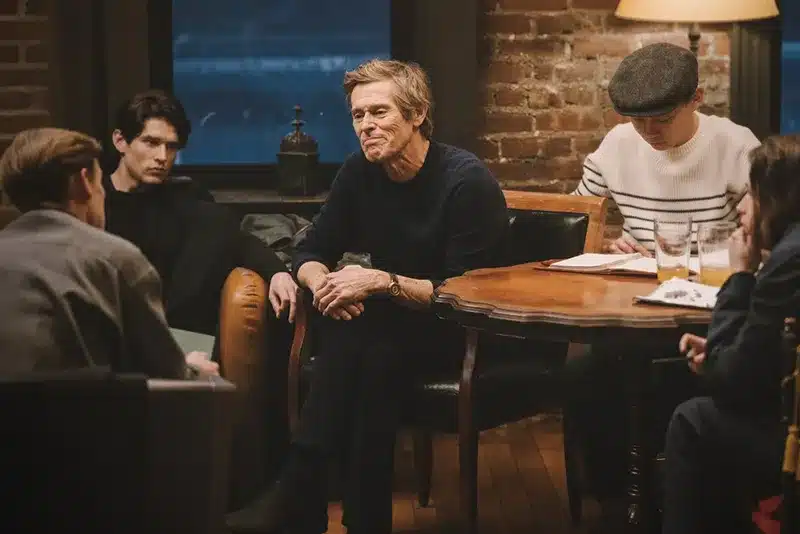
At its core, Late Fame follows Ed Saxberger (Dafoe), a 64-year-old New York City postal worker who long ago abandoned the bohemian literary circles of his youth. Saxberger once published a single book of poetry after arriving in the metropolis as a teenager, but he long ago traded literary aspirations for the quiet, predictable rhythm of a blue-collar existence. That is, until a young, academically trained aspiring poet in his twenties named Wilson Meyers (Edmund Donovan) uncovers a rare, long-out-of-print copy of Saxberger’s poetry. Captivated by the text, Meyers tracks down the older man, inadvertently thrusting the reluctant hermit into a circle of ambitious young writers and breathing accidental life into a phenomenon the film terms "late fame."
Executive produced by Martin Scorsese and boasting an exceptional supporting cast—most notably Greta Lee as the volatile, magnetic performer Gloria—Late Fame operates as a love letter to Downtown bohemian culture. It blends the structural social critique of Edith Wharton with the observational realism of independent American cinema from the late 20th century. Running an economical 96 minutes, the film balances a melancholic, old-world sensibility with contemporary urban realities, creating a cinematic touchstone destined to resonate across generations of filmgoers and cultural critics alike.
Detailed Chronology: From Vienna to Lower Manhattan
Adapting Schnitzler for the Modern Metropolis
The genesis of Late Fame lies in a transatlantic and trans-historical literary translation. Arthur Schnitzler penned his novella in 1895, capturing the stifling social stratifications and artistic pretensions of late-19th-century Vienna. Screenwriter Samy Burch and director Kent Jones undertake a delicate alchemy in transplanting this narrative to contemporary New York City. The adaptation honors Schnitzler’s underlying preoccupation with vanity, validation, and the generational friction inherent in artistic communities, while grounding it firmly in the physical and cultural geography of modern Manhattan.
Despite acknowledging 21st-century realities such as ubiquitous cellphones, e-bike delivery couriers weaving through chaotic traffic, and the permeation of digital influencers, Late Fame maintains a deliberately anachronistic, old-world rhythm. The narrative moves at a measured, unhurried pace. It prioritizes lingering shots of Washington Square Park’s tall, ancient trees, manhole covers venting steam, and quiet moments of urban contemplation over breathless pacing.
The Inciting Incident and the Awakening
The plot hinges on a quiet disruption. Ed Saxberger’s solitary routine—characterized by quiet walks, minimal neighborhood interactions, and an ascetic lifestyle born of past trials (indicated by his matter-of-fact declaration that he has not touched alcohol in six years)—is upended when Wilson Meyers appears outside his home. Meyers, a product of rigorous academic poetic training, acts as the zealous acolyte who refuses to let Saxberger’s literary past remain buried.
Meyers introduces Saxberger to his cadre of aspiring writers, a group predominantly comprised of twenty-something men eagerly debating aesthetics, ambition, and relevance. While Dafoe’s performance expertly traces Saxberger’s internal evolution from initial wariness to a guarded, self-aware amusement, the aging poet ultimately takes the bait. He begins to move through the city with a slightly more buoyant stride, confronting the strange, dizzying reality of being "discovered" decades after he abandoned the pursuit of literary glory.
The Crucible of Performance and Personal Stakes
As the narrative unfolds, the generational divide between Saxberger and Meyers’s coterie sharpens. This tension is mirrored in the film’s atmospheric contrasts: the stark, blue-lit working-class bar where Saxberger shares quiet drinks with peers, contrasted against the warm, cushioned, affluent salons where the younger "rich kids" foment their own artistic revolutions.
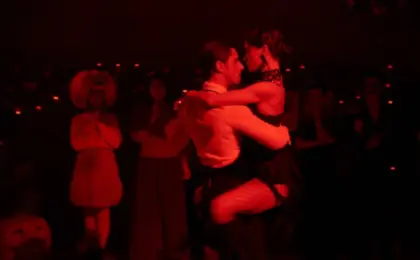
The emotional zenith of the film arrives through the character of Gloria, brought to cinematic life by Greta Lee. Unlike the writers in Meyers’s circle, Gloria is a performer—a singer and actress operating on a larger-than-life scale. Described as a complex, dangerous force of nature brimming with both raw talent and a deep vulnerability, Gloria’s presence introduces high personal and professional stakes to the narrative. Her bravura, extended performance of a Kurt Weill composition serves as the film’s emotional anchor, crystallizing the intoxicating and often destructive allure of artistic expression.
Supporting Context & Metrics
Production Pedigree and Artistic Lineage
Late Fame benefits from a remarkably cohesive creative team whose collective pedigree positions the film firmly within the lineage of intelligent, New York-centric American cinema. Executive produced by cinematic master Martin Scorsese—whose own 1993 adaptation of Edith Wharton’s The Age of Innocence shares thematic DNA with Late Fame—the film draws from a rich cinematic vocabulary.
Critics and industry observers have noted the film’s stylistic and thematic kinship with several classic works of urban drama:
- Whit Stillman’s Metropolitan (1990): Evident in the meticulous, often humorous charting of youthful bourgeois ambition and social rituals.
- Joan Micklin Silver’s Crossing Delancey (1988): Providing a foundation for the authentic, unvarnished urban charm and cross-generational neighborhood dynamics.
- Tom Noonan’s What Happened Was… (1994): Informing the intimate, psychologically probing explorations of urban isolation.
- Stanley Kubrick’s Eyes Wide Shut (1999): Connecting back to Arthur Schnitzler, whose 1926 novella Dream Story served as Kubrick’s source material, though Late Fame avoids stiffness in favor of a lively, observant warmth.
Soundtrack and Cultural Touchstones
The film’s auditory and literary landscape reinforces its nostalgic yet vital tone. The moody, atmospheric soundtrack features Lou Reed’s "Charlie’s Girl" from his 1975 masterpiece Coney Island Baby, cementing a sonic connection to the gritty, poetic eras of New York’s past. Literary allusions abound both on and off-screen; the camera pans lovingly across Saxberger’s bookshelves, capturing Pauline Kael film reviews, Samuel Beckett novels, and classic poetry cassettes with the same reverent eye afforded to the architecture of Greenwich Village.
Distribution and Critical Reception Metrics
Released in early 2025, Late Fame has found a natural spiritual home in cultural institutions like New York’s Film Forum—which makes a brief, affectionate cameo appearance in the film. While targeted primarily toward cinephiles, literary enthusiasts, and urban romantics, the film’s universal meditations on aging, unrealized potential, and creative rebirth have generated strong word-of-mouth momentum.
| Metric Category | Details & Industry Estimates |
|---|---|
| Runtime | 96 minutes (1 hour, 36 minutes) |
| Primary Locations | Lower Manhattan, Greenwich Village, Washington Square Park |
| Literary Source | Posthumous novella by Arthur Schnitzler (1895) |
| Key Cinematic Influences | Metropolitan, Crossing Delancey, The Age of Innocence |
| Notable Cameos/Appearances | New York’s Film Forum |
Official Statements and Critical Commentary
While traditional corporate press releases for independent features often rely on hyperbolic marketing, the critical discourse surrounding Late Fame has focused heavily on the synergy between Jones’s directorial restraint, Burch’s structurally sound screenplay, and the powerhouse central performances.
Industry analysts have highlighted the rare convergence of veteran talent and contemporary indie sensibility. In reviews circulating through major cultural and film criticism outlets, commentators have repeatedly emphasized Willem Dafoe’s ability to communicate profound internal shifts through micro-expressions.
"Whatever else Saxberger has experienced or feels, viewers are invited to read into Dafoe’s skin, his subdued line readings, and his matter-of-fact body language during solitary walks through the neighborhood," notes critical consensus within festival reporting. "The film proves that mature character studies, when executed with patience and visual poetry, remain vital commodities in the contemporary marketplace."
Furthermore, praise has been universally directed toward Greta Lee’s incendiary supporting turn. Reviewers have pointed to her extended musical sequence as a defining cinematic moment of the year, one that encapsulates the unpredictable, high-stakes nature of artistic devotion. Production notes and early festival responses underline the filmmakers’ shared intent to honor New York City not merely as a static backdrop, but as an active, breathing participant in the lives of the characters—a city that continues to cultivate refuge amidst relentless transformation.
Future Outlook
As Late Fame completes its initial theatrical rollout and expands into broader arthouse circuits, industry prognosticators are looking toward its longevity and awards season prospects.
Awards Season Trajectory
Given the caliber of the creative team, the film is widely anticipated to be a formidable contender in upcoming independent film awards and is frequently cited as a strong candidate for major Academy Award consideration. Observers point to several specific areas primed for critical recognition:
- Best Actor: Willem Dafoe’s nuanced, physically grounded portrayal of Ed Saxberger.
- Best Supporting Actress: Greta Lee’s electrifying, multifaceted performance as Gloria.
- Best Adapted Screenplay: Samy Burch’s seamless translation of late-19th-century Viennese literature into a contemporary New York setting.
Cultural Legacy and Audience Longevity
Beyond accolades, Late Fame is positioned to achieve rare status as a modern urban classic. Much like how films such as Rent or Hedwig and the Angry Inch captured specific eras of New York artistic fervor for younger generations, Late Fame offers a rich thematic framework that will likely resonate with audiences long into the future.
Its exploration of wisdom, love, change, and the bittersweet nature of unheralded creativity provides an accessible, emotionally resonant roadmap for adults navigating their own life transitions. By honoring the past while remaining fully alive to the sensory textures of the present, Kent Jones’s Late Fame secures its place not only as a highlight of the 2025 cinematic landscape, but as a timeless cultural touchstone for anyone who has ever loved, lost, or sought meaning within the labyrinthine streets of the metropolis.




Belum ada komentar. Jadilah yang pertama berkomentar!