

Executive Overview
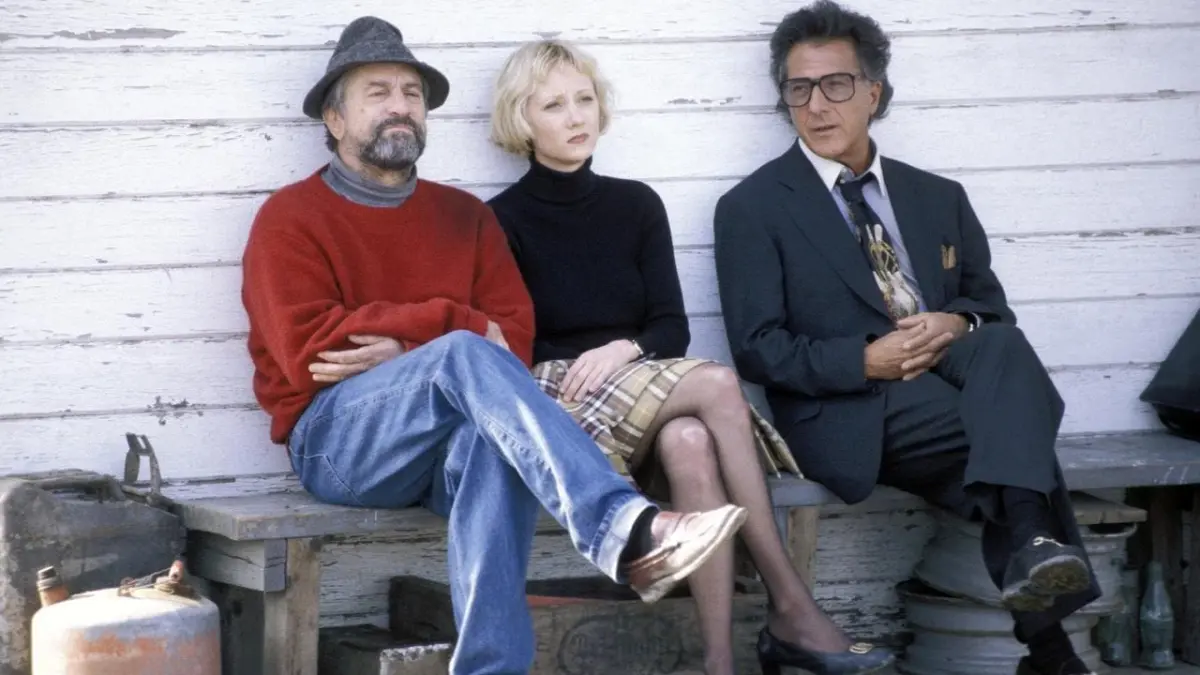
Released in the winter of 1997, just weeks before real-world headlines began eerily echoing its fictional premise, Barry Levinson’s dark satirical comedy Wag the Dog remains a masterclass in cinematic prescience. Starring an ensemble cast led by Robert De Niro and Dustin Hoffman, the film tells the story of a Washington spin doctor and a Hollywood producer who fabricate a fake war against Albania to distract the American public from a presidential sex scandal.
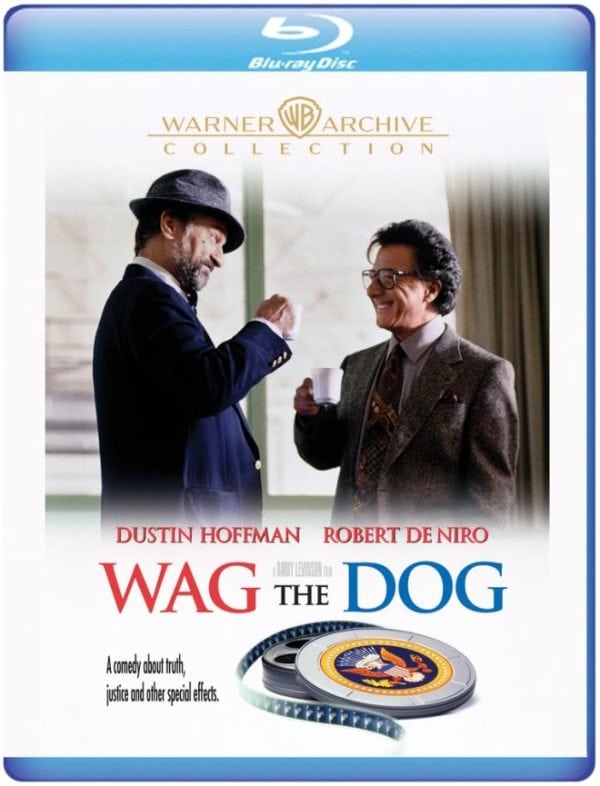
More than two decades after its theatrical run, the Warner Archive Collection has debuted the film on Blu-ray, providing a timely invitation to re-evaluate its place in cinema history. While the mechanics of 1990s political subterfuge—which required high-paid "fixers" and massive Hollywood soundstages—may seem charmingly quaint compared to today’s decentralized, algorithm-driven social media disinformation campaigns, the underlying thesis is sharper than ever. Wag the Dog is not merely a period piece about late-20th-century political cynicism; it is a foundational warning regarding the fragility of truth and the ease with which public perception can be manufactured.
This comprehensive retrospective explores the film’s production, its biting satire of media manipulation, its uncanny timing relative to real-world history, and the comprehensive contents of its long-awaited high-definition home video release.
Detailed Chronology: From Script to Screen and Beyond
1. The Genesis of a Satire
Based loosely on Larry Beinhart’s 1993 novel American Hero, the cinematic adaptation of Wag the Dog was penned by heavyweights David Mamet and Hilary Henkin. The project caught the attention of director Barry Levinson during a climate of growing public skepticism toward government transparency, mass media sensationalism, and the intersection of political campaigns and entertainment.

Production moved swiftly through 1997, buoyed by a powerhouse cast that featured Robert De Niro as political fixer Conrad Brean, Dustin Hoffman as eccentric Hollywood producer Stanley Motss, Anne Heche as presidential aide Winifred Ames, alongside supporting and cameo appearances from Denis Leary, Willie Nelson, Andrea Martin, Kirsten Dunst, Woody Harrelson, and William H. Macy.
2. The Plot: Manufacturing an Entire War
The narrative kicks into gear when a sitting U.S. President is accused of sexual misconduct with a young Firefly troop member just days before a crucial election. Desperate to divert public attention away from the developing scandal, presidential aide Winifred Ames enlists crisis manager Conrad Brean.
Recognizing that traditional damage control will not suffice, Brean devises an audacious scheme: he brings in Hollywood producer Stanley Motss to construct a completely fictitious war. Complete with green-screen footage of a terrified "Albanian refugee" (played by a young Kirsten Dunst) clutching a bag of chips in a bombed-out village, a catchy patriotic theme song, and a fabricated military hero dubbed "Old Shoe" (an institutionalized ex-soldier played by Woody Harrelson), the operation snowballs into a massive media event. The public swallows the narrative whole, proving Brean’s cynical worldview correct: “War is show business.”
3. The Uncanny Real-World Convergence
One of the most remarkable aspects of Wag the Dog is its release timing. Hitting theaters in December 1997, the film predated the outbreak of the Clinton-Lewinsky scandal and the subsequent U.S. military strikes in Sudan and Afghanistan (Operation Infinite Reach) by mere weeks. Critics and political commentators alike marveled at how closely real-life events mirrored the satirical plot points of Levinson’s film, turning "wag the dog" into a permanent part of the political lexicon.
Supporting Context & Metrics: Behind the Scenes and Performances
Hoffman’s Masterclass and the Spirit of Robert Evans
Dustin Hoffman’s performance as Stanley Motss anchors the film’s manic energy. Channeling legendary Hollywood producer Robert Evans—complete with oversized glasses, perpetual tan, and relentless bravado—Hoffman devours every frame he inhabits. His portrayal is equal parts pathetic and terrifying, illustrating a man whose entire existence is validated solely by his ability to "produce" reality.
Behind-the-scenes accounts indicate that the atmosphere on set was frequently chaotic in the best possible way. Notably, co-star Anne Heche struggled to maintain her composure during Hoffman’s uninhibited comedic riffs, forcing the editing team to work around stifled laughter in post-production. Hoffman’s work earned him a well-deserved Academy Award nomination for Best Actor.
The Blu-ray Package: Warner Archive Collection Debut
The new Blu-ray release from the Warner Archive Collection remedies a glaring omission in high-definition physical media catalogs. While the release lacks a flashy, ground-up 4K restoration, the 1080p transfer presents the film with impressive clarity, preserving Robert Richardson’s distinct cinematography, which shifts between the glossy, hyper-saturated hues of Hollywood soundstages and the gritty, desaturated tones of news broadcasts.
Bonus Features Breakdown
- Audio Commentary: Features director Barry Levinson and star Dustin Hoffman. Though recorded separately, the pairing offers a wealth of anecdotal evidence regarding the film’s hurried production schedule, tone adjustments, and thematic ambitions.
- "From Washington to Hollywood and Back" (24 minutes): A fascinating retrospective documentary featuring Levinson, Hoffman, producer Jane Rosenthal, screenwriter Bud Schulberg, and legendary journalist Tom Brokaw. The featurette contextualizes the film against the backdrop of real-world political scandals and military actions of the late 20th century.
- Q&A with William H. Macy (6 minutes): A brief, entertaining conversation with character actor William H. Macy discussing his compact role in the film and his creative synergy with screenwriter David Mamet.
- Theatrical Trailer: Preserved in standard promotional format.
Official Statements & Critical Reception
Upon its initial release, Wag the Dog garnered widespread critical acclaim, holding a prominent place in conversations regarding media literacy and political satire.
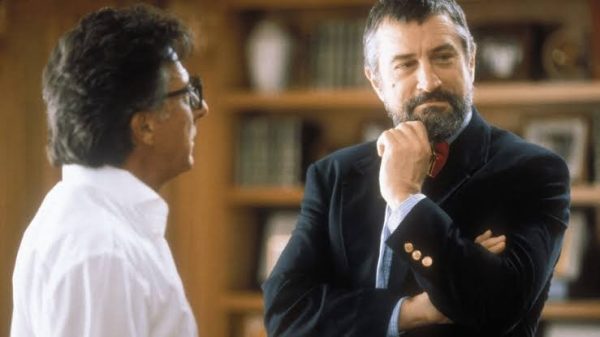
"Wag the Dog is a brilliantly acid trip through the machinery of modern image-making. It dares the audience to laugh at the terrifying realization that public truth is nothing more than a well-executed marketing campaign." — Contemporary Film Review Archives
Director Barry Levinson noted in archival interviews accompanying the home video release:
"We weren’t trying to predict the future; we were simply looking at the trajectory of where politics and media were intersecting. When you turn governance into entertainment, the line between what is real and what is staged ceases to exist entirely."
Future Outlook: Relevance in the Algorithm Era
As we navigate an era dominated by hyper-targeted social media algorithms, deepfake technology, and instantaneous global communication streams, the mechanics depicted in Wag the Dog appear almost quaint. In 1997, fabricating a war required a high-paid fixer, a studio lot, and the cooperation of network television broadcasts. Today, manufactured outrage, synthetic media, and distraction campaigns can be deployed by decentralized actors within minutes from a smartphone.
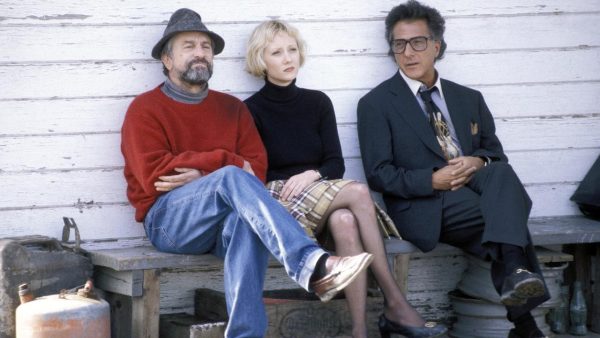
Yet, the core lesson of the film remains unassailable. Wag the Dog serves as an enduring reminder that societies will perpetually grapple with manufactured crises designed to draw attention away from accountability. Whether it is a fictional conflict in Albania or modern political posturing over trade disputes and administrative theatrics, the human susceptibility to compelling storytelling over objective reality persists.
For cinephiles, political junkies, and physical media collectors alike, the Warner Archive Collection Blu-ray of Wag the Dog is an essential addition to the library—a timeless, laugh-out-loud alarm bell ringing out from an analog past that warned us precisely how fragile our digital future would be.




Belum ada komentar. Jadilah yang pertama berkomentar!