


Executive Overview
The intersection of classical music, intense adolescent ambition, and volatile human emotion has long served as fertile ground for compelling television drama. However, tvN’s latest prestige series, Four Hands, Two Sonatas, is pushing the boundaries of the genre by trading quiet rehearsal rooms for the raw, visceral intensity of a physical altercation. In an upcoming sequence that has sent shockwaves through the show’s burgeoning fandom, leading actors Song Kang and Lee Jun Young transition from the harmonious synchronicity of a piano duet to an explosive, tackle-and-punch brawl on a high school soccer field.
The scene, which serves as a narrative turning point in the series’ third episode, captures the fragile boundary between profound creative camaraderie and bitter, burning rivalry. Four Hands, Two Sonatas follows the intersecting lives, complex friendships, romantic undertones, and cutthroat competitions of two exceptional students at an elite arts high school. Tracing their evolutionary arc from the turbulent trials of adolescence to the uncompromising pressures of professional adulthood as concert pianists, the series has quickly established itself as a masterclass in character-driven storytelling.
While earlier episodes focused on the tentative forging of a bond between Kang Pio (played by Song Kang) and Choi Jeong Yo (played by Lee Jun Young) over shared sheet music, the newly unveiled stills signal a definitive fracture in their relationship. This report provides a comprehensive examination of the impending conflict, contextualizes the narrative stakes within the broader framework of the series, analyzes the psychological underpinnings of the characters’ escalating tension, and outlines what viewers can expect as the drama unfolds its next narrative chapter.
Detailed Chronology: The Anatomy of a High School Breakdown
To fully understand the gravity of the soccer field brawl, one must trace the trajectory of the relationship between Kang Pio and Choi Jeong Yo from its inception. When the two prodigious talents first crossed paths at their prestigious arts academy, they existed in separate, guarded orbits dictated by the rigid hierarchy of classical music training. While both possessed exceptional technical proficiency, their temperaments and approaches to the piano could not have been more divergent.
Harmonious Beginnings in the Practice Room
The narrative foundation of their relationship was initially built upon reluctant cooperation. Thrown together by faculty mandate to prepare a demanding duet performance—the literal "four hands" of the show’s title—Pio and Jeong Yo were forced to navigate their stark differences. Early scenes depicted late-night sessions in dimly lit rehearsal rooms, where the friction of competing egos slowly gave way to mutual respect.
During these formative sequences, viewers witnessed the subtle humanization of both characters. Pio, often characterized by a brooding internalization of his artistic insecurities, found a mirror in Jeong Yo, whose outward ambition masked a deeply rooted fear of inadequacy. As their fingers danced across the ivory keys in tandem, the piano became a medium for unspoken communication. For a brief window, it seemed the academy had successfully forged a formidable musical partnership.
The Catalyst: Competition Shifts to the Turf
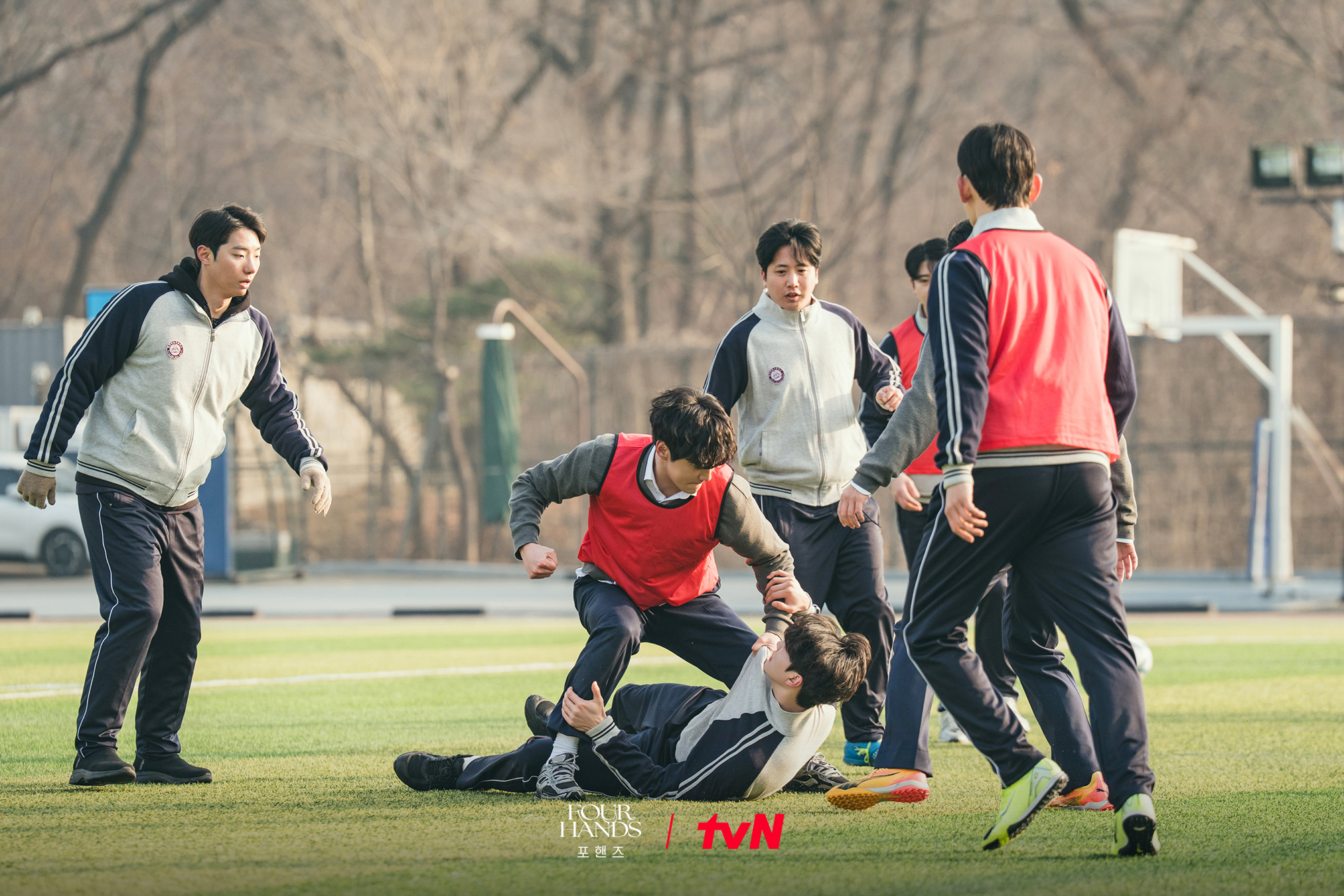
However, the harmonious veneer of the practice room shatters in the explosive stills released ahead of Episode 3. The setting shifts dramatically from the controlled, acoustically insulated environment of the music conservatory to the open, volatile atmosphere of the school soccer pitch. Participating in an intramural match on opposing teams, Pio and Jeong Yo find themselves physically pitted against one another.
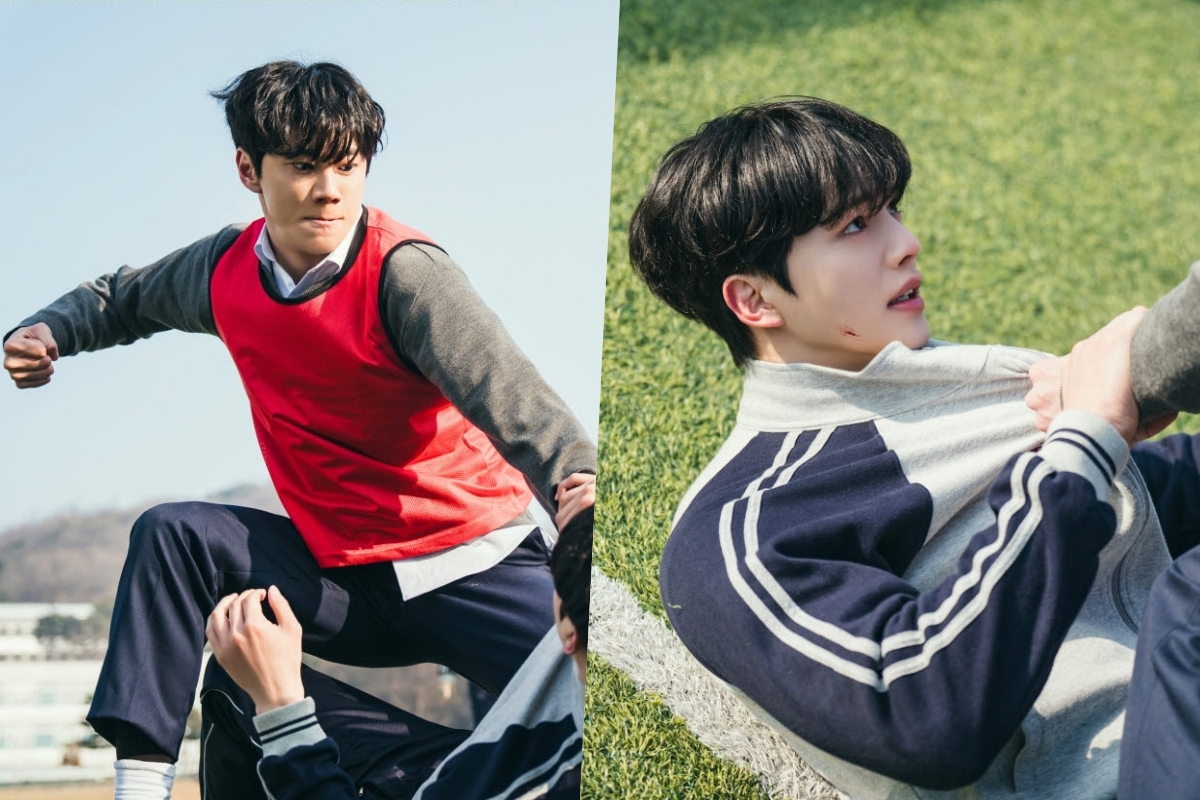
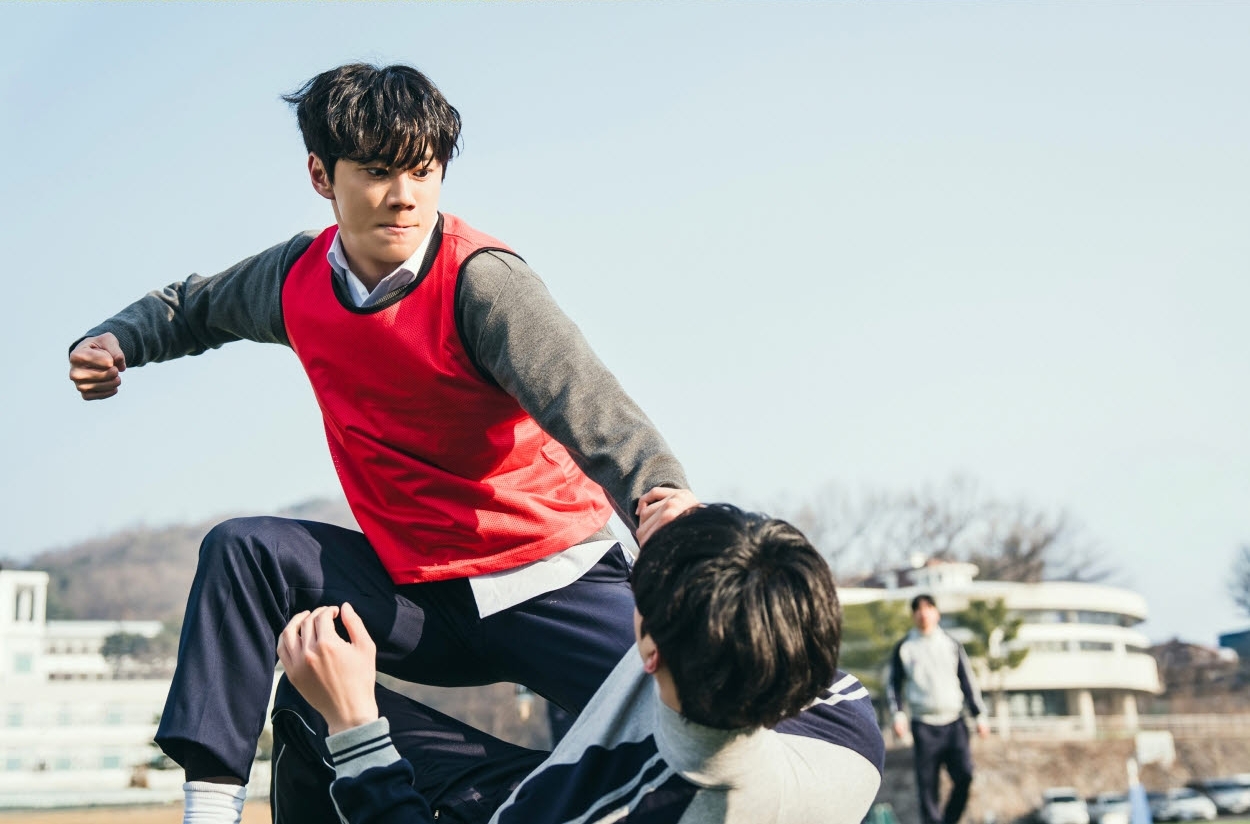
What begins as standard athletic competitiveness rapidly deteriorates into something far more dangerous. In the sequence of captured images, the kinetic energy of the game gives way to personal confrontation. Choi Jeong Yo is seen driving Kang Pio fiercely to the ground, his expression hardened into a mask of pure fury. Before classmates or referees can intervene, Jeong Yo follows up with a direct punch, leaving Pio reeling on the grass.
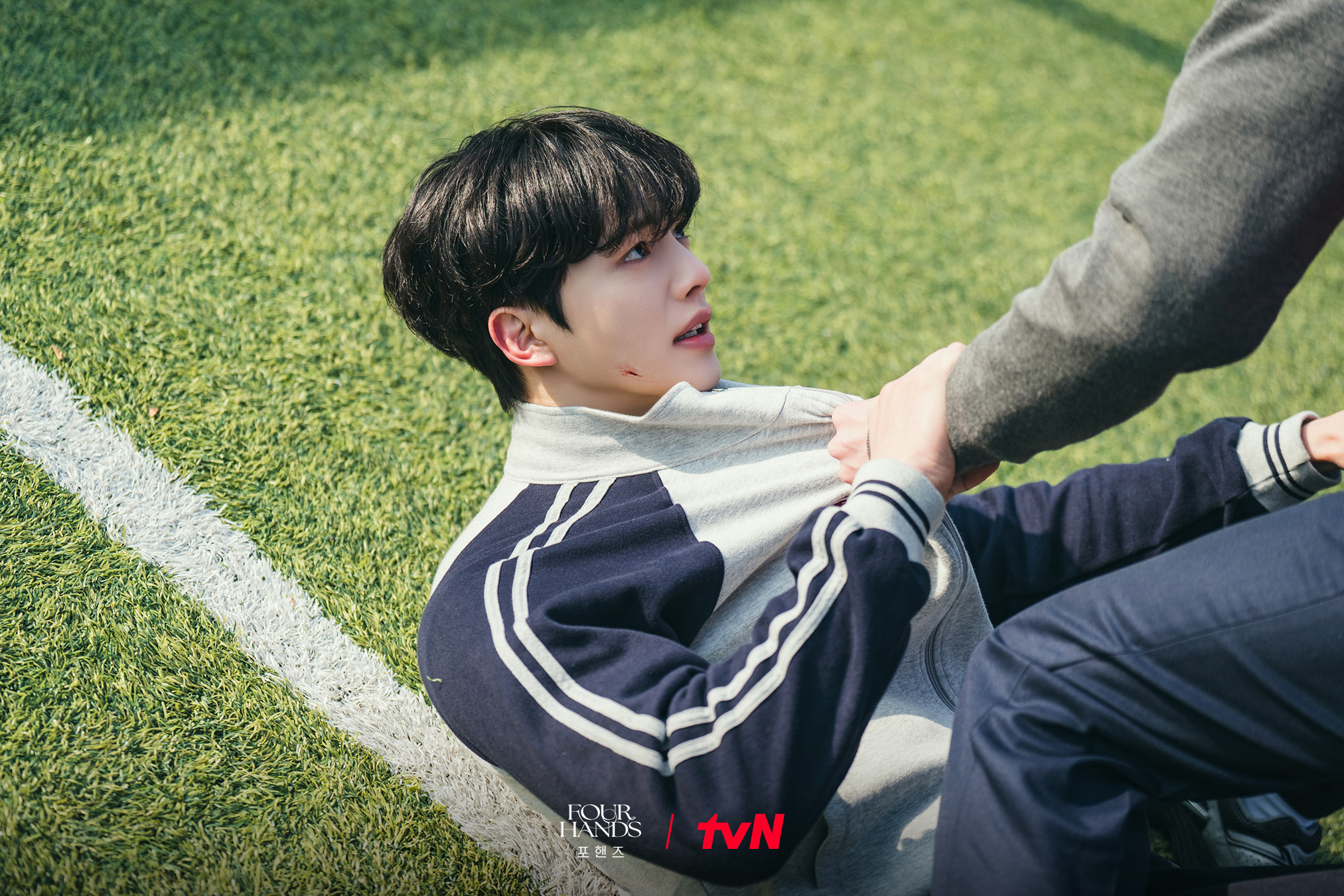
Crucially, eyewitness accounts within the narrative universe—and the palpable tension captured in the promotional stills—suggest that this outburst is far from a spontaneous loss of temper over a misplaced soccer ball. The stark, dead-eyed seriousness etched across both actors’ faces indicates that the tackle and subsequent blow are the culmination of weeks, if not months, of suppressed animosity, professional jealousy, and unresolved psychological pressure.
Supporting Context & Metrics: The Weight of Artistic Ambition
To appreciate why a simple athletic game could degenerate into a physical fight, one must examine the high-stakes ecosystem of elite arts high schools as depicted in contemporary K-dramas. Four Hands, Two Sonatas taps into a well-documented cultural phenomenon: the crushing psychological toll exacted upon youth in hyper-competitive academic and artistic environments.
The Psychology of Musical Prodigies
In the realm of classical performance, the margin for error is razor-thin, and the path to professional recognition is agonizingly narrow. Students at academies like the one featured in the series are not merely learning an instrument; they are fighting for limited spots in international conservatories, coveted seats in symphony orchestras, and the validation of an unforgiving industry.
- The Burden of Expectation: Both Pio and Jeong Yo carry the heavy expectations of teachers, parents, and their own inflated self-images. When two alpha-level talents are forced to share a stage—or a piano bench—collusion inevitably breeds comparison.
- Displacement of Emotion: Musicians often struggle to articulate complex emotional distress verbally, frequently channeling their existential angst, frustration, and fury directly into their craft. When the music stops, however, that accumulated pressure must find another outlet—in this case, the unforgiving turf of a soccer field.
- The Dual Nature of Duets: A piano duet requires absolute vulnerability. You must breathe with your partner, anticipate their physical shifts, and surrender a portion of your artistic autonomy. For ambitious rivals, this forced intimacy is intoxicating yet deeply threatening, creating a psychological powder keg waiting for a spark.
Audience Reception and Engagement Metrics
Since its premiere, Four Hands, Two Sonatas has commanded significant attention across streaming platforms and social media networks. Industry analysts have noted several key engagement drivers:
- Stellar Casting Synergy: The pairing of Song Kang—widely celebrated for his nuanced portrayals of complex, emotionally guarded youths—and Lee Jun Young, known for his intensity and commanding screen presence, has generated immense pre-release buzz.
- Search and Social Velocity: Following the drop of the Episode 3 preview stills featuring the fight scene, related hashtags trended globally within hours, dominating discussion boards on platforms like Soompi, Twitter, and Naver Entertainment.
- Platform Dominance: The drama’s strategic distribution via major international streaming services, including Viki, has allowed its domestic momentum to translate into a formidable overseas fan base, driving up viewership metrics for both lead actors’ back catalogs.
Official Statements and Production Insights
The production team behind Four Hands, Two Sonatas has offered tantalizing hints regarding the trajectory of Episode 3, emphasizing that the physical altercation between Pio and Jeong Yo is a foundational pillar of the show’s narrative arc.
Director and Writer Commentary
In a recent behind-the-scenes press release, the creative team addressed the shift from the serene beauty of piano sonatas to the raw violence of the soccer pitch:
"While the piano allowed Kang Pio and Choi Jeong Yo to express harmony, it also forced them into a crucible of intense comparison. The soccer field fight is not a random act of teenage aggression; it is the physical manifestation of a psychological boiling point. Viewers should look beyond the violence itself and examine what has been left unsaid between these two characters during their late-night practice sessions."
Furthermore, production insiders praised the physical commitment of both Song Kang and Lee Jun Young during the filming of the sequence. Despite the inherent risks of shooting high-action physical sequences—especially involving actors whose primary instruments are their hands—both performers reportedly insisted on executing the majority of the stunt work and close-up scuffling themselves to preserve the raw authenticity of the moment.
Cast Dedication to Craft
To prepare for their respective roles as professional pianists in training, both Song Kang and Lee Jun Young underwent rigorous physical and musical coaching months prior to principal photography. Learning the intricate fingerings, posture, and emotional gravitas required to convincingly portray elite classical musicians demanded hours of daily practice. This off-screen dedication reportedly fostered a deep mutual respect between the two leads, paradoxically enabling them to channel such convincing animosity during their explosive confrontation scenes.
Future Outlook: What Lies Beyond the Bruises?
As Four Hands, Two Sonatas prepares to air its third episode on September 5 at 9:10 p.m. KST, the central question for viewers is no longer if Pio and Jeong Yo will clash, but how their relationship will ever recover from the fallout of the soccer field brawl.
Narrative Implications for Episodes 3 and Beyond
A physical fight of this magnitude in a high school setting carries immediate institutional and social consequences. Faculty members, academic boards, and peer groups will inevitably be forced to take sides, further polarizing the school environment.
- The Fractured Partnership: With their duet performance looming, the immediate future of their musical collaboration is thrown into severe jeopardy. Can a duo that has literally traded blows on a field ever achieve the delicate synchronicity required to perform a complex sonata?
- Vulnerability Revealed: Paradoxically, explosive conflicts in K-dramas often serve as a catalyst for deeper emotional honesty. By stripping away the polite facades and passive-aggressive competition, the physical fight may force Pio and Jeong Yo to confront the root causes of their insecurity—clearing the air for a more authentic, albeit turbulent, friendship.
- The Long Arc to Professional Adulthood: Because the series explicitly traces its protagonists from the volatile passions of adolescence into the sober realities of professional adulthood, this high school rivalry will likely cast a long shadow over their future careers on international concert stages.
Conclusion
Four Hands, Two Sonatas continues to prove that it is much more than a standard youth romance or coming-of-age melodrama. By juxtaposing the sublime discipline of classical music with the unbridled fury of adolescent rivalry, the series offers a rich, multi-layered exploration of ambition, friendship, and identity. As the September 5 airdate approaches, audiences are left waiting with bated breath to see how the final chord of this explosive confrontation will resonate across the remainder of the season.






Belum ada komentar. Jadilah yang pertama berkomentar!