

By Craig Robinson, Senior Editor
Published: August 27, 2026
Executive Overview
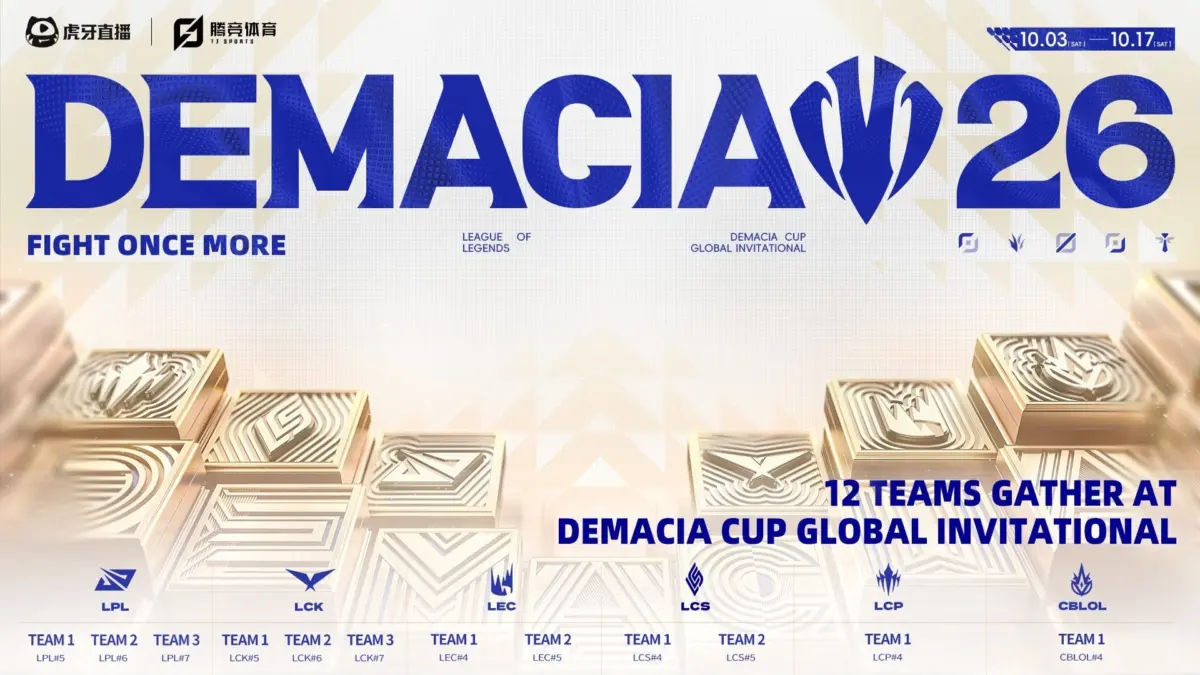
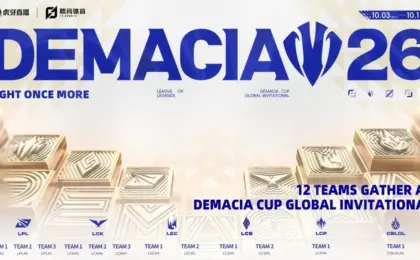
In a landmark development for the global League of Legends esports ecosystem, Riot Games, in strategic partnership with TJ Sports and Huya Inc., has officially announced a massive expansion of the prestigious Demacia Cup. Historically recognized as an LPL-focused regional tournament—often serving as an exciting off-season or year-end proving ground for Chinese talent—the event is breaking past its traditional borders. For the very first time, the competition is evolving into the 2026 Demacia Cup Global Invitational, a sprawling, multi-region tournament designed to unite twelve top-tier teams from across six major competitive territories.
Scheduled to run from October 3rd through October 17th, 2026, this newly minted global invitational arrives as a welcome relief to professional organizations, players, and fans alike. For years, the global competitive calendar has faced persistent criticism for its heavy, almost exclusive reliance on the annual World Championship (Worlds) as the definitive benchmark for international prestige. While the Mid-Season Invitational (MSI) has historically provided a spring interlude, the vast majority of the competitive year locks regional leagues into isolated bubbles. The 2026 Demacia Cup Global Invitational directly addresses this structural bottleneck, offering a lucrative, high-stakes international circuit event during the autumn window.
The tournament’s qualification architecture is equally meritocratic, tying slot distribution directly to the performance outcomes of MSI 2026. This ensures that the world’s strongest competitive ecosystems are heavily represented while still providing vital cross-regional exposure for developing and tier-one regions alike. Featuring a hybrid format that transitions from online group play into a high-octane offline bracket in Beijing—hosted at the state-of-the-art JDG home venue—the event boasts a competitive prize pool of 1.5 million RMB (approximately €191,000).
Beyond the immediate prestige of hoisting an international trophy, the expansion carries profound implications for teams on the bubble of Worlds qualification. Most notably, powerhouse organizations in regions like the LEC—such as Fnatic, Team Vitality, NaVi, and GiantX—now have a tangible safety net. Even if they stumble during the final stretches of their domestic splits and miss out on the global dance at Worlds, they retain a clear, highly competitive path to international glory in Beijing. As the esports industry navigates shifting economic landscapes and structural reforms, the 2026 Demacia Cup Global Invitational stands out as a visionary step toward a more integrated, globally connected competitive calendar.
Detailed Chronology and Tournament Architecture
The announcement of the 2026 Demacia Cup Global Invitational is the culmination of months of behind-the-scenes planning between Riot Games, TJ Sports, and Huya Inc. The roadmap for the tournament has been carefully designed to seamlessly integrate into an already packed autumn esports calendar, running just ahead of the global madness of Worlds 2026.
Timeline of Events
- Late August 2026: Official joint announcement by Riot Games, TJ Sports, and Huya Inc. detailing the transformation of the Demacia Cup into a six-region global invitational.
- October 3rd, 2026: Tournament officially commences with the online phase, featuring twelve elite teams from across the globe battling through initial group stages.
- Mid-October 2026: Transition to the offline phase as the top eight surviving teams fly to Beijing, China.
- October 17th, 2026: Grand Finals hosted live at the JDG home venue in Beijing, crowning the first-ever global champion of the expanded Demacia Cup.
- October 15th – November 14th, 2026: The immediate overlap window where Worlds 2026 takes center stage, creating a continuous, high-intensity two-month block of tier-one international League of Legends action.
The Hybrid Competitive Format
To balance the logistical complexities of flying twelve international teams to China for an extended duration while maintaining competitive integrity, organizers have opted for a hybrid tournament structure.
The action kicks off on October 3rd with an online phase. This digital battleground allows all twelve participating rosters to contest the opening rounds from their respective regional training facilities or local headquarters. This phase minimizes early travel strain—a notorious factor in player fatigue—while setting the stage for high-stakes elimination.
Following the initial online skirmishes, the tournament narrows down significantly. The top eight performing teams will secure advancement to the offline playoffs, packing their bags for Beijing, China. There, the tournament transitions into a live-audience spectacle hosted at the state-of-the-art home venue of JD Gaming (JDG). The shift from online play to an arena environment introduces critical LAN variables, testing teams’ adaptability under pressure, communication in high-noise environments, and resilience against jet lag and stage nerves.
Supporting Context, Slot Allocations, and Financial Metrics
Understanding the weight of the 2026 Demacia Cup Global Invitational requires a close look at the quantitative framework governing team entry and financial incentives.
Merit-Based Slot Allocations
Unlike invitational tournaments of the past that frequently relied on popularity contests, partner brand power, or arbitrary selection, the 2026 Demacia Cup Global Invitational utilizes a strict, performance-driven slot distribution model. The allocations are directly indexed to regional results from MSI 2026, reinforcing the competitive value of international performance throughout the entire calendar year.
The slot distribution breakdown is structured as follows:
- Top 2 Regions (MSI Performance): Receive 3 slots each (Total: 6 teams). These powerhouses are rewarded for their dominant consistency on the international stage earlier in the year.
- 3rd & 4th Place Regions (MSI Performance): Receive 2 slots each (Total: 4 teams).
- Remaining Regions: Snag 1 slot apiece, ensuring comprehensive representation across the six participating ecosystems.
The six participating territories encompass the core pillars of the global professional League of Legends landscape:
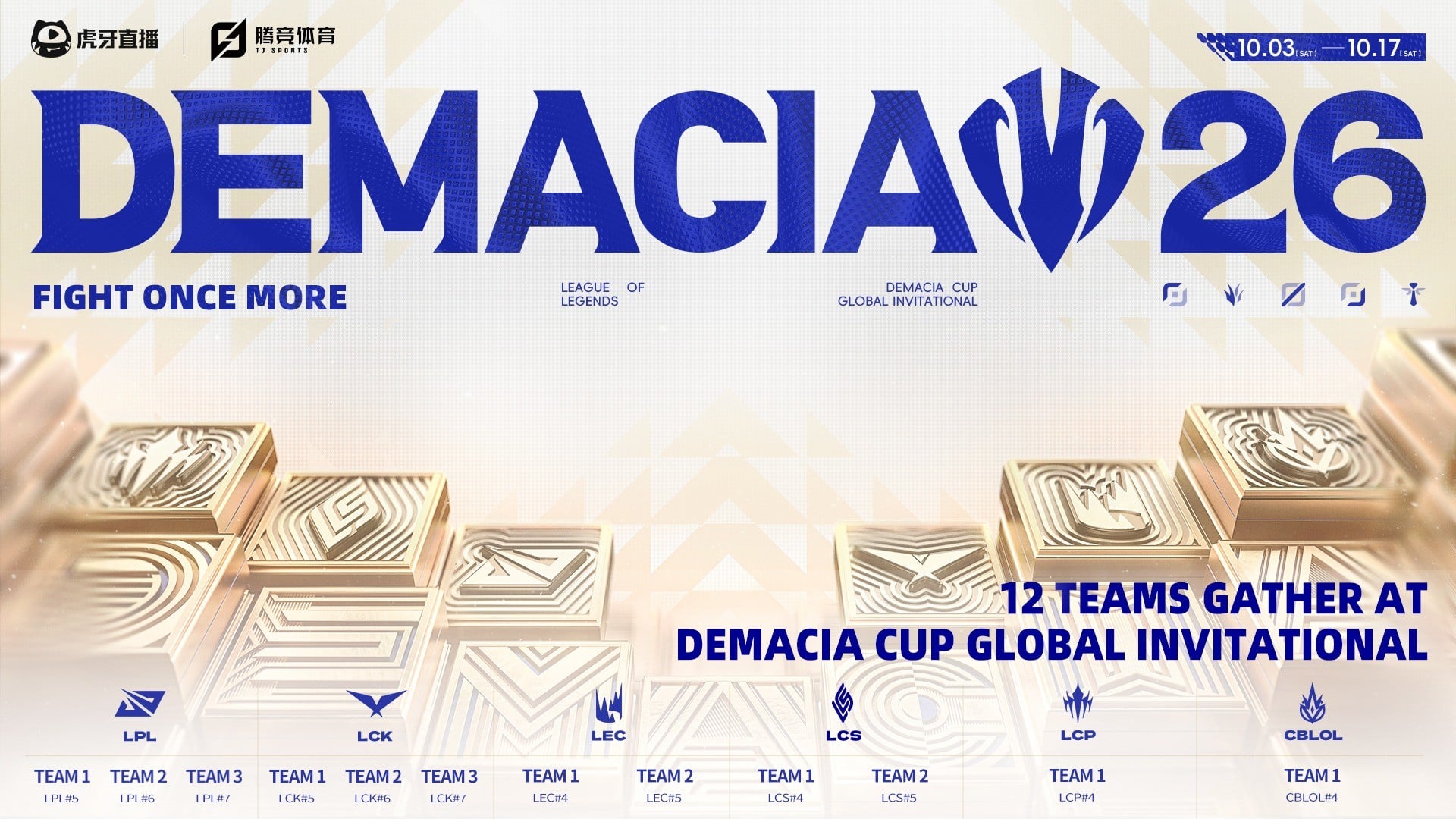
- LPL (China – TJ Sports / Huya domestic ecosystem)
- LCK (South Korea)
- LEC (Europe, Middle East, and Africa)
- LCS (North America)
- LCP (Asia-Pacific / combined regional league)
- CBLOL (Brazil)
While exact roster lineups and specific organizational seeds are still being finalized as domestic summer splits draw to their climactic finishes, the algorithmic slot allocation guarantees that the tournament floor will feature world-class tactical execution.
Financial Stakes and Prizes
While the 1.5 million RMB prize pool (approximately €191,000) may not match the astronomical multi-million-dollar purses of Worlds, it represents a substantial financial injection for a mid-to-late-season invitational. For mid-tier organizations and runner-up squads, this financial backing helps offset operational overheads while offering players tangible performance bonuses. Furthermore, the exposure gained by competing on a global broadcast platform produced in tandem with Huya Inc. and TJ Sports provides immense value for team sponsors and brand partners looking to expand their footprint in the lucrative Asian market.
Strategic Implications for the LEC and Western Ecosystems
For fans and analysts following Western League of Legends—particularly within the LEC—the expansion of the Demacia Cup serves as a vital structural safety net.
The Post-Summer Lifeline
In the traditional European competitive format, the transition from the Summer Split to Worlds has historically meant heartbreak for legendary organizations that narrowly miss out on qualification. Teams finishing fourth or fifth in the LEC standings often found their competitive seasons abruptly halted by late August or September, leading to long, economically costly off-seasons characterized by roster turnover and lost momentum.
The 2026 Demacia Cup Global Invitational completely redefines this paradigm. With the event taking place in October, the fourth- and fifth-placed teams from the LEC who fail to punch their tickets to Worlds are given an immediate, high-stakes international tournament to pivot toward.
Realistic projections point directly to historic giants and rising contenders within the European ecosystem:
- Fnatic: A perennial powerhouse with deep roots in the UK and European fanbases, frequently found on the razor’s edge of Worlds qualification. Recent roster maneuvers—such as the integration of top-laner Soboro and tactical flexibility in the bot lane—position them well to capitalize on this bracket.
- Team Vitality: Known for volatile yet explosive rosters capable of high-ceiling performances when the pressure mounts.
- NaVi: Bringing immense legacy brand power and competitive hunger into the LEC fold.
- GiantX: A pillar of European esports with strong foundational roots in both Spain and the UK, constantly striving to break into the upper echelons of international competition.
Because of this structural shift, organizations with deep UK and European ties like Fnatic and GiantX possess a very realistic, highly coveted pathway to advance to an international bracket in Beijing. Instead of watching Worlds from the sidelines with months of inactivity ahead, these squads can salvage their competitive years, test experimental rosters against Eastern titans, and reward their fanbases with thrilling cross-regional matchups.
Official Statements and Future Outlook
While formal statements from Riot Games, TJ Sports, and Huya Inc. emphasize the collaborative spirit of the expansion, industry insiders view the 2026 Demacia Cup Global Invitational as a trial balloon for a more interconnected global tournament calendar in future competitive cycles.
Bridging the East-West Competitive Gap
For years, Western analysts have argued that the primary reason Eastern regions (the LPL and LCK) maintain a competitive chokehold on international trophies is the frequency of high-level practice and cross-region competition. While domestic leagues provide rigorous local competition, the nuances of meta adaptation against foreign playstyles are often only truly experienced during MSI and Worlds.
By opening the Demacia Cup up to six distinct regions, Riot Games is actively dismantling these regional silos. Allowing LEC, LCS, LCP, and CBLOL teams to lock horns with LPL and LCK powerhouses outside of the traditional championship pressure cooker creates a unique environment for tactical innovation, meta-shaping, and mutual growth.
Looking Ahead to October and Beyond
As the summer splits across the globe draw to a dramatic close, attention will inevitably pivot toward the final confirmation of team rosters, broadcast talent lineups, and detailed daily schedules. Organizers have promised a wave of announcements as October 3rd approaches.
When the virtual gates open on October 3rd, the 2026 Demacia Cup Global Invitational will instantly transform from an ambitious concept into a high-octane reality. Whether an LPL powerhouse defends its home turf, an LCK juggernaut claims foreign dominance, or a revitalized Western squad like Fnatic or GiantX pulls off a stunning Cinderella run in the heart of Beijing, one thing is certain: the global League of Legends calendar has permanently changed for the better.





Belum ada komentar. Jadilah yang pertama berkomentar!