Over a decade after establishing a landmark benchmark for interactive horror with Alien: Isolation, British developer Creative Assembly has formally detailed its approach to developing its highly anticipated sequel, Alien: Isolation 2. The original 2014 release achieved critical acclaim for its relentless fidelity to Ridley Scott’s seminal 1979 cinematic masterpiece, Alien. Rather than relying on contemporary sci-fi tropes, the development team meticulously recreated the tactile, low-fi "cassette futurism" of the late 1970s, coupling it with an unscripted, adaptive artificial intelligence system that redefined player tension.
Now, as Creative Assembly undertakes the development of Alien: Isolation 2, the studio faces the formidable task of matching its previous critical success while meaningfully evolving the gameplay paradigm. In an exclusive interview following an early preview of the title, Art Director Ana Sopikova revealed the foundational creative philosophy guiding the sequel.
Backed by unprecedented access to 20th Century Studios’ historical archives, Creative Assembly is shifting the terror from claustrophobic, metallic corridors to an expansive, planetary surface. By introducing dynamic environmental variables—such as atmospheric weather, fluctuating visibility, and extended tracking systems—the studio aims to iterate on its signature survival mechanics without compromising the core identity that turned the original into an enduring classic.
Detailed Chronology
To understand the weight of expectations resting on Alien: Isolation 2, one must trace the multi-decade evolution of the franchise’s transmedia ecosystem and the specific milestones that led to this full-fledged sequel.
+-----------------------------------------------------------------------------------+
| CHRONOLOGY OF THE ALIEN SURVIVAL HORROR LEGACY                                     |
+-----------------------------------------------------------------------------------+
| 1979 | Ridley Scott directs 'Alien', establishing the tactile sci-fi aesthetic.   |
| 2014 | Creative Assembly releases 'Alien: Isolation' aboard Sevastopol Station.  |
| 2024 | 'Alien: Romulus' incorporates Creative Assembly's save station design.    |
| Pres.| Creative Assembly develops 'Alien: Isolation 2', expanding to open planets.|
+-----------------------------------------------------------------------------------+
1. The Cinematic Foundation (1979)
Director Ridley Scott and concept artist H.R. Giger release Alien, a film that pivots away from optimistic, polished space exploration in favor of a dirty, utilitarian "truckers in space" aesthetic. The film establishes a visual language characterized by analog CRT monitors, chunky mechanical toggles, industrial padding, and hydraulic pressure systems.
2. The Interactive Breakthrough (2014)
Creative Assembly releases Alien: Isolation, starring Amanda Ripley aboard the decaying Sevastopol Station. The game discards traditional action-game mechanics in favor of pure survival horror. Its crowning achievement is a dual-layer AI system controlling a single, invincible Xenomorph that learns player behaviors dynamically, leading to widespread critical acclaim and establishing a cult following.
Director Fede Álvarez releases Alien: Romulus. In a rare instance of a video game directly influencing feature film canon, Álvarez incorporates Creative Assembly’s distinct emergency save station—a glowing phone booth-style rig designed specifically for the 2014 game—directly into the film’s set design, highlighting the studio’s lasting impact on the franchise’s visual legacy.
4. The Sequel Development Phase (Present)
Creative Assembly officially moves forward with Alien: Isolation 2. Utilizing direct access to original 1970s production materials, the studio embarks on expanding the core mechanics onto an open planetary surface, introducing environmental atmospheric hazards and an upgraded, weather-adaptive Xenomorph AI system.
Supporting Context & Metrics
Architectural Authenticity and Archival Research
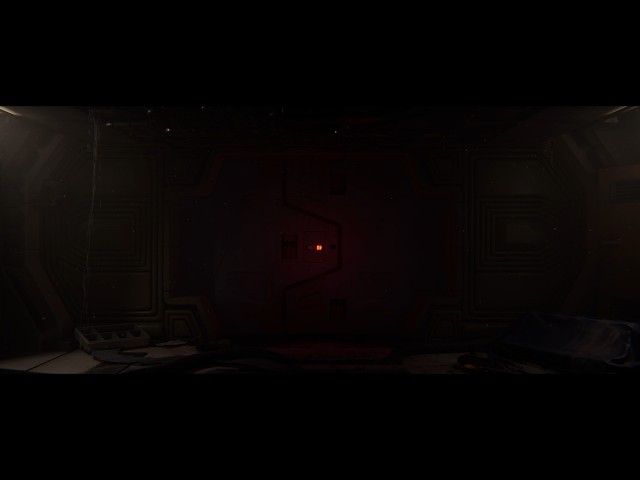
Creative Assembly’s artistic methodology relies on absolute fidelity to the production limitations of 1970s Hollywood cinema. Through a close operational partnership with 20th Century Studios, the development team has been granted unfettered access to the original production archives of the 1979 film.
According to Art Director Ana Sopikova, this archive provides comprehensive behind-the-scenes photographic reference material, set schematics, material composition lists, and lighting setups.
The core design directive inside Creative Assembly requires every artist to adhere to a strict rule: If a prop, material, or color could not physically exist or be manufactured on a movie set in 1979, it cannot exist in the game engine.
This philosophical constraint preserves the aesthetic identity of the franchise:
Tactile Interactions: Buttons must possess physical weight and mechanical clunk; digital touchscreens are strictly prohibited.
Color Palette Limits: Strict adherence to monochrome computer displays, beige plastics, exposed industrial cabling, and muted yellow-green illumination.
Grounded Functionality: World elements must look utilitarian, designed for working-class blue-collar personnel rather than futuristic military elites.
Systemic Mechanical Shifts: Planetary Survival
The transition from the confined bulkheads of Sevastopol Station to an open planet surface represents a major mechanical evolution for the franchise. In traditional survival horror games, player movement is restricted by static geometry—walls, locked doors, and narrow corridors. Outdoor environments risk diluting tension by offering players too much space to evade threats.
Creative Assembly counteracts this potential loss of tension by introducing a suite of systemic environmental mechanics:
1. Dynamic Weather Occlusion
The planetary surface introduces fluctuating weather phenomena, including heavy fog, torrential rain, and high-velocity wind storms. These elements act as double-edged tactical modifiers:
Visual Impairment: Heavy fog reduces player visibility, rendering long-range navigation impossible and forcing reliance on localized motion-tracking devices. Simultaneously, it obscures the Xenomorph’s precise vector of approach.
Acoustic Masking: Torrential rain and howling winds create ambient auditory noise. While this allows players to move rapidly without generating audible footstep noise, it simultaneously drowns out the distinct skittering, huffing, and vent-crawling sounds that signify the creature’s proximity.
2. Adaptive Outdoor AI Behavior
In Alien: Isolation, hiding beneath a desk or inside a locker provided a temporary safe haven, provided the Xenomorph did not directly observe the action. In Alien: Isolation 2, the Xenomorph’s AI architecture has been overhauled to exploit wide-open space.
The creature utilizes heightened sensory tracking to sweep open areas systematically. Rather than relying solely on scripted pathing through ceiling vents, the AI evaluates natural cover, line-of-sight angles, and environmental disturbances—such as broken vegetation or footprints in mud—to isolate and stalk its target.
Official Statements
During the post-preview interview with Pocket Tactics, Art Director Ana Sopikova outlined the creative pressures, internal guidelines, and technical ambitions defining the development of Alien: Isolation 2.
On the 1979 Film as the Studio’s Foundation
Sopikova emphasized that Ridley Scott’s original film remains the absolute reference point for every visual and structural decision made inside Creative Assembly:
"We have the archive from Fox that has all the behind-the-scenes pictures, and it’s just amazing to see all the sets kind of in a different light, so you can really inspect the details and how everything was built. The guiding star is really Ridley Scott’s experience… that’s the guiding star for us, and we always come back to it. I say this every day at work as well. They’re all tired of hearing it in the office."
On Refusing a Simple Engine Port
Addressing fan concerns regarding whether the sequel would simply reuse existing art assets within a modernized game engine, Sopikova stressed the studio’s commitment to building a genuine mechanical successor:
"It’s not a remaster, right? We wanted to evolve it meaningfully. We wanted to make sure that we’re not kind of just taking the existing assets and putting them in a new engine, because that wouldn’t be fair to fans, I think. And for us as well, it wouldn’t be satisfying."
On Translating "Truckers in Space" to Outdoor Environments
Maintaining the franchise’s blue-collar grounded reality while transitioning to an unmapped alien wilderness required careful environmental balancing:
"The original Alien is all very relatable. It’s believable. It’s truckers in space. For us, it’s how do we take that and how do we apply it to a planet surface so it feels familiar, but different? The only thing that’s extraordinary is the Alien really, and everything else is kind of just the backdrop for it."
On Systemic AI and Improvised Survival
Sopikova underscored that the introduction of dynamic weather and open terrain creates unpredictable gameplay loops that escape simple player memorization:
"It actively hunts you. If you hide behind the desk, it’s not just going to come and get you. It will be looking for you, and eventually it will get you. How are you going to adapt and survive in these conditions, and how is the Alien going to adapt to hunt you differently in these conditions? It’s all about experiencing the Alien the way you haven’t experienced it before. It’s the Alien in the outdoors… You better improvise to survive."
Future Outlook
The development of Alien: Isolation 2 marks a pivotal moment for both Creative Assembly and the broader survival horror genre. By attempting to scale up unscripted, highly lethal artificial intelligence from tight indoor environments to open planetary landscapes, the studio is tackling one of game design’s most complex challenges: maintaining pure, inescapable horror in expansive spaces.
Industry analysts note that survival horror has undergone a significant resurgence, driven by high-profile remakes and brand-new entries across major platforms, including modern consoles like the Nintendo Switch successor ecosystem. Creative Assembly’s decision to avoid action-heavy tropes—a trap that plagued previous Alien video game adaptations prior to 2014—suggests that Alien: Isolation 2 will maintain its focus on tension and disempowerment.
Furthermore, the reciprocal relationship between Creative Assembly and 20th Century Studios points to a unified approach for the Alien intellectual property. With contemporary cinematic entries acknowledging the design contributions of the video games, Alien: Isolation 2 stands to not only set new standards for interactive game design, but also directly shape the aesthetic future of the entire franchise.
As production continues, players will soon discover whether Creative Assembly’s expanded atmospheric mechanics and evolved Xenomorph AI can capture lightning in a bottle twice. One fact remains undeniably clear: in the open, unyielding elements of an alien world, standard hiding spots will no longer be enough to guarantee survival.













Belum ada komentar. Jadilah yang pertama berkomentar!