Few trajectories in modern Hollywood history mirror the radical metamorphosis of Robert Pattinson. Emerging onto the global consciousness as the tragic wizard Cedric Diggory in Harry Potter and the Goblet of Fire before ascending to astronomical, pop-culture-defining stratospheres as the brooding vampire Edward Cullen in The Twilight Saga, Pattinson easily could have settled into a lucrative, decades-long career as a conventional leading man. Instead, he systematically dismantled his own heartthrob image, pivoting away from major studio safety nets to collaborate with some of the most abrasive, uncompromising, and visionary auteurs of contemporary cinema.
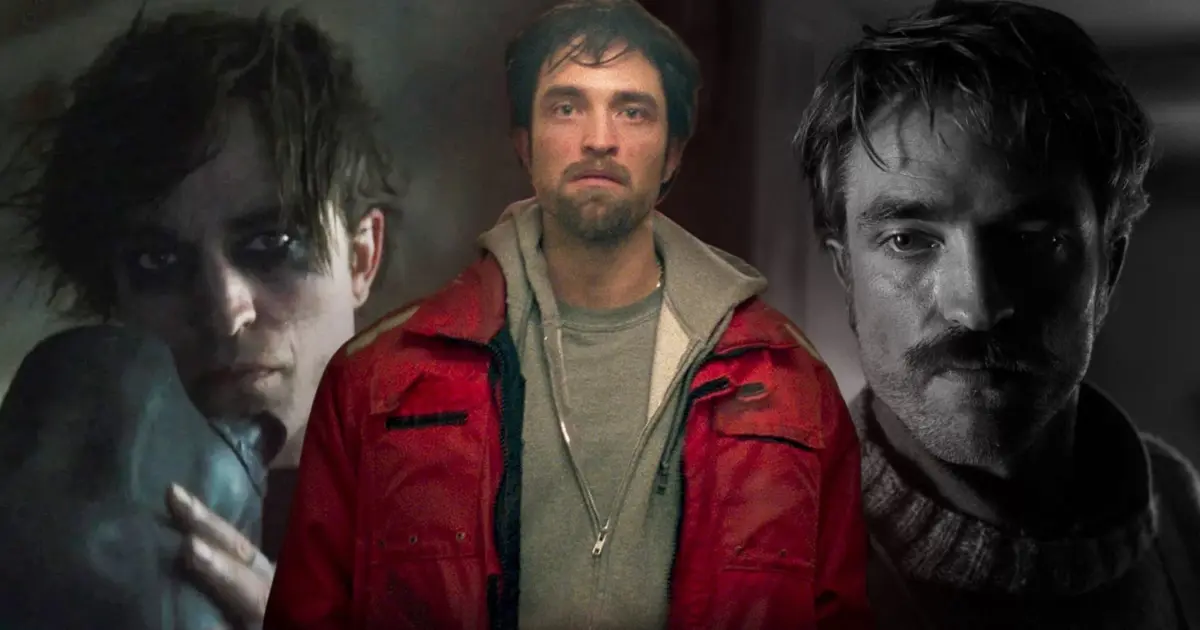
Over the past decade and a half, Pattinson has transformed from a tabloid staple into one of the most fearless, chameleonic character actors of his generation. His filmography reads like a masterclass in risk-taking, encompassing David Cronenberg’s sterile limos, Claire Denis’s deep-space purgatories, the Safdie Brothers’ breathless New York panics, and Robert Eggers’ booze-soaked maritime hallucinations.
As he continues to balance massive blockbuster landscapes—such as Matt Reeves’ The Batman and Bong Joon Ho’s Mickey 17—with daring independent projects and prestige 2026 releases like Christopher Nolan’s The Odyssey and Kristoffer Borgli’s The Drama, examining his career trajectory reveals an artist who refuses to stand still. This comprehensive retrospective ranks Robert Pattinson’s ten definitive cinematic performances, charting his evolution from franchise royalty to modern cinema’s ultimate cinematic shapeshifter.
Detailed Chronology: Ranking the Ten Definitive Performances
10. The Lost City of Z (2016) — Corporal Henry Costin
Beginning this definitive countdown is James Gray’s hypnotic, old-school adventure epic, which served as a monumental stepping stone in Pattinson’s active dismantling of his pretty-boy persona. Cast as Corporal Henry Costin, an aide to Charlie Hunnam’s obsessive explorer Colonel Percy Fawcett during an arduous expedition into the uncharted Bolivian jungle, Pattinson is nearly unrecognizable behind an unruly, scraggly beard and vintage spectacles.
Though the role is structurally supporting, Pattinson makes Costin entirely indelible. His prickly temperament and boozy, world-weary curtness lend the expedition an earthy, grounded humor. By seamlessly blending the raw edges of an English working-class roustabout with the rigid discipline of a military man, Pattinson leaves zero room for conventional movie-star vanity. Long before he reclaimed top-tier leading-man status, this performance proved his heart belonged to character acting.
9. Maps to the Stars (2014) — Jerome Fontana
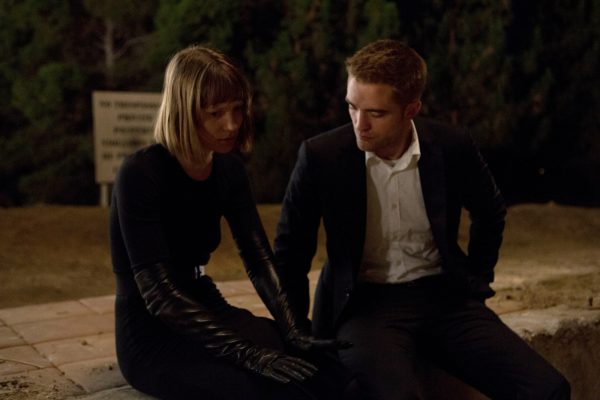
David Cronenberg’s acidic satire of Hollywood excess offered Pattinson an ideal canvas for his increasingly adventurous career choices. As Jerome Fontana—a struggling limousine driver and aspiring screenwriter ferrying the damaged elite of Los Angeles—Pattinson initially projects an aura of normalcy amidst a circus of narcissism inhabited by Julianne Moore, Mia Wasikowska, and John Cusack. This perceived normality makes his slow-burning moral corruption all the more harrowing.
Jerome is an outsider desperate to breach the gates of the Hollywood machine, portrayed by Pattinson with a delicate balance of ambition, insecurity, and underlying unease. As Jerome is gradually swallowed by the industry’s ecosystem of abuse and generational dysfunction, Pattinson charts the quiet erosion of his empathy. It is a restrained performance that delivers an uncomfortable truth: the industry rarely destroys raw ambition; instead, it teaches you precisely what you must become to satisfy it.
8. Mickey 17 (2025) — Mickey 17 and Mickey 18
Bong Joon Ho’s futuristic sci-fi satire overflows with madcap surrealism and biting political commentary reminiscent of Stanley Kubrick’s Dr. Strangelove. Inserting Robert Pattinson into dual roles as expendable clones could have easily degraded into a flashy technical gimmick relying heavily on CGI and editing tricks. Instead, Pattinson uses the platform to execute a masterclass in vocal and physical dexterity.
The acoustic distinction between Mickey 17 and Mickey 18 is nothing short of brilliant. Mickey 17 features a nasal, dorky sweetness that makes him absurdly endearing, while Mickey 18 is defined by a rougher, abrasive, and genuinely intimidating physicality. Furthermore, Pattinson captures the film’s peculiar dark-comedy rhythms—particularly during an excruciatingly awkward dining sequence. In a film bursting with eccentricities, Pattinson anchors the chaos as its most magnetic ingredient.
7. The Rover (2014) — Rey
David Michôd’s relentlessly bleak post-apocalyptic thriller The Rover was an early, flashing warning sign of just how far Pattinson was willing to push his psychological and physical boundaries. Pitted opposite Guy Pearce’s stoic, monosyllabic survivor Eric, Pattinson plays Rey, an erratic, deeply nervous American Southerner whose non-stop chatter, physical spasms, and profound guilt render him wildly unsuited for a brutal wasteland.
Rey is a tragic figure—simultaneously innocent and culpable, pathetic and desperately sympathetic. His faint glimmers of hope feel doomed from the outset. The film’s defining sequence arrives when it grinds to a temporary halt so Rey can passionately belt out Keri Hilson’s “Pretty Girl Rock.” It is a bizarre, deeply human creative choice that Pattinson commits to with absolute fearlessness, supported by a physically gaunt frame, prosthetic teeth, and a mangled Southern drawl.
6. The Drama (2026) — Charlie
Kristoffer Borgli’s provocative dark comedy places an engaged couple under extreme psychological duress after Emma (Zendaya) confesses a disturbing secret from her past, forcing Charlie to reevaluate everything he thought he knew. Refusing to spoon-feed the audience a clean moral judgment, the film traps viewers inside an atmospheric fog of discomfort and uncertainty.
At the epicenter is Pattinson as Charlie, who initially presents as disarmingly ordinary—a rumpled, awkward Englishman whose tentative romanticism makes him instantly rootable. However, as his internal certainty fractures, Pattinson peels back the layers to expose mounting anxiety and deep-seated insecurity. Shifting effortlessly from likeable to frustrating, pitiful to sympathetic, Pattinson mirrors the film’s refusal to offer easy answers, cementing his gift for making deeply flawed men endlessly fascinating.
5. The Batman (2022) — Bruce Wayne / The Batman
Following his purposeful post-Twilight dive into independent cinema, Pattinson stepped into blockbuster territory to inherit one of pop culture’s most hallowed mantles. Alongside director Matt Reeves, he bypassed the traditional billionaire playboy archetype to forge a Bruce Wayne who has already been utterly consumed by childhood trauma.
Pattinson plays Batman less as an inspiring crusader and more as a man serving an unending, self-imposed prison sentence. His Gotham is a perpetual, rain-slicked purgatory, and the cowl operates as an extension of his intense self-loathing. Whether tearing through the underworld or losing composure during an interrogation with The Riddler, Pattinson embodies a man who has long mistaken vengeance for purpose. When his Bruce Wayne finally recognizes that Gotham requires hope rather than fear, the resulting emotional shift is hard-earned and profoundly moving.
4. Cosmopolis (2012) — Eric Packer
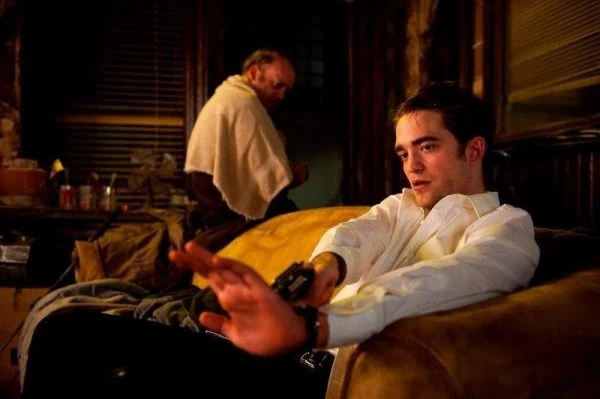
Pattinson’s inaugural collaboration with David Cronenberg announced that the actor was a premier vessel for cold, intellectual, and misanthropic storytelling. As twenty-eight-year-old billionaire asset manager Eric Packer, Pattinson spends nearly the entire runtime traversing a gridlocked Manhattan limousine while the external world collapses into economic and social anarchy.
Adapting Don DeLillo’s dense novella, the film demands total commitment to a specific, absurdist rhythm. Pattinson adopts a gravelly cadence and delivers verbose philosophical dialogue with eerie, detached prestige. Beneath the surface, however, runs a quiet, suffocating current of existential dread. Pattinson pulls off the ultimate trick: making thoughtlessness feel meticulously, agonizingly calculated.
3. The Lighthouse (2019) — Ephraim Winslow / Thomas Howard
Robert Eggers’ psychological horror masterpiece is a tempest of conflicting genres, functioning simultaneously as historical myth-making, German Expressionist nightmare, and pitch-black comedy driven by the volcanic chemistry between Willem Dafoe and Robert Pattinson. While Dafoe relishes playing the bombastic, loud-mouthed veteran lighthouse keeper Thomas Wake, Pattinson portrays Ephraim Winslow, the tight-lipped, suspicious apprentice.
Initially, Pattinson invites the audience’s trust through his quiet, subservient demeanor. But as isolation sets in, the cracks imperceptibly widen. Meekness curdles into hostility, suspicion transforms into paranoia, and deep repression explodes into primal, drunken shrieks. By the time Ephraim’s true, terrifying nature surfaces, the audience realizes they have been willingly manipulated by a masterclass in psychological escalation.
2. High Life (2018) — Monte
Claire Denis’s cerebral, soul-shredding sci-fi meditation casts Pattinson as Monte, one of a crew of death-row inmates dispatched on a suicide mission toward a black hole. Alongside Juliette Binoche and Mia Goth, Pattinson anchors a time-hopping odyssey that probes the absolute limits of human endurance, intimacy, and isolation.
Monte’s journey is monumental—he is simultaneously a prisoner, a reluctant father, a survivor, and ultimately a lone hermit drifting at the edge of the universe. Yet Pattinson rejects grandiose, theatrical reveals, choosing instead to communicate these massive internal shifts through microscopic adjustments in posture, vocal timbre, and physical exhaustion. It is a masterclass in quiet restraint, proving Pattinson can anchor an abstract masterpiece without ever demanding excessive spotlight.
1. Good Time (2017) — Connie Nikas
Before his mainstream renaissance, the Safdie Brothers’ gritty, adrenaline-fueled crime thriller Good Time delivered the definitive proof that Robert Pattinson was operating on a completely different plane than his contemporaries. Stripped of all romantic mystique, charm, and vanity, Pattinson dives headfirst into the sweaty, frantic underworld of New York City as Connie Nikas.
Unlike standard cinematic antiheroes, Connie is an objectively reprehensible human being—manipulative, erratic, exploitative, and entirely toxic to everyone crossing his path. Yet, through Pattinson’s white-hot intensity and complete psychological immersion, the audience is magnetically, disturbingly drawn into his desperate orbit. Good Time stands as a definitive declaration of intent: a performance that signaled the arrival of one of the most fearless, transformative character actors of the 21st century.
Supporting Context & Metrics: The Box-Office and Critical Pivot
To understand the magnitude of Pattinson’s career pivot, one must look at the quantitative data surrounding his transition from commercial juggernauts to art-house cinema.
The Franchise Era (2005–2012): Across five Twilight films and his appearance in Harry Potter, films featuring Pattinson grossed upwards of $3.3 billion domestically and over $6 billion worldwide. While this cemented him as an international household name, it artificially constrained public perception regarding his dramatic range.
The Independent Re-Calibration (2012–2019): Choosing to forego major studio paydays, Pattinson deliberately targeted micro-budget and mid-budget European and American auteur projects. Films like Cosmopolis, The Rover, Maps to the Stars, and The Lost City of Z operated on modest budgets—frequently under $15 million—but radically re-established his critical standing, netting him multiple Independent Spirit Award nominations and overwhelming praise at major international festivals including Cannes, Venice, and TIFF.
The Blockbuster Return (2022–Present): When Pattinson returned to major studio filmmaking with Matt Reeves’ The Batman, the financial payoff validated his risk-taking strategy. Opening to a massive $134 million domestic debut on its way to grossing over $772 million globally, The Batman proved that audiences now viewed Pattinson not as a teen idol, but as a premier prestige leading man capable of carrying major intellectual property on the strength of his acting chops alone.
Official Statements and Industry Insights
Reflecting on his unconventional career path in recent industry profiles, Pattinson has frequently highlighted the necessity of taking creative risks and embracing discomfort:
"When you build a career on a global pop-culture phenomenon, you can either spend the rest of your life trying to replicate that safety, or you can jump off the cliff and see if you actually know how to fly. I wanted to work with directors who terrified me a little bit, because that’s usually where the truth of a performance lives."
Collaborating auteurs have similarly lauded his unmatched work ethic and willingness to subvert expectations. David Cronenberg, who directed Pattinson in both Cosmopolis and Maps to the Stars, noted:
"Rob possesses an intelligence that goes far beyond standard movie stardom. He doesn’t care about vanity, he doesn’t care about being liked in the traditional sense; he cares about unpacking the machinery of human psychology, no matter how ugly or strange it gets."
Matt Reeves, speaking on the casting process for The Batman, emphasized how Pattinson’s indie pedigree shaped his interpretation of the Dark Knight:
"What Rob brought to Batman was a profound understanding of alienation and obsession. Because he spent years refining his craft in intense, character-driven independent films, he brought a psychological depth to Bruce Wayne that elevated the entire genre."
Future Outlook
As the cinematic landscape progresses through 2026, Robert Pattinson’s upcoming slate indicates that his appetite for eclectic, challenging material remains entirely unquenched.
Following his turn in Bong Joon Ho’s Mickey 17, Pattinson is slated to headline Kristoffer Borgli’s highly anticipated dark comedy The Drama, maintaining their successful creative synergy. Furthermore, his upcoming attachment to Christopher Nolan’s epic The Odyssey positions him at the center of yet another monumental cinematic event.
Beyond historical epics, Pattinson continues to test boundaries by joining Denis Villeneuve’s monumental sci-fi universe in Dune: Part Three, while also tackling real-world journalistic tension by portraying controversial television personality Chris Hansen in A24’s upcoming feature Primetime.
From the misty Highlands of The Lighthouse to the neon-drenched panic of Good Time, Robert Pattinson has successfully rewritten the modern movie-star playbook. By trading easy teen-idol acclaim for grueling, transformative character work, he has cemented a legacy defined not by his image, but by his absolute, fearless commitment to the art of acting.


















Belum ada komentar. Jadilah yang pertama berkomentar!